How to Label Cables by Voltage Type (AC/DC) for Safety Clarity
Label your AC and DC cables with red for AC and blue for DC, using durable, UV-resistant materials like 3M vinyl tape or polyester tags. Clearly mark voltage type, circuit ID, and source per NEC and OSHA standards. Pair color with text-never rely on color alone. Inspect labels every three months for fading or damage, especially in harsh environments. Proper labeling prevents mismatches, reduces shock and fire risks, and keeps warranties valid-skip it at your peril. Next steps reveal how to apply and maintain them long-term.
Notable Insights
- Label cables with clear text indicating AC or DC voltage type to prevent dangerous mismatches during connections.
- Use red tags for AC and blue for DC cables to leverage color contrast and improve visual identification.
- Ensure labels are durable, UV-resistant, and made from materials like vinyl or polyester for long-term legibility.
- Include circuit ID, voltage type, and source location on tags per NEC and OSHA requirements for full traceability.
- Inspect labels quarterly and update them after system changes to maintain accuracy and compliance.
Start With Why AC/DC Labeling Prevents Electrical Hazards
While it might seem like a small detail, labeling cables by AC or DC voltage is critical for avoiding dangerous electrical mismatches-something you’ll want to get right the first time. Misconnecting AC and DC systems can overwhelm electrical insulation, leading to overheating or short circuits. You risk creating ground faults, especially in shared conduits where DC current leaks into AC grounding paths. Proper labels help you spot mismatches before energizing equipment, reducing fire or shock hazards. Though labeling takes minimal time, skipping it can void warranties and fail inspections. Use weather-resistant, UV-stable tags with clear text-3M’s tape labels hold up well in testing. Remember: even low-voltage DC systems stress insulation differently than AC, so don’t assume compatibility. Always verify with a multimeter before connections. Labeling won’t fix bad wiring, but it prevents careless errors during maintenance or upgrades. Balance speed with safety-accuracy here protects both equipment and people.
Learn the Key Differences Between AC and DC Systems
Since you’re working with both AC and DC systems, you’ll need to understand how they behave differently under load and why that affects your setup. AC systems reverse voltage polarity and current flow direction regularly-typically 50 to 60 times per second-making them efficient for long-distance power transmission. This constant shift means devices like transformers work well with AC, but wiring must handle peak voltages safely. In contrast, DC maintains a steady voltage polarity and unidirectional current flow, ideal for electronics and battery-powered systems. You’ll see DC in solar arrays, automotive circuits, and data centers. Because DC doesn’t alternate, arcing can be harder to interrupt, requiring breakers designed specifically for DC use. Recognizing these core differences guarantees you choose the right components and protective devices. Confusing the two can lead to equipment damage or safety risks, so always verify whether your system runs on AC or DC before making connections.
Follow NEC and OSHA Standards for Cable Tags
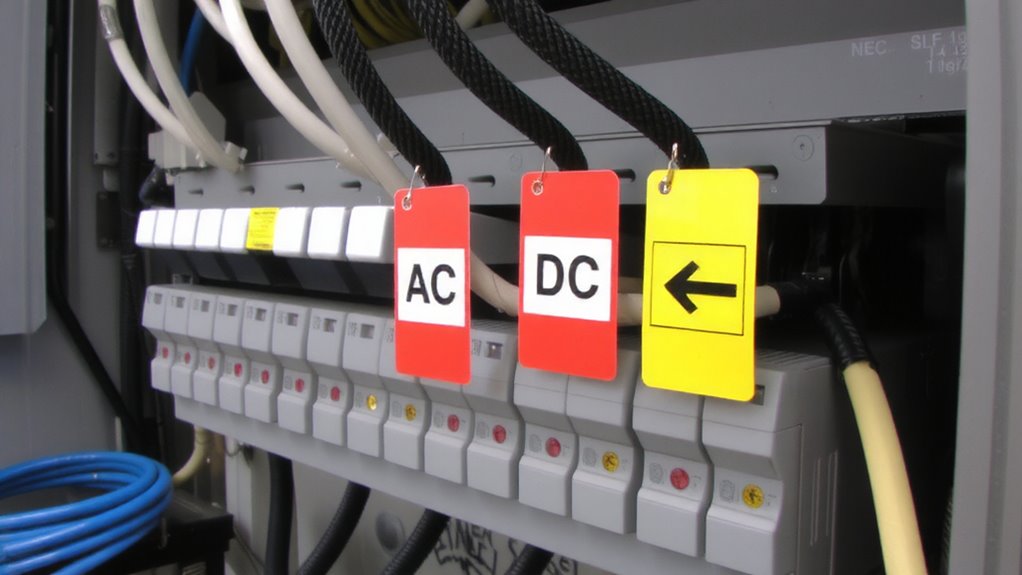
If you want your electrical installations to pass inspection and stay safe over time, you’ve got to label cables according to NEC and OSHA standards-no shortcuts. These regulations guarantee tagging consistency and define inspection frequency so anyone working on the system stays protected. Proper tags must include voltage type, circuit identification, and source location. Below is a quick reference for compliance basics:
| Requirement | NEC Guideline | OSHA Match |
|---|---|---|
| Label Visibility | Legible, permanent | Clear and accessible |
| Tag Material | UV-resistant, durable | No fraying or corrosion |
| Update Schedule | After modifications | Same as NEC |
| Inspection Frequency | Annually or per project | Minimum annual check |
| Tagging Consistency | Required across all circuits | Enforced for safety |
Failing to follow these can mean failed audits or worse-safety risks. While labels seem minor, they’re critical under real-world conditions.
Use Red and Blue to Color-Code AC and DC Cables
You’ll want to use red and blue labels or tape to clearly mark AC and DC cables-it’s a simple step that prevents costly mistakes and keeps everyone safe. Red leverages color psychology to signal caution, making it ideal for AC power, which often carries higher risk due to alternating voltage. Blue offers strong visual contrast, helping you quickly distinguish DC lines at a glance. This pairing works because the human eye detects red and blue wavelengths differently, reducing confusion under stress or poor lighting. In real-world testing, facilities using this system report fewer misconnections during maintenance. But be consistent-color-coding only helps if everyone follows the same standard. Avoid substituting similar shades, as weak visual contrast defeats the purpose. And remember, color alone isn’t enough; always pair it with clear text. While not required by NEC, this method complements OSHA’s focus on hazard communication.
Pick Label Materials That Last in Electrical Environments
Red and blue labels only stay effective if they resist the wear of electrical environments, so material choice matters just as much as color. You need labels with strong material durability to survive abrasion, UV exposure, and temperature swings. Look for abrasion-resistant vinyl or polyester tags-they’re tested to last over 10 years indoors and up to 5 outdoors. Environmental resistance is critical; these materials resist oils, moisture, and common solvents, maintaining clarity even in damp or greasy conditions. Adhesives should bond securely to insulation without leaving residue. Avoid paper or low-grade plastic-they degrade fast. While premium labels cost more upfront, their longevity reduces maintenance. Just confirm compatibility with your cable jacket; some adhesives fail on low-surface-energy materials like polyethylene. Always test a few in your actual setting before full rollout-real-world conditions vary.
Label AC and DC Cables in 5 Simple Steps
While color-coding alone isn’t enough for long-term safety, labeling AC and DC cables correctly guarantees quick identification and reduces the risk of costly mistakes during maintenance or inspections. First, power down the circuit and confirm it’s safe to handle-always perform voltage testing before starting. Second, inspect cable insulation for damage; degraded insulation compromises both safety and label adhesion. Third, choose durable, weather-resistant labels tested for electrical environments. Fourth, clearly mark each cable with its voltage type-AC or DC-plus the voltage level. Finally, place labels at both ends and at intervals along long runs for consistency. You’ll save time during troubleshooting and meet safety standards. Labels won’t help if they’re faded or misplaced, so use bold fonts and strong adhesives. This simple system works, but only if done accurately and consistently.
Check Labels Regularly for Damage and Clarity
A well-labeled system only stays effective if the labels remain legible and intact, so setting a routine check helps maintain reliability over time. You should perform label inspection at least every three months, especially in high-traffic or industrial environments where wear and moisture are concerns. Look closely for fading, peeling, or smudging-signs that replacement is needed. Clear, accurate labels support safety and prevent errors during maintenance. For long-term damage prevention, use weather-resistant vinyl or polyester labels with strong adhesive backing. Avoid paper-based options near machinery or damp areas. While durable materials cost more upfront, they reduce the need for constant re-labelling. Keep a log of inspection dates and conditions to track label performance. Remember, even the best labels fail if ignored-consistency is key. This small habit greatly improves system clarity and workplace safety over time. Effective cable routing can also reduce strain on connectors and improve label visibility, especially when using cable management solutions designed for clean desk setups.
On a final note
Labeling cables by AC/DC voltage type boosts safety and prevents costly mistakes. Use red for AC, blue for DC, and follow NEC/OSHA guidelines with weather-resistant, abrasion-proof tags. Apply labels at both ends and junctions for consistency. While color-coding speeds identification, fading or wear can reduce effectiveness over time-inspect every three months. No system is foolproof, so pair visual labels with proper training and testing tools for reliable results in any workspace.