How to Use a Fold-Down Wall Desk in a Hallway Without Blocking Traffic
Mount your fold-down desk in a low-traffic hallway spot, ensuring at least 30 inches of clearance when open to keep walkways safe and functional. Pick a model no wider than 48 inches and mount it 28–30 inches high for comfortable use without blocking movement. Secure it to studs or use proper anchors, and pair with Velcro straps or a raceway to manage cords and avoid hazards. Opt for lightweight laminate or solid wood, checking weight limits and warranty-then test with doors open and during daily routines to confirm it fits your flow. Small adjustments now prevent big disruptions later, and there’s more to contemplate for long-term comfort and setup efficiency.
Notable Insights
- Install the desk in a low-traffic hallway area to minimize interruptions and maintain smooth pedestrian flow.
- Ensure at least 30 inches of clearance remains when the desk is fully deployed for safe walking access.
- Mount the desk between 28 and 30 inches high to support ergonomics while preserving headroom and walkway space.
- Choose a desk no wider than 48 inches and with a depth of 20–24 inches for hallway compatibility.
- Use wall-mounted organizers and cable management to keep essentials accessible without obstructing the pathway.
Choose a Spot With Clear Access and Minimal Foot Traffic
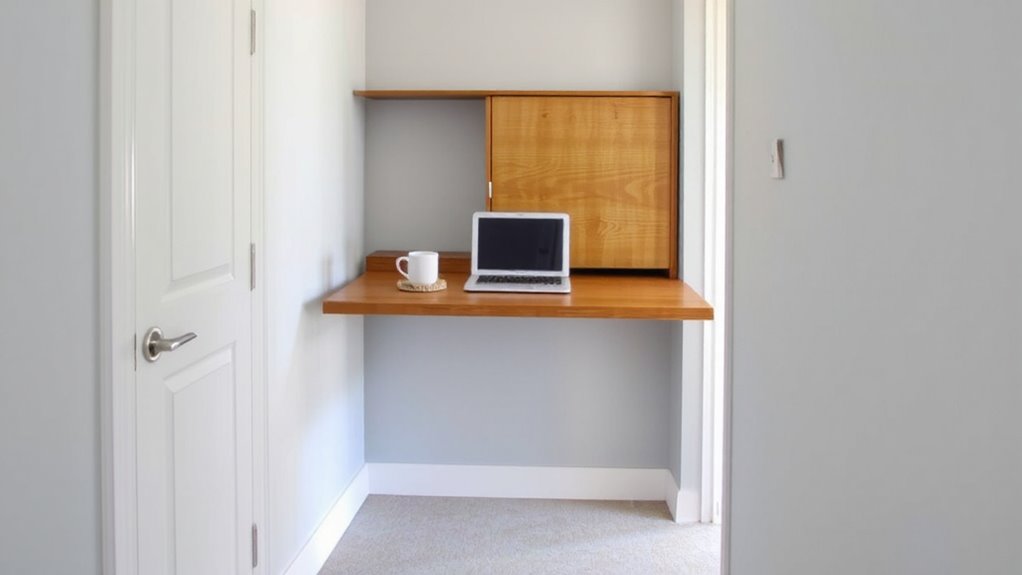
While you might be tempted to install your fold-down wall desk in the most convenient part of the house, picking a spot with clear access and minimal foot traffic is essential for actually getting work done. Wall placement directly affects how usable your workspace feels-choose a section of the hallway where people aren’t constantly passing by. This boosts focus and reduces interruptions. For effective space optimization, pick a wall that doesn’t interfere with door swings or light switches. A spot near an outlet helps with cord management but avoid high-traffic junctions, even if they seem ideal. You’ll gain productivity, but you may sacrifice a bit of hallway width-just don’t crowd the path. Test the location by opening the desk fully and standing in the area; if it feels cramped or obstructive, reconsider. Smart wall placement saves hassle later, especially in shared homes where every inch matters. Consider models from the best small desks list to ensure durability and space efficiency.
Measure Clearance So the Desk Doesn’t Block the Walkway
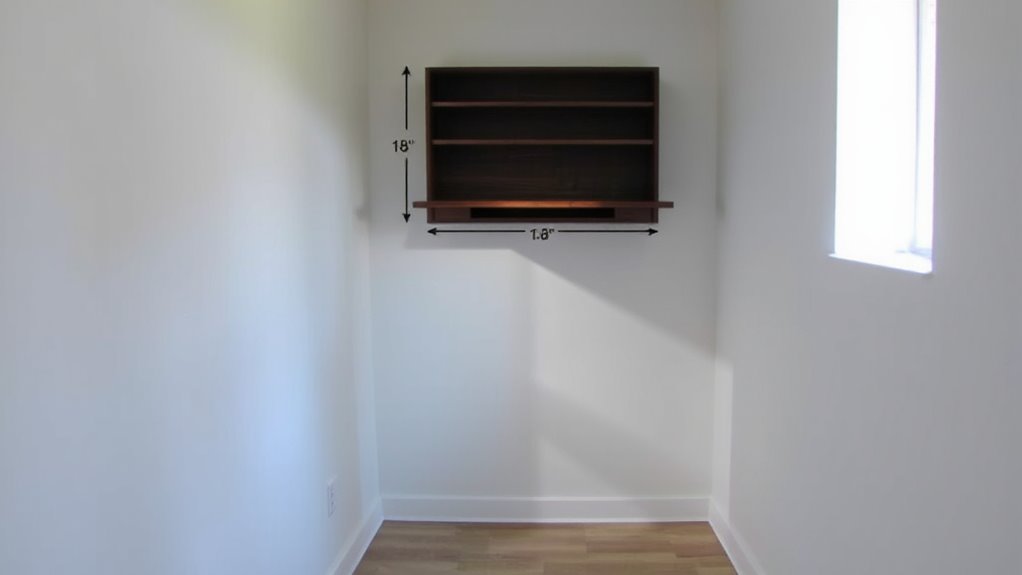
You’ve picked a smart spot with limited foot traffic-now make sure your fold-down desk doesn’t turn the hallway into an obstacle course. Measure the space carefully to maintain at least 30 inches of clearance when the desk is down, ensuring safe traffic flow. Standard desk depth ranges from 18 to 24 inches, so account for that swing radius. If your hallway’s under 4 feet wide, a deeper desk could force people to sidestep, disrupting movement. Pull the desk out and check it with the door open or closed-real conditions matter. Test with family members walking through to identify unseen obstructions. A shallow desk depth (like 18″) works better in tight spaces, though it gives less workspace. Always prioritize walkway space over desk size. Even a useful setup fails if it hinders traffic flow. Measure twice, mount once.
Mount the Desk at a Comfortable Writing Height
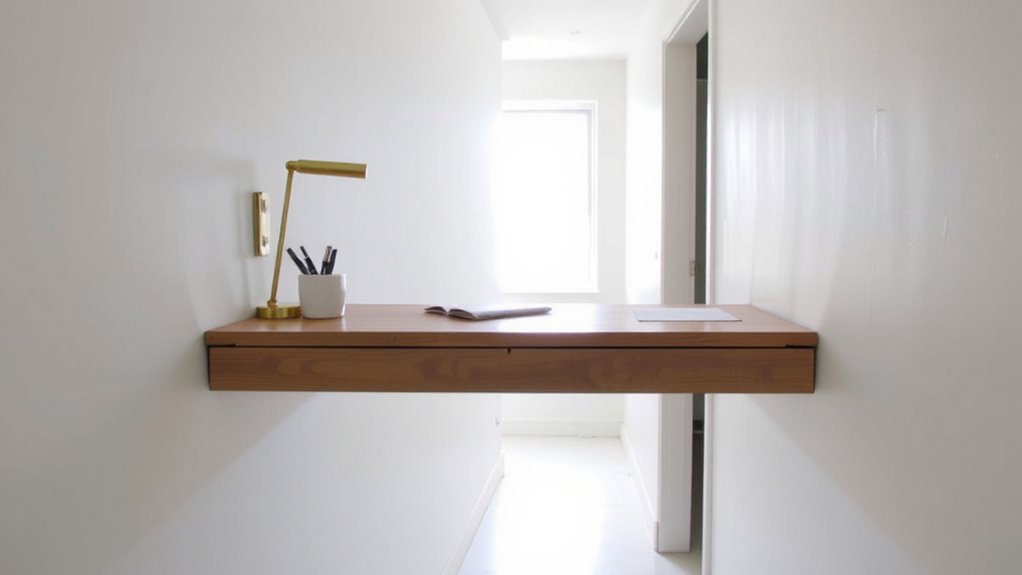
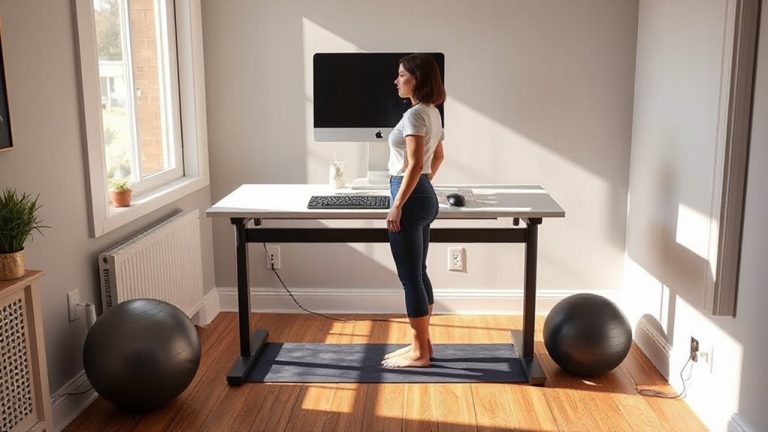
Set the desk at 28 to 30 inches above the floor for comfortable writing and light typing-this range suits most adults without straining the wrists or shoulders. This height supports proper ergonomic positioning, helping maintain a neutral arm angle and reducing fatigue during short tasks. While ideal for quick notes or tablet use, it may not suit prolonged typing if you’re taller or using a bulky keyboard. User comfort depends on your posture and how long you work there. For best results, pair the setup with a supportive standing mat or nearby stool. Keep in mind that standard desk heights are around 36 inches, so this lower mount trades full workstation function for hallway practicality. Adjust slightly based on your build, but don’t compromise walkway clearance. Test the height before final mounting-sit or stand as you would while working and check wrist alignment.
Pick a Fold-Down Wall Desk That Fits Your Space
Size matters when choosing a fold-down wall desk for a hallway-opt for one that balances workspace utility with tight-space practicality. You’ll want a desk no wider than 48 inches to avoid obstructing foot traffic, yet deep enough-around 20 to 24 inches-to fit a laptop and notebook. Check your wall material before buying: masonry or tile may require special anchors, while studs in drywall offer the most secure mounting. A lightweight laminate desk finish works well for durability and cost, but if you want a premium look, go for solid wood-it’s sturdier but pricier. Watch for weight limits; most models support 20–30 pounds. Some desks come with warranties up to five years, a good sign of reliability. Always measure twice-once the desk is mounted, adjusting won’t be easy.
Tame Cables and Store Supplies Within Reach
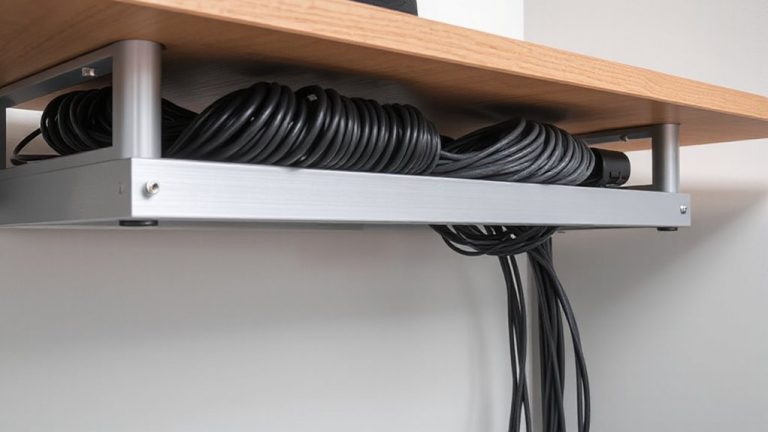
A well-installed fold-down desk means little if cords dangle across the hallway or supplies clutter the floor. Good cable management keeps things safe and tidy-use adhesive-backed Velcro straps or a low-profile raceway behind the desk to route power and data cords neatly. Avoid tripping hazards by anchoring cables to the wall, not the floor. For supply organization, install shallow under-desk trays or wall-mounted bins within arm’s reach. Keep notebooks, pens, and charging cables contained but accessible when the desk folds down. Overloading storage adds weight and strain, so limit accessories to essentials. Units with built-in outlets help minimize cord length, but check local electrical codes before installation. Effective cable management and supply organization save time and reduce clutter, though they require planning. The best systems balance convenience with minimal visual impact, ensuring your hallway stays functional and efficient. For optimal results, consider a cable management solution that integrates seamlessly with wall-mounted furniture.
Add a Lamp and Personal Touches to Mark the Zone
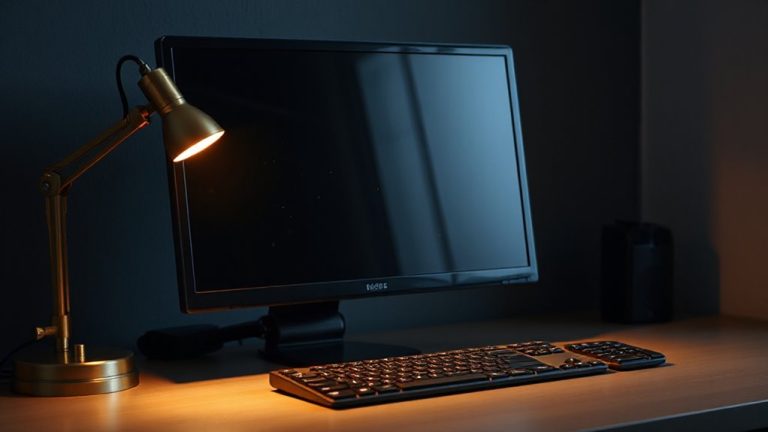
How do you turn a narrow hallway spot into a workspace that feels intentional? Add a lamp and personal touches to mark the zone. Task lighting is essential-choose a wall-mounted swing-arm or clip lamp with adjustable brightness to illuminate your work without glare. This focused light signals the desk’s purpose and improves usability. Pair it with simple decor accents like a framed photo, small plant, or textured runner to distinguish the area visually. These elements make the space feel less like a pass-through. For optimal eye comfort during long coding sessions, consider a best desk lamp for programmers, which offers flicker-free illumination and color temperature control.
| Feature | Benefit |
|---|---|
| Swing-arm lamp | Adjustable task lighting, saves space |
| Wall art | Adds identity without clutter |
| Mini potted plant | Softens the zone, needs little care |
| Desk mat | Defines surface, reduces glare |
Just avoid bulky decor-the hallway still needs to breathe.
Test the Setup During Real Daily Use
Now that you’ve lit the area and added character, put the setup through its paces by using it as you would during a normal day. Try working at it for a full session to assess comfort and practicality. If you’re using ergonomic seating, check that the chair fits when pulled up and stores easily when not in use-compact risers or low-profile stools often work best. Pay attention to noise distractions, especially if others are moving through the hallway; even quiet footsteps can break focus. Test at different times, like during morning routines or evening traffic, to gauge real-world interruptions. While the desk may feel spacious, limited depth (usually 18–24 inches) restricts large monitors or multiple devices. Fold mechanisms should support daily use, but check warranty terms-many last only one to three years. It’s functional, but not ideal for long hours.
On a final note
You can make a fold-down desk work in a hallway if you pick the right spot and install it correctly. Mount it at 30 inches high for comfortable use, guarantee 36+ inches of clear walkway, and choose a model with a sturdy hinge and at least a 20-pound capacity. Use adhesive cable channels and wall-mounted bins. Test it during busy times-privacy and noise may still be issues, so it’s best for quick tasks, not long work sessions.