How to Use Lighting Design to Reduce the Psychological Impact of Long Work Hours
Use bright, cool lighting (5000K–6500K) at 500+ lux during morning work to boost alertness, then shift to 4000K in the afternoon to maintain focus without fatigue. Prioritize natural light near south-facing windows, and position lights 30–50 degrees off your screen to cut glare. Pair matte surfaces with UGR <19 anti-glare panels for eye comfort. Avoid over-relying on cool tones-long exposure can strain mental energy. Warm it down to 3000K by evening to support sleep cycles. You’ll find balanced setups keep mood and focus steady, especially when lighting adapts like daylight.
Notable Insights
- Use bright, cool-toned lighting (5000K–6500K) in the morning to boost alertness and mental energy.
- Position workstations within 20–30 feet of south-facing windows to maximize natural light and support circadian rhythm.
- Maintain 300–500 lux on work surfaces with diffused lighting to reduce eye strain and mental fatigue.
- Switch to 4000K lighting in the afternoon to sustain focus without overstimulating the brain.
- Minimize glare with indirect fixtures and matte finishes to prevent headaches and improve visual comfort.
Tap Into Light’s Impact on Mental Energy
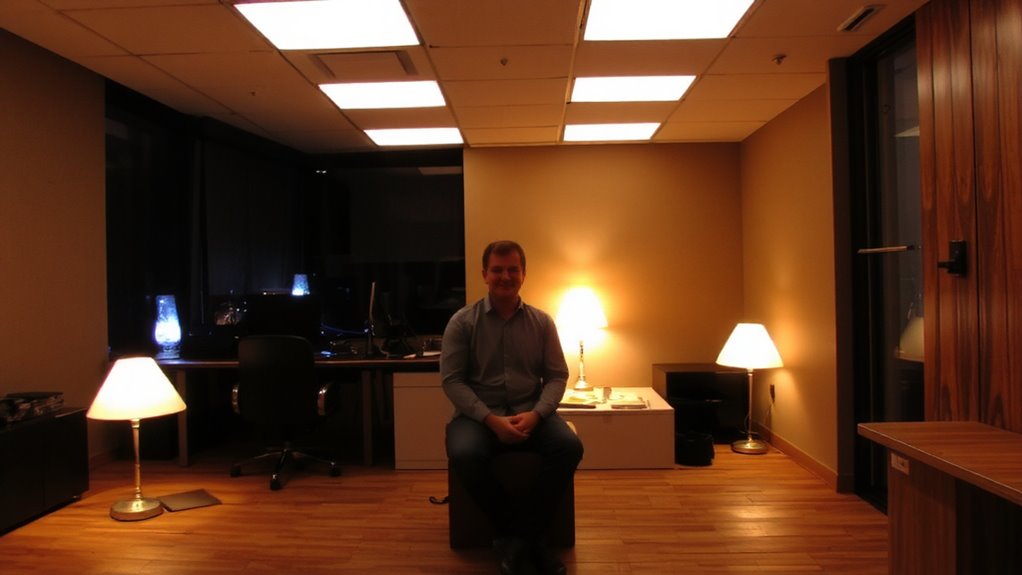
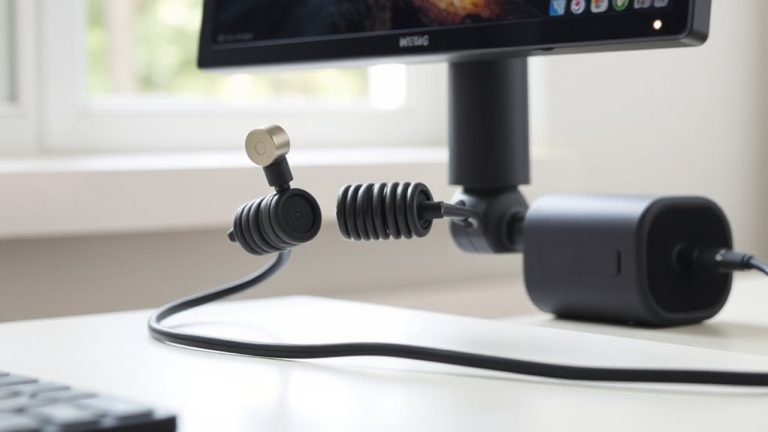
How often do you feel your focus fading mid-afternoon, even with enough coffee? Bright, cool-toned lighting (5000K–6500K) can help sustain mental energy by boosting alertness and supporting visual clarity. Studies show this range mimics daylight, aiding concentration and enabling mood enhancement over time. But it’s not just about color temperature-consistent illumination matters. Uneven lighting causes eye strain, so aim for 300–500 lux on your work surface. Desk lamps with diffusers or ceiling fixtures with glare shields reduce harsh contrasts. Full-spectrum bulbs, while effective, cost more and may not suit everyone-some find them too intense, especially in small, reflective spaces. Quality fixtures with flicker-free drivers and a CRI above 90 improve readability and comfort. Check warranty length and dimming compatibility. Results vary; test different setups over a week to see what actually works for you. Pairing optimal lighting with an ergonomically adjusted monitor stand height can further reduce physical strain and improve focus.
Optimize Natural Light for Circadian Health
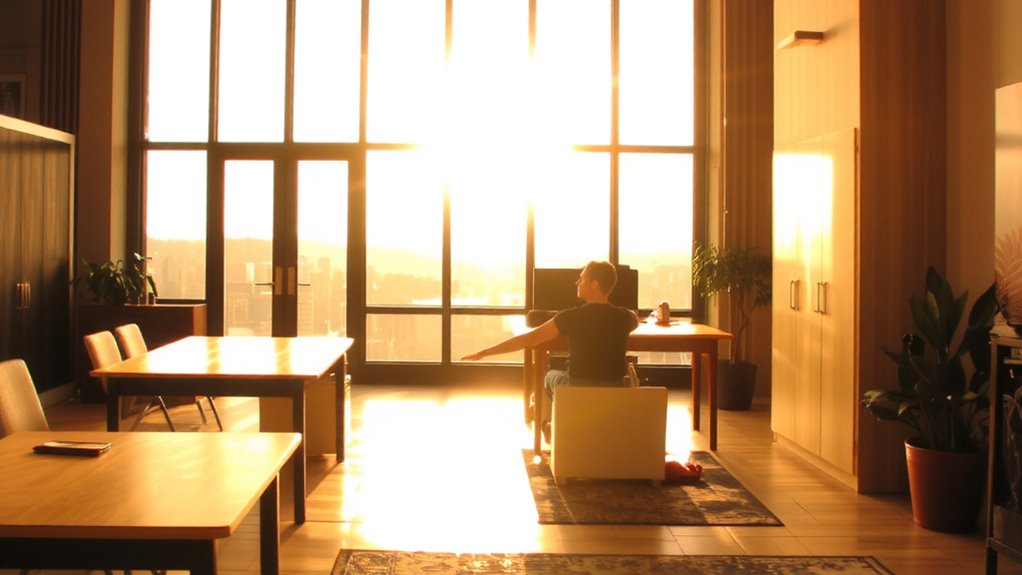
While you can’t always control your building’s layout, prioritizing access to natural light during the day helps regulate your circadian rhythm, boosting daytime alertness and improving sleep quality at night. Strategic window placement maximizes daylight exposure, especially near core working hours. South-facing windows typically offer consistent illumination, while east or west setups may cause glare or uneven light. You’ll benefit most from unobstructed views to the sky, not just the ground-think higher floors or open perimeters. Workstations within 20–30 feet of windows receive meaningful daylight, but actual exposure varies by glazing, blinds, and interior reflectivity. Even with ideal conditions, overcast days or short winter hours limit gains. You can supplement with automated dimming or light-level sensors, but they’re no full substitute. Prioritize seating near windows when possible, but stay ready to adapt with task lighting when daylight dips.
Pick the Right Color Temperature for Focus and Calm
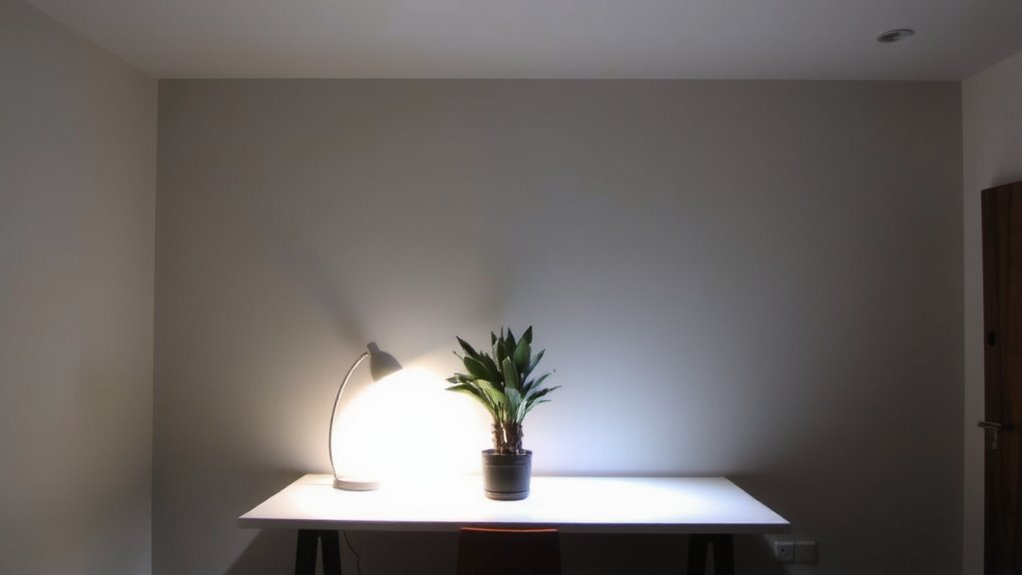
Why does the light in your workspace feel either too harsh or too sleepy? It’s likely the color temperature. For focus and calm, aim between 3500K and 5000K-warm lighting at the lower end for comfort, a cool ambiance at the higher end for alertness.
| Temperature | Effect |
|---|---|
| 3000K | Warm lighting, soothing but may dull focus |
| 4000K | Balanced, supports concentration |
| 5000K+ | Cool ambiance, energizing but can strain mood |
You’ll stay sharper with 4000K, but don’t go too cool-over 5000K risks mental fatigue. Switchable LED bulbs let you adapt, though lifespan varies by brand. Some lose color accuracy after 12,000 hours. Test before committing.
Cut Glare to Ease Eye Strain
If you’re squinting at your screen or noticing headaches by midday, glare is likely the culprit-and tackling it starts with controlling direct and reflected light. You can reduce reflections by positioning lights 30–50 degrees off your screen’s plane and using indirect fixtures that bounce light off ceilings or walls. Matte finishes on desks and monitors also help diffuse harsh highlights. To enhance contrast, avoid overhead lighting that floods the workspace; instead, use adjustable task lamps with diffusers to create balanced illumination. While glare control boosts comfort, over-dimming can strain your eyes in another way, so aim for 300–500 lux on work surfaces. Some LED panels boast anti-glare ratings (UGR <19), but real-world results depend on room layout. Test setups over a week, and remember-no lighting fix compensates for poor screen positioning near windows. For content creators, choosing the right lamp matters-consider a best desk lamp for content creators that combines adjustability, color accuracy, and diffused lighting to support both productivity and eye comfort.
Adjust Lighting for Task Type and Time of Day
You’ve controlled glare, but lighting that supports sustained focus needs more than just reduced reflections-it demands alignment with what you’re doing and when you’re doing it. Task specific lighting helps you match intensity and color temperature to your work, while time based adjustments support your body’s natural rhythms. Use brighter, cooler light (5000K) for detailed tasks like coding or reading, and warmer, dimmer light (2700K–3000K) for brainstorming or winding down.
| Time of Day | Recommended Setting |
|---|---|
| Morning | 5000K, 500+ lux |
| Midday | 5000K, 750+ lux |
| Afternoon | 4000K, 500 lux |
| Evening | 3000K, 300 lux |
| Pre-sleep | 2700K, <200 lux |
Many adjustable LED fixtures offer these settings, but verify dimming range and color accuracy. Some budget models flicker or shift tint, so check warranties and lab-tested reviews before buying. A well-designed LED desk lamp can make it easier to implement these lighting strategies effectively.
Beat Mental Fog With Dynamic Light
How do you stay sharp when your afternoon focus starts to slip? Dynamic lighting can help-specifically systems that shift color temperature and intensity throughout the day. In the early afternoon, when mental fog rolls in, cooler light (around 5000K) mimics midday sun, boosting alertness. These systems often use biophilic lighting principles, syncing with natural circadian rhythms to sustain energy without jitters. Some setups even employ ambient storytelling-gradual shifts that simulate sunrise or a forest canopy changing with time-to support focus subtly. Real-world tests show productivity improvements, but only if brightness stays under 750 lux to avoid glare. Many units offer app control and dimming, though reliability varies; look for brands with 3-year warranties and flicker-free certifications. Installation isn’t always plug-and-play-check compatibility with ceiling types and existing switches. While effective, dynamic systems cost more upfront, and benefits depend heavily on consistent use.
Create Lighting Zones for Psychological Comfort
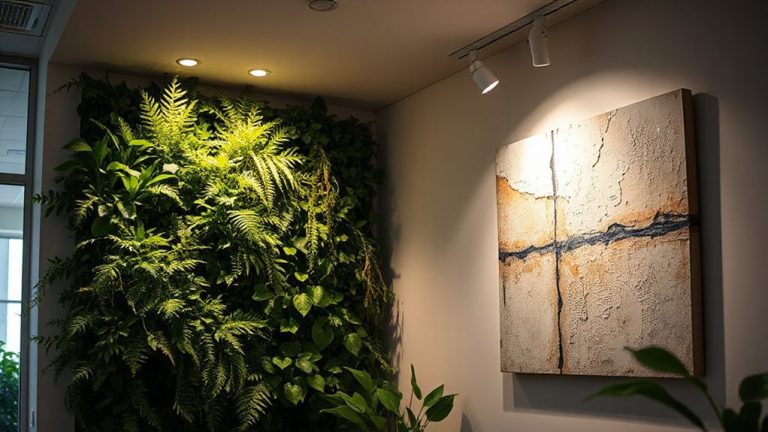
Lighting zones can substantially boost your psychological comfort at work by giving different areas of a space distinct lighting roles, much like how dynamic light supports alertness but with a focus on spatial function and emotional ease. You can use light placement to create mood zones-bright, cool lighting at desks for focus, and softer, warmer light in break areas to encourage relaxation. This helps your brain shift between task modes and rest, reducing strain over long hours. Track lighting, adjustable floor lamps, or ceiling-mounted task lights let you define these zones effectively. Just keep glare and shadows in check-position lights carefully and use diffusers. While layered setups improve comfort, they can get costly and need careful planning. Not all smart bulbs or fixtures deliver consistent color temps, so check CRI (aim for 90+) and dimming range before buying.
On a final note
You should upgrade your lighting to support focus and well-being during long hours, but choose carefully. Full-spectrum LED panels with 4000K color temperature boost alertness without overstimulating. Look for flicker-free models tested for eye comfort-brands like BenQ and Philips have 3-year warranties and low blue-light emission. However, even top lights won’t fix poor sleep or sedentary habits. Pair dynamic lighting with breaks and natural light exposure for best results.