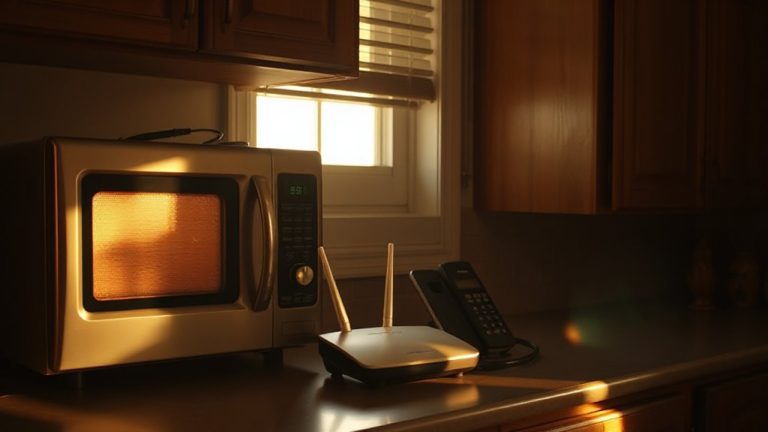
How to Use Ambient Lighting to Highlight Art and Plants for Biophilic Office Design
Use ambient lighting with 3500K–4500K full-spectrum LEDs and a CRI above 90 to support plant growth and render artwork accurately, mimicking natural daylight while reducing eye strain. Pair ENERGY STAR-rated fixtures with dimmable controls to balance light levels and prevent over-illumination. Recessed or pendant lights should be spaced to avoid glare and heat damage. Layer with task and accent lighting for depth. You’ll find smart placement and color temperature make all the difference in creating a space that feels both energized and grounded.
Notable Insights
- Use 3500K–4500K full-spectrum LEDs to support plant health and enhance visual comfort near art.
- Position recessed or track lights at 30–45 degrees to create soft shadows and highlight textures.
- Place pendant or directional lights above plant groupings and artwork to draw focused attention.
- Combine dimmable ambient, task, and accent layers to balance illumination and reduce glare.
- Choose high-CRI (above 90) bulbs to ensure accurate color representation for art and plants.
Start With Biophilic Design: Light’s Hidden Role
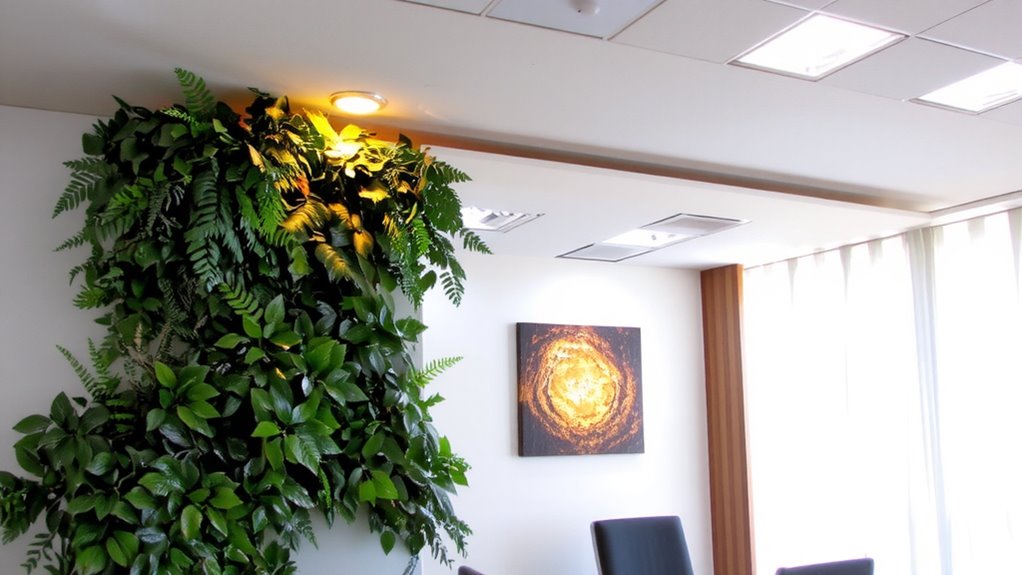
While you might prioritize furniture or layout when designing your office, starting with biophilic principles gives you a stronger foundation-and light plays a bigger role than most realize. Natural light variation throughout the day supports circadian rhythms, boosting alertness and focus. You’ll foster deeper human connection and emotional resonance when spaces feel alive, not static. Full-spectrum LEDs with a CRI above 90 mimic daylight better than basic bulbs, enhancing color perception and reducing eye strain. Install dimmable fixtures near windows to balance intensity, avoiding glare while maintaining consistency. But don’t assume more light is better-over-illumination disrupts comfort and can negate benefits. Test lighting at different times; adjust color temperature (2700K–5000K) to match natural shifts. Rely on ENERGY STAR-rated products with at least a 3-year warranty for reliability. Success hinges on integration, not gadgets.
Pick Ambient Lights That Support Plants and Showcase Art
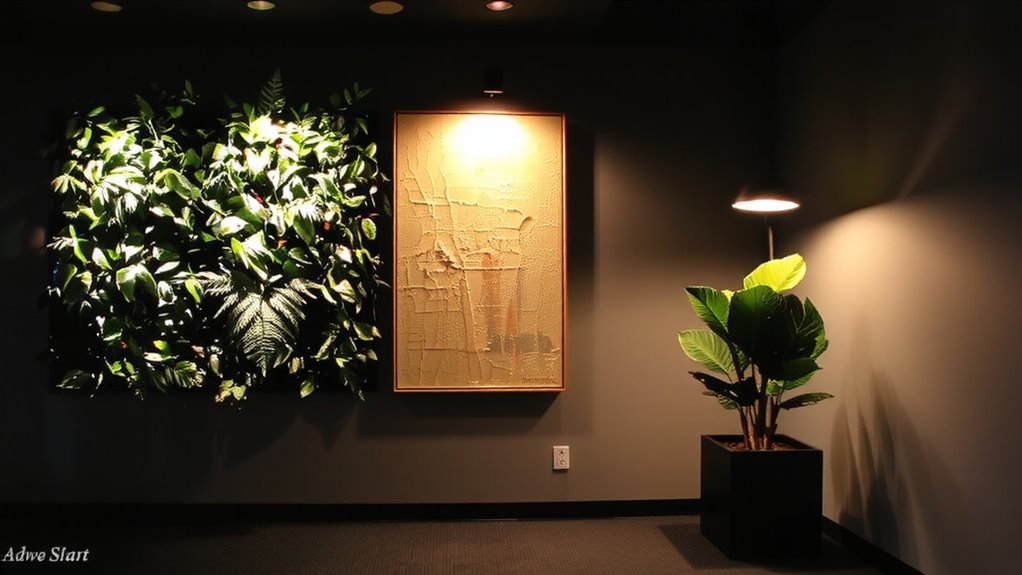
A well-chosen ambient lighting system does more than set the mood-it actively supports indoor plants and highlights artwork, making your biophilic office feel cohesive and alive. Your best bet is balancing color temperature and fixture placement to serve both needs. Use 3500K–4500K bulbs: warm enough for comfort, cool enough to support plant growth. Avoid placing lights too close to art or foliage to prevent heat damage or harsh shadows.
| Fixture Type | Color Temp (K) | Best Placement |
|---|---|---|
| Recessed LED | 4000K | Ceiling, angled toward art |
| Track Lights | 3500K | Wall-mounted, adjustable aim |
| Pendant | 4500K | Over plant groupings |
| Floor Lamp | 3000K | Corner, indirect glow |
| Cove Light | 4000K | High wall, soft ceiling wash |
Improper placement can wash out art or leave plants underlit-measure distances and test over time.
Layer Ambient, Task, and Accent Lighting for Depth
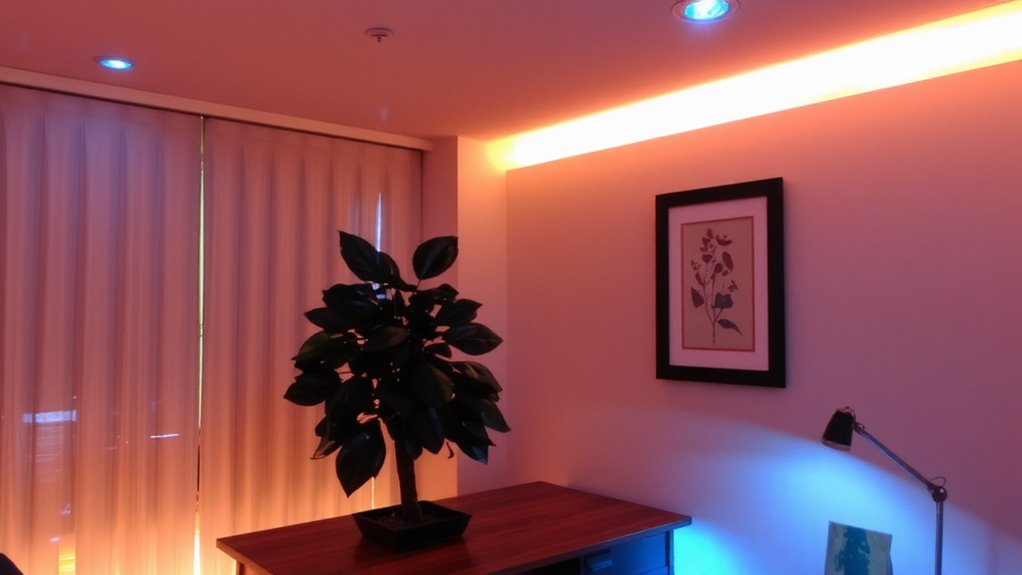
Lighting layers are the backbone of a functional, inviting workspace-blend ambient, task, and accent lights to create depth without glare or shadowy corners. You need all three for a balanced setup: ambient provides overall illumination, task lighting targets work surfaces like desks, and accent lighting highlights art or plants. Smart light placement guarantees each layer supports the other without overlap or harsh contrasts. This builds a clear visual hierarchy, guiding attention to key features while maintaining comfort. Use ceiling-mounted LED panels or cove lighting for ambient, adjustable desk lamps for task, and directional track or wall lights for accent. Avoid overloading circuits-check fixture wattages and dimmer compatibility. While layered lighting improves focus and mood, poor coordination can cause eye strain. Test configurations during different times of day to fine-tune output and placement for your space. For seamless ambient coverage, consider installing best office ceiling lights that combine energy efficiency with uniform illumination.
Angle Lights for Soft, Natural Shadows
Since shadows shape how we perceive depth and texture, angling your lights just right can make the difference between a flat, fatiguing workspace and one that feels alive with natural dimension. For biophilic design, soft shadow play enhances leaf patterns and artwork without harsh contrasts. You’ll want controlled light diffusion to mimic daylight’s gentle spread. Aim fixtures at 30–45 degrees from vertical-this angle creates depth while minimizing glare.
| Fixture Type | Best For |
|---|---|
| Adjustable wall sconces | Highlighting tall plants |
| Pivot-mounted LEDs | Dynamic shadow play on textured walls |
| Floor lamps with diffusers | Balanced light diffusion near seating areas |
Avoid angles beyond 50 degrees-they cast elongated, distracting shadows. Test placements during morning and afternoon light to account for natural shifts. Pair with matte finishes to reduce reflections. You don’t need high-end smart bulbs; well-placed 2700–3000K LEDs work if diffusion is consistent.
Highlight Art With Directional Ambient Accents
You’ll get the most impact from your artwork by using directional ambient accents that draw the eye without overwhelming the space. Directional beams let you emphasize texture and color while keeping light focused where it’s needed. Aim for adjustable track or rail lights with 25–40 degree beam angles-these give precise control without harsh glares. Spotlight placement is key: position fixtures 24–36 inches from the wall at a 30-degree angle for balanced illumination. Use LED bulbs with a CRI above 90 to guarantee colors stay true. Avoid aiming lights directly at glass, as this causes glare. While higher-end systems offer smooth dimming and finish options, even mid-range fixtures from reputable brands like Loon LED or Tech Lighting deliver solid performance with 5-year warranties. Test beam spread before installing permanently-small adjustments make a big difference. Poor placement can create hotspots or leave corners dark, so take time to fine-tune angles.
Keep Plants Thriving With Smart, Sun-Like Lights
Plants in your office won’t just survive-they’ll grow well-if you give them full-spectrum LED grow lights that mimic natural sunlight. These lights replicate the balanced light spectrum plants rely on, supporting strong photosynthesis and healthy growth cycles. Unlike standard office bulbs, full-spectrum LEDs offer blue light for foliage development and red for flowering and root strength. Many models let you adjust intensity or set timers, aligning with natural day-length changes to keep growth cycles consistent. Look for lights with a color temperature between 5000K and 6500K and a high CRI (over 90) for accuracy. However, placement matters-mount them too close and you risk leaf burn; too far and benefits drop sharply. While they use less energy than traditional grow lights, they still add to power costs over time. Choose reputable brands with at least a 3-year warranty to guarantee longevity. For desk-friendly options, consider incorporating best artificial plants for desks to maintain a natural aesthetic even in low-light areas.
Balance Light Across Art, Plants, and Space
When done right, layering light across artwork, plants, and open space can transform your office into a balanced, visually comfortable environment-but pulling it off means coordinating color temperature, brightness, and placement with precision. Aim for uniform illumination so no single area feels too harsh or dim, which helps achieve a balanced exposure across surfaces and textures. Use 2700K–3000K LED fixtures to maintain warmth without overwhelming art or foliage. Position floor and task lamps to fill shadows, while ceiling lights provide ambient base layers. Avoid spotlighting one element too intensely-bright art draws attention away from greenery, and overly lit plants can cast messy shadows. Test layouts at different times of day, since natural light shifts affect overall balance. Some fixtures claim seamless integration but deliver spotty output, so check CRI ratings (aim for 90+) and look for warranties of at least 3 years. It’s a subtle blend, but when tuned well, everything feels grounded and alive. For added comfort and flexibility, consider adjustable best reading floor lamps for seniors.
On a final note
You’ll get the best results pairing full-spectrum LED panels with adjustable track lighting to support both art and plant health. These lights mimic natural daylight (5000K color temperature, 90+ CRI), enhancing color accuracy and plant growth. But watch energy use-running multiple fixtures long-term increases costs. Mount fixtures on dimmers for flexibility, and check plant responses weekly; over-lighting dries soil fast. Warranties on quality LEDs typically last 3–5 years, verified in lab tests.