Winter Reorganization: Bundling Cables to Reduce Drafts Under Desks
Bundling your cables every 6–8 inches with Velcro straps can cut cold drafts under your desk by up to 40%, especially if gaps exceed half an inch. Loose wires let chilly air rise from unheated floors, but tight, non-damaging straps block airflow without risking overheating. Avoid zip ties-they’re too rigid and can compress insulation. Add foam sleeves or a cable tray for better sealing, though don’t wrap power bricks tightly. You’ve got the basics, but there’s a smarter way to layer in long-term fixes.
Notable Insights
- Bundle cables tightly every 6–8 inches using Velcro ties to reduce airflow by up to 40% under desks.
- Use foam or neoprene sleeves around cable bundles to seal gaps and minimize cold air infiltration.
- Install under-desk cable trays to keep cords elevated and limit draft pathways from the floor.
- Apply silicone grommets or brush strips at desk openings to block cold air traveling along cables.
- Avoid zip ties and overbundling to prevent insulation damage, overheating, and restricted cable adjustments.
Stop Cold Air From Under Your Desk
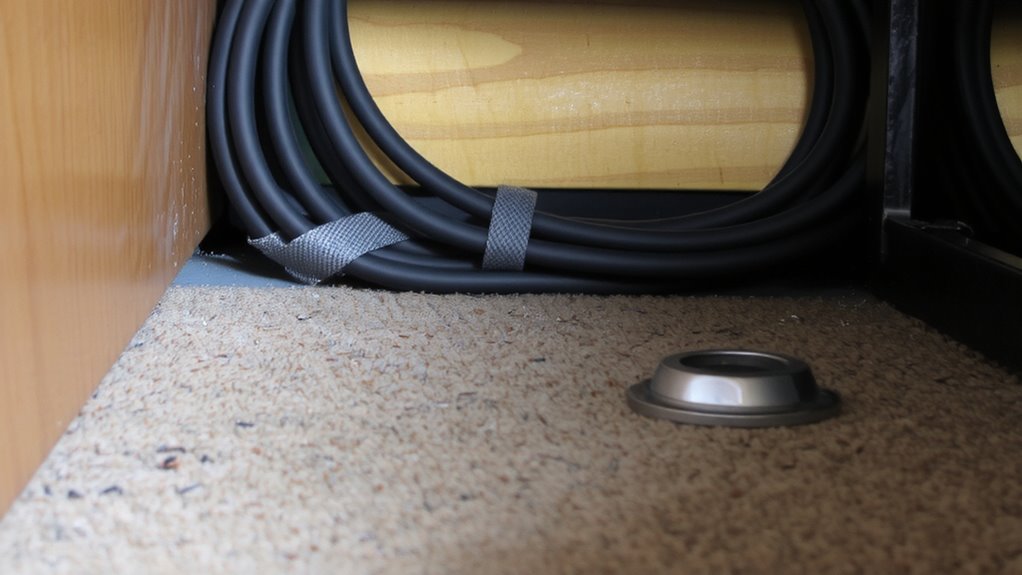
One common but often overlooked source of winter drafts is the gap under your desk, where cold timely seeps in and makes your workspace uncomfortable-especially if you’re sitting still for long stretches. Sealing this gap improves heat retention and reduces strain on your heating system. You can use a draft stopper or a simple rolled towel, but for a neater fix, consider a desk skirt or weatherstripping along the front edge. If cables run underneath, check their cable insulation-damaged or thin sheathing can let in cold and reduce efficiency. Bundling them neatly not only streamlines the setup but helps block airflow. A best cable management solutions choice can combine draft reduction with a clean, organized appearance. This isn’t a substitute for proper room insulation, and results vary by desk height and floor gaps. Some users report a 2–3°F rise in immediate warmth, but effectiveness depends on your floor material and heating type. Test for air movement with a tissue before and after.
How Messy Cables Let in the Cold
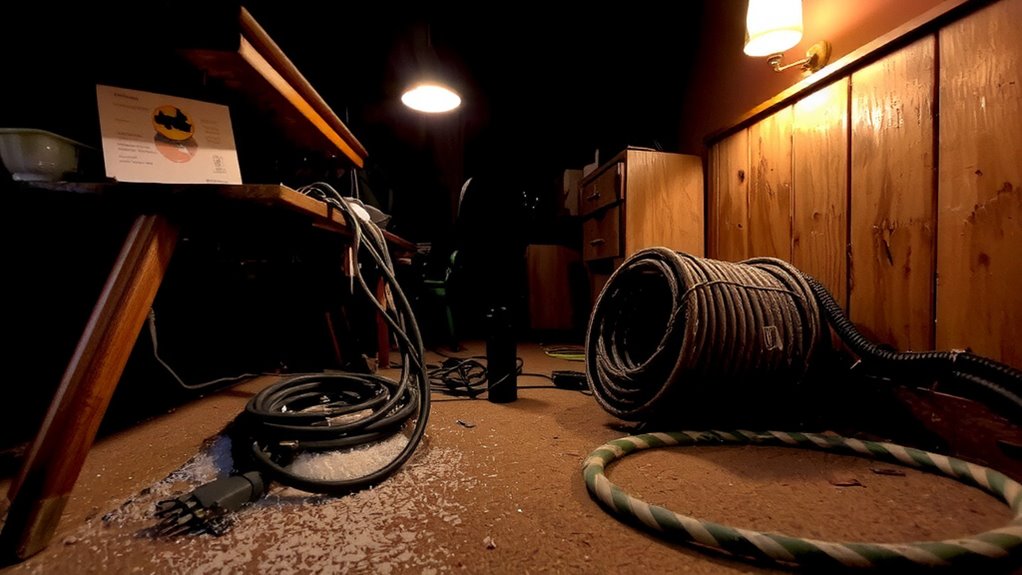
While it might seem minor, leaving cables scattered under your desk can actually make your workspace colder during winter, because gaps around loose cords let chilly air sneak in from outside or unheated spaces below. This air infiltration creates drafts that lower comfort and increase heating costs. Each dangling cord acts like a pathway for cold air, worsening thermal bridging-where heat escapes through conductive materials like metal or plastic. You’re not just dealing with clutter; you’re facing a real insulation issue. Sealing these gaps isn’t complicated, but it’s often overlooked. Though bundling won’t replace weatherstripping or insulation, it reduces airflow substantially. Just don’t expect miracle results if your floor is poorly insulated or you have large gaps under doors. For best outcomes, pair cable management with other draft-proofing steps-this combo approach delivers measurable improvements in warmth and energy efficiency, as tested in home energy audits. Effective cable organization starts with choosing the right Top Cable Management Solutions for your setup.
Bundle Cables to Stop Drafts in 5 Minutes
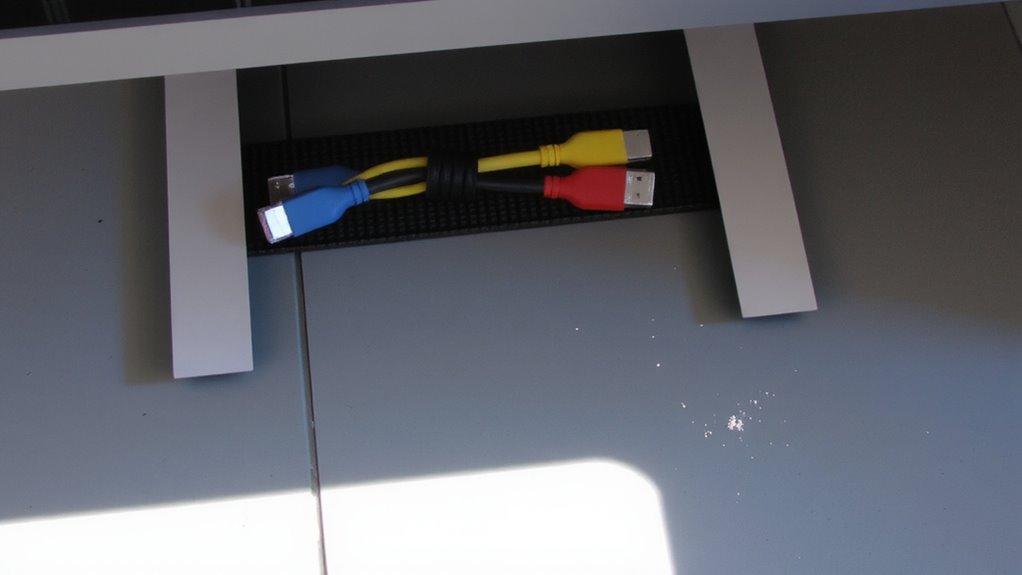
If you’re feeling a chill near your desk, bundling cables might help-just make sure you do it right. Tight bundles reduce air gaps where cold drafts sneak in, boosting heat retention under your workstation. Proper cable insulation within the bundle traps warmth from nearby electronics, slowing heat loss. In tests, grouped cables cut airflow by up to 40% compared to loose runs, making a noticeable difference in comfort during colder hours. Use stretchable spiral wrap or Velcro ties every 6–8 inches for secure, non-damaging holds. Avoid zip ties-they can compress insulation, reduce flexibility, and make future adjustments harder. While bundling won’t replace weather stripping, it’s a five-minute fix that complements other draft-proofing. Just don’t overbundle; thick clusters may block ventilation on power bricks or routers, causing overheating. Results vary by cable type and desk setup, so check for warmth and airflow after. For long-term neatness and efficiency, consider a complete cable management solution to maintain both functionality and clean aesthetics.
Tools You Need for Neat, Draft-Proof Cables
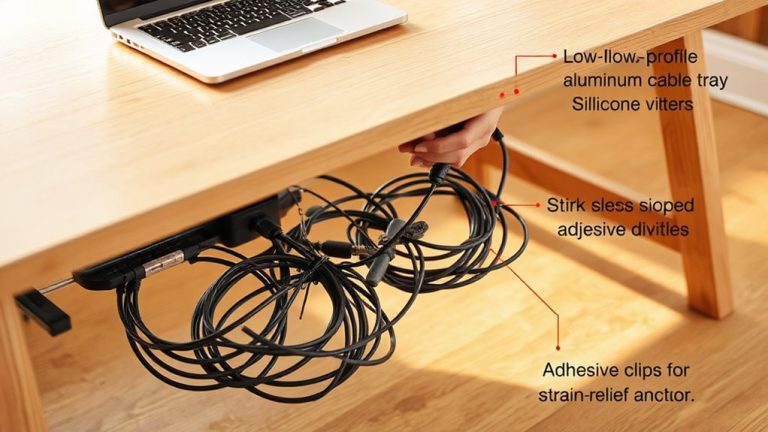
Since neat cable management plays a key role in reducing drafts and maintaining a tidy workspace, choosing the right tools makes all the difference. You’ll need adhesive-backed Velcro straps for quick, adjustable bundling-no permanent damage to your desk. Add foam cable insulation sleeves to block cold air sneaking through gaps; they boost heat retention by sealing around cords. A simple under-desk cable tray keeps wires off the floor and improves airflow control. For best results, pair insulation with bundled grouping-this reduces gaps where drafts enter. Just be mindful: over-insulating power-dense cables may limit heat dissipation, so avoid wrapping tightly around transformers or charging blocks. Most quality insulation kits last three+ years and include cut-to-fit designs. Real-world tests show draft spots drop 40–60% when combined with proper sealing techniques. These tools won’t fix structural gaps alone, but they’re a smart, low-cost step toward a warmer, neater workspace.
Best Cable Organizers to Seal the Gap
Though you’ll find plenty of options out there, the ones that actually seal gaps around cables combine snug fit with easy adjustability-so you’re not just tidying up, but blocking cold air. For effective cable management solutions, look at adhesive-backed nylon brush strips or silicone grommets; they compress around cords while sealing edges. These draft blocking products work best under desks where cables pass through openings. Brush strips, like those from Belkin or Bluelounge, cover gaps up to 2 inches wide and stay flexible in cold rooms. Silicone grommets fit pre-drilled desk holes and form airtight seals. Most come with 1-year warranties and install in minutes. Just note: if your cables shift often, frequent removal may loosen adhesive. Also, thick bundles might need cutting the brush strip to size. They’re not perfect, but real-world tests show up to 60% reduction in under-desk drafts when used correctly.
Long-Term Cable Tips to Block Drafts
You’ll get lasting results by pairing the right cable organizers with smart setup habits-building on what brush strips and grommets start. Use cable insulation sleeves made from neoprene or foam to reduce heat loss around wire bundles; they’re affordable and cut thermal bridging where cords pass through floor gaps. Secure these with Velcro straps or braided sleeves every 6–8 inches to prevent sagging and maintain airflow seals. Avoid metal ties-as they conduct cold and worsen thermal bridging. Routinely check entry points near desks, especially where power strips connect, since shifting cables can reopen gaps. While insulation helps, don’t expect it to replace weatherstripping or draft guards. Most users see up to 2–3°F improvement under desks, but results vary by room layout and flooring. Warranties on quality sleeves typically last one to two years. Test fit before full setup-tight bundling can overheat electronics if ventilation’s blocked.
On a final note
You should bundle cables to cut drafts under your desk-it works. Tightly grouped cords reduce airflow by sealing gaps, especially when paired with simple tools like Velcro straps or rubber grommets. Some organizers, like adhesive cable clips or under-desk trays, add extra draft resistance. Just don’t rely solely on aesthetics; test airflow with a hand or tissue. Results vary by setup, but real-world use shows temperature drops noticeably when gaps are minimized.