Identifying and Reducing Electrical Outlet Noise Transmission in Home Office Walls
Turn off power and seal outlet gaps with acoustic caulk to cut mid-to-high-frequency noise transmission in home office walls. Add foam gaskets or 1–2 lb/ft² mass-loaded vinyl for better blocking, ensuring tight seals to stop flanking. These fixes help, but won’t stop dangerous hum from loose wiring-always consult an electrician if buzzing persists. Combining methods can reduce sound transfer by up to 5 dB, though installation takes care. Smart solutions yield real results, but safety and correct diagnosis come first.
Notable Insights
- Electrical outlet buzzing may indicate arcing or loose wiring, posing fire risks that require immediate circuit shutdown and professional inspection.
- Visible light gaps around outlet boxes can reveal sound leaks, which compromise acoustic privacy and contribute to noise transmission in home offices.
- Power off the circuit before removing faceplates to safely test for sound leaks by listening for noise from adjacent rooms.
- Seal outlet gaps with flexible acoustic caulk to block mid-to-high frequency sounds like speech, improving sound isolation between rooms.
- Combine foam gaskets and mass-loaded vinyl with caulked seals to significantly reduce noise transmission, though proper installation is essential for effectiveness.
Why Is My Outlet Buzzing or Humming?
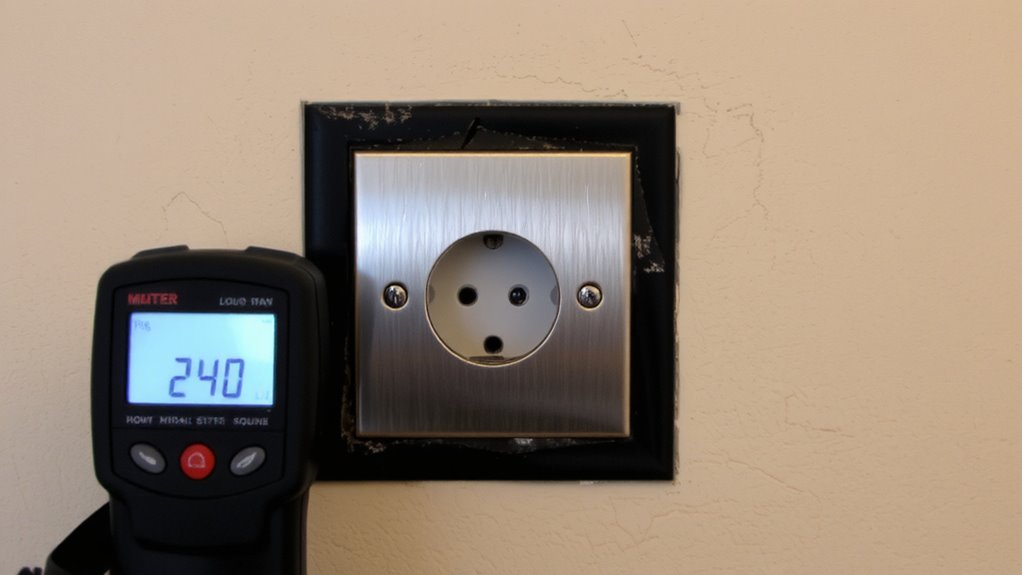
What’s that buzzing or humming coming from your outlet? It’s likely due to electrical arcing or loose wiring-both serious issues. Electrical arcing occurs when current jumps between conductors, often from worn contacts or damaged wires, generating heat and noise. Loose wiring in outlet terminals or switches can vibrate at 60 Hz, creating a hum you’ll notice in quiet home office environments. While minor buzzing in older dimmer switches may be normal, persistent or new sounds demand attention. Ignoring them raises fire risk. You should turn off the circuit and inspect connections, tightening any loose wires. But if you’re unsure, hire a licensed electrician-safety isn’t worth risking. Some modern outlets offer tighter grip terminals or tamper-resistant models, but no product compensates for poor installation. Retrofit boxes or sound-dampened outlets won’t fix underlying faults. Always prioritize safety over DIY convenience.
Test for Sound Leaks at Electrical Outlets
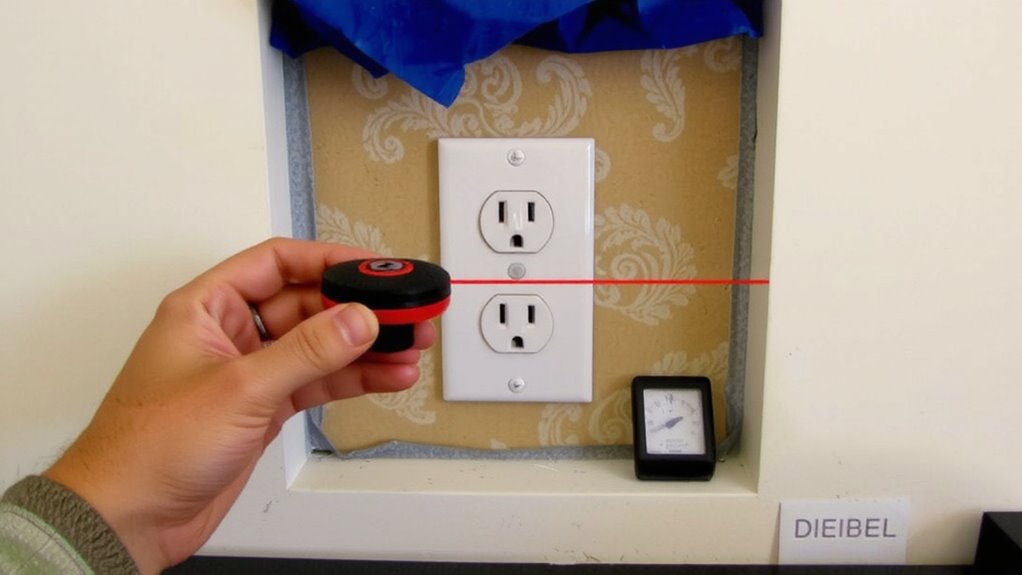
Ever wonder why sound seems to seep through your walls right at the outlets? That’s often a sign of poor sound insulation or unnoticed outlet vibration acting as a conduit for noise. To test, turn off the power and remove the faceplate. Hold a flashlight behind the outlet box-if you see light gaps into the wall cavity, sound leaks are likely. Another method: have someone speak or play audio in an adjacent room while you listen closely at the outlet; any clarity indicates insufficient isolation. These gaps compromise privacy and acoustic control, especially in home offices. While basic insulation helps, standard setups rarely block mid-to-high frequency transmission. Note that outlet vibration from nearby speakers or transformers can worsen noise transfer. Testing is quick and reveals where upgrades matter most-just don’t confuse buzzing (electrical) with noise leakage (acoustic). Addressing both guarantees better performance without overpromising results.
Seal Gaps Around Outlets With Acoustic Caulk
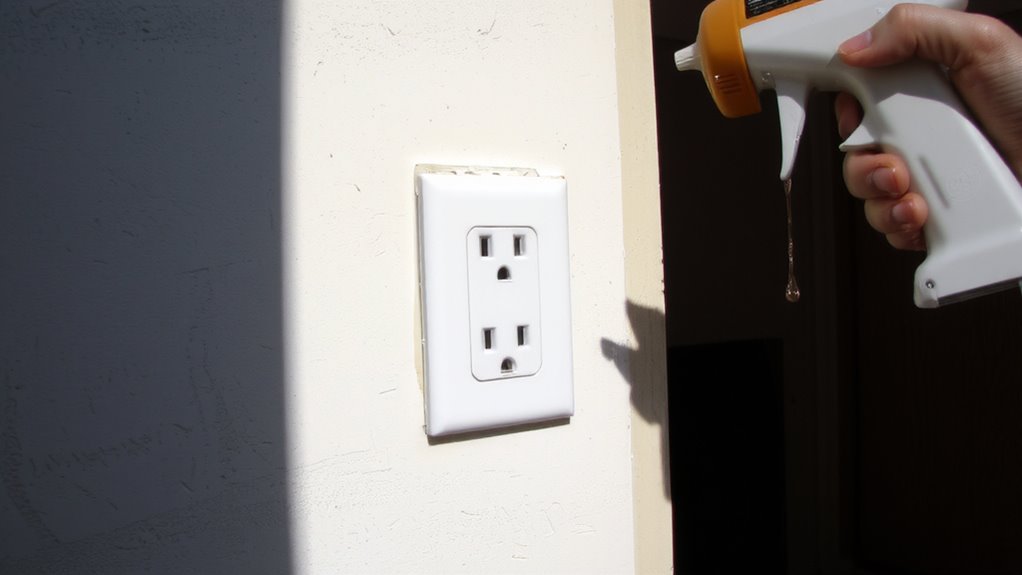
While you might not expect much soundproofing from a standard electrical outlet, sealing the gaps around it with acoustic caulk can make a measurable difference in reducing airborne noise transmission-especially for mid-to-high frequencies like speech and office equipment hum. This simple step improves sound insulation by closing the wall penetration that allows noise to leak through. Acoustic caulk stays flexible, bonds well to drywall and electrical boxes, and doesn’t shrink over time, making it more effective than standard sealants. You’ll need to cut the power, remove the faceplate, and apply the caulk evenly around the edges before reattaching the plate. It’s low-cost and non-invasive, but it won’t stop low-frequency sounds. Results vary based on wall construction, yet real-world tests show up to 5 dB reduction in sound transmission when installed correctly.
Block Noise With Foam Gaskets and Mass-Loaded Vinyl
Adding foam gaskets behind outlet covers and installing mass-loaded vinyl (MLV) around electrical boxes gives you a stronger defense against noise than caulk alone. These materials boost sound dampening by sealing air gaps and adding mass where walls are weakest. Foam gaskets compress easily, creating an airtight seal that also aids in vibration isolation. MLV, typically 1 or 2 pounds per square foot, blocks sound transmission through the wall cavity-especially effective against mid- to high-frequency noise. For best results, attach MLV snugly around the electrical box before closing the wall. You’ll need acoustic sealant to bond the MLV edges, preventing flanking paths. While both upgrades improve performance, they add complexity: MLV is heavy and messy to cut, and overuse can complicate future electrical work. Used wisely, they deliver measurable noise reduction without replacing drywall.
Silence Noisy Devices Near Electrical Outlets
Noise from power adapters, plug-in hubs, or dimmer switches near electrical outlets can be more than a nuisance-they’re productivity killers. You can reduce it with smart device placement and clean cable management. Keep humming devices like AC adapters away from your desk ear level and group them neatly to avoid clutter-induced noise amplification. Use cord channels or braided sleeves to secure wires-this minimizes vibration transfer that worsens sound.
| What You Experience | How It Feels |
|---|---|
| Constant low buzz | Distracting, draining |
| Intermittent clicks | Jarring, focus-breaking |
| Silence after fix | Calm, in control |
Mount devices on anti-vibration pads and avoid daisy-chaining power strips. While some noise is inherent in cheap transformers, thoughtful layout helps-even high-end gear performs better when organized. Just don’t expect total silence from budget electronics.
Call an Electrician If Outlet Noise Persists
If you’ve cleaned up your setup, swapped out buzzing adapters, and still hear sounds coming from the outlet itself-like a persistent hum, sizzle, or erratic popping-it’s time to call a licensed electrician. Don’t risk electrical safety by ignoring internal wall noise. What you’re hearing could signal loose connections, damaged wiring, or overloaded circuits-issues a DIY fix won’t safely resolve. A professional wiring inspection can pinpoint dangers like arcing or worn insulation before they lead to fires or equipment damage. Electricians use calibrated tools to test voltage, grounding, and load balance, ensuring your home office meets modern demands. While the service has a cost, it’s a necessary investment for long-term safety and performance. Still, not every sound needs panic-some transformer hum is normal. But consistent outlet-originating noise isn’t one of them. Trust verified expertise over guesswork.
On a final note
You’ll likely reduce outlet noise by sealing gaps with acoustic caulk and adding foam gaskets behind plates-tested solutions that block sound leaks effectively. For louder hums, mass-loaded vinyl on walls helps, but installation is labor-intensive. Keep devices like power strips away from outlets to prevent vibration noise. If buzzing continues, faulty wiring could be the cause, so call a licensed electrician. These fixes offer real improvement, but results vary by wall construction and noise source.