Choosing Between Nylon Zip Ties and Hook-and-Loop Straps for Home Office Cables
You should pick hook-and-loop straps for your home office cables-they’re reusable, adjustable, and prevent damage when reorganizing. Unlike nylon zip ties (which lock once and can crush wires), straps handle frequent changes safely. They cost more upfront-around $0.50 to $1.00 each-but save money and waste over time. While nylon ties are stronger (up to 50 lbs), straps hold up well with 10–20 lb loads. Just avoid high-tension spots where constant pulling may loosen them. There’s more to think about if your setup changes often.
Notable Insights
- Hook-and-loop straps are ideal for home offices needing frequent reconfiguration due to their reusable and adjustable design.
- Nylon zip ties offer superior strength for heavy, permanent cable runs but can damage wires if overtightened.
- Reusable hook-and-loop straps reduce plastic waste, making them a more sustainable choice over time.
- Zip ties are cheaper upfront but require cutting for removal, limiting flexibility in evolving home office setups.
- For a clean, professional look with easy access, combine hook-and-loop straps with adhesive clips for optimal cable management.
Why Cable Management Matters in Your Home Office
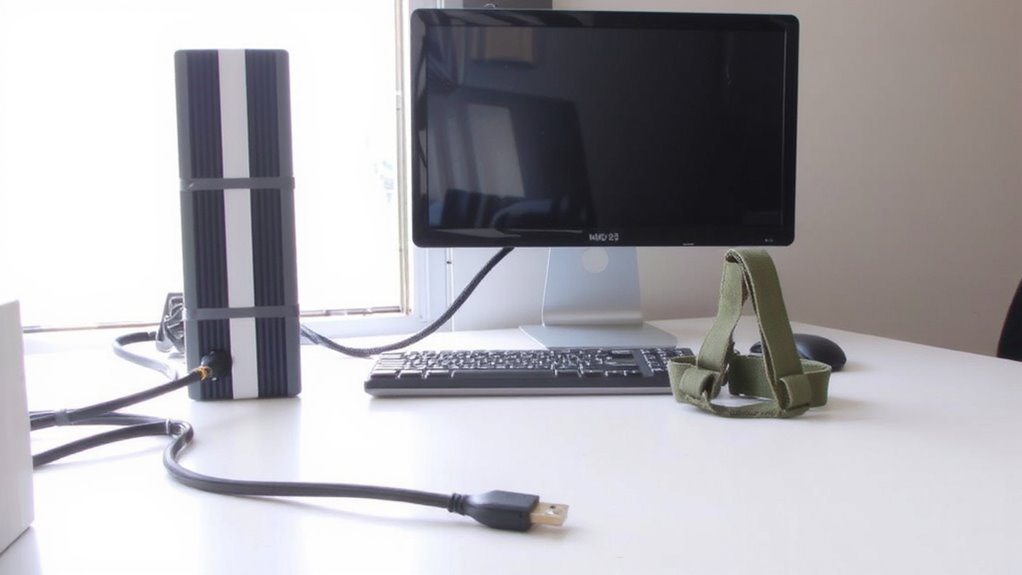
A cluttered desk isn’t just an eyesore-it’s a productivity drain. You lose time searching for the right cord, and tangled cables can lead to frustration during video calls or while switching devices. Proper cable management boosts both efficiency and cable safety-untangled cords are less likely to fray, overheat, or become tripping hazards. It also dramatically improves workspace aesthetics, giving your home office a clean, professional look that helps you focus and impresses on camera. Securing cables neatly reduces wear from constant tugs or pulls, extending their lifespan. While it might seem minor, organized cabling prevents accidental unplugs and eases upgrades. However, over-managing-like binding cables too tightly-can make maintenance harder. Aim for a balanced system that keeps cords secure but accessible. Good cable management isn’t about perfection-it’s about creating a safer, sharper, and more functional setup tailored to your daily workflow. For those seeking effective solutions, exploring top-rated cable management solutions for desks can help streamline the process.
Nylon Zip Ties: Secure but Permanent
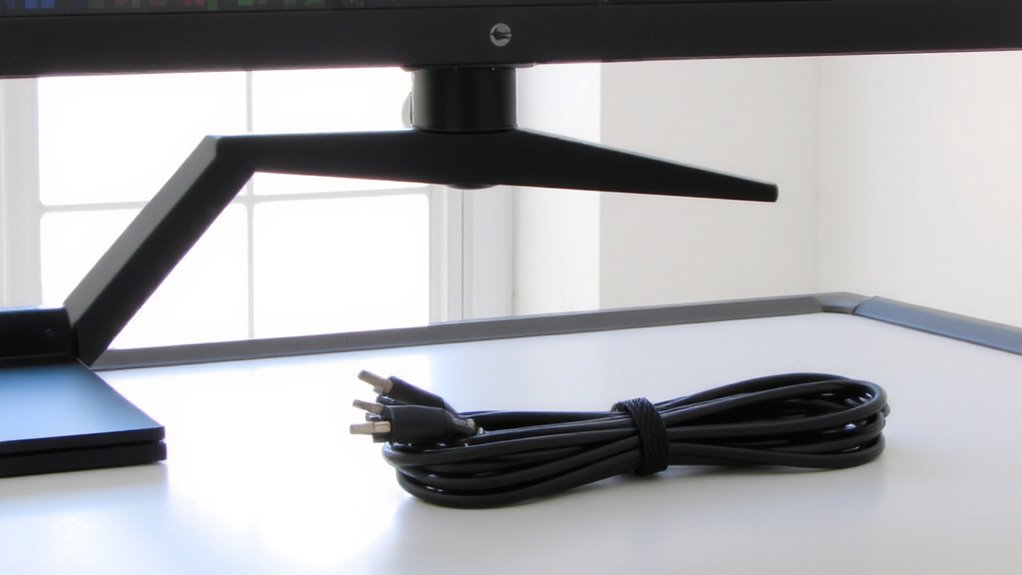
Zip ties mean business when you need cables locked down tight. They offer serious tensile strength-often holding up to 50 pounds-making them ideal for securing heavy bundles or routing cables along walls. You won’t worry about slipping or sagging, especially with longer cable runs under stress. But here’s the catch: they’re a one time use solution. Once you snap them shut, you’re stuck unless you cut them off, which means no adjustments later. That permanence works if your setup rarely changes, but it’s a hassle if you’re reorganizing or adding new devices. Also, overtightening can crush delicate wires, so pull just until snug. They’re cheap and effective, but think carefully before committing. Choose zip ties for final, unchanging layouts where security matters most, not for flexible or evolving home office setups. For those seeking reliable options, check out the best cable ties based on performance and durability.
Hook-And-Loop Straps: Reusable & Adjustable
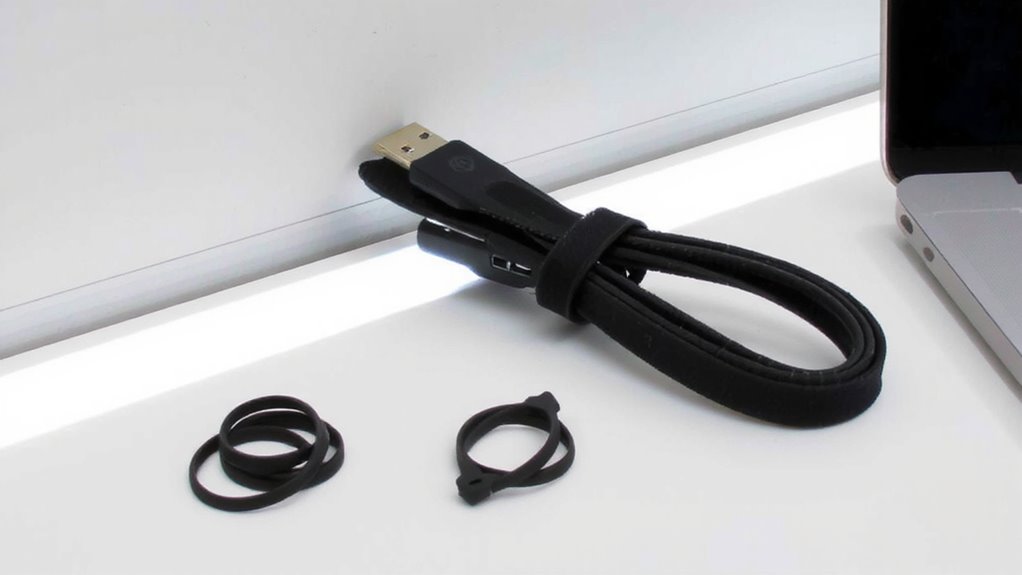
If you’re reworking your setup often or just want a cleaner way to manage cords without committing to a permanent fix, hook-and-loop straps are likely your best bet. They’re an eco friendly choice since you can reuse them across cables and devices over time, reducing plastic waste. Their adjustable design lets you bundle various cord thicknesses-ideal for tangle prevention without over-tightening. Unlike zip ties, they open and close easily, so swapping monitors or adding peripherals won’t mean cutting and replacing fasteners. Most straps rated for 10–20 lb hold power bricks, USB hubs, or ethernet cables securely when applied mid-length or near anchor points. For best results, pair them with adhesive clips. Just know they can loosen under constant pull or in high-traffic areas. Durability varies by brand, but high-quality versions withstand hundreds of cycles. Not totally invisible, but they balance neatness, flexibility, and practicality well. A great option for maintaining a clutter-free desk is integrating these straps into a comprehensive cable management system.
How They Compare: Cost, Strength, and Reuse
You’re probably weighing convenience against long-term value, and when it comes to comparing nylon zip ties and hook-and-loop straps, the differences in cost, strength, and reusability are clear-cut.
| Feature | Nylon Zip Ties | Hook-and-Loop Straps |
|---|---|---|
| Cost (per unit) | $0.05–$0.10 | $0.50–$1.00 |
| Reuse Potential | Single-use only | Reusable (100+ times) |
| Material Durability | High (but brittle over time) | Moderate (resists fraying) |
Zip ties win on upfront cost and tensile strength (up to 50 lbs), but their environmental impact is worse due to plastic waste. Hook-and-loop straps cost more initially but offer better reuse and lower environmental impact. Material durability favors nylon in short bursts, but straps hold up better with daily adjustments. Choose based on how often you reconfigure your setup-frequent changes favor straps, while permanent setups may tolerate ties.
Choose Based on Your Home Office Workflow
Often, the best choice between nylon zip ties and hook-and-loop straps comes down to how frequently you adjust your workspace. If you tweak your setup weekly for ergonomic efficiency-repositioning monitors, keyboards, or docking stations-hook-and-loop straps are ideal. They’re reusable, adjustable, and won’t damage cables when removed. Their clean look also boosts visual aesthetics, especially with color-coded strips. But if your layout rarely changes and you prioritize a tight, permanent hold, nylon zip ties offer strength and low cost. Just be aware: they’re single-use, and overtightening can pinch wires. For dynamic workflows, hook-and-loop delivers practical flexibility and a polished appearance. For static ones, zip ties work fine-just cut cleanly and leave minimal slack. Neither option is perfect, but matching the tool to your routine guarantees better long-term satisfaction.
On a final note
You’ll likely want hook-and-loop straps for most home office tasks-they’re adjustable, reusable, and gentle on cables. They hold strong enough for routine setups and make changes simple. But if you need a permanent, high-tensile fix-like securing heavy power strips-nylon zip ties work better, though they’re single-use and can’t be fine-tuned. Choose straps for flexibility, ties for permanence, and always match the fastener to your workflow.