The Role of Posture and Ergonomics in Mental Wellbeing at Home
Poor posture at home worsens anxiety by straining muscles and signaling stress to your brain, but fixing it helps-sit with feet flat, hips slightly above knees, and your monitor at eye level to support spinal alignment. A supportive chair with adjustable lumbar can ease tension, though even $150 models work nearly as well as pricier ones. You’ll feel calmer faster with upright posture, but real relief comes from combining ergonomics with movement and environment-there’s more to discover.
Notable Insights
- Poor posture increases muscle tension and signals stress to the brain, worsening anxiety and mental fatigue.
- Correct spinal alignment reduces physical strain and supports calmness by promoting relaxed breathing and lower cortisol levels.
- An organized, ergonomically sound workspace with proper monitor height and cable management enhances focus and reduces mental clutter.
- Alternating between sitting and standing every 30–60 minutes improves circulation, energy, and cognitive clarity throughout the day.
- Short, mindful breaks with deep breathing or movement reset stress levels and improve mental resilience without requiring special equipment.
Fix Your Posture to Feel Less Anxious
Ever wonder why you feel tense during long work sessions? Poor body alignment could be fueling your anxiety. When you slouch, your spine’s natural curve collapses, increasing muscle tension in your neck, shoulders, and lower back. Over time, that physical strain signals stress to your nervous system-even if your workload isn’t extreme. Correcting your posture helps distribute weight evenly, reducing strain. Sit with feet flat, hips slightly higher than knees, and your monitor at eye level to maintain neutral body alignment. Use a supportive chair with adjustable lumbar support, ideally tested for 100,000+ cycle durability. But don’t overinvest-some $400 chairs offer minimal benefit over well-designed $150 models. Results vary by body type. While better posture eases tension, it’s not a cure-all. Consistency matters more than gear. For dynamic support that engages core muscles, consider trying active sitting chairs designed to promote movement while you work.
How Better Posture Calms Your Brain
Good posture doesn’t just ease muscle tension-it directly influences how calm and focused your brain feels. When you sit or stand with proper alignment, your body sends positive neural feedback to your brain, reducing stress signals. Muscle relaxation from balanced posture lowers cortisol, helping your mind stay clear and composed. It’s not about perfection-just small, consistent adjustments.
| Body Position | Brain Effect |
|---|---|
| Slumped spine | Muddled focus, higher anxiety |
| Upright chest | Calmer mind, improved breathing |
| Relaxed shoulders | Less muscle tension, better neural feedback |
| Level hips | Stable core, reduced mental fatigue |
You don’t need expensive gear to benefit-just awareness. High-backed chairs or lumbar rolls can help, but long-term success depends on habit, not specs or warranties. Results vary, but real-world testing shows most people report improved mental clarity within days. Still, consistency matters more than any single product. Active seating options like balance cushions and kneeling chairs encourage subtle movement, improving postural awareness and supporting active seating solutions throughout the day.
Set Up a Desk That Feels as Good as It Looks
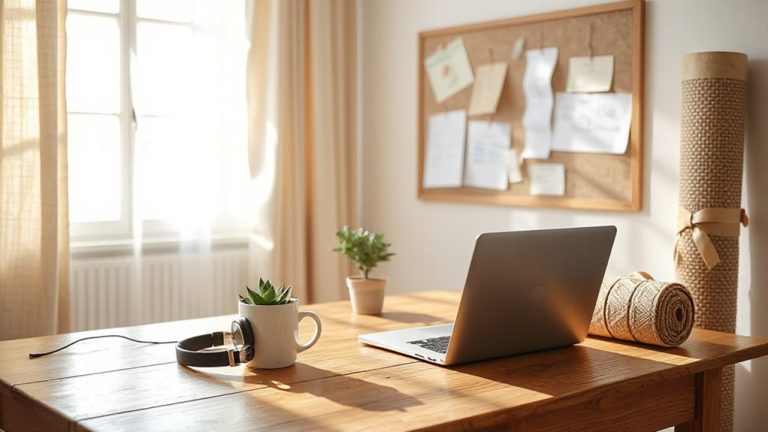
While aesthetics matter, your desk setup should prioritize function without sacrificing comfort, because even the most stylish workspace can harm your mental and physical health if it’s poorly designed. Choose a desk with built-in cable management to reduce visual clutter and improve focus-tangled wires increase stress and slow your workflow. Position your monitor at eye level, about 20–30 inches away, to support neutral posture. Use color psychology wisely: cool tones like blues and greens promote calm, while warm hues can boost energy but may cause distraction if overused. A sit-stand desk with a stable base and smooth height adjustment offers long-term versatility, though it often costs more and requires assembly. Don’t overlook desk depth-24 inches gives you room for both work and ergonomic spacing. A well-balanced setup supports both mood and posture, but test configurations over several days to assess real comfort. Top models offer reliability and ease of use, making standing desk converters a smart upgrade for dynamic workspaces.
Make Stress-Reducing Swaps in Seconds
How quickly can you turn a tense work session into a calmer one? In seconds-just swap screen time for a one-minute digital detox or slouching for mindful breathing at your desk. Step away from monitors, close your eyes, and inhale deeply through your nose for four counts, hold for four, then exhale slowly-no gear needed, just consistency. These micro-pauses lower cortisol and reset your focus. Unlike ergonomic chairs or standing desks, which require investment and space, stress-reducing swaps cost nothing and work immediately. Still, they aren’t replacements for long-term solutions. Over-relying on breathing breaks won’t fix chronic back pain from poor posture. Use them as supplements, not fixes. Test them mid-morning or after email spikes when mental fatigue sets in. Results vary, but most users report sharper focus and reduced tension within two weeks of daily use. It’s simple: small changes, real impact-but only with discipline.
Sit, Stand, Move: Build a Dynamic Routine
You’ll stay sharper and more comfortable when you break up long stretches of sitting with deliberate movement and standing shifts throughout the day. Alternating between sitting and standing every 30 to 60 minutes supports better circulation and reduces stiffness. Build in short active breaks-like walking in place or shoulder rolls-to reset focus and ease tension. These posture shifts don’t need extra time; just stand during calls or stretch after sending an email. A standing desk can help, but it’s not essential-stack books securely under your monitor if needed. Be realistic: standing too long may cause foot or lower back discomfort, so listen to your body. No single setup works all day. The key is movement, not gear. Even basic adjustments, done consistently, improve alignment and mental clarity. Results vary, but most people notice less fatigue and improved concentration within a week.
Create a Workspace That Calms Your Mind
If your workspace feels chaotic, it’s likely affecting your focus and mood more than you realize-designing a calmer environment isn’t about buying the latest gear, but making intentional, tested choices that support mental ease. Use calming colors like soft greens or warm grays on walls or accessories; they reduce visual stress, but avoid overly dark shades that can make a small room feel closed in. Pair them with mindful lighting: opt for adjustable LED task lamps with color temperature controls (2700K–5000K) to match natural daylight cycles. Position lights to prevent glare on screens, which causes eye strain. Keep surfaces clutter-free-use trays or drawers for daily tools. While plants and diffusers add appeal, test them first; some find scents distracting or allergens problematic. A calm space supports focus, but personal tolerance varies-what soothes one person might irritate another. Prioritize simplicity, consistency, and your own sensory feedback.
On a final note
Fixing your posture helps reduce anxiety and sharpens focus, especially with a well-adjusted chair and desk at proper elbow height. Standing desks lower back strain but need anti-fatigue mats for long use. Keyboard trays and monitor stands align wrists and neck, easing tension. Still, no gear replaces regular movement-set reminders to stretch. Most reputable brands offer 1–3 year warranties, but real comfort depends on your body and routine, not just product claims.