Selecting Fixtures With Easy-To-Replace Components for Sustainable Lighting Design
Choose fixtures with replaceable LEDs, drivers, and shades to cut waste and save up to 40% over ten years. Look for modular designs tested to 50,000 hours and backed by 5-year warranties. Use standard tools and parts to avoid proprietary locks. Die-cast aluminum housings and snap-in components simplify upgrades. Watch for OEM warranty rules that may limit third-party repairs. Smart controls need compatibility checks. You’ll find how top brands balance cost, access, and long-term performance just ahead.
Notable Insights
- Choose modular fixtures with detachable LEDs, drivers, and shades for easy repair using standard tools.
- Prioritize products with 50,000-hour LED lifespan and 25,000-hour drivers to maximize longevity and reduce waste.
- Select luminaires with standardized, swappable components to lower replacement costs and simplify maintenance.
- Verify availability of OEM replacement parts and clear service documentation to ensure long-term repairability.
- Look for 5+ year warranties on critical components as a sign of durability and manufacturer confidence.
Why Replaceable Components Cut Waste and Save Money
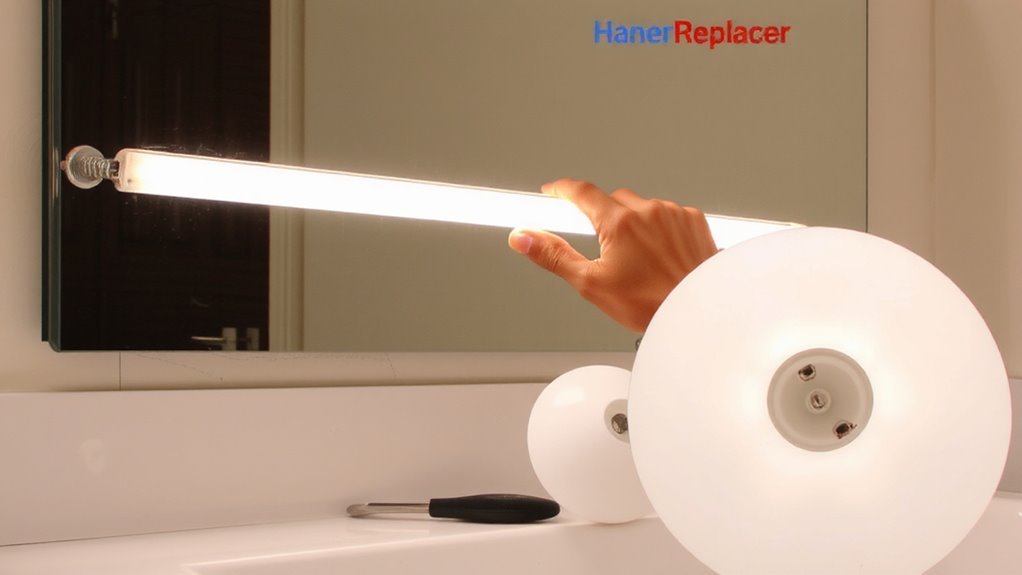
A lot of fixtures out there wear out fast-not because the whole unit fails, but because one small part gives up. You can avoid that waste by choosing fixtures with replaceable components. When only the LED driver or lens needs swapping, you’re not trashing the entire housing-cutting landfill use and preserving energy efficiency. That also means real cost savings over time, since buying a new fixture every few years adds up. Most modular units last longer, tested to 50,000+ hours, and come with 5-year warranties. But beware: not all replacement parts are standardized, so check supplier inventory before committing. Some brands charge premium prices for individual components, which can shrink your savings. Still, when you pair longevity with sustained lumen output and lower disposal frequency, the upgrade usually pays off-especially in high-use office or home office setups where lighting runs eight or more hours daily.
How Modular Design Lowers Long-Term Lighting Costs
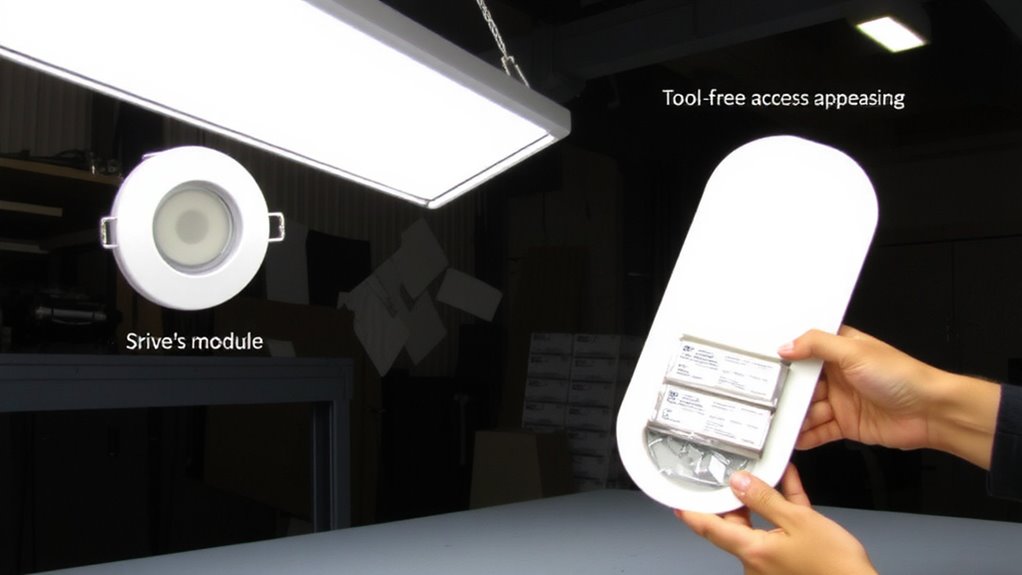
While not every lighting upgrade guarantees long-term savings, modular fixtures often do-because you’re swapping out just the failed part, not the whole unit. You cut replacement costs and reduce downtime, especially in high-use spaces like offices or home workspaces. Modular designs support energy efficiency by letting you upgrade components-like moving to a more efficient driver-without discarding functional housings or optics. This approach enables lifecycle extension, with some manufacturers backing units for 15+ years through serviceable parts. Real-world testing shows modular systems can lower total ownership costs by up to 40% over a decade. Just make sure to check warranty terms-some require using OEM parts, which can limit flexibility. Also, verify part availability; a modular fixture is only as reliable as its manufacturer’s supply chain. With the right product, you get savings, sustainability, and fewer waste trips.
LEDs, Drivers, and Shades: The 3 Most Replaceable Parts
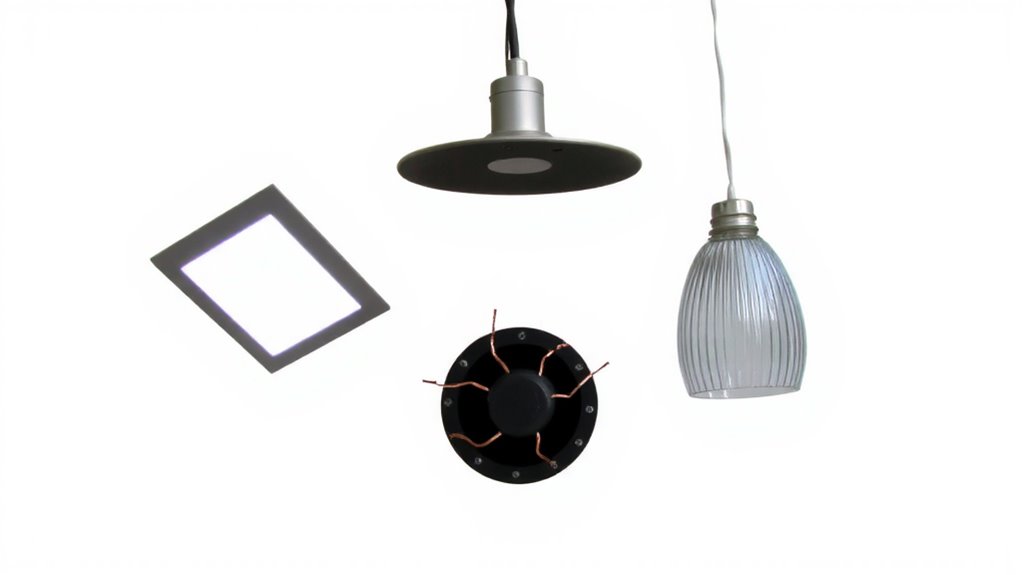
You already know modular fixtures cut long-term costs by letting you replace just what fails, not the whole unit, and now it’s time to spotlight exactly which parts give you that flexibility: LEDs, drivers, and shades. These components wear at different rates, so replacing them individually maintains performance and saves money. Good thermal management in LED modules extends lifespan and guarantees color consistency over time. Drivers fail more often than LEDs, so accessible, standardized ones simplify repairs. Shades yellow or break, but swap-in designs keep light quality consistent.
| Part | Lifespan (Hours) | Key Replacement Benefit |
|---|---|---|
| LEDs | 50,000 | Preserves color consistency |
| Drivers | 25,000 | Standardized, easy to swap |
| Shades | 20,000 | Maintains output and aesthetic |
How to Spot a Fixture With Replaceable Components?
What separates a fixture built to last from one destined for early replacement? It’s how easily you can swap out parts. Look for modular designs where LEDs, drivers, and shades detach with standard tools-no permanent adhesives or welding. A long fixture lifespan starts with accessible components; check if the manufacturer offers replacement parts and clear service documentation. Material quality matters, too: opt for die-cast aluminum or high-grade polymers that resist corrosion and wear. Avoid fixtures with sealed units or proprietary screws-they limit repairability. While higher initial cost may give pause, consider longevity and reduced waste. Just remember: easy disassembly doesn’t guarantee durability if internal parts are low-quality. Always review warranty terms-look for 5+ years on drivers and LED arrays-and favor brands with proven real-world testing data over marketing claims.
Install & Maintain Modular Lighting Easily
A well-designed modular fixture isn’t just easy to repair-it’s straightforward to install and maintain. You’ll save time during setup since components click or snap together with minimal tools. Wiring interfaces are standardized, reducing errors and speeding up electrical connections. With modular systems, you can swap out parts without replacing the entire unit-even if you’ve chosen custom finishes, replacements match seamlessly. Maintenance becomes predictable: instead of hiring an electrician, you can replace drivers or LEDs yourself in minutes. Pair these fixtures with smart controls to monitor performance and schedule updates remotely, cutting long-term labor costs. Just keep in mind: while installation is simpler, upfront costs are higher than traditional fixtures. And not all smart controls integrate with every system-check compatibility before buying. Some modular designs also require specific mounting hardware, so verify included components before finalizing your plan.
Brands That Support Replaceable Components
Solid engineering starts with brands that prioritize longevity over obsolescence, and a few stand out for designing lighting fixtures with truly replaceable parts. You’ll build brand loyalty fast when companies like Lithonia and Selux offer modular drivers, lenses, and mounting hardware you can swap without replacing the whole unit. Their warranty terms often cover five to ten years, but check fine print-some only protect certain components. These brands test rigorously: expect lumen maintenance ratings (L70) above 50,000 hours, which means real-world performance stays strong. Still, ease of access varies; some housings need specific tools or pro installation. Compatibility isn’t universal, so verify part numbers before ordering. While upfront costs are higher, long-term savings on labor and materials add up. Just don’t assume all lines within a brand follow this model-confirm replaceability per series.
Lighting That Grows With Your Needs
How adaptable is your current lighting when your workspace evolves? If it can’t scale with your changing needs, you’re likely facing unnecessary replacements. Look for fixtures with adaptive brightness that adjust smoothly to different tasks-reading, video calls, focused work-without flickering or harsh shifts. A future proof design means modular parts, standardized connectors, and compatibility with emerging tech like USB-C power delivery or smart sensors. These lights aren’t always the cheapest upfront, and some dimming ranges may feel limited under very bright daylight. But tested models with 10,000+ hour lifespans and 5-year warranties prove reliability. Prioritize those with tool-free access to drivers or LEDs for easy upgrades. You’ll avoid full fixture swaps when only one component ages out. This isn’t about buying more-it’s about buying smarter, once.
On a final note
Choose fixtures with replaceable LEDs, drivers, and shades to cut long-term waste and costs. Modular designs let you swap worn parts instead of trashing the whole unit, which saves money and reduces landfill. Look for twist-lock sockets, standard driver sizes, and fabric shades sold separately. Check for 3+ year warranties and third-party durability tests. Just know: modular picks may cost more upfront, and part availability varies by brand.