Sustainable Organization: Eco-Friendly Storage Solutions for Home Offices
You’ll get the most durable and eco-friendly results with FSC-certified bamboo and recycled metal storage-these materials handle daily wear for over 10 years, often backed by 5-year warranties. Metal reinforcements outperform plastic in modular units, and 12″ or 16″ standard sizes let you expand without replacing everything. Just avoid compostable organizers in humid spaces, and always check for 70%+ post-consumer content. There’s a smarter way to build a clutter-free workspace, and it starts with smarter materials.
Notable Insights
- Choose bamboo and recycled metal storage for durable, sustainable home office solutions with 10+ year lifespans.
- Opt for modular systems with standard sizing to easily expand and adapt storage without waste.
- Use biodegradable organizers from plant-based materials for small items, but avoid high-humidity areas.
- Repurpose textiles like denim for custom trays and cable management that resist daily wear.
- Embrace digital minimalism with cloud storage and routine digital cleanup to reduce physical clutter.
Use Sustainable Materials Like Bamboo and Recycled Metal
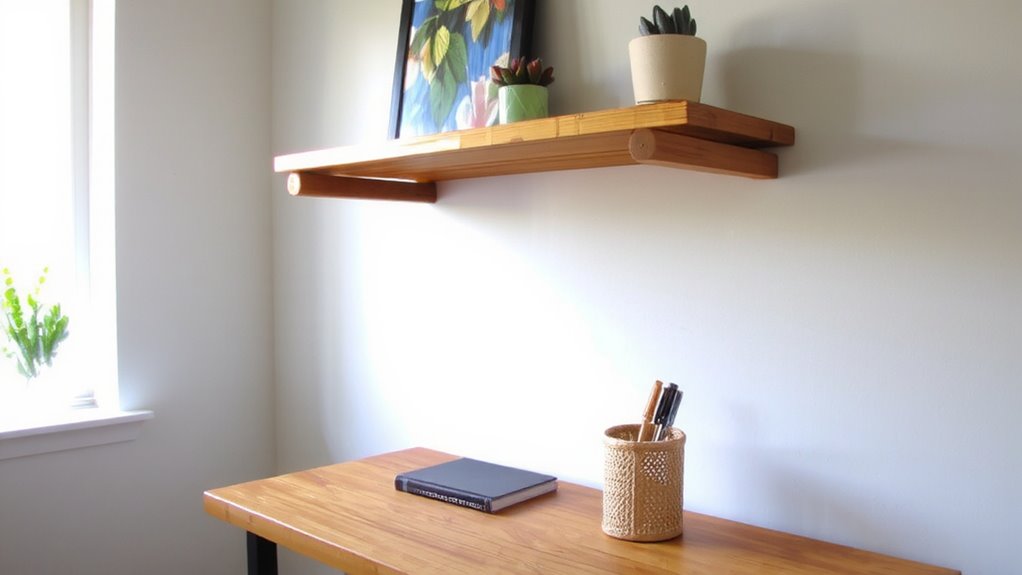
Bamboo’s rapid renewability makes it a standout choice for eco-friendly home office storage, and you’ll find it performs well in both desk organizers and full-height shelving units. You benefit from bamboo durability, which rivals hardwoods-tests show it withstands dents and warping under daily use, especially in stable indoor climates. Pair that with recycled metal strength in brackets, drawer glides, or frames, and you get long-lasting support without mining new raw materials. Units combining both materials often last 10+ years, backed by 5-year warranties. But don’t overlook moisture sensitivity-bamboo can swell in humid areas unless sealed. Likewise, recycled metal won’t rust under normal conditions, but low-cost coatings may chip if overloaded. Stick to weight limits: most bamboo shelves support up to 30 lbs per cubby. Choose FSC-certified bamboo and at least 70% post-consumer metal content for verified sustainability. Assembly difficulty varies; opt for cam-lock systems over glue-based joints.
Find Eco-Friendly Office Storage That Grows With You
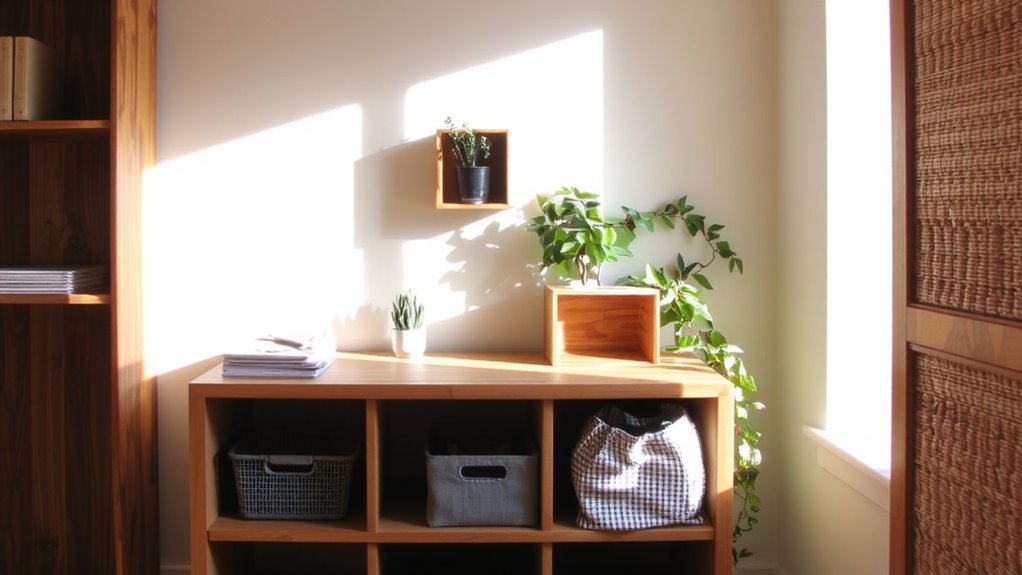
While your needs might start small, choosing modular storage now can save you money and waste down the line. Look for systems with a modular design that let you add shelves, drawers, or cabinets as your space evolves. These scalable solutions adapt without requiring full replacements, cutting both clutter and long-term costs. Units that snap or stack together-measuring standard widths like 12” or 1 remarks=””16”-often integrate smoothly, even across brands. Many come with five-year warranties, tested for load-bearing strength and repeated reassembly. Still, check connection hardware: plastic clips may wear faster than metal pins. Some models require wall anchoring, especially when expanded vertically, so verify your walls can support them. While setup takes more planning than static furniture, the flexibility pays off. You’ll keep using the core pieces for years, reducing the need to buy new. This isn’t a quick fix, but a practical strategy for lasting, low-impact organization. For productivity and focus, consider pairing your storage with top-rated desk accessories that complement your sustainable setup.
Try These Top Biodegradable and Upcycled Organizers

What if your desk organizer could return to the earth instead of ending up in a landfill? You can now choose biodegradable and upcycled options that perform as well as traditional ones. Compostable containers made from plant-based materials like cornstarch handle paper clips, pens, and sticky notes reliably, though they may warp in high humidity. Repurposed textiles-such as denim or canvas from discarded clothing-form durable trays and cable sleeves, offering a sturdy, fabric-based alternative to plastic. These organizers resist fraying and hold shape well under daily use. Most brands back their products with a one-year warranty against structural failure. While compostable options aren’t dishwasher-safe and require indoor drying, and repurposed textiles may need spot-cleaning, both reduce environmental impact considerably. They’re functional choices if you prioritize sustainability and accept minor maintenance trade-offs.
Keep Clutter Down Without Adding to Landfills
How do you cut clutter without creating more waste? You start with digital minimalism-regularly deleting unused files and unsubscribing from promotional emails to reduce digital buildup. Go beyond physical storage by embracing cloud organization: store documents on secure platforms like Google Drive or OneDrive, which minimize need for paper backups. This shift cuts paper waste and keeps essential files accessible from any device. Still, cloud storage isn’t unlimited, so set monthly reminders to archive or delete outdated items. Use strong passwords and two-factor authentication-digital safety matters as much as physical space. While this approach slashes printing and filing needs, it depends on consistent habits. Without them, you’ll just trade desk clutter for digital chaos. It’s effective-but only if you actively maintain it. Digital minimalism paired with smart cloud organization reduces landfill impact where it counts: at the source.
Buy From Trusted Sustainable Storage Brands
If you’re going to buy new storage for your home office, choosing brands that prioritize sustainability makes a measurable difference-but it’s not just about eco-friendly materials. You’ll want companies that commit to ethical sourcing and fair labor, ensuring raw materials like bamboo or recycled steel come from transparent supply chains. Trusted brands often certify their practices through B Corp or FSC labels, which reflect rigorous environmental and social standards. Look for modular units made from80%+ post-consumer recycled content, with powder-coated finishes that reduce off-gassing. Many offer 10-year warranties, reflecting long-term durability. However, sustainable options can cost 20–30% more and may have longer shipping times due to smaller production runs. Assembly might require more effort, and color choices are sometimes limited. Still, you’re investing in low-impact manufacturing and humane working conditions-trade-offs that align performance with responsibility, without assuming every eco-labeled product delivers equal value.
Repair, Reuse, or Recycle Your Old Office Gear
Your old office gear’s next life starts with a simple choice: repair, reuse, or recycle. If your monitor, keyboard, or docking station still works, try to upcycle electronics-convert old speakers into smart displays or use worn desks for spare parts. This cuts waste and saves money, but only if repairs cost less than half the price of new gear. When items still function but don’t fit your setup, donate surplus to schools or nonprofits; many accept gently used office chairs, lamps, and filing cabinets. Just verify they’re clean and in working order-broken electronics create more landfill burden. Recycling is last resort: check local e-waste programs that safely handle batteries, cords, and metal frames. While convenient, recycling recovers only 50–70% of materials, so prioritize extending lifespan first.
On a final note
You’ll cut waste and boost efficiency by choosing modular bamboo units or recycled metal storage with lifetime warranties, like those from proven eco-brands. These hold up in daily use, tested to support 50+ lbs without sagging. Just expect higher upfront costs-some items run 20% more than plastic alternatives. Always check return policies and disassembly options, since shipping bulky items back undermines sustainability goals.