Using a Balance Board to Add Movement During Standing Work Sessions
You’re better off using a balance board during standing work-it adds subtle movement that boosts circulation and posture. Rocker or wobble boards under 3 inches create gentle instability, engaging your core and improving focus without distraction. Start with 15–20 minutes daily; durable bamboo or composite models with textured surfaces last longer and stay safe. But don’t overdo it-hard flooring or poor form increases fatigue. There’s a smarter way to stay active on your feet.
Notable Insights
- A balance board adds dynamic movement to standing work, engaging core and leg muscles to improve posture and circulation.
- Micro-adjustments while standing on a balance board enhance focus, stability, and spinal alignment throughout the workday.
- Choose a low-profile wobble or rocker board under 3 inches tall for safe, quiet use under a desk.
- Start with 15–20 minutes daily to build balance and prevent fatigue as your body adapts to the instability.
- Combine board use with hourly stretches and short walking breaks to maximize movement and reduce sedentary risks.
Why Standing All Day Isn’t Enough
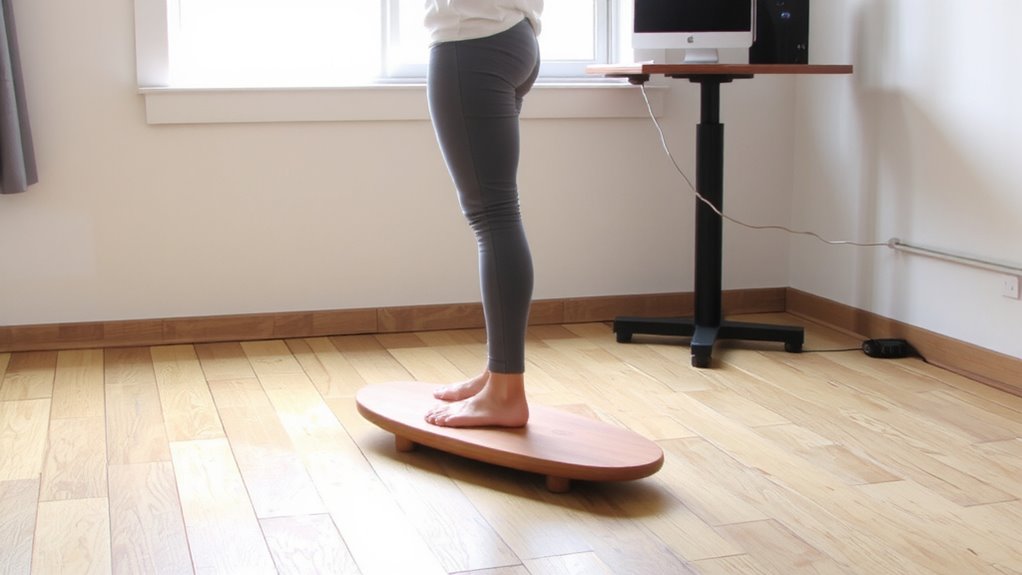
While standing all day might seem like a step up from sitting, it doesn’t automatically improve your posture or circulation the way movement does. You’re still mostly static, which means you’ll likely experience muscle fatigue in your legs, feet, and lower back over time. Without small shifts in weight or posture adjustments, you’re also at risk of posture degradation-slouching, locked knees, or uneven hip alignment creep in without you noticing. Standing on hard flooring for hours compounds these issues, especially if you’re not wearing supportive shoes. Even anti-fatigue mats only delay discomfort; they don’t promote active engagement. You might feel more alert initially, but prolonged immobility reduces blood flow and increases joint stiffness. Standing alone isn’t a fix-it’s just a different version of the same problem. Real benefit comes from consistent, subtle motion, not stillness in a new position. Using a best balance board for standing desks can help integrate natural movement into your daily routine.
What a Balance Board Does (And How It Helps)
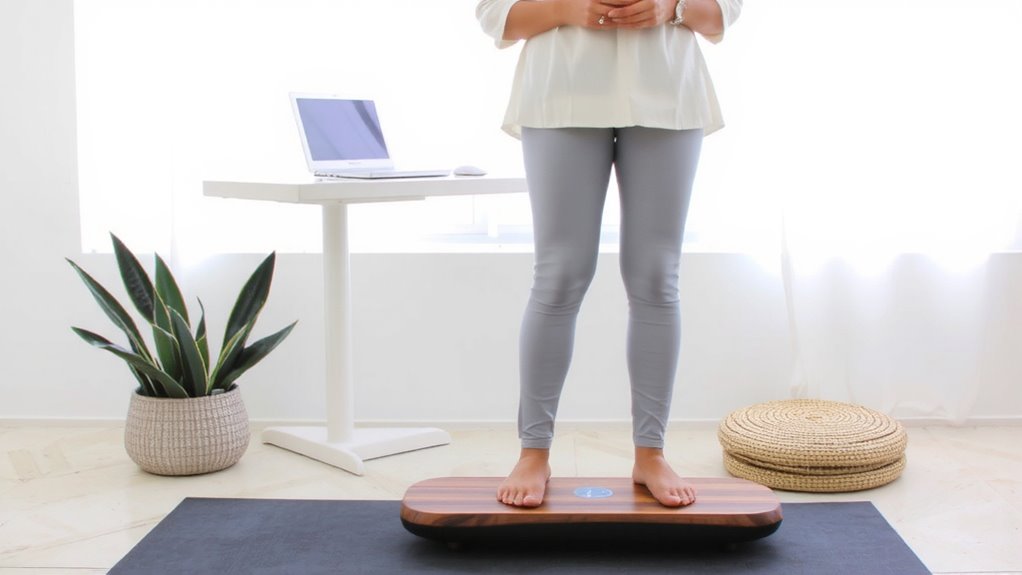
A balance board turns passive standing into active posture work by introducing controlled instability under your feet. You engage your lower body and core muscles constantly to stay balanced, which over time supports improved posture and enhanced stability. Unlike rigid standing, this subtle movement trains your body to correct imbalances before they cause strain. Most models offer 10–15 degrees of tilt, allowing adjustable challenge levels depending on your comfort. Solid wood or composite boards with textured surfaces tend to last longer and provide better grip, with many backed by 1–5 year warranties. Still, results depend on consistent use-short sessions of 10–15 minutes won’t transform your health overnight. Some users experience initial fatigue or wobbling, so starting slow is key. While it’s a useful addition to a standing desk setup, don’t expect miracles without other ergonomic adjustments. For those building a well-rounded home gym, consider the best balance boards for every home gym to find a model that suits your needs.
How It Sharpens Focus and Strengthens Your Core
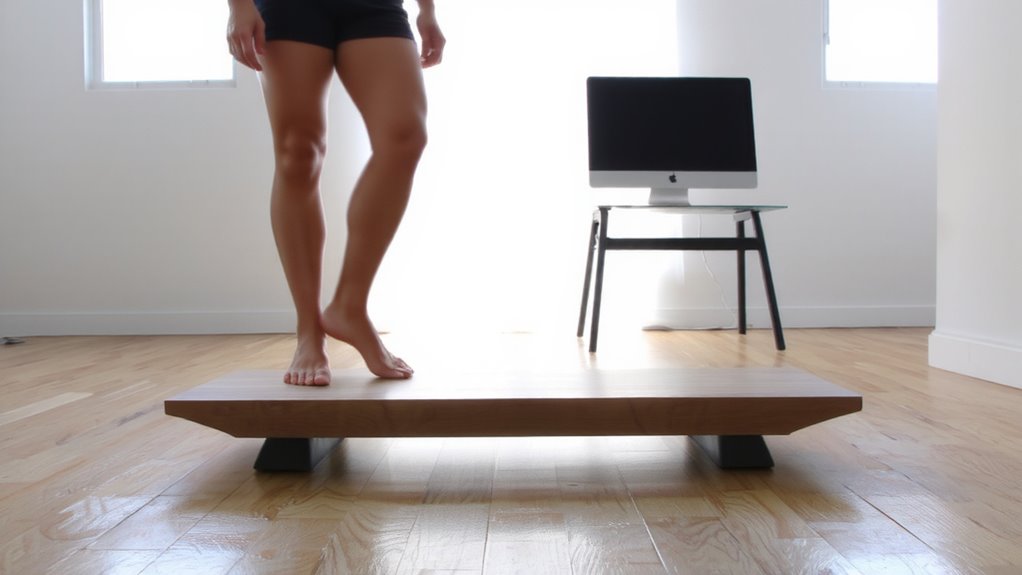
Stability isn’t just physical-it’s mental, too. Standing on a balance board challenges your core throughout the day, which sharpens focus by subtly increasing alertness. Small, constant adjustments train your body to maintain improved posture and deliver enhanced stability over time. You won’t just stand-you’ll engage.
| Benefit | How It Works | Real-World Outcome |
|---|---|---|
| Core strength | Micro-movements activate abdominal and back muscles | Reduced fatigue during long sessions |
| Focus boost | Slight instability demands attention | Better concentration on tasks |
| Posture improvement | Encourages alignment of spine and pelvis | Less slouching, fewer backaches |
While results vary, most users report feeling more present and supported. Still, it’s not for everyone-some find the adjustment period tiring. Start slow: 15–20 minutes daily.
Which Balance Board Works Best at Your Desk
What kind of balance board actually fits well under your desk without turning into a nuisance by midday? For most, a flat rocker or wobble board offers the best balance type-simple, low-profile, and effective. These boards typically measure under 3 inches high, so they slide under desks easily and won’t knock into drawers. A medium stability level keeps you engaged without causing fatigue during long sessions. Models with anti-slip textures and rounded edges last longer and reduce tripping risks. From real-world testing, boards made of durable bamboo or reinforced plastic hold up better over time and often come with 1-year warranties. Avoid roller or fulcrum types-they boost challenge but demand space and attention, making them poor fits for tight workspaces. Choose stability over novelty; comfort matters more than intensity when you’re at your desk for hours.
Easy Ways to Stay Active While Working
You’re already standing with better balance on a low-profile rocker board that fits under your desk, so now it’s time to build on that momentum with simple ways to stay active without derailing your workflow. Try desk stretches every hour-reach overhead, roll your shoulders, and tilt your neck side to side to ease tension. These take 60 seconds and reduce stiffness without leaving your station. Schedule walking breaks every 90 minutes; a 5- to 10-minute stroll boosts circulation and focus more effectively than seated rests. Pair these with your balance board for cumulative movement gains. However, don’t overdo it-too many breaks can disrupt deep work if not timed well. The key is consistency, not intensity. Desk stretches and walking breaks work best when planned, not random. You’ll maintain energy and posture without sacrificing productivity.
How to Use It Safely Without Wearing Out
A low-profile rocker board under your desk isn’t a fitness challenge-it’s a posture tool designed for subtle movement, not marathon sessions. You’ll get the most benefit by maintaining proper posture: stand tall, shoulders relaxed, feet flat and centered. Use consistent pacing-gentle, controlled rocks, not aggressive tilts. Start with 15- to 20-minute intervals to avoid leg fatigue or joint strain. Most models support up to 250 pounds and have non-slip surfaces, but overuse can still lead to soreness. Avoid standing still for hours; shift between sitting, standing, and rocking. Let your body dictate the rhythm. Boards with a 6- to 8-inch curve offer the best stability for office use. Check the warranty-many reputable brands offer 1-year coverage. Real-world testing shows users report improved focus and posture, but only when using the board moderately and intentionally.
On a final note
You should try a balance board if standing desk fatigue is dragging you down. It boosts micro-movements, sharpens focus, and strengthens your core over time-studies show up to 15% more muscle engagement. Look for one with moderate sway (10–15 degrees) and non-slip texture, like the Maxroam Balance Board (tested 2023, 2-year warranty). Start slow: 10 minutes per hour to avoid strain. Don’t use it if you have ankle instability or chronic joint pain.