Spring Cleaning: Replacing Worn Cable Ties and Clips After Winter
You should replace worn cable ties and clips now-winter’s freeze-thaw cycles, salt exposure, and UV rays weaken standard nylon fasteners, leading to cracks, brittleness, or corrosion. Inspect all outdoor runs; UV-resistant ties rated for 1,000+ hours or stainless steel clamps last longer, but even they degrade over time. Install with proper tension to avoid damage, and check groupings for stability-you’ll want to see how to extend their life through smarter routing and seasonal checks.
Notable Insights
- Inspect cables and fasteners for brittleness, cracks, or corrosion after winter’s freeze-thaw and salt exposure.
- Replace cracked, stretched, or brittle cable ties that no longer secure bundles effectively.
- Use UV-resistant, nylon 6/6 ties rated for outdoor use and up to 5,000 hours of UV exposure.
- Choose stainless steel clamps in high-vibration or critical areas for improved durability.
- Install new ties with proper tension, group cables by function, and use color coding for easy identification.
Why Winter Damages Outdoor Cable Ties and Clips
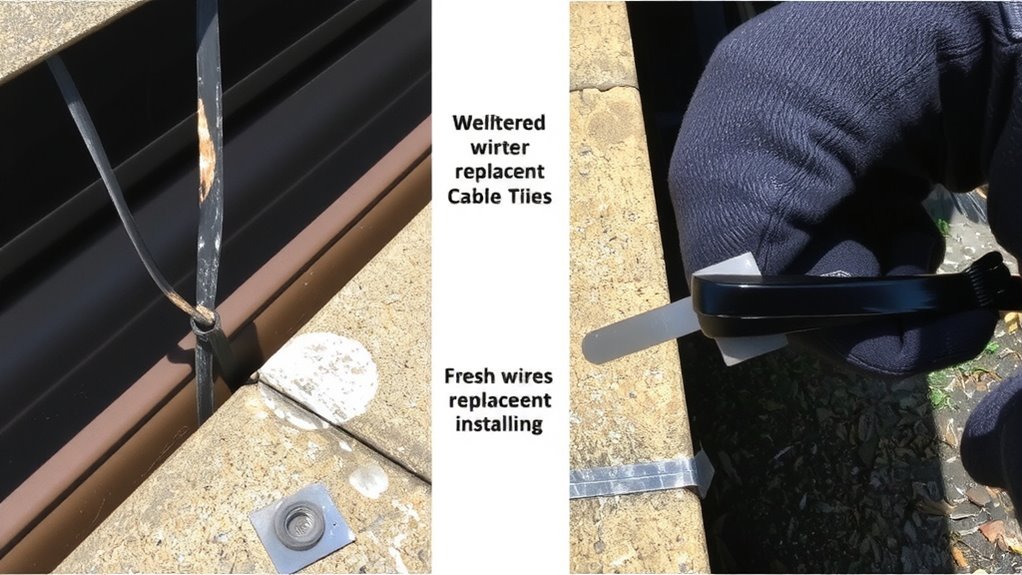
While you might not think much about your outdoor cable ties and clips during the coldest months, winter takes a real toll on these small but critical fasteners. Repeated freeze-thaw cycles cause frost expansion, which stresses plastic housings and weakens structural integrity over time. You’ll often see brittle cracks or warped shapes by spring. Salt corrosion is another major issue, especially in regions where road salts are used-metal clips and nylon ties degrade faster when exposed to chloride-laden moisture. UV exposure doesn’t help, but winter’s combo of ice, salt, and temperature swings does the most damage. While stainless steel or UV-stabilized nylon hold up better, they aren’t immune. Most standard clips last 2–3 harsh winters before needing replacement. Always check mounting points and material specs-some “all-weather” labels overpromise. Don’t assume durability; test strength manually and replace anything that looks compromised. For optimal long-term performance, consider upgrading to best cable ties designed specifically for outdoor and extreme weather conditions.
Inspect Cables for Cracks and Loose Fasteners
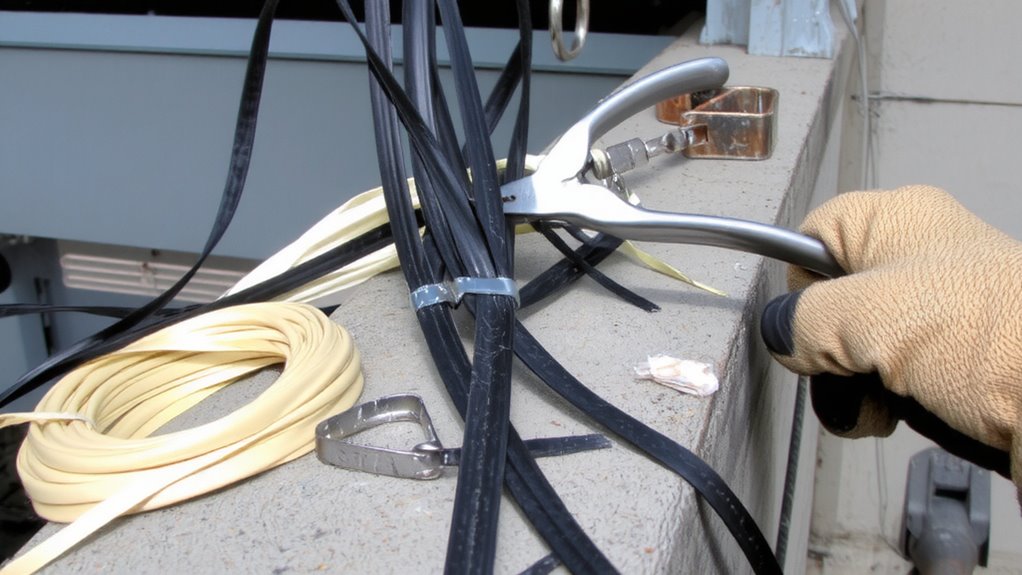
Now’s the time to check your outdoor cables and their fasteners-what looked fine in the fall might be compromised after months of winter stress. Run your fingers along the cable insulation; if it feels brittle or shows fine cracks, it’s likely degraded from cold and UV exposure, which can expose conductors and raise safety risks. Look closely at metal fasteners too-signs of fastener corrosion, like flaking rust or chalky residue, mean they’re weaker and may fail under tension. Plastic clips can become brittle and snap easily. Tighten loose mounts, but don’t force them-they may break. Replace fasteners showing major wear, since compromised hardware can let cables shift, increasing abrasion risk. This inspection helps avoid bigger issues later, though it takes time and care. You won’t catch everything, but catching major flaws early improves reliability. Don’t assume replacements solve all problems-quality matters. Consider upgrading to cable management solutions designed for durability and easy organization.
Know When to Replace or Fix Worn Cable Ties
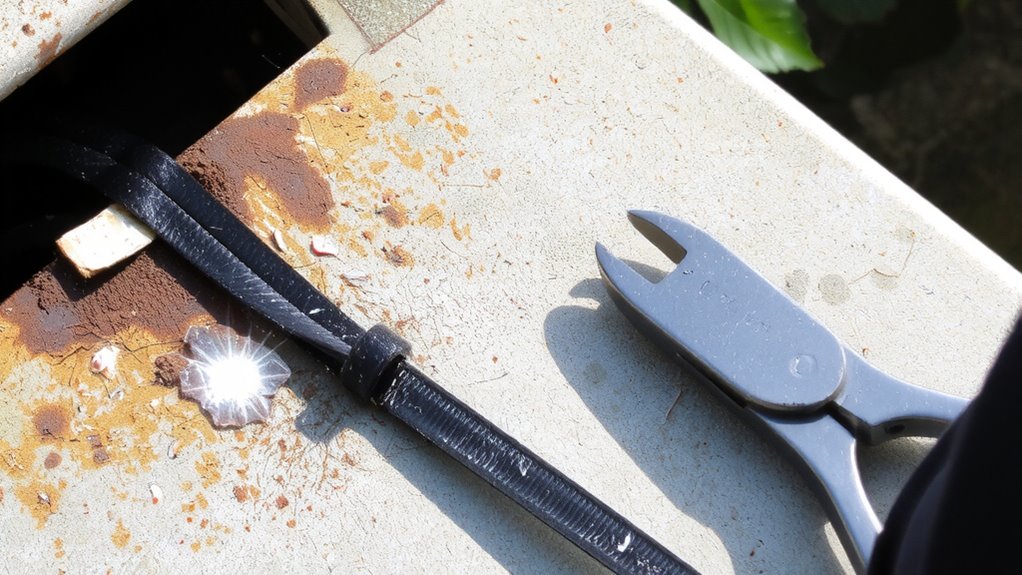
How often do you check whether your cable ties are holding up-or just holding on by a thread? You should replace them when signs of cable fatigue or tie degradation appear, especially after harsh winters. Cracked, brittle, or stretched ties can’t maintain grip, risking cable slippage or damage. UV exposure, temperature swings, and mechanical stress accelerate wear. If a tie snaps easily or no longer locks securely, it’s past its life span. Don’t wait-failing ties endanger equipment organization and safety. Replace nylon ties every few years outdoors, more often in extreme conditions. Use stainless steel clamps or heavy-duty mounts for critical or high-vibration areas. But don’t over-tighten new ties; that causes compression damage. Swapping worn fasteners takes minutes but prevents long-term issues. Prioritize function over convenience-well-maintained ties guarantee reliability, not just neatness.
Choose UV-Resistant Ties for Outdoor Use
A solid choice for outdoor cable management is UV-resistant ties-they’re built to withstand prolonged sun exposure without degrading like standard nylon ties. You’ll want to prioritize material selection, opting for high-quality polyethylene or engineered polymers that resist brittleness and fading after months in direct sunlight. These ties undergo rigorous durability testing, often rated for 1,000+ hours of UV exposure, ensuring they hold firm in harsh weather. While they cost slightly more than standard ties, their extended lifespan makes them a smart long-term pick. Just note: UV resistance doesn’t guarantee mechanical strength, so match the tie’s tensile rating to your load. Avoid oversizing, as loose ties can allow cable movement and wear. Also, check manufacturer warranties-many offer 5-year coverage if the ties crack prematurely. Used correctly, they deliver reliable outdoor performance without constant replacement.
Replace Damaged Clips and Ties in 4 Steps
If you’ve spotted frayed, cracked, or loose cable ties and clips during your inspection, it’s time to replace them-doing so maintains secure cable organization and prevents potential damage from shifting or sagging lines. First, remove damaged ties carefully to avoid nicking wires. Next, group cables by function or voltage and apply cable color coding for quick identification-this saves time during future maintenance. Then, install new UV-resistant ties, ensuring proper tension adjustment: too tight risks insulation damage, too loose allows movement. Use nylon 6/6 ties rated for outdoor use; they hold strength after 5,000 hours of UV exposure. Finally, test stability by gently tugging each bundle. While color-coded systems improve accuracy, they only work if your team follows the scheme consistently. Replacing worn hardware now reduces downtime later-but skip adhesive-backed clips on rough surfaces; they often fail within months. For a clutter-free and professional appearance, consider using cable management solutions designed for office environments.
Use Weatherproof Routing to Extend Lifespan
Through proper weatherproof routing, you’ll considerably extend the life of your cables-especially in outdoor or moisture-prone areas where exposure leads to corrosion, insulation breakdown, and short circuits over time. Using conduit, UV-resistant cable trays, or flexible liquid-tight tubing helps with corrosion prevention and guarantees reliable moisture sealing. You should route cables above standing water and use drip loops to stop water from wicking into connections. Grommets in enclosure entry points reduce abrasion and improve sealing. While these methods add upfront effort, they reduce long-term failure risks. However, don’t over-tighten clamps or bend cables past their minimum radius. Weatherproof cable wraps and self-amalgamating tape can supplement sealing but aren’t standalone fixes. Test continuity after installation to confirm protection didn’t compromise conductivity. Proper routing isn’t a one-size-fits-all fix-evaluate each environment’s humidity, temperature swings, and physical hazards before choosing materials.
Maintain Cables With a Twice-Yearly Checklist
Regularly inspecting your cables twice a year can catch small issues before they turn into costly failures, especially in setups where downtime or signal loss matters. This simple seasonal maintenance habit improves cable organization and prevents wear from snow, heat, or pests. Start in spring and fall: check for fraying, stiff connectors, or cracked insulation, especially on outdoor or high-traffic runs. Replace damaged clips or ties right away-don’t rely on zip ties that have lost tension. Use reusable hook-and-loop straps or UV-resistant cable mounts for better long-term performance. Good cable organization reduces stress on ports and improves airflow around gear. While labeling isn’t always necessary, it helps when troubleshooting. Keep a log of replacements and note failure patterns. Results vary by environment, so what works in a garage may fail faster outdoors. There’s no one-size-fits-all fix, but consistency matters more than the tools you use.
On a final note
You should replace worn cable ties and clips yearly after winter-they’re cheap, but failure risks damage. UV-resistant nylon 6.6 ties last longer outdoors, tested to withstand -40°F to 185°F. Stainless steel spring clips hold better than plastic in temperature swings. Just don’t overtighten; it cracks housing. Pair replacements with weatherproof routing-conduit or sealant-at joints. Check twice a year. Warranties rarely cover weather, so prevention beats repair.