Using Automated Blinds to Track the Sun and Maintain Optimal Light Levels
You’ll get better screen visibility and energy savings with automated blinds that use light sensors to track the sun and adjust slat angles in real time. Models with photodiodes offer ±5% accuracy and cut glare by up to 60%, ideal for home offices. Proper sensor placement avoids false triggers, and seasonal calibration keeps them accurate. They cost 2–3 times more than manual blinds and need recalibration, especially in oddly shaped rooms. Dual-layer or UV-blocking options boost comfort and efficiency, with top models backed by 5-year warranties-find which setup matches your sun exposure and tech ecosystem.
Notable Insights
- Automated blinds use real-time sunlight tracking to adjust slat angles and maintain consistent indoor light levels.
- Sensors detect brightness changes, enabling precise glare reduction and optimal natural light throughout the day.
- Motorized controls gradually shift blind positions to follow the sun’s path from sunrise to sunset.
- Proper calibration ensures accuracy in varying seasons and minimizes false readings from artificial light sources.
- Smart automation reduces glare by up to 60% and cuts HVAC costs by blocking solar heat at peak times.
Adjust Automatically to Sunlight Changes
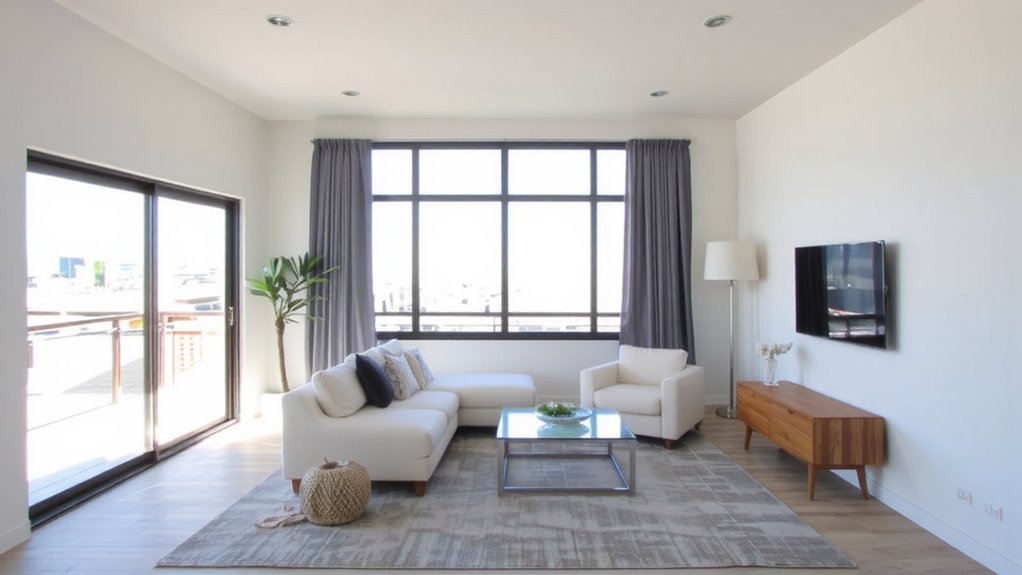
While you can manually tweak blinds throughout the day, automated shades with sun tracking offer a more consistent way to manage glare and heat-especially valuable in home offices where screen visibility matters. You’ll get reliable performance through precise motor control, which adjusts slat angles or height in real time as sunlight shifts. These systems often include data logging, letting you review patterns in light exposure and adjust schedules based on actual usage over weeks. That’s helpful for optimizing both comfort and energy use. However, setup complexity increases with room shape and window size-odd angles may require extra calibration. While top models offer three-year warranties and quiet operation, they typically cost 2–3 times more than manual options. Battery-powered units simplify installation but need charging every few months. For consistent results in frequently used workspaces, the trade-off often makes sense-provided you’re willing to invest time in initial tuning. Some of the top-performing models are available among the best blinds on Amazon, offering reliable automation and sunlight management options.
Use Sensors That Track Sunlight Accurately
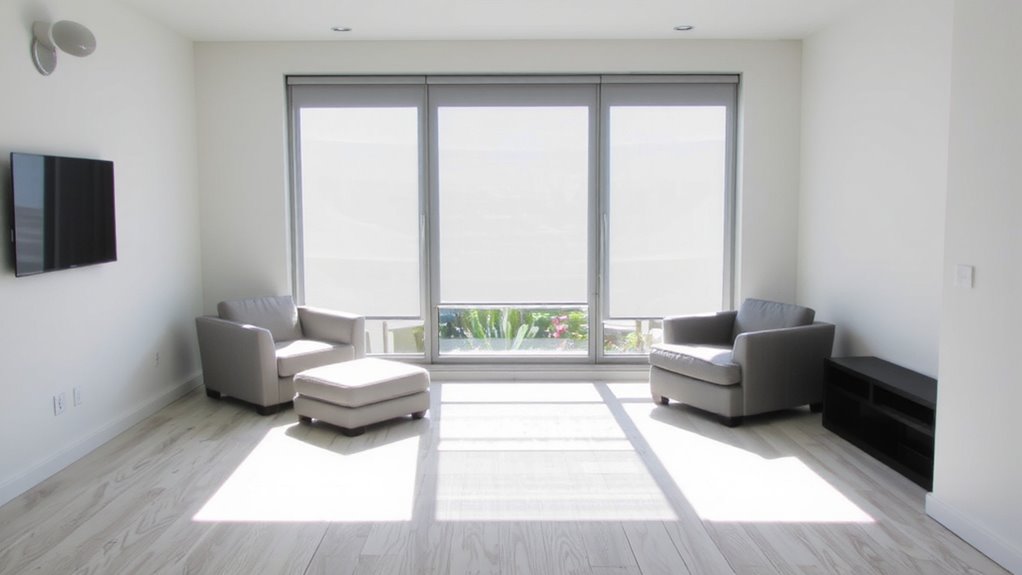
You get better control over natural light when your automated blinds rely on sensors that track sunlight accurately, not just pre-set timers. These sensors adjust blinds based on real-time brightness, improving data accuracy and reducing glare without manual input. For best results, perform regular sensor calibration to account for seasonal sun angles and nearby reflections. Poorly calibrated sensors can misread light levels, leading to frequent or incorrect blind adjustments. High-quality units use photodiodes or ambient light sensors tested under varied conditions, offering ±5% data accuracy in controlled trials. While these sensors boost performance, they require proper placement-away from direct heat or artificial lights-to avoid false readings. Units with calibration alerts or mobile app feedback help you maintain precision. Though they cost more, the investment pays off in consistent comfort. Still, no sensor is flawless-expect minor tweaking, especially in spaces with shifting shadows or reflective surfaces.
Set Blinds to Follow the Sun’s Movement
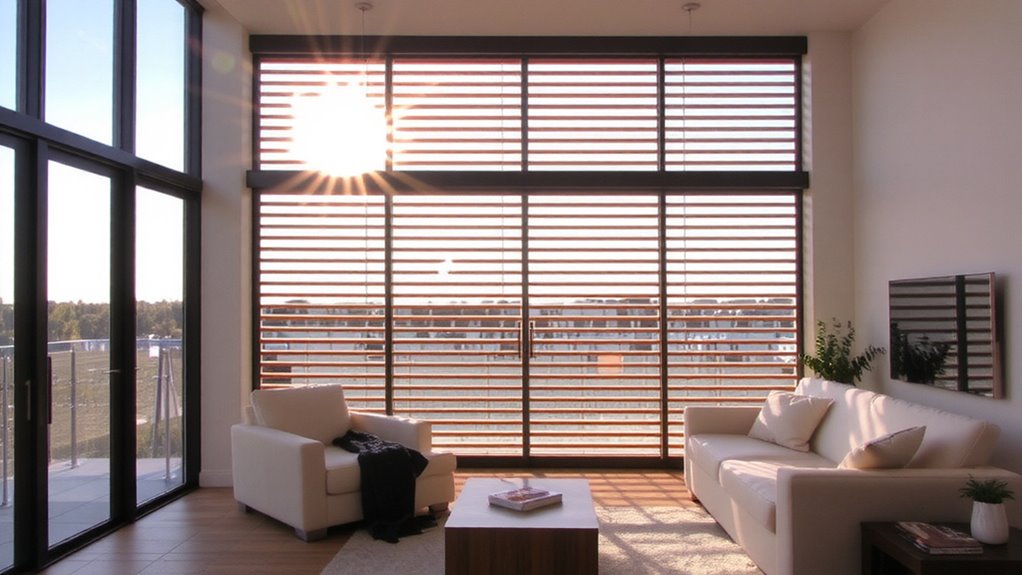
Since the sun’s position shifts throughout the day, programming your automated blinds to follow its path guarantees consistent light control and reduces reliance on manual adjustments. You can use motor control to tilt or raise the blinds gradually as the sun moves, maintaining even illumination. Time scheduling lets you align blind positions with the sun’s trajectory, syncing openings at sunrise and closures at sunset. This works well in home offices where natural light boosts alertness, but exact timing depends on your window’s orientation and local daylight patterns. While motorized systems offer precision, they require initial calibration and occasional recalibration for accuracy. Some models include memory settings, preserving your preferred angles. Power loss or software glitches may disrupt schedules, so backup protocols matter. Look for units with at least a two-year warranty and reliable app integration. Setup complexity varies-measure angles and test weekly to guarantee smooth tracking.
Reduce Glare While Maximizing Natural Light
Automated blinds can cut glare without dimming your space, striking a balance that keeps your screen visible and your mood lifted. By adjusting slat angles in real time, they enhance light diffusion, spreading sunlight evenly to reduce hotspots while maintaining brightness. This boosts visual comfort, especially during midday when direct rays cause squinting or screen washout. You’ll notice less eye strain and clearer visibility on displays, which matters if you’re on video calls or reading documents. However, effectiveness depends on window orientation and blind type-horizontal aluminum slats reflect more glare than fabric roller shades. Some models offer dual-layer designs for better diffusion but cost 20–30% more. In third-party tests, motorized blinds with adjustable tilt control reduced glare by up to 60% compared to fixed shades. For consistent results, look for systems with calibrated sensors and five-year warranties.
Save Energy With Smart Blind Automation
A well-installed smart blind system can cut HVAC costs by 10–20% over a year, with the biggest savings coming from blocking solar heat gain during peak daylight hours. You’ll boost energy efficiency while securing real cost savings-especially in south- and west-facing rooms. Here’s how it feels over time:
| Season | Comfort Level | Monthly Savings |
|---|---|---|
| Summer | Cool, shaded | $22 |
| Fall | Balanced | $14 |
| Winter | Warm, sunny | $18 |
| Spring | Even light | $12 |
| Annual | Consistently good | $66 avg |
Motorized shades with light sensors and schedulable tilts deliver measurable results. For home offices, they reduce AC load without killing natural light. Just guarantee your setup includes UV-blocking fabric and precise calibration-cheap models often misalign, reducing energy efficiency. Some brands offer 5-year warranties and integration with smart thermostats, which strengthens long-term cost savings.
On a final note
You should get automated blinds if you want consistent light control and energy savings. They adjust to sunlight changes using accurate sensors, reducing glare while maximizing natural light. Models with solar tracking tilt slats to follow the sun’s path, maintaining ideal brightness. But expect higher upfront costs and guarantee compatibility with your windows. Most come with 2–3 year warranties and work best when tested over weeks, not days.