Using Circadian Lighting to Support Shift Workers in a Home Office Environment
You can use circadian lighting in your home office to stay alert during night shifts with 500+ lux of 5000–6500K light from flicker-free LED panels, then switch to 2700K in the post-shift wind-down to support sleep. While it helps manage fatigue and melatonin timing, full circadian adaptation is unlikely. Success depends on consistent timing, accurate color temperature, and real-world performance-check warranties and third-party reviews before buying. The best results combine lighting with environmental and behavioral controls. There’s more to optimizing your setup than light alone.
Notable Insights
- Use tunable circadian lighting to deliver bright, cool light (5000–6500K) during night shifts to enhance alertness and suppress melatonin.
- Transition to warm, dim light (2700–3000K) post-shift to support melatonin release and prepare for daytime sleep.
- Install flicker-free, high-CRI LED fixtures that minimize eye strain and accurately simulate natural light patterns.
- Position circadian lights in the home office to maximize vertical eye-level illumination for effective circadian stimulus.
- Combine lighting strategies with blackout curtains and white noise to create a sleep-conducive environment after night shifts.
Recognize How Shift Work Disrupts Sleep
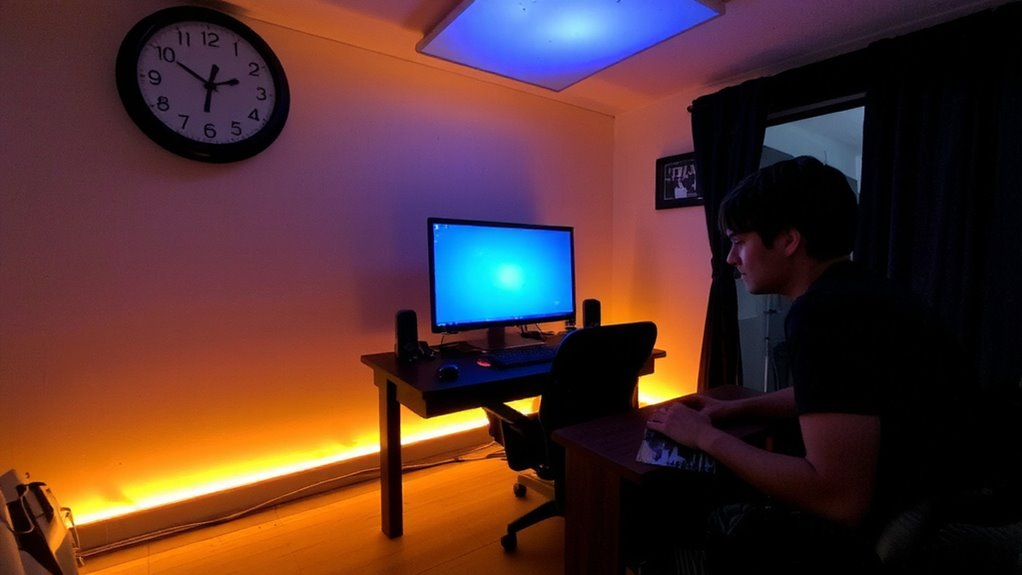
Why does working the night shift leave you feeling groggy, unfocused, or struggling to sleep during the day? Because it clashes with your body’s natural rhythm, leading to serious sleep hygiene issues and hormone imbalance. At night, your brain expects darkness, triggering melatonin release for sleep-but light exposure delays this, keeping you alert when you need rest. During day sleep, even with blackout curtains, ambient noise and light leaks often disrupt solid rest. This constant misalignment affects cortisol, insulin, and other hormones, harming long-term health. You might adapt somewhat, but full adjustment is rare. Prioritizing strict sleep routines helps, but it’s not a complete fix. Shift work inherently strains your system, so while smart lighting later can assist, don’t expect miracles. Real improvement requires consistent habits, not just gear. Using a best light therapy lamp can help regulate circadian rhythms by simulating natural daylight during night shifts.
Understand How Circadian Lighting Works
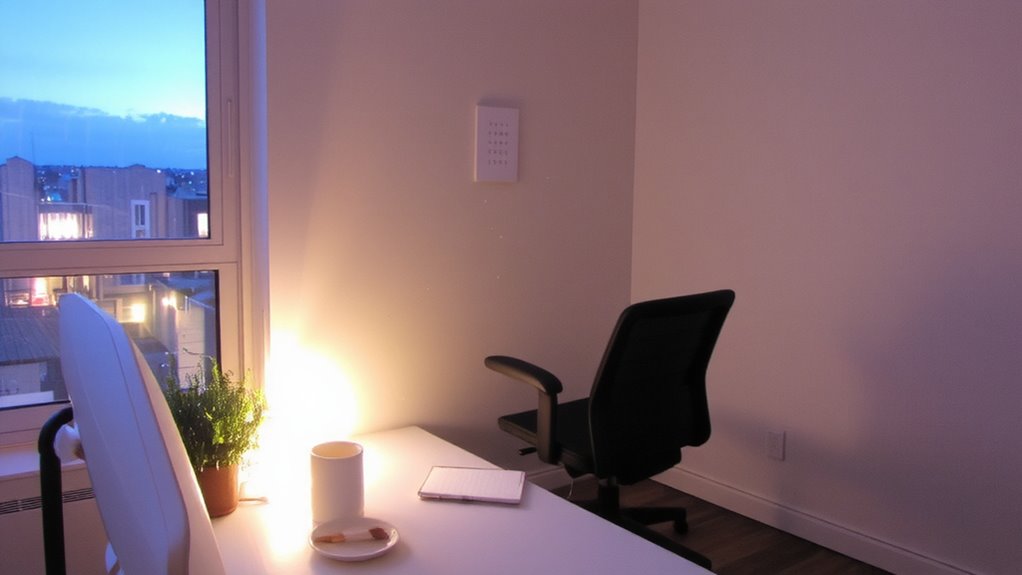
Light plays a central role in regulating your internal clock, and circadian lighting systems use that to your advantage. These systems adjust color temperature and brightness throughout the day to match natural sunlight patterns, helping cue your body’s rhythm. Your light sensitivity peaks in the blue-green spectrum around 480 nanometers, which directly influences melatonin suppression-meaning exposure to cool, bright light during waking hours reduces melatonin and keeps you alert. In the evening, warmer, dimmer light minimizes suppression, supporting sleep. Systems like tunable LED panels or smart bulbs (e.g., Philips Hue or Nanoleaf) let you shift from 6500K to 2700K gradually. Look for products with CRI over 90 and flicker-free operation to reduce eye strain. While real-world results vary, consistent use improves rhythm alignment. Still, effectiveness depends on proper placement, timing, and avoiding screen-based blue light after scheduled wind-down.
Stay Alert With Bright, Cool Light at Night
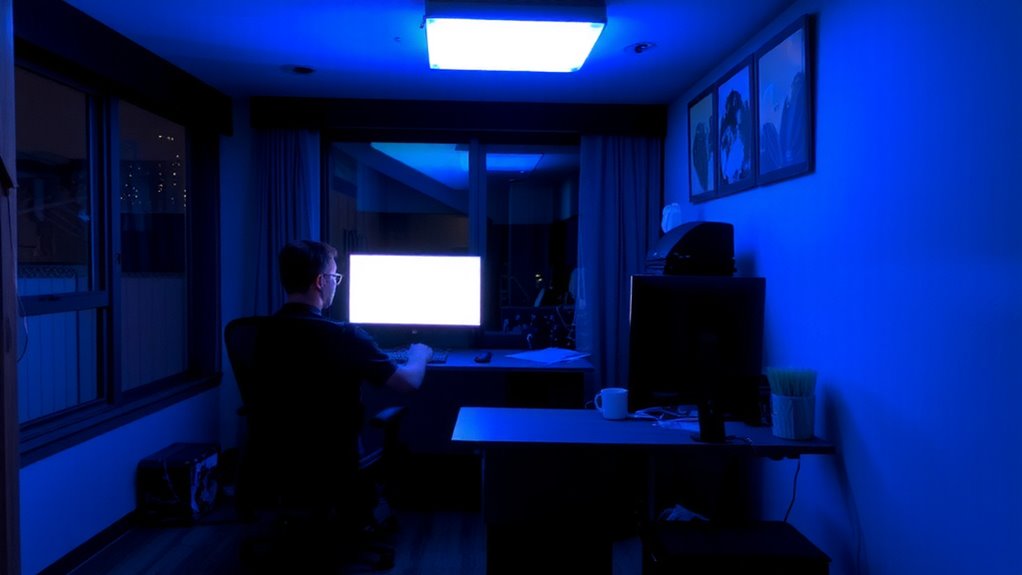
Pulling night shifts doesn’t mean you have to fight constant fatigue-strategic use of bright, cool light can keep your alertness up when your body expects to sleep. Night brightness around 500 lux or higher, with a color temperature of 5000–6500K, supports alertness optimization during late hours. Use a high-output LED panel or adjustable desk lamp positioned to minimize glare. Real-world tests show improved focus, but eye strain can occur without proper diffusion. For content creators working overnight, choosing the right lighting setup is crucial-consider models highlighted in the best desk lamps for content creators for optimal performance and comfort.
| Feeling | With Cool Light | Without It |
|---|---|---|
| Focus | High | Low |
| Energy | Steady | Fading |
| Mood | Alert | Drowsy |
| Concentration | Sharp | Scattered |
| Fatigue | Delayed | Early onset |
Results vary by individual, and long-term use requires breaks and screen-time management. Not all fixtures deliver consistent output-check lumens and warranty length before buying.
Use Light Color to Boost Alertness or Sleep
A well-chosen color temperature can make a measurable difference in your alertness during night shifts or your ability to wind down afterward. Cool white light, around 5000–6500K, mimics daylight and supports focus through light therapy principles, helping suppress melatonin when you need it most. But prolonged exposure can increase eye strain, especially if the light is overly bright or poorly diffused. Warmer tones, near 2700–3000K, signal your body it’s time to relax, reducing alertness safely post-shift. Using adjustable LED bulbs or smart lamps lets you switch between these temperatures as needed. Look for models with flicker-free operation and high color rendering index (CRI >90) to minimize discomfort and improve visual clarity. While effective, results vary per individual, so test settings over several shifts. Not all “circadian” labeled products deliver consistent performance-verify claims through independent reviews and real-world testing before relying on them fully. Some modern desks integrate lighting and charging, like top desk lamps with wireless charging for added convenience.
Set a Circadian Lighting Schedule at Home
How do you reset your internal clock after a night shift when daylight’s already streaming through the windows? You need a circadian lighting schedule that mimics natural patterns, even indoors. Start by aligning light placement with your wake-sleep cycle-position bright, cool-toned lights where you’ll sit during active hours, and dim, warm lights near relaxation zones. Guarantee bulb compatibility with dimmers or smart hubs so you can adjust intensity and color temperature smoothly. Timers help automate shifts in lighting, reinforcing rhythm without daily effort. While effective, success depends on consistency and avoiding conflicting light sources like unshielded windows or screens. Poor placement can cause glare or uneven exposure, reducing benefits. And not all bulbs work with all systems-check compatibility to avoid flickering or limited range. It’s not a cure-all, but done right, it supports better alertness and sleep over time.
Find the Best Circadian Light Bulbs for Shift Work
Some of the most effective circadian light bulbs for shift work deliver tunable white light with a color temperature range between 2700K and 6500K, letting you simulate daylight during night shifts and wind down with warm light afterward. Your choice of light temperature and bulb placement directly affects alertness and circadian alignment. Place bulbs overhead or task-facing to mimic natural exposure, avoiding glare and shadows.
| Bulb Model | Light Temperature Range | Smart Features |
|---|---|---|
| Philips Hue White | 2200K–6500K | App control, scheduling |
| Sylvania Smart+ | 2700K–6500K | Voice control, dimming |
| GE Cync Bright | 2200K–5000K | No hub required |
Look for at least a 25,000-hour lifespan and verify third-party testing. Cheaper models may lack precise light temperature control or durable bulb placement options.
Make Your Bedroom Calm for Daytime Sleep
Creating a restful bedroom environment for daytime sleep means prioritizing darkness, quiet, and consistent cool temperatures-your sleep quality depends on it. You’ll want blackout curtains that block 100% of sunlight and outside light, especially if you live in a bright urban area. Look for ones with thermal insulation to also help regulate temperature. White noise machines can effectively mask daytime sounds like traffic or neighbors, but pick one with adjustable frequency ranges so it doesn’t become a distraction. Keep your bedroom around 65°F (18°C) for ideal sleep onset. Avoid relying solely on expensive gear-some high-end systems overpromise. Test setups during trial periods, if possible. While blackout curtains and white noise machines are proven aids, individual tolerance varies. Combine them with good habits, like a consistent pre-sleep routine, for best results.
On a final note
You should use circadian lighting to help manage alertness and sleep if you work shifts from home. Bright, cool light (5000K–6500K) at night boosts focus, while warm, dim light (2700K–3000K) before bed supports sleep. Choose smart bulbs with adjustable color temperature and a high CRI (>90) for accuracy. Set schedules via apps, but test routines over two weeks-results vary by individual, and consistent timing matters more than any single product.