Using Sensory Grounding to Stop Anxiety Spirals During Work
You can stop an anxiety spiral at work in under two minutes using sensory grounding-techniques like the 5-4-3-2-1 method shift focus from thoughts to real sensations, calming your nervous system. Box breathing or pressing your wrists to your desk takes 60 seconds and works quietly in meetings. Results vary, but most feel relief within 90 seconds. No gear’s needed, though a smooth stone or brown noise through basic headphones can help-just test discreetly. Strong scents may bother coworkers. Your exact mix of moves matters more than any tool, and small, consistent use builds resilience over time-what works for one might not work for you, so keep adjusting until it clicks.
Notable Insights
- Use the 5-4-3-2-1 method to quickly refocus on present sensations and halt escalating anxiety at work.
- Practice box breathing for 60 seconds: inhale, hold, exhale, pause for 4 seconds each to regulate your nervous system.
- Perform discreet grounding moves like slow foot tapping or wrist pressing during meetings to reduce anxiety unnoticed.
- Carry a tactile anchor, like a smooth stone, to interrupt stress with brief, focused touch.
- Schedule hourly check-ins to catch early anxiety signs and apply grounding before spirals deepen.
What Sensory Grounding Is and How It Calms Anxiety
Anxiety doesn’t have to spiral out of control-sensory grounding can help you regain balance fast. It works by redirecting your focus to present-moment sensations, which interrupts the stress loop. You can use breathing techniques like box breathing-inhale four seconds, hold four, exhale four, pause four-to slow your nervous system. Pair that with mindful observation: name five things you see, four you feel, three you hear, two you smell, one you taste. This isn’t a cure, but it’s a practical tool backed by real-world use. Results vary-some notice calm in 60 seconds, others take practice. No special gear’s needed, though noise-canceling headphones or a fidget tool might help briefly. These items don’t boost effectiveness much, and cheap versions often fail within months. It’s the method, not the equipment, that matters.
Why Work Triggers Anxiety (And How to Recognize It Early)?
What makes work such a common trigger for anxiety? You’re often stuck juggling deadlines, meetings, and shifting priorities-all under constant environmental pressures. Open offices buzz with noise, while remote setups can blur boundaries, making it hard to disconnect. Perfectionism triggers creep in when you feel like anything less than flawless work is failure. That voice saying “I should’ve done more” or “What if I mess up?” is a warning sign. You might notice tension, racing thoughts, or irritability early on-don’t ignore them. These aren’t just stress; they’re anxiety building. Catching it early means checking in with yourself hourly, not waiting until you’re overwhelmed. It’s not about fixing everything at once but recognizing patterns. Awareness is step one. You don’t need special gear or a perfect home office-just honest observation.
Use the 5-4-3-2-1 Method to Ground Yourself at Work
One simple, research-backed method to reduce acute anxiety at work is the 5-4-3-2-1 grounding technique-it’s free, takes under two minutes, and doesn’t require any tools or apps. By combining mindful breathing with focused attention on sensory input, you shift mental resources away from panic and back to the present.
| Sense | Example (Office Setting) |
|---|---|
| 5 things you see | Desk lamp, plant, coffee mug |
| 4 things you feel | Chair under you, feet on floor, glasses on nose, pen in hand |
| 3 things you hear | AC hum, keyboard clicks, distant chatter |
This structured format prevents rumination. While it won’t fix chronic stress, it does offer real-time relief. Success depends on consistent practice-especially before anxiety peaks. Results vary, but most report reduced intensity within 90 seconds. Use it at your desk, in a bathroom stall, or during a quiet hallway walk.
Discreet Grounding Moves for Your Desk
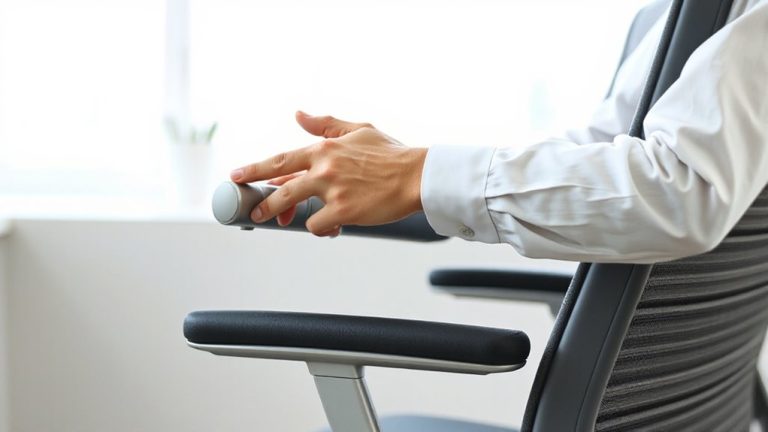
How do you stay centered when your inbox is overflowing and your desk feels like the eye of a storm? Discreet grounding moves can help you reset without drawing attention. Try slow foot tapping-press your heels down, then lift your toes, holding briefly. This rhythmic motion builds body awareness and cuts tension without looking odd. For deeper focus, use wrist pressing: place your palms flat on your desk and press down firmly for 10 seconds. You’ll feel mild resistance in your arms and shoulders, which activates proprioception and stabilizes your nerves. Both techniques work quietly and require zero gear, making them ideal for open offices or video calls. They’re not magic fixes-if anxiety is severe, they may only offer short-term relief-but combined with breathing, they add real value. No app, mat, or gadget needed, just your body and a few seconds.
How Touch, Sound, and Smell Reduce Work Anxiety
Can a few quiet moments with your hands, ears, and nose really dial back work anxiety? Yes-but only if you use the right sensory tools deliberately. Tactile anchors, like a smooth stone or textured fidget tool, ground you by giving your mind a physical focal point-studies show 30 seconds of touch can slow cortisol spikes. Aromatic cues, such as a drop of lavender oil on a tissue, trigger calm through the limbic system, though strong scents may bother coworkers. Low, ambient sound-like brown noise through over-ear headphones-can mask jarring office noise without blocking communication. These aren’t miracle fixes; effects vary by sensitivity and environment. A $15 essential oil diffuser isn’t better than a $2 hand lotion if the scent or texture doesn’t suit you. Test options quietly. Avoid anything disruptive or overly perfumed.
Make Grounding a Daily 60-Second Work Habit
Three focused minutes each day-just sixty seconds at three key shifts-can make grounding a reliable defense against work anxiety. You don’t need a special setup or expensive gear; just pair grounding with existing habits through habit stacking-like after checking email or before lunch. These micro pauses work best when timed with natural shifts, helping your brain reset without disrupting flow. Use one minute to focus on touch, sound, or smell: feel your chair’s fabric, listen to office hum, or breathe in coffee’s scent. Consistency matters more than duration, and studies show daily micro pauses reduce cumulative stress. But keep expectations realistic-they won’t replace therapy or fix toxic workloads. Grounding is a tool, not a fix-all. Over time, these brief moments build resilience, making anxiety spikes easier to manage when they come.
Create a Personal Grounding Routine for Stressful Moments
You’ve already built small grounding pauses into your workday, and now it’s time to design a personalized routine for when stress hits hard. Start with mindful breathing: inhale for four counts, hold for four, exhale for six-this ratio activates your parasympathetic system and lowers heart rate within 90 seconds. Pair it with emotional labeling: name what you’re feeling (“frustration,” “overwhelm”) to reduce amygdala reactivity. Use a quiet corner or even your chair-no special gear needed. A noise-canceling headset can help block distraction, but isn’t essential. Test your routine during low-stress moments to refine timing and cues. Apps can guide you, but may create dependency; aim for independence in five to seven days. Results vary-most report calmer responses within a week, though consistency matters more than perfection. Your routine should fit your space, schedule, and sensory preferences-no one-size-fits-all setup works.
On a final note
You should try sensory grounding-it’s proven to reduce anxiety fast. The 5-4-3-2-1 method works in under two minutes, no gear needed. Keep a textured stone or scented pen at your desk for quick touch or smell cues. These moves are subtle, so no one notices. Results vary if you’re highly distracted or in open offices. It’s free, portable, and works immediately-but won’t replace therapy for chronic anxiety.