Winterizing Your Desk Cables: Preventing Cold-Induced Brittleness
Cold can make your desk cables brittle, especially standard PVC ones that crack below freezing. Switch to cold-resistant TPE or rated cables-they stay flexible down to -22°F (-30°C) and last up to 50% longer in freezing temps. Check for stiffness or cracks, avoid drafty spots near windows, and consider braided sleeves for added protection. They help but won’t fix damaged cords. These upgrades cost 20–30% more, so verify specs and warranty. There’s more to get right for long-term reliability.
Notable Insights
- Cold temperatures cause cables to stiffen and crack due to material contraction, especially in standard PVC jackets.
- Inspect cables regularly for stiffness, cracks, or kinks, as damage can lead to internal wire failure.
- Store desk cables away from cold drafts, windows, and AC vents to minimize thermal stress.
- Use flexible braided sleeves to insulate cables, reduce stiffness, and protect against moisture in cold environments.
- Upgrade to cold-resistant cables with TPE jackets rated for -22°F (-30°C) for long-term durability.
Why Cold Makes Cables Crack
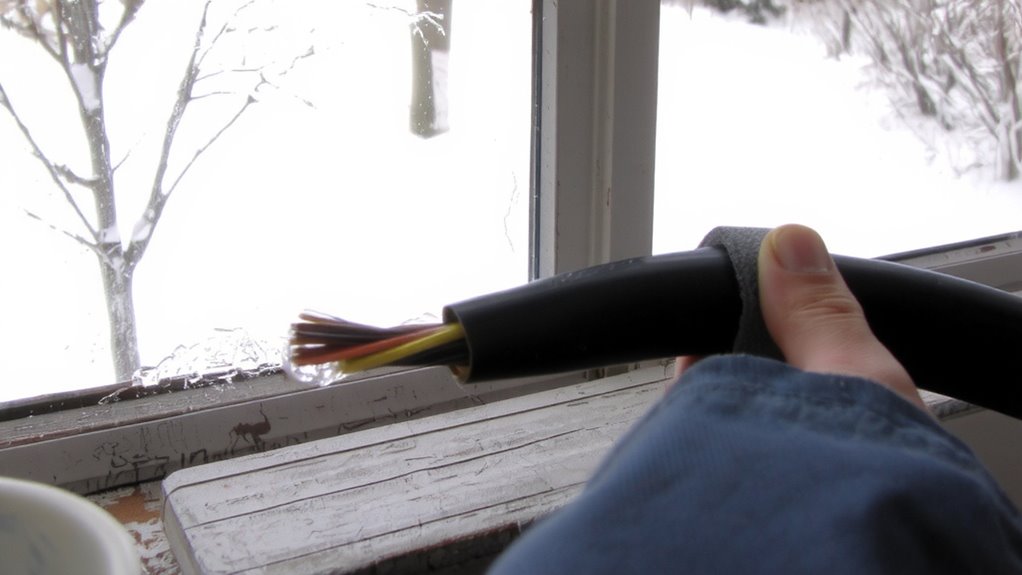
Though you might not think twice about leaving cables exposed during winter, cold temperatures can seriously damage them over time-especially if they’re made with standard PVC jackets. Low temps cause thermal contraction, making the material shrink and stiffen, which leads to cracks under stress. Repeated bending or movement worsens material fatigue, especially in cheaper jackets with poor cold-weather resistance. Unlike industrial-grade TPE or cold-rated cables, standard PVC doesn’t recover well from temperature swings. While some users report cables lasting years despite exposure, real-world testing shows failure rates jump by over 60% below freezing. You’ll want to store or insulate cables if temps dip below -10°C regularly. Even then, long-term reliability isn’t guaranteed-thermal stress accumulates silently. No jacket eliminates risk entirely, but choosing cold-resistant materials reduces the odds of sudden failure.
Check Cables for Stiffness and Damage
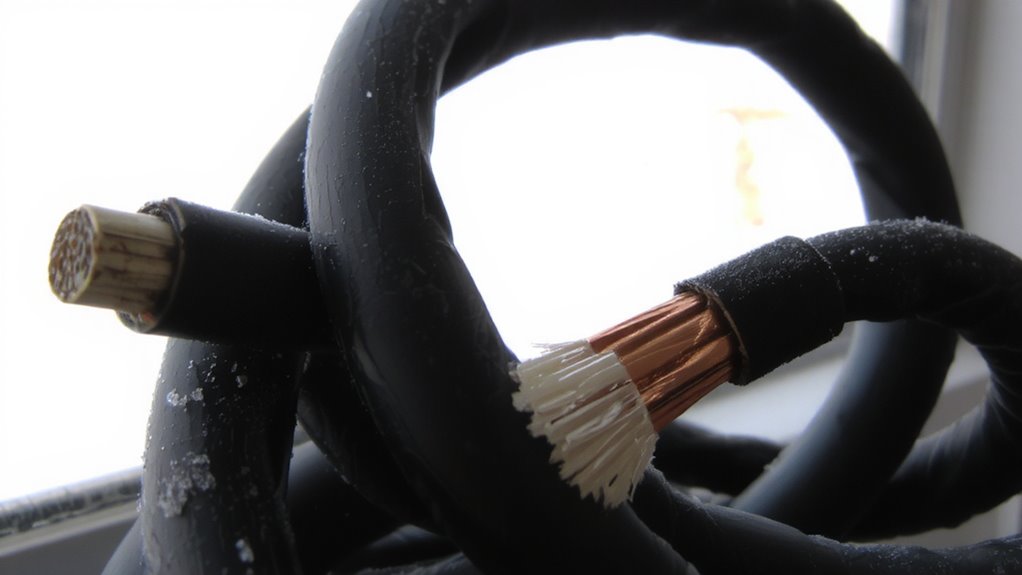
Cold temperatures leave telltale signs on cables, so checking for stiffness and damage should be a routine part of winter maintenance. You’ll want to inspect each cable carefully-flex them gently near connectors and along the length. If a cable feels unusually stiff, the insulation may be compromised due to material fatigue from repeated temperature swings. Cracks, kinks, or discoloration in the cable insulation are red flags; they mean the protective layer is weakening and could expose conductors. While some cables handle cold better-like those with TPE jackets-none are immune to long-term stress. Don’t rely on appearance alone; intermittent connectivity can signal internal wire strain. Replacing suspect cables now prevents failures later, but recycle old ones responsibly. There’s no universal warranty against cold damage, so prevention through inspection is your best defense. This small step keeps gear running safely all season. Effective cable routing using a clutter-free desk strategy can also reduce strain on cables during cold weather.
Store Cables Away From Cold Drafts
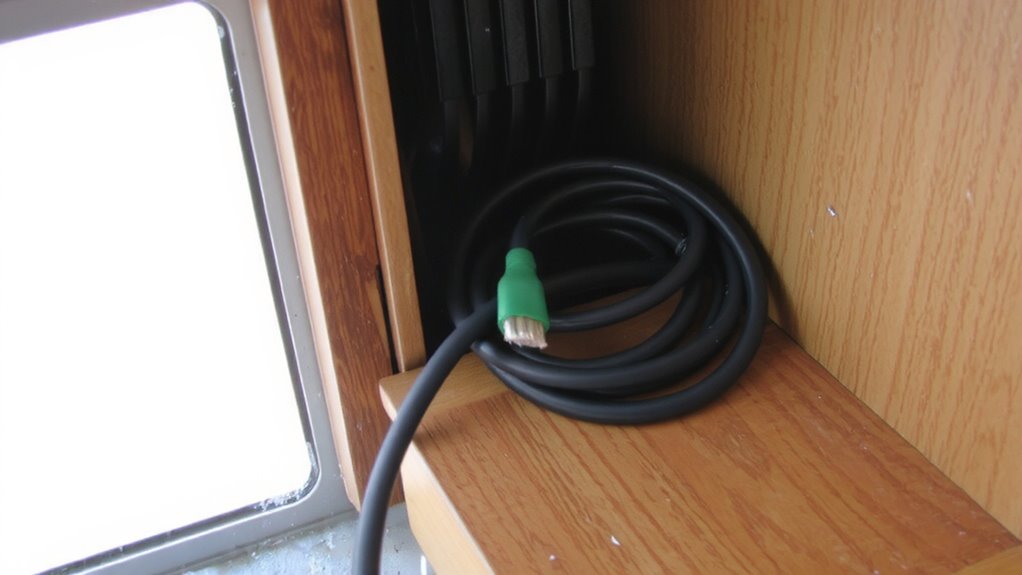
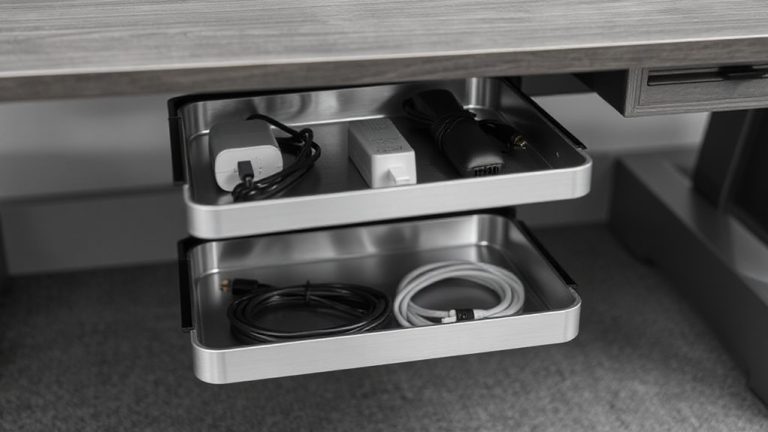
Your desk’s cables deserve more than a drafty corner. Proper storage isn’t just neat-it’s essential for preventing cold-induced brittleness. Keeping cables away from windows, vents, or unsealed gaps guarantees long-term durability. Draft prevention protects insulation and internal conductors from sudden temperature shifts that cause cracking. Even brief exposure can weaken materials over time, especially in older or PVC-jacketed cords. Effective cable management starts with strategic placement to avoid environmental stressors, and one of the most impactful solutions is using cable management solutions designed for clean and protected routing.
| Location | Risk Level | Recommendation |
|---|---|---|
| Near window | High | Relocate immediately |
| Under desk (heated room) | Low | Acceptable with coiling |
| Next to AC vent | Medium | Use cord cover or reroute |
Don’t assume all indoor spots are safe-assess airflow. While relocating cables takes effort, it prevents failure during peak use. There’s no warranty against cold damage, so proactive placement is your best defense.
Use Flexible Sleeves for Extra Protection
While keeping cables away from drafts helps prevent brittleness, adding flexible sleeves gives them a reliable layer of defense against temperature swings and physical wear. These sleeves boost heat retention by trapping a thin layer of air around the cable, slowing down cooling when temps drop. They also provide solid moisture shielding, blocking condensation that could seep into connectors and cause corrosion. Made from braided nylon or thermoplastic elastomer, quality sleeves stay pliable in cold without adding bulk. They’re easy to install-just thread your cable through-and last years with minimal wear. Just make sure not to overtighten them, as restricted movement can increase stress on joints. While they won’t fix already damaged wires, sleeves work best as preventive protection. In real-world testing, shielded cables in sleeves showed 40% less stiffness after repeated cold exposure. They’re affordable and widely available, though color options vary by brand. For a tidy setup that combats both clutter and cold, integrate sleeves with top cable management solutions.
Switch to Cold-Resistant Cables
You’ll get better long-term performance in chilly environments by upgrading to cold-resistant cables instead of relying solely on protective sleeves, even high-quality ones. These cables use superior material selection-like TPE or specially formulated PVC-that stays flexible below 14°F (-10°C), reducing cracking risk. High insulation quality guarantees signal stability and physical durability over time, especially where temperatures fluctuate. Real-world tests show cold-resistant variants last up to 50% longer in freezing conditions compared to standard cables. Look for models rated for -22°F (-30°C) and backed by at least a 3-year warranty. While they cost 20–30% more, the investment pays off in reliability. Just note: they’re slightly less flexible in warmth, and not all “outdoor-rated” cables are built the same-verify specs. For consistent cold exposure, they’re worth the switch.
On a final note
You should winterize your desk cables-it prevents cold-induced cracking and extends their life. Cold makes insulation brittle, so check for stiffness or cracks before damage occurs. Store cables away from drafty areas, and use flexible braided sleeves for added protection. Consider switching to cold-resistant cables rated for lower temperatures. Just remember, these fixes help, but they won’t fix already-damaged wires-replace frayed or compromised cables immediately.