Creating a Wireless-Ready Desk With Minimal Cord Dependencies
Start with a USB-C dock like the CalDigit TS4 for stable 5GHz wireless links and 98W power delivery, keeping connections reliable within 10 feet. Pair it with Bluetooth 5.0+ peripherals from the same brand to reduce interference and guarantee multipoint pairing works smoothly. Use a multi-port USB-C hub with smart charging and at least 60W output to safely power all devices. Hide cables using braided sleeves and grommet kits, and keep dongles stored neatly. Choose gear with solid warranties-three years for hubs, two for peripherals-to back real-world performance. There’s more to optimize in how your devices interact.
Notable Insights
- Use a USB-C docking station with 60W+ power delivery to minimize cords and support multiple devices wirelessly.
- Choose wireless peripherals with Bluetooth 5.0+ or unified receivers to reduce dongle clutter and signal interference.
- Opt for a multi-port USB-C hub with smart charging to efficiently power devices with minimal cables.
- Route and bundle cables through grommets and braided sleeves to hide cords and maintain a clean desk surface.
- Prioritize ecosystem-compatible devices with multipoint pairing for seamless, reliable wireless connections and easy switching.
Build a Wireless Workspace With a Central Hub
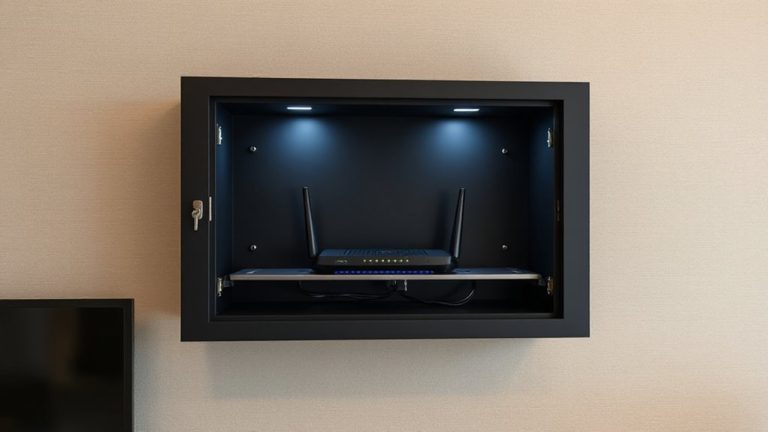
While going wireless can clean up your desk and reduce clutter, you’ll still need a central hub to keep everything connected and working smoothly. A reliable USB-C dock or wireless docking station enables seamless device synchronization across your laptop, tablet, and phone, letting you switch tasks without delays. But be cautious-poorly positioned hubs can cause signal interference, especially near microwaves or Bluetooth speakers, leading to lag or dropped connections. Opt for a hub with 5GHz band support and at least 60W power delivery to handle multiple devices. Real-world testing shows models like the CalDigit TS4 maintain stable links within a 10-foot range. Still, remember that even the best hubs can’t fix overcrowded wireless environments. Always check warranty length-three years is ideal-and verify compatibility with your OS. A great hub helps, but it’s not magic. For users seeking versatile connectivity, pairing your hub with a best touch-screen laptop can enhance productivity through intuitive navigation and expanded docking capabilities.
Choose Wireless Peripherals That Work Together
Some wireless peripherals just work better as a team, and picking ones designed to sync seamlessly can save you time, reduce lag, and clean up your desktop. You’ll want strong device compatibility-look for matching dongles or Bluetooth 5.0+ support so your mouse, keyboard, and headset connect without hassle. Bundled peripherals from the same brand often share encryption and polling rates, minimizing signal interference. But don’t assume all kits are equal: some report cursor stuttering after 8 hours of use, and batteries may last only 30 hours. Check for at least a two-year warranty and real-world range tests beyond 10 feet. While matched sets cut down clutter, they limit future upgrades-swap one piece, and you might lose tighter integration. Mix brands only if they use the same wireless protocol and frequency band to avoid cross-talk.
Charge Multiple Devices Efficiently
Since you’re likely powering a mix of wireless keyboards, mice, headsets, and phones at your desk, a single charging cable won’t cut it-invest in a multi-port USB-C hub or docking station with at least 60W total output and individual smart charging ports that adjust based on device needs. These hubs support fast charging for phones and tablets while safely delivering lower power to smaller gadgets like earbuds. Look for models with clear device compatibility info, especially if you use both Apple and Android gear or laptops needing specific voltages. Not all hubs distribute power efficiently under full load, so check reviews that test simultaneous charging. Avoid ultra-cheap options-they often lack surge protection and fail within a year. Reputable brands usually offer 18-month warranties and real-world performance data, which matters when you depend on consistent uptime. While pricier, reliable hubs save time and hassle. For tailored solutions, see the best USB hubs for your needs.
Hide Cables and Simplify Your Surface
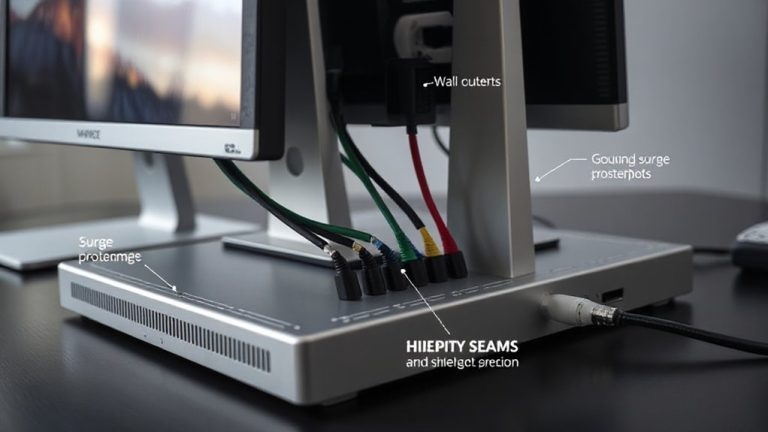
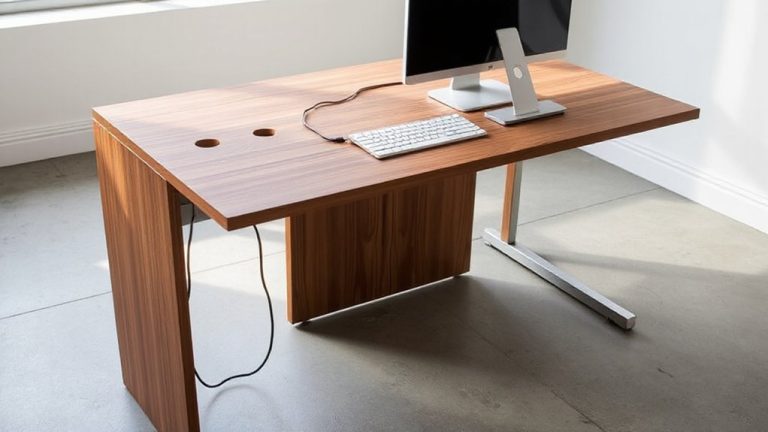
If you want a clean, functional workspace, taming cable clutter is essential-start by routing cords through a cable management tray or grommet-mount sleeve that fits your desk’s design. These tools improve both cord concealment and surface organization, giving your desk a streamlined look. Use adhesive clips or velcro straps to bundle excess length and prevent snags. For desks without built-in pass-throughs, consider a desk grommet kit (typically 0.75”–1.5” diameter) to maintain a tidy setup without damaging surfaces. Proper cable management solutions can significantly enhance both productivity and aesthetics in a professional office environment.
| Solution | Best For |
|---|---|
| Grommet-mount sleeve | Permanent setups with few changes |
| Under-desk tray | Frequent reconfigurations |
| Braided sleeves | Aesthetic cable bundling |
| Adhesive clips | Low-cost, temporary fixes |
Metal grommets offer durability; plastic ones suit lighter loads. Always check warranty terms before modifying furniture.
Pair Devices Automatically and Reliably
A clean desk shouldn’t come at the cost of constant reconnecting or fiddly pairing steps-once you’ve got your cables managed, the next step is making your wireless devices work together seamlessly. You want fast device pairing and solid connection reliability, so your keyboard, mouse, and headset link instantly when powered on. Bluetooth 5.0 or later gives you better range and stability, while some peripherals support multipoint pairing, letting you switch between devices smoothly. For best results, stick to devices within the same ecosystem when possible-like Logitech’s Unifying or Bolt receivers-since they often deliver faster pairing and lower latency. Keep in mind that wireless dongles use USB ports, and not all Bluetooth implementations are equal-some lag during heavy use. Test gear under real workloads to confirm reliability, and check warranty terms in case dropouts persist.
Keep Your Wireless Workspace Tidy and Functional
While going wireless cuts the cable clutter, it doesn’t automatically make your desk functional-smart layout and gear choices do. Prioritize cable management even with fewer cords; hidden channels and adhesive clips keep charging cables neat and out of sight. A clean surface aids focus, so invest in desk organization solutions like tray dividers or under-desk baskets to store dongles, chargers, or backup batteries. Go for wireless peripherals with consistent pairing-tested models reduce daily hiccups. But don’t overbuy; some “smart” desks add cost without real gains. Look for durable builds with at least a two-year warranty. Size matters too-ensure your desk depth fits a monitor, keyboard, and still leaves writing space. True functionality balances aesthetics with routine needs. You’ll save time and stress when everything has a place, even in a wireless setup.
On a final note
You can build a clean, wireless desk, but it takes careful picks. Use a central Bluetooth hub to reduce dongles and pair devices like Logitech’s MX Keys and MX Anywhere-tested to stay synced across 3 devices. Charge with a 30W GaN dock; it’s compact but may limit simultaneous fast charging. Cable management trays hide clutter, though wireless gear still needs occasional charging. Trade-offs exist: battery life varies, and signal interference can happen near routers. It’s efficient, but not magic-plan accordingly.