Hip Flexor Tightness Reduction Strategies: Stretching and Strengthening Exercises to Combat the Effects of Sedentary Work
Sitting shortens your hip flexors and weakens your glutes, but you can reverse it with consistent stretching and strengthening. Try the deep lunge and kneeling twist 3–5 times weekly, hold each 30 seconds, and engage your core to avoid back strain. Pair these with glute bridges and planks to restore balance. Movement breaks every 30–60 minutes matter more than any desk or chair. Overdoing stretches or relying only on gear backfires-start slow, stay consistent, and see how small daily efforts reshape your mobility long-term.
Notable Insights
- Prolonged sitting shortens hip flexors, leading to tightness and reduced range of motion over time.
- Stretch tight hip flexors with deep lunges and kneeling twists 3–5 times weekly for best results.
- Strengthen weak glutes and core with glute bridges, bird-dogs, and planks to improve pelvic alignment.
- Take movement breaks every 30–60 minutes to reset muscle tension and reduce adaptive shortening.
- Combine foam rolling, dynamic stretches, and posture checks daily to prevent and reverse hip tightness.
Why Desk Jobs Tighten Your Hip Flexors
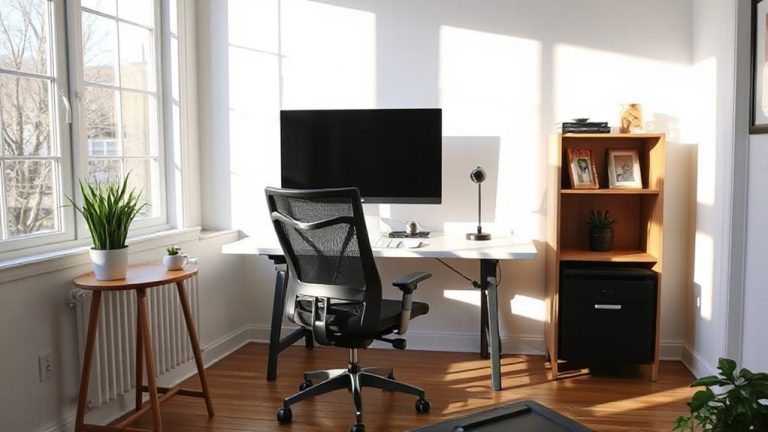
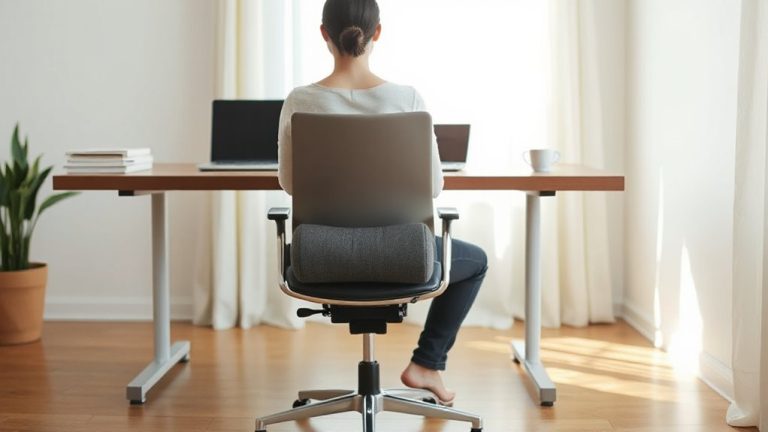
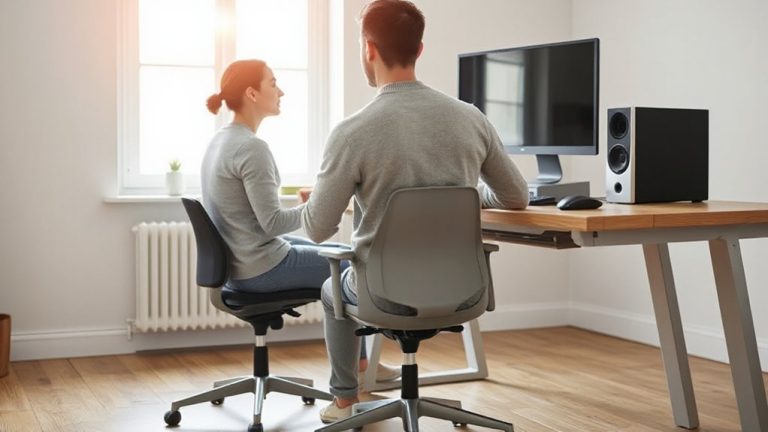
While sitting for extended periods might seem harmless, it’s actually the main reason your hip flexors tighten up if you’re stuck at a desk all day. Prolonged sitting leads to anatomical changes-your hip flexors stay in a shortened position, gradually adapting to this posture. Over time, that stiffness can alter pelvic alignment and increase pressure on surrounding structures, raising the risk of nerve compression, especially in the lumbar spine. You might not notice it at first, but symptoms like lower back discomfort or hip tightness often follow. Standing desks or ergonomic chairs can help, but they’re not a fix-all. You still need movement breaks every 30–60 minutes to counteract these effects. There’s solid evidence supporting regular mobility work, though results depend on consistency. No product replaces active recovery, and long-term benefits come from habit, not gear.
How Sitting Shortens Your Hip Flexors
Because your hip flexors are actively engaged every time you bend at the waist, sitting for hours keeps them in a chronically shortened position, and that constant lack of stretch leads to adaptive tightening. Over time, this repetitive posture triggers muscle adaptation, where your hip flexors adjust to the shortened length as the new normal. These anatomical changes reduce your range of motion and can affect posture and gait. Even if you sit on an ergonomic chair or use a standing desk, without regular movement, your muscles won’t reset. The adaptation isn’t immediate, but consistent sitting-especially over months-reprograms muscle memory. You might not feel pain yet, but the structural shift is happening. The real fix isn’t gear; it’s consistent positional changes. Sitting won’t ruin you, but ignoring movement breaks will compound risk.
5 Stretches to Loosen Tight Hip Flexors Now
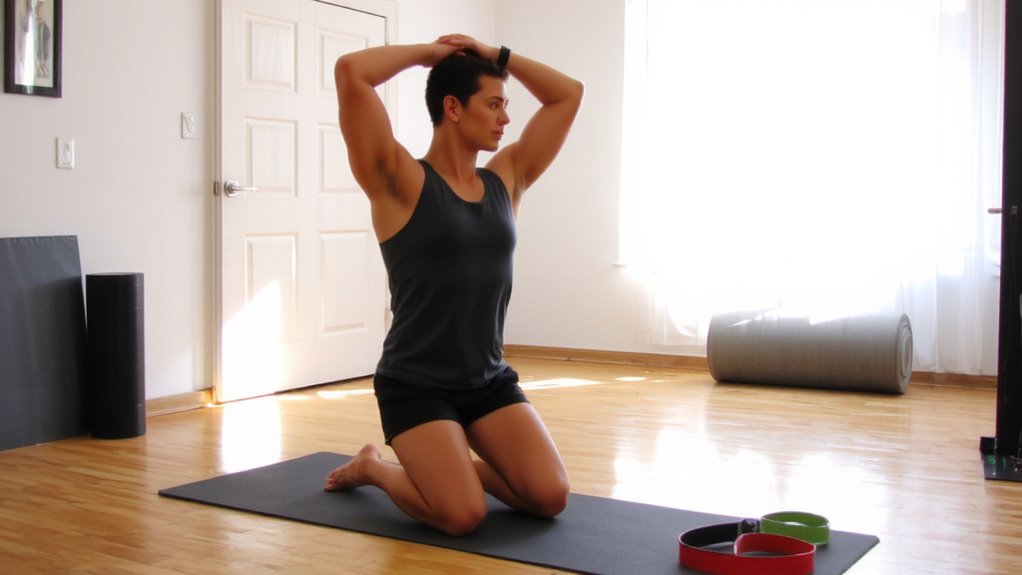
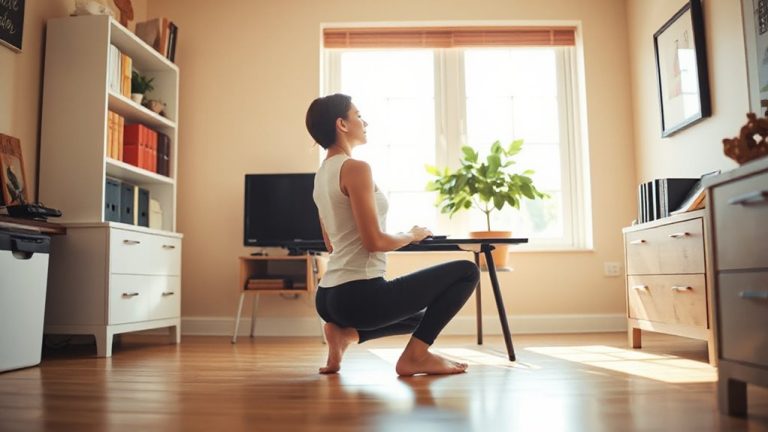
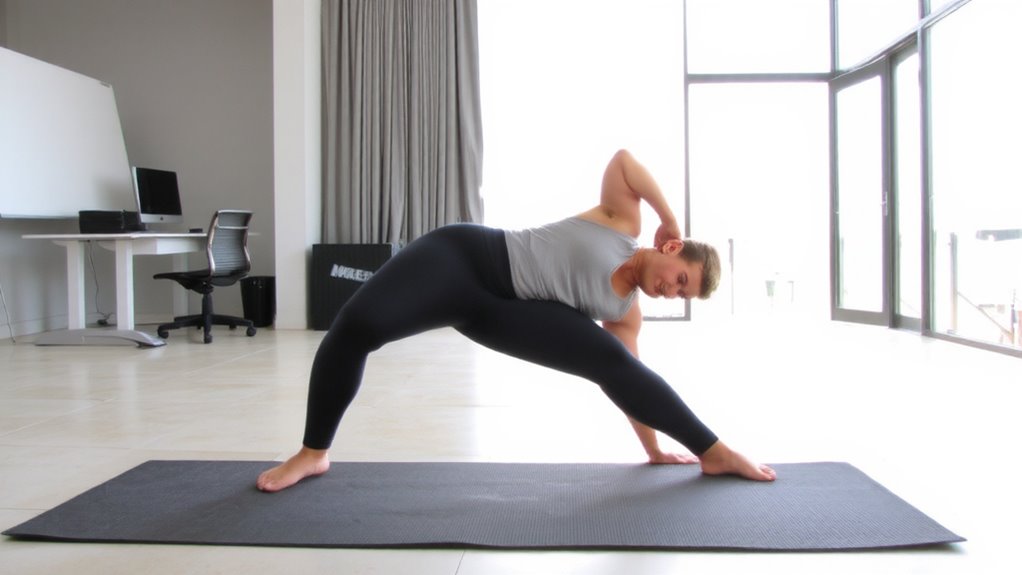
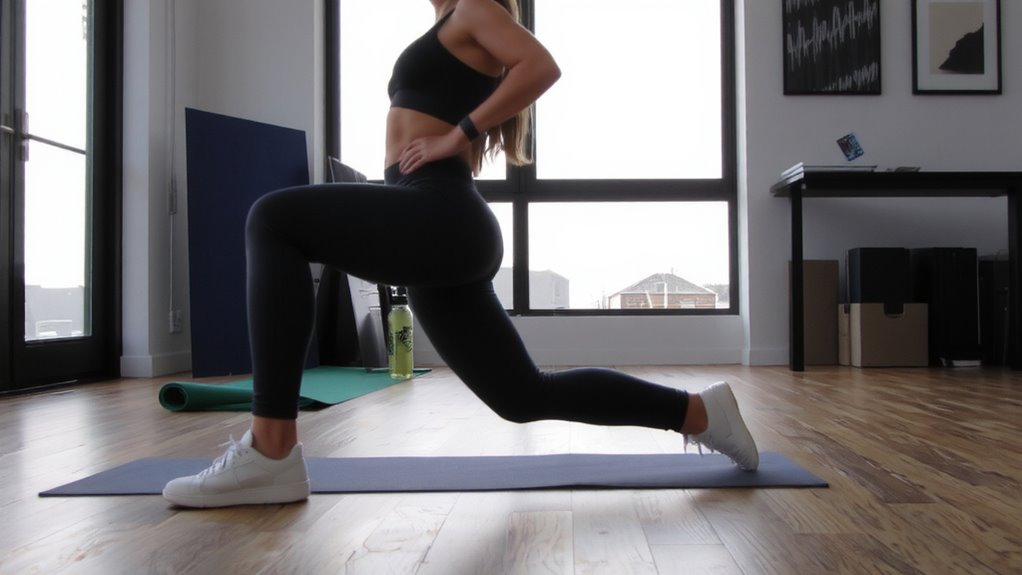
You can reverse the shortening caused by long sitting with consistent, targeted stretches that restore length and improve mobility in your hip flexors. Try the deep lunge stretch: step one foot forward into a lunge, lower your back knee, and gently push your hips forward. Hold 30 seconds per side, feeling a stretch along the front of the back leg’s hip. It’s effective but avoid overarching your lower back-keep your core engaged. Another solid choice is the kneeling twist: from a lunge, place your back hand on the floor and twist your torso upward, reaching with your opposite arm. This adds spinal mobility while deepening the hip flexor release. Do both stretches 3–5 times weekly, ideally after light movement or heat application. Results build over weeks, not days. Overstretching causes irritation, so ease into each rep. No special gear’s needed-just a mat for comfort.
Strengthen Your Glutes and Core to Fix Imbalance
Tight hip flexors often don’t exist in isolation-they’re usually paired with weak glutes and an underactive core, a combination that pulls your pelvis out of alignment and throws off your whole movement pattern. You need glute activation and core stability to restore balance and support proper posture. Strengthening these areas helps counteract prolonged sitting, improving how your body moves from sitting to standing and during everyday activity. Exercises like glute bridges, bird-dogs, and planks train your muscles to engage when they should. Do them consistently, focusing on form over reps. You’ll notice better control and less lower back strain. But don’t expect quick fixes-results take weeks of practice. These moves won’t replace medical care if you’re injured, and overdoing them can worsen imbalances. Start slow, track how your body responds, and adjust as needed.
Break the Sitting Cycle With These 3 Habits
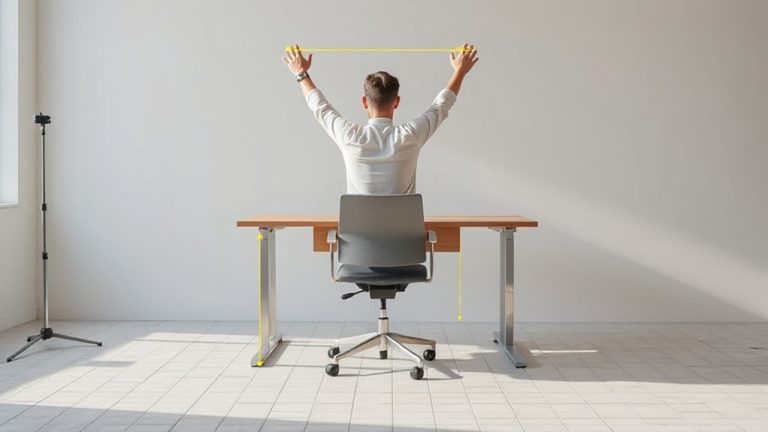
How often do you pause during the day to stand, stretch, or simply shift your weight? Small changes can make a big difference in reducing hip flexor tightness. Start with scheduled movement breaks every 30 to 60 minutes-set a timer or use a basic smartwatch to remind you. Stand up, walk around, or do a quick stretch to reset muscle tension. Pair this with regular posture checks: keep your feet flat, spine neutral, and shoulders relaxed whether seated or standing. Third, avoid over-relying on ergonomic gadgets; they help but aren’t a fix-all. A standing desk might reduce sitting time, but poor standing posture can cause new issues. The real benefit comes from consistent habits, not equipment. Results take time, but sticking with these three habits improves mobility and reduces stiffness. No single solution works instantly-consistency beats convenience.
When to See a Doctor for Hip Flexor Pain
When should you actually call the doctor about that nagging hip flexor pain? If it doesn’t ease up after a few weeks of stretching and rest, it might be more than simple tightness. Persistent hip flexor inflammation can lead to prolonged discomfort and muscle weakness, especially if daily movement gets harder. Sharp, shooting pain or numbness spreading down your leg could signal nerve compression symptoms, which need medical evaluation. You should also seek help if pain wakes you at night or follows a specific injury, like a fall or sudden sprint. While home fixes often work, they’re not foolproof. Doctors might recommend imaging or physical therapy to rule out serious issues. There’s no need to rush to an MRI or splurge on expensive office gear as a fix-all. Some find relief with simple changes, but when symptoms persist, professional insight makes the difference.
Build a 5-Minute Daily Routine to Stay Pain-Free
Could such a short routine actually keep hip pain at bay? Yes-if it’s strategic. This 5-minute ritual combines foam rolling and active recovery to reset tight hips daily. Prioritize consistency over intensity to avoid overuse. Here’s how it feels over time:
| Time Invested | How You Feel | Long-Term Gain |
|---|---|---|
| Day 1 | Slight relief | Building habit |
| Week 1 | Less stiffness | Improved mobility |
| Month 1 | Noticeable ease | Fewer flare-ups |
| 3 Months | Daily comfort | Sustained flexibility |
| 6 Months | Automatic routine | Lasting joint health |
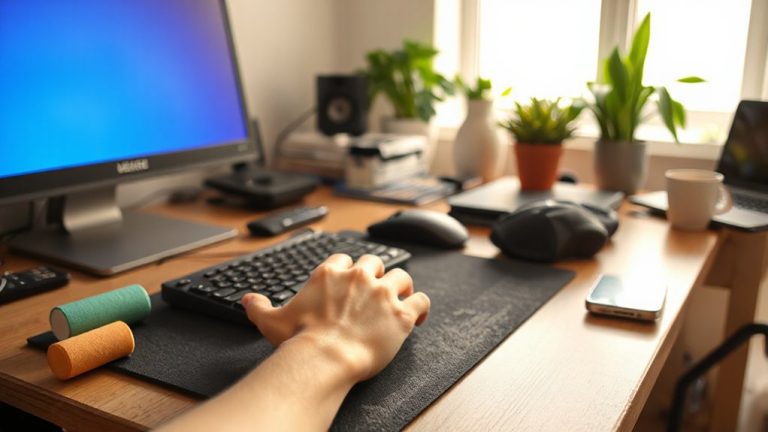
Include 2 minutes of foam rolling on quads and hips, followed by 3 minutes of dynamic stretches like leg swings and lunges. This isn’t a substitute for medical care, but it supports active recovery. Use a firm roller (avoid memory foam-it collapses). No special gear needed; this works at home or between desk sessions. Results depend on posture and frequency, not expensive office equipment.
On a final note
You should stretch and strengthen daily-tight hip flexors from sitting won’t fix themselves. Proven moves like lunges and glute bridges help, but only with consistency. Even the best ergonomic chair or standing desk won’t replace movement. Do 5 minutes a day, every day. Skip it, and discomfort returns. Results take weeks, not days. If pain persists, see a physical therapist. No gadget replaces real effort.