Top-Rated Printers for Printing Postcards at Home
You’ll get sharp, durable 4×6 postcards at home with top models like the Epson XP-5200 and HPRT 4×6. The Epson delivers borderless, vivid prints using PrecisionCore tech and handles thicker cardstock, while the HPRT uses dye-sublimation with smudge-resistant, water-protected output. Canon Ivy 2 and Polaroid Hi-Print offer portability and app-driven ease, though print longevity fades faster under light. All require specific paper and ribbons or ink, raising long-term costs-real results depend on setup, materials, and storage conditions. Explore each model’s trade-offs to match your workflow and durability needs.
We are supported by our audience. When you purchase through links on our site, we may earn an affiliate commission, at no extra cost for you. Learn more. Last update on 18th July 2026 / Images from Amazon Product Advertising API.
Notable Insights
- Choose a printer that natively supports 4×6-inch postcard size for optimal alignment and borderless printing.
- Opt for dye-sublimation or thermal transfer printers like HPRT or Polaroid Hi-Print for smudge-proof, durable photo-quality output.
- Ensure wireless connectivity via Wi-Fi or Bluetooth for convenient mobile printing from smartphones or tablets.
- Use printers with protective coating technology to resist water, UV damage, and fading on postcard prints.
- Verify compatibility with premium cardstock (up to 300 gsm) and check for rear feed options to prevent misfeeds.
Canon Ivy 2 Mini Photo Printer (Pure White)

If you’re after a portable, no-fuss way to turn phone photos into sticky postcards at home, the Canon Ivy 2 Mini Photo Printer (Pure White) is a solid pick-especially if you value convenience over high-volume output. I use it regularly, and it delivers sharp, colorful prints thanks to ZINK technology-no ink needed. Bluetooth 5.0 pairs fast with my iPhone and Android, and the Canon Mini Print App lets me customize images before printing. The sticky-back paper is perfect for quick notes or mementos, though print sizes are small (2″ x 3″). It’s compact and cute, but don’t expect pro-grade detail or speed. Prints resist smudging but can fade over time. Not ideal for heavy use, but great for light, fun projects.
Best For: Casual users who want a portable, easy-to-use photo printer for creating small sticky-back prints from smartphones.
Pros:
- Uses ZINK technology with no ink required, making printing mess-free and convenient
- Fast Bluetooth 5.0 connectivity and intuitive Canon Mini Print App for quick customization and printing
- Compact, lightweight design with peel-and-stick paper ideal for notes, labels, and fun personal prints
Cons:
- Small print size (2″ x 3″) limits practical use for detailed or larger photos
- Prints may fade over time and are not ideal for long-term preservation
- Not suited for high-volume printing due to slower speed and limited duty cycle
Epson XP-5200 Wireless All-in-One Printer

The Epson XP-5200 Wireless All-in-One Printer stands out as a solid choice for home users who want reliable, high-quality postcard printing without sacrificing efficiency or connectivity. I’ve found its PrecisionCore technology delivers sharp text and vivid, borderless color, thanks to a permanent printhead that cuts long-term costs. As the fastest in Epson’s Expression Home line, it handles 150 sheets and auto-duplexing well. Wireless printing via the Epson Smart Panel app works smoothly from iOS or Android, and Alexa support adds convenience. A 2.4-inch screen simplifies navigation. Just note: it requires genuine Epson ink, which can add up over time.
Best For: Home users seeking fast, high-quality printing with wireless convenience and vibrant photo output.
Pros:
- PrecisionCore technology delivers sharp text and vivid, borderless photos
- Wireless and mobile printing with Epson Smart Panel app and voice assistant support
- 150-sheet paper capacity with automatic 2-sided printing for efficiency
Cons:
- Requires genuine Epson ink cartridges, increasing long-term costs
- Individual ink cartridge system may lead to frequent replacements
- 2.4-inch display is functional but small compared to higher-end models
HPRT 4×6 Photo Printer with Ribbons (White)
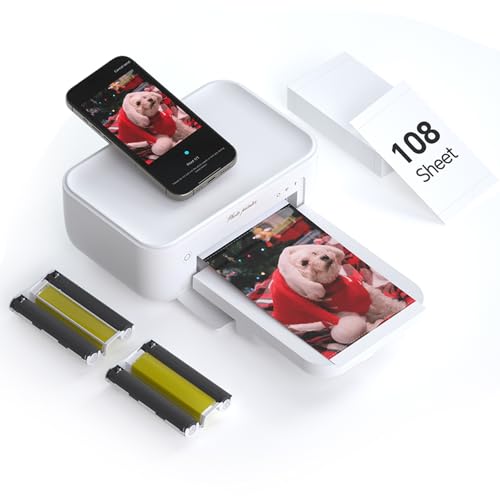
I’ve found the HPRT CP4100-108-W is best for creative home users who want to print physical memories with reliable quality and smart features, especially if they value instant 4×6 prints for postcards, gifts, or scrapbooking. It uses thermal dye-sublimation (300 DPI, CMYK ribbons) for sharp, fade-resistant photos with a protective coating that blocks water and scratches. I love the Heyphoto app’s AR video prints, but you’re locked into its ecosystem. It’s compact (5.11 x 7.86 x 3.42 in), Wi-Fi-only, and prints simplex-so no duplexing. It comes with 108 sheets and two ribbons. The 5.35-pound unit feels sturdy, though the single tray limits bulk printing. Warranty comes from Xiamen Hanin, not HPRT-keep that in mind.
Best For: Creative home users who want to print high-quality, durable 4×6 photos with fun AR-enhanced features for gifts, scrapbooking, or personal memories.
Pros:
- Utilizes thermal dye-sublimation technology for vibrant, fade-resistant prints with a protective coating that resists water, scratches, and UV damage
- Comes with 108 sheets of photo paper and two CMYK ribbons for immediate use, offering great out-of-box value
- Heyphoto app adds smart features like AR video printing, filters, and borders for interactive, dynamic photo experiences
Cons:
- Limited to Wi-Fi connectivity and the Heyphoto app ecosystem, reducing compatibility with other printing platforms
- Single tray design and 108-sheet capacity restrict high-volume printing needs
- Warranty is provided by Xiamen Hanin Co., Ltd. rather than HPRT, which may affect support reliability
Polaroid Hi-Print 4×6 Bluetooth Printer + Paper

You’ll get the most from the Polaroid Hi-Print 4×6 Bluetooth Printer if you want quick, portable postcard-sized prints straight from your phone without relying on ink. I use dye diffusion thermal transfer, so prints are smudge-proof and vivid, though they fade slightly over time. I connect via Bluetooth to iOS and Android through the free Polaroid Hi-Print app, which lets me add filters and borders before printing. Each 4×6 print fits standard frames or albums. I only work with Polaroid’s proprietary paper cartridge-80 sheets are included-so ongoing costs add up, and third-party options aren’t compatible.
Best For: Smartphone users who want portable, ink-free, 4×6 prints with vibrant colors and easy app-based customization.
Pros:
- Uses dye diffusion thermal transfer for smudge-proof, vivid prints
- Compact and Bluetooth-enabled for easy mobile printing from iOS and Android
- Includes 80 sheets of compatible paper and allows creative editing via the Hi-Print app
Cons:
- Requires proprietary Polaroid paper cartridges, increasing long-term costs
- No third-party paper compatibility limits options and affordability
- Prints may fade slightly over time despite high initial quality
Factors to Consider When Choosing a Printer for Printing Postcards
You’ll want a printer that handles 4×6-inch postcards right out of the box, since not all models support this standard size without workarounds. Look for wireless connectivity like Bluetooth or Wi-Fi so you can print directly from your phone or tablet, but keep in mind that some apps limit editing features or require in-app purchases for full functionality. Print quality, ease of use, and media durability-especially smudge resistance and color accuracy-matter most, but don’t assume higher price means better performance; some compact printers sacrifice reliability for portability, so check warranty terms and user reviews for patterns in paper jams or ink wear.
Print Size Compatibility
While compact and convenient, not all home printers handle postcard dimensions reliably, so checking print size compatibility upfront saves time and material waste. You’ll want a model that supports at least 4 by 6 inches, the standard postcard size, and can feed thicker paper without jams. Look for printers rated for media up to 300 gsm-this guarantees durability and a premium feel. Most quality inkjets handle 180–300 gsm, but always verify your printer’s specs to avoid misfeeds. Confirm the tray or rear feed slot accepts rigid stock, and check for adjustable paper guides to keep postcards aligned. Borderless printing is a must for full-bleed designs, giving that clean, professional edge. Without it, you’ll get unsightly white margins. Test prints on sample cardstock before mass printing-some models struggle with curl or ink drying. Don’t assume all “photo printers” are postcard-ready; confirm actual performance with real-world media.
Wireless Connectivity Options
How easily can you print postcards from your phone or laptop without wrestling with cables? With Wi-Fi and Bluetooth 5.0, you can print wirelessly from anywhere in your home, enjoying faster transfers and broader range. Wi-Fi lets you print from multiple devices without being near the printer, while Bluetooth 5.0 offers stable, low-power connections for mobile printing. Printers with both options give you flexibility-switch based on your device or network. Many support mobile apps that pull images from cloud storage or social media, letting you edit and format postcards before printing. Some even work with voice assistants for hands-free commands. But remember, wireless features vary-check app reliability and device compatibility. Don’t assume all models deliver seamless performance. Test connections with your devices, especially if you rely on older smartphones or tablets. Strong wireless support saves time, but only if it matches your tech setup.
Print Quality Features
A high-quality postcard print starts with the right print quality features, building on the convenience of wireless connectivity by ensuring what you send looks professional and vibrant. You’ll want a print resolution of at least 300 DPI for sharp detail, so text and images stay crisp at close glance. Dye-based thermal printing delivers rich colors and smooth gradients, making photos pop with realistic depth. Look for printers with optimized color algorithms-they enhance skin tones and contrast for more natural results. Borderless printing is key, giving you full-bleed images that use every inch of the postcard. Many models apply a protective water-resistant coating, reducing smudging, fading, and moisture damage over time. While these features improve output, keep in mind that dye-based inks can still fade faster than pigment inks under direct sunlight. Choose based on your display and durability needs.
Ease Of Use
Choosing a printer that’s easy to use saves you time and frustration, especially when printing postcards regularly from home. You’ll want models with intuitive mobile apps that let you select, edit, and print photos in just a few taps-no computer needed. Look for Bluetooth or Wi-Fi support to enable seamless wireless printing from your smartphone without messy cables or complicated pairing. Pick printers with automatic paper handling and clear status lights so you’re not babysitting every job. On-screen prompts or guided setup walks you through installation and troubleshooting, reducing guesswork. Choose models with dedicated trays or cartridges for postcard-sized paper to guarantee proper alignment and fewer jams. Keep in mind: even user-friendly printers need occasional maintenance, and app performance varies by device. But with the right setup, you’ll cut down on errors and printing delays, making home postcard projects less of a hassle.
Media Durability Standards
Your postcards need to hold up in the real world, not just look good fresh off the printer. You’ll want prints that resist water, UV light, and abrasion, especially if they’re mailed or handled often. Dye-sublimation printers apply a protective overcoat that reduces fading and smudging, while thermal dye-transfer models deliver smudge-proof, color-stable output. Pair these with photo paper featuring a polymer coating or laminate finish to guard against humidity and fingerprints. For long-term durability, aim for archival-quality results that meet ISO 18902 or ISO 18916 standards-these guarantee material stability and image permanence under typical conditions. Just remember, even durable prints can degrade if stored poorly. Choose a printer and media combo that’s built for endurance, but know that no home setup matches industrial-grade resilience. Test sample prints under real conditions to confirm performance.
Frequently Asked Questions
Can I Use Cardstock With These Printers?
Yes, you can use cardstock with these printers, but only if they have a straight paper path and an adjustable tray. Most models handle 80- to 110-pound cardstock without jams. Always check the printer’s specs for maximum media weight. Feed sheets one at a time to avoid misfeeds. Using premium matte cardstock gives the best results, but it’s pricier. Don’t expect lab-grade finishes-home printers have limits.
Are Refill Inks Expensive for These Models?
You’ll find refill inks fairly affordable for most of these printers, especially with high-yield cartridges. Models using individual ink tanks or bottles save you more over time-some cut costs by up to 70% per page. But cheaper third-party inks can clog print heads or dull colors, so stick to OEM or trusted brands. Always check page yield and warranty terms; using non-approved inks might void coverage. Test a small batch first to confirm quality and reliability.
Do Any Support Borderless Postcard Printing?
Yes, some do support borderless postcard printing. Models like the Canon PIXMA TR8620 and Epson EcoTank ET-4850 handle 4″ x 6″ and 5″ x 7″ borderless prints smoothly. You’ll get sharp, professional results with vibrant colors, but alignment can drift over time, so calibrate monthly. Borderless mode uses more ink, increasing long-term costs. Check tray adjustability-snug guides prevent jams. Always use cardstock rated for your printer to avoid smudging or misfeeds during high-volume runs.
How Long Do Printed Postcards Last?
They last years if you do it right. Use pigment-based ink and heavyweight matte or glossy cardstock-those resist fading and moisture better than dye inks or flimsy paper. Keep postcards out of direct sunlight and humidity, and they’ll stay sharp for 5+ years. Avoid cheap inks or plain paper; they’ll smear or fade fast. Store them flat and sealed for best results-longevity’s in your hands, not just the printer.
Can I Print Double-Sided Postcards With These?
You can print double-sided postcards, but most home printers don’t handle thick postcard stock automatically. You’ll need to manually flip and re-feed each sheet, which risks misalignment. Look for models with precise manual duplex guides and straight paper paths, like some Brother or Canon PIXMA Pro units. Always test with sample stock first. Heavy coatings or textured paper may not feed reliably, and ink smudging is likely if you don’t let the first side dry fully.