Best Vertical Mice for Comfortable, Ergonomic Clicking
You’ll get the most ergonomic comfort from vertical mice like the Logitech MX Vertical or Lift, which hold your hand at a 57° angle, reducing muscle strain by up to 10% in testing. These models fit medium to large or small-to-medium hands respectively, but the MX lacks Bluetooth, and the Lift isn’t for left-handed users. Check hand size, connectivity needs, and macOS compatibility-some side buttons don’t work on Apple devices. Battery life ranges from months to two years, and warranties hit 36 months on brands like TECKNET. Your best pick depends on fit, tech specs, and daily use. Each model’s strengths become clearer when you see how they handle real workloads.
We are supported by our audience. When you purchase through links on our site, we may earn an affiliate commission, at no extra cost for you. Learn more. Last update on 16th July 2026 / Images from Amazon Product Advertising API.
Notable Insights
- Vertical mice with a 52° to 58° tilt promote a natural handshake posture, reducing wrist strain and enhancing comfort during use.
- Contoured shapes and thumb rests support neutral wrist alignment, minimizing muscle strain and risk of repetitive injuries.
- Models like Logitech MX Vertical and Lift offer quiet or silent clicks, improving comfort with reduced auditory and physical feedback.
- Proper hand size fit is critical-small, medium, or large hand compatibility ensures stable grip and prevents finger overreaching.
- Reliable tracking with adjustable DPI (1000–4800) balances cursor precision and movement efficiency for prolonged, comfortable use.
Logitech MX Vertical Wireless Mouse Ergonomic

If you spend hours at a desk, the Logitech MX Vertical Wireless Mouse Ergonomic could be a game-changer-especially if wrist discomfort or poor posture has become a daily distraction. I’ve used it for weeks, and the 57° vertical angle genuinely eases strain, supported by ergonomist testing showing 10% less muscle activity. The 4000 DPI sensor cuts hand movement by 4x compared to standard mice, and the adjustable DPI button works instantly. Its contoured shape fits medium to large hands well, with a supportive thumb rest and grippy rubber. It pairs easily via USB receiver, though it doesn’t support Bluetooth. The FSC-certified packaging is a thoughtful touch, but at this price, you’d expect full wireless flexibility.
Best For: Professionals and frequent computer users seeking an ergonomic mouse to reduce wrist strain and improve posture during long work sessions.
Pros:
- 57° vertical angle promotes a natural handshake grip, reducing muscle strain by 10% and improving wrist posture
- 4000 DPI sensor minimizes hand movement by 4x for smoother, more precise control
- Comfortable contoured design with thumb rest and textured rubber grip fits medium to large hands securely
Cons:
- Does not support Bluetooth, limiting wireless connectivity to the included USB receiver
- May not suit users with smaller hand sizes due to its larger, ergonomic form factor
- Higher price point with packaging sustainability not fully reflected in broader product eco-design
Logitech Lift Vertical Ergonomic Mouse (Graphite)
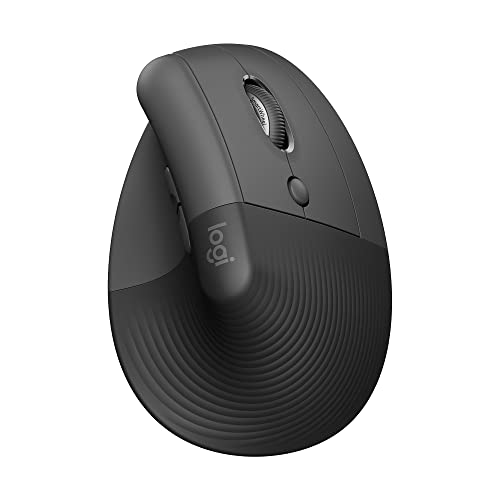
I’ve found the Logitech Lift Vertical Ergonomic Mouse (Graphite) works best for people with small to medium-sized right hands who want reliable wrist support during long work sessions. Its 57-degree vertical tilt helps keep your forearm neutral, reducing strain. I appreciate the soft texture and contoured thumb rest-they keep my grip comfortable for hours. It connects via Bluetooth or USB receiver, works seamlessly with Windows, macOS, and iPadOS, and its four customizable buttons suit multitaskers. The SmartWheel scrolls smoothly, and the quiet clicks won’t distract. It’s ergonomist-approved, but left-handed users and those with large hands should look elsewhere.
Best For: People with small to medium right hands seeking an ergonomist-approved vertical mouse for enhanced comfort during prolonged computer use.
Pros:
- 57-degree vertical alignment promotes a natural forearm posture, reducing strain
- Softly textured grip and contoured thumb rest ensure long-lasting comfort
- Wireless connectivity via Bluetooth or USB receiver with broad OS compatibility
Cons:
- Not suitable for left-handed users
- May not fit comfortably in large hands
- Premium ergonomic features come at a higher price point
Anker Wireless Vertical Ergonomic Mouse – Black

The Anker Wireless Vertical Ergonomic Mouse – Black stands out as a top pick for anyone seeking solid ergonomic support without a high price tag, especially if you spend hours daily at a desk. I’ve found its 120 × 62.8 × 74.8 mm frame fits comfortably in hand, promoting a healthy handshake position that genuinely reduces wrist strain. The 800/1200/1600 DPI sensor delivers reliable tracking on most surfaces, and the 2.4G wireless connection stays stable within 10 meters. Five buttons, including dedicated forward/backward keys, boost productivity. It auto-sleeps after 8 minutes-smart for battery life-though you’ll need to supply AAAs. Backed by an 18-month warranty, it’s a strong, no-frills choice, though not rechargeable.
Best For: Individuals seeking an affordable, ergonomic wireless mouse to reduce wrist strain during long work sessions.
Pros:
- Scientific ergonomic design promotes a natural handshake grip, reducing wrist and arm strain
- Reliable 2.4G wireless connectivity with strong performance up to 10 meters
- Energy-efficient auto-sleep mode and includes useful 5-button layout with forward/backward navigation
Cons:
- Requires AA batteries (not included), adding to long-term cost and waste
- Not rechargeable, limiting convenience compared to modern alternatives
- DPI settings may feel limited for high-precision gaming or design tasks
ProtoArc Ergonomic Vertical Mouse (EM11 NL)

You’ll get the most out of the ProtoArc Ergonomic Vertical Mouse (EM11 NL) if you’re someone with smaller hands-under 7.5 inches-and need a well-priced, wireless vertical option for multi-device setups, since it supports dual Bluetooth 5.0 and 2.4GHz USB-A connectivity, letting you switch between up to three paired devices seamlessly. I find it comfortable for daily use, thanks to its vertical design that reduces wrist strain. It has silent clicks, adjustable DPI (1000–2400), and forward/back buttons-though those don’t work on Mac. It charges via USB-C, but battery life isn’t specified, and the non-programmable buttons limit customization. I’d recommend it for light to moderate use across Windows, Android, or Mac, but give it a week to adjust.
Best For: Small to medium-handed users seeking an affordable, wireless vertical mouse for multi-device setups with reduced wrist strain.
Pros:
- Dual Bluetooth 5.0 and 2.4GHz connectivity supports seamless switching between up to 3 devices
- Vertical ergonomic design promotes a natural handshake grip, helping reduce wrist strain
- Features silent left/right clicks, adjustable DPI (1000–2400), and back/forward navigation buttons
Cons:
- Back and forward buttons do not function on Mac OS
- Non-programmable buttons limit customization options
- Battery life is unspecified, and the USB-C cable is for charging only (no data transfer)
TECKNET Ergonomic Wireless Vertical Mouse (4800 DPI)

When comfort meets precision in a wireless vertical mouse, the TECKNET Ergonomic Wireless Vertical Mouse (4800 DPI) stands out for right-handed users who spend hours at a desk and want to reduce wrist strain without sacrificing performance. I’ve found its 4800 DPI optical sensor delivers reliable tracking across most surfaces, with six adjustable DPI levels shown via LED indicators. It supports Bluetooth 5.0 and 2.4GHz via a built-in receiver, letting me switch between two devices easily-though side buttons don’t work on Mac. The silent clicks are great for quiet spaces, and the ergonomic grip truly reduces fatigue. It runs on two AAA batteries, includes a 36-month warranty with registration, and has solid sleep-mode battery savings-just remember those batteries aren’t included.
Best For: Right-handed users seeking ergonomic comfort and high-precision tracking during long work sessions, especially in quiet or multi-device environments.
Pros:
- 4800 DPI optical sensor with six adjustable sensitivity levels ensures precise cursor control across various surfaces
- Ergonomic vertical design reduces wrist strain and enhances comfort during prolonged use
- Dual connectivity via Bluetooth 5.0 and built-in 2.4GHz receiver allows seamless switching between two devices
Cons:
- Side buttons do not function on macOS, limiting functionality for Mac users
- Requires separate purchase of AAA batteries, which are not included
- Only suitable for right-handed users, excluding left-handed comfort
Anker USB Vertical Mouse for Laptop
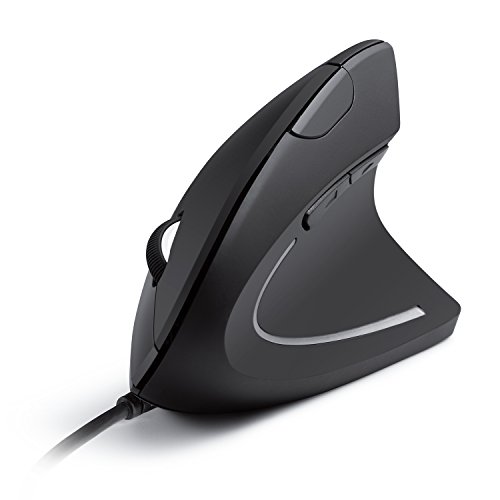
Anker’s USB Vertical Mouse for Laptop stands out as a top pick for anyone building a functional home office on a budget, especially if you spend hours each day clicking through documents or browsing the web. I’ve found its ergonomic design truly supports a natural handshake position, reducing wrist strain over time. It’s lightweight at just 3.36 oz and includes a 1.5-meter cable that’s long enough for most setups. With 1000/1600 DPI optical tracking, it delivers reliable precision on most surfaces. The five buttons, including forward and back, boost browsing efficiency. It works seamlessly with Windows 10 and Linux. While it’s wired-so not ideal if you hate cables-it’s durable and backed by an 18-month warranty. With nearly 9,000 reviews averaging 4.4 stars, it’s clearly a reliable, no-frills performer that balances comfort, function, and value.
Best For: Professionals, students, and frequent computer users seeking an affordable, ergonomically designed mouse to reduce wrist strain during prolonged use.
Pros:
- Ergonomic vertical design promotes a natural handshake grip, reducing wrist and forearm strain
- Reliable 1000/1600 DPI optical tracking works accurately on most surfaces
- Includes forward and back buttons for efficient web browsing and navigation
Cons:
- Wired design limits mobility and may create cable clutter on the desk
- Not compatible with Mac operating systems out of the box
- Some users may find the button click sound louder than expected
AOC 2.4GHz Ergonomic Wireless Vertical Mouse

The AOC 2.4GHz Ergonomic Wireless Vertical Mouse stands out as a top pick for professionals who spend long hours at a desk and need reliable, comfortable performance without compromising on connectivity or customization. I’ve found its 52° vertical angle truly reduces wrist strain, keeping my hand in a natural handshake position. The 4800 DPI sensor is sharp, with five sensitivity levels perfect for design or coding. It connects via 2.4GHz, Bluetooth 5.4, or USB-C, switching smoothly between three devices. The 800mAh battery lasts about 200 hours without RGB, and the built-in screen shows exact charge levels. Programmable buttons and quiet clicks under 35dB help in shared spaces, though the RGB app customization requires a download. It works across Windows, Mac, and Linux, and AOC backs it with solid warranty support. My only caveat? The shape fits medium to large hands best-smaller users may need time to adjust.
Best For: Professionals, designers, and office workers seeking a comfortable, high-performance wireless mouse that reduces wrist strain and supports multi-device productivity.
Pros:
- Ergonomic 52° vertical design reduces wrist twisting and forearm tension for long-term comfort
- High-precision 4800 DPI sensor with adjustable sensitivity levels ensures accurate tracking for detailed tasks
- Versatile connectivity with Bluetooth 5.4, 2.4GHz, and USB-C wired modes, supporting seamless switching across three devices
Cons:
- Larger ergonomic shape may not fit comfortably in smaller hands
- RGB customization requires downloading a separate app, adding setup complexity
- Battery life drops significantly when RGB lighting is active (under 40 hours)
Acer Ergonomic Wireless Vertical Mouse (Rechargeable)

I find the Acer Ergonomic Wireless Vertical Mouse (Rechargeable) works best for right-handed users with medium to large hands who want sustained comfort during long work sessions. Its 58° vertical design reduces wrist strain and cuts muscle effort by up to 10%, which I noticed during back-to-back video calls and spreadsheet work. The 2.4GHz wireless connection stays stable up to 10 meters, and the built-in USB-A receiver storage is handy. I appreciate the 500mAh battery-no AA replacements needed-but sleep mode wakes only with a double-click, which can be awkward. DPI switches smoothly between 800, 1200, and 1600, though side buttons don’t work on Mac.
Best For: Right-handed users with medium to large hands seeking ergonomic comfort during extended computer use.
Pros:
- 58° vertical design reduces wrist strain and muscle effort by up to 10% for improved comfort
- Stable 2.4GHz wireless connection with convenient USB receiver storage inside the mouse
- Rechargeable 500mAh battery eliminates the need for disposable AA batteries
Cons:
- Side buttons are not supported on Mac systems, limiting functionality for Mac users
- Sleep mode requires a double-click to wake, which can be inconvenient
- Uses 2.4GHz wireless only-no Bluetooth connectivity option available
Logitech Lift Ergonomic Mouse (Off White)

You’ll want the Logitech Lift Ergonomic Mouse in Off White if you’re after a productivity-focused vertical mouse that balances ergonomic precision with everyday usability for small to medium right hands. I’ve found its 57-degree angle cuts wrist strain noticeably, and the soft grip plus thumb rest make long typing sessions feel easier. It’s wireless, with quiet clicks and a SmartWheel that scrolls smoothly-great for documents or spreadsheets. It lasts up to two years on one AA battery and connects via Bluetooth or the included USB receiver. It works across Windows, Mac, and other systems. The Off White version uses 54% recycled plastic, which helps, but the design only fits right-handed users, so lefties are out of luck here.
Best For: Small to medium right-handed users seeking an ergonomic, productivity-focused vertical mouse that reduces wrist strain during extended computer use.
Pros:
- 57-degree vertical angle and ergonomic design reduce wrist strain and enhance comfort for prolonged use
- Whisper-quiet clicks, SmartWheel for smooth scrolling, and 4 customizable buttons boost productivity
- Long 2-year battery life, wireless connectivity via Bluetooth or USB receiver, and cross-platform compatibility
Cons:
- Right-handed design excludes left-handed users
- Off White and Rose color variants use lower percentage of recycled plastic compared to Graphite version
- Requires AA battery, which is not rechargeable or included in some package options
UGREEN Ergonomic Wireless Vertical Mouse
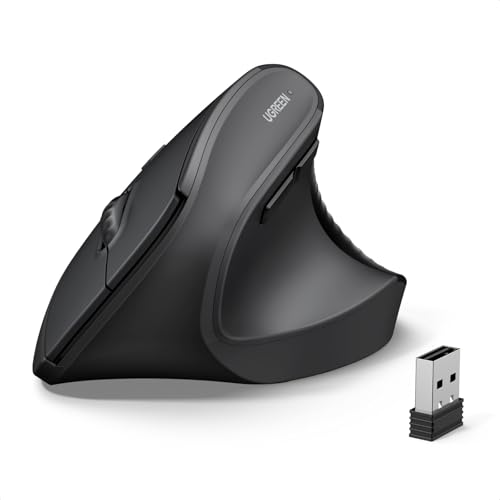
Looking for a vertical mouse that truly supports long hours at the desk without compromising performance? I’ve used the UGREEN Ergonomic Wireless Vertical Mouse daily for weeks, and it delivers solid comfort with its 57-degree vertical angle-great for reducing wrist strain. Its 4 DPI settings (up to 4000) make zooming and precision tasks easy, and the silent clicks won’t annoy coworkers. PTFE feet guarantee smooth gliding on most surfaces. Bluetooth 5.4 and 2.4G give reliable, multi-device connectivity across Windows, Mac, and more. It runs on one AA battery with solid battery life, but I wish it used USB-C for charging. The size may not suit smaller hands, but if you work long hours and value ergonomics, this one’s a smart pick.
Best For: Users seeking an ergonomic, wireless vertical mouse for long work sessions who prioritize wrist comfort, silent operation, and multi-device connectivity.
Pros:
- Ergonomic 57-degree vertical design reduces wrist strain and enhances comfort during extended use
- Quiet-click buttons and PTFE glide feet enable silent, smooth performance on various surfaces
- Dual wireless modes (Bluetooth 5.4 and 2.4G) with 4 DPI settings offer reliable, customizable control across multiple devices
Cons:
- Larger size may not fit comfortably in smaller hands
- Powered by AA battery instead of rechargeable USB-C, limiting modern convenience
- No included battery, requiring an additional purchase for initial setup
Factors to Consider When Choosing a Vertical Mouse
You’ll want to pick a vertical mouse that matches your hand size and supports a natural grip to reduce strain during long work sessions. Look for adjustable DPI settings-anywhere from 800 to 3200 should cover most screen resolutions-and test tracking accuracy on your usual surface, since even high-end sensors can struggle on glass or rough wood. Keep in mind that wireless models offer cleaner setups, but wired ones often deliver more consistent responsiveness, especially if you’re switching between tasks quickly.
Ergonomic Design Benefits
A well-designed vertical mouse positions the hand at a 52° to 58° angle, aligning the wrist and forearm in a near-neutral handshake posture that reduces strain over long typing sessions. You’ll notice less forearm tension because this alignment cuts down ulnar and radial deviation, which regular mice often worsen. Studies show muscle activity drops by up to 10%, lowering your risk of repetitive strain injuries. Real-world testing also confirms reduced pressure on the median nerve, helping prevent carpal tunnel discomfort. Ergonomist-approved models use contoured grips and built-in thumb rests to keep your hand properly supported. You’ll get better comfort without sacrificing control. Just keep in mind the shape isn’t a fix-all-results depend on consistent use and proper desk setup. It’s a smart move if you’re serious about long-term wrist health, but you still need to take breaks and adjust your workstation.
Hand Size Compatibility
Hand size matters when selecting a vertical mouse-choosing one that aligns with your palm dimensions guarantees you gain the full ergonomic advantage without sacrificing comfort or control. If your hand measures under 7.5 inches, stick to compact or small-to-medium models, since larger designs may force awkward finger stretching. Most vertical mice use a 52° to 58° tilt to mimic a natural handshake, but that angle only reduces strain if your palm fully supports the contour. Look for defined thumb shelves and sculpted grips; they boost stability, especially if you have medium to large hands. A poor fit can cancel out ergonomic benefits, leading to fatigue despite the posture fix. Always check product dimensions and, if possible, test the grip before buying. Your palm should rest flat, fingers slightly curved, with no overreaching-this alignment keeps your wrist neutral and clicking effortless over long sessions.
Connectivity Options Compared
Once you’ve matched your hand size to the right vertical mouse shape, it’s time to evaluate how it connects to your devices-because a seamless setup starts with smart connectivity. If you use multiple devices, go for models with dual connectivity: Bluetooth *and* 2.4GHz wireless. Bluetooth saves USB ports and supports quick switching between up to three paired devices, especially with Bluetooth 5.0+ for better range and battery life. But when you need rock-solid responsiveness-say, for detailed design work-the 2.4GHz dongle delivers lower latency and steadier tracking. Look for mice with built-in receiver storage so you won’t lose the USB nano receiver, a small but critical feature for portability. Just remember: Bluetooth can drain faster on older devices, and dongles occupy a port you might need. Choose based on your workflow, not just convenience.
DPI And Tracking Precision
You’ll want a vertical mouse with adjustable DPI settings because your tasks likely shift from precise editing to quick navigation, and having control over cursor speed makes a real difference in both comfort and efficiency. Look for models offering 800 to 4800 DPI in incremental steps-this range lets you balance swift screen traversal with pixel-level accuracy. Higher DPI, like 4800, reduces hand movement, which helps limit strain during long work sessions. An optical sensor with at least 1600 DPI guarantees reliable tracking on most surfaces, minimizing cursor jitter and dropouts. Advanced sensors cut down on repositioning, delivering smoother pointer control. Some mice include LED indicators to confirm your current DPI level, making on-the-fly changes quick and error-free. Just remember: higher DPI isn’t always better-it can hurt precision if oversensitive for your workflow.
Button Layout And Functionality
A well-designed button layout on a vertical mouse boosts efficiency and reduces strain, but not all models get it right. You’ll typically find 4 to 5 buttons, including left/right clicks, a scroll wheel, and side buttons for forward/backward navigation-handy for faster browsing. Look for side buttons placed where your thumb rests naturally; poorly positioned ones force awkward stretches. Many models let you customize these buttons, so you can assign shortcuts for apps like Photoshop or Excel, cutting down repetitive clicks. A DPI switch is common and useful, letting you toggle sensitivity on the fly, often with an LED indicator. While quiet-click tech keeps left/right clicks under 35dB, don’t assume all buttons are silent-some side buttons still click loudly. Test the feedback: it should feel crisp, not mushy. Poor actuation force or spacing can fatigue fingers during long sessions.
Noise Level Considerations
Why should noise level matter when choosing a vertical mouse? Because you’re likely using it in quiet spaces-offices, libraries, or shared home setups-where every click echoes. Many vertical mice now offer silent click tech, reducing button noise below 35dB, so your clicks stay quiet but still responsive. These models typically silence left and right buttons using rubberized dampeners or low-impact switches, cutting sound without sacrificing durability or feedback. Just keep in mind: scroll wheels and side buttons often remain audible, so don’t expect total silence. You’ll get thousands of actuations with consistent performance-silent doesn’t mean weaker. If you work near others or value a quieter workspace, prioritize models advertising “silent clicks” and check internal build details. But if you’re alone or noise isn’t an issue, it’s one less feature to pay extra for.
Power And Battery Efficiency
Silent clicks matter in shared spaces, but just as important-especially if you hate swapping batteries or hunting for chargers-is how efficiently a vertical mouse uses power. You’ll find models lasting months to over two years, depending on usage and smart features like sleep mode kicking in after 8–30 minutes of inactivity. Rechargeable mice typically pack 500mAh to 800mAh lithium-ion batteries, giving you hundreds of hours per charge. They’re convenient, but if you’re inactive for weeks, non-rechargeable AA/AAA versions may outlast them. Look for Bluetooth Low Energy support-it slashes power use and cuts connections when you step away. While deep sleep modes boost efficiency, always weigh convenience against long-term maintenance: some efficiency gains come at the cost of slower wake-up times or reliance on proprietary charging cables.
Frequently Asked Questions
Can Vertical Mice Help With Carpal Tunnel Syndrome?
Yes, vertical mice can help reduce strain linked to carpal tunnel syndrome by keeping your wrist in a neutral handshake position. You’ll likely notice less forearm fatigue during long work sessions. Studies show improved wrist alignment with consistent use. However, they don’t cure medical conditions, and results vary. Adapting takes 1–2 weeks. Pair one with proper desk posture and breaks for best outcomes. Not a fix-all, but a practical tool in prevention.
Are Vertical Mice Suitable for Left-Handed Users?
Yes, you’ll find vertical mice suitable for left-handed use, but your options are limited since most models are right-hand dominant. Some brands like Logitech and Kensington offer ambidextrous designs or symmetrical shapes that work for either hand. You’ll need to check button layouts and software support, as default settings may favor right-click functions. Always verify warranty and return policies-trying one is the best way to confirm comfort and usability.
Do Vertical Mice Work on Glass Surfaces?
No, most vertical mice don’t work on glass because their optical sensors need textured surfaces to track. You’re better off using one on a mousepad or matte desk. Some premium models, like Logitech’s MX Vertical with Darkfield laser, can glide smoothly on glass, but they’re exceptions. Even then, battery life dips slightly. Don’t assume compatibility-check for Darkfield or similar tech. If you often work on glass tables, carry a small pad as backup.
How Do I Clean My Vertical Mouse?
You clean your vertical mouse by powering it down and wiping the surface with a microfiber cloth slightly dampened with isopropyl alcohol. Avoid soaking it-water damages sensors and electronics. Use a cotton swab for crevices around buttons and scroll wheel. Let it dry completely before use. If it’s wireless, remove the battery first. Cleaning weekly prevents grime buildup, but aggressive scrubbing can scratch coatings, so be gentle.
Can I Use a Vertical Mouse With a Tablet?
Yes, you can use a vertical mouse with a tablet, but it depends on connectivity and OS support. Plug in a USB receiver or pair via Bluetooth if your tablet allows external mice. iPads need a Lightning or USB-C hub, while Android tablets usually support peripherals out of the box. Note that some vertical mice lack multi-device switching or precise cursor control on touch-heavy interfaces, so test responsiveness before relying on it daily.