Understanding the Impact of Natural Light on Productivity Levels Within Home Offices
Natural light sharpens your focus and boosts alertness by aligning with your body’s rhythms-position your desk in a south- or east-facing room with large windows for steady morning exposure. While 5000K task lighting can help on cloudy days, avoid cool-toned fluorescents that strain your eyes. Use adjustable blinds to manage afternoon glare. Pair high-CRI LEDs with dimmable drivers rated for 25,000+ hours to maintain clarity without overheating. You’ll work better when light feels natural-but balance matters as much as brightness.
Notable Insights
- Natural light enhances focus and energy by regulating circadian rhythms more effectively than artificial lighting.
- Morning sunlight exposure boosts alertness and supports vitamin D production, improving mood and cognitive function.
- South-facing home offices receive consistent daylight, maximizing natural light benefits for sustained productivity.
- Poor artificial lighting causes eye strain and fatigue, reducing concentration and increasing error rates over time.
- Combining natural light with 4000K–5000K LEDs and task lighting maintains optimal brightness and visual comfort.
Why Poor Lighting Hurts Your Home Office Productivity
While you might think lighting is just about brightness, poor lighting in your home office can quickly undermine focus, mood, and long-term productivity. Dim or overly harsh lights force your eyes to work harder, leading to persistent eye strain and mental fatigue-both proven to reduce concentration and slow task completion. Fluorescent bulbs, especially cool-toned ones, often create glare on screens, worsening discomfort over time. Even shadows from poorly placed lamps can disrupt visual balance, making reading or writing feel taxing. You’ll likely notice headaches or restlessness creeping in after just a few hours. Though LED panels or adjustable desk lamps can help, not all are equal-look for flicker-free models with color temperatures between 3500K and 5000K. Be cautious, though: cheaper lights may save money upfront but often lack proper diffusers or durability, risking inconsistent output. Always check warranties and lumens, not just wattage. For those seeking optimal illumination, investing in the best natural light lamps can significantly improve both comfort and performance.
How Natural Light Boosts Focus and Energy at Work
A solid amount of natural light-especially from east- or south-facing windows-can substantially sharpen your focus and sustain energy during work hours, thanks to its full-spectrum illumination and its role in regulating circadian rhythms. You’re more alert and mentally clear when your circadian rhythm syncs with daylight, reducing grogginess and midday crashes. Morning sunlight also boosts your vitamin exposure-specifically vitamin D-which supports mood and cognitive function over time. But don’t assume more light is always better; glare on screens or overheating can offset benefits. Use sheer blinds or adjustable shades to maintain comfort. While full-spectrum LED lamps mimic daylight, they can’t replicate the regulatory impact of real sun exposure on your body’s internal clock. Balance is key: aim for consistent, indirect daylight without compromising ergonomics or screen visibility. Natural light helps, but smart setup makes it work.
Pick a Sunny Room for Your Home Office
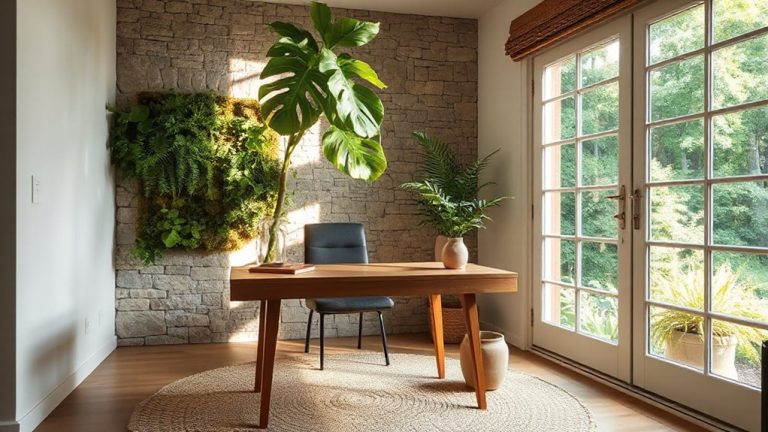
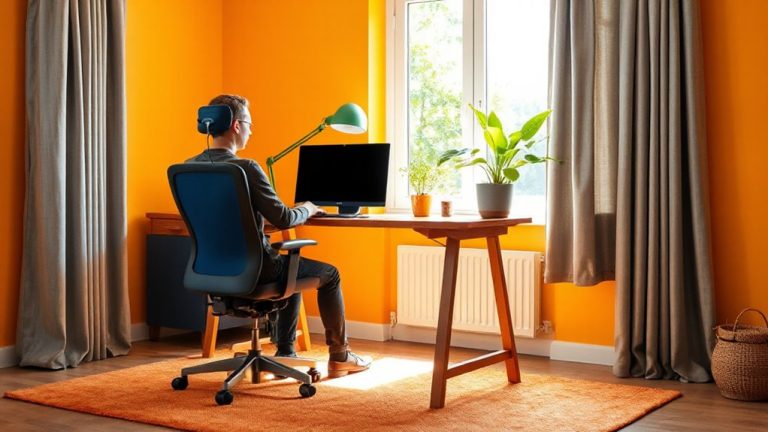
Choose a room with strong, direct sunlight for your home office-you’ll get sharper focus and fewer energy drops throughout the day. Room orientation matters: south-facing spaces typically get the most consistent light, while east or west offer intense morning or afternoon sun. Pair this with ample window size to maximize coverage. But avoid rooms with glare on screens, even if they feel bright.
| Factor | Why It Matters |
|---|---|
| South-facing rooms | Most steady sunlight, ideal for productivity |
| Large windows | Increase light depth, reduce need for artificial lighting |
| East/west exposure | Strong light but can overheat or cause glare |
| North-facing rooms | Low light, may require supplemental fixtures |
| Window size vs. room size | Bigger windows help, but only if aligned with usage patterns |
Adjust for your work hours-too much sun can be just as disruptive as too little.
Brighten Your Office With These Easy Upgrades
Can a few simple changes really make your workspace feel brighter and more energizing? Yes-if you choose wisely. Swapping outdated lighting fixtures for LED models with adjustable color temperature gives you control over your environment. Aim for 4000K to 5000K during work hours; this cooler light mimics midday sun and supports alertness. Pair bright overheads with a desk lamp to reduce screen glare. Look for dimmable options and energy-efficient drivers that last at least 25,000 hours. While high-CRI bulbs (90+) improve color accuracy, they often cost more and may not boost productivity noticeably. Install with care-poor placement creates shadows. These upgrades work best when natural light is limited, but they can’t fully replace sunlight. Balance brightness to avoid eye strain, and remember: even the best artificial lighting has limits. For targeted task lighting, consider a Top LED Desk Lamp to enhance focus and comfort.
Morning Light vs. Afternoon Glow: When Sunlight Fuels Productivity
Why does sunlight feel sharper in the morning than in the afternoon, and does it really affect your focus? Yes-morning light has higher blue-spectrum content and greater light intensity, which helps reset your circadian rhythm, boosting alertness. Your body responds more strongly to early daylight, making it ideal for demanding tasks. Afternoon light, while warmer and gentler, often brings glare and heat, potentially causing eye strain and fatigue. Position your desk east-facing to maximize morning exposure, but use adjustable blinds to manage afternoon brightness. While natural light improves mood and focus, inconsistent intensity throughout the day means you’ll still need task lighting. Don’t rely solely on windows-pair daylight with a 5000K LED desk lamp for steady illumination. Results vary by room, window size, and climate, so test adjustments over a week to see what truly works. For architects and other detail-oriented professionals, a best desk lamp ensures consistent lighting for precision work.
On a final note
You’ll likely boost focus and energy by placing your desk near a window with consistent daylight-it’s proven to improve mood and alertness. But avoid glare on screens; use sheer curtains or adjustable blinds for control. While natural light beats artificial, supplement with a 4000K LED task lamp for cloudy days or evening work. Don’t assume costlier gear guarantees results-many budget-friendly lighting tools perform well in real-world testing, though they may lack dimmable settings or 3-year warranties.