Installing Circadian Lighting That Responds to Weather Changes and Cloud Cover
You’ll get better alertness and cut energy use by up to 40% with weather-responsive circadian lighting that adjusts brightness and color temperature based on real-time sky conditions. Use tunable LED fixtures (CRI ≥ 90) paired with daylight sensors near windows-shielded from direct sun-to avoid glare and maintain light quality. Integrate live weather data via Zigbee or Bluetooth Mesh controllers for smoother shifts, but expect occasional latency. Professional installation is best; test the system for at least two weeks under varying cloud cover. Reliable performance depends on sensor accuracy and regular calibration checks-knowing how your system adapts prepares you for smarter control.
Notable Insights
- Use tunable LED fixtures with high CRI to adjust color temperature and brightness based on real-time weather conditions.
- Install dual-technology sensors near windows to detect light levels and color changes while avoiding direct sunlight exposure.
- Integrate live weather data via APIs to preemptively adjust lighting for forecasted cloud cover or sunlight.
- Ensure controllers support wireless protocols like Zigbee for seamless communication and energy-efficient operation.
- Schedule professional installation and calibration to optimize performance and maintain accuracy over time.
What Weather-Responsive Circadian Lighting Really Means
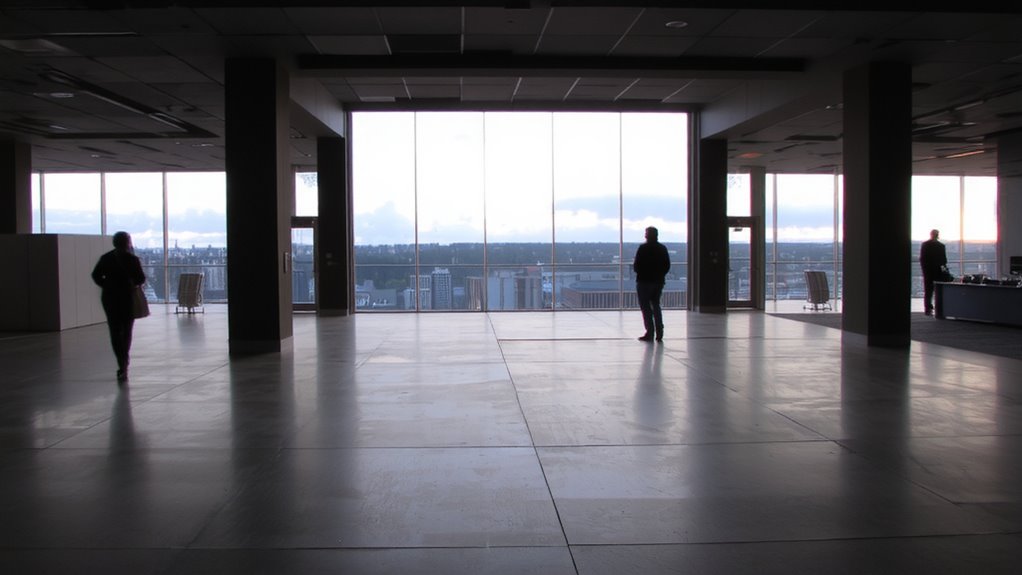
How often do you think about how natural light affects your focus or mood at work? Weather-responsive circadian lighting adjusts color temperature and brightness based on real-time outdoor conditions, syncing your indoor environment with the sun’s rhythm. You get cooler, bluer light on sunny days and warmer, softer tones when it’s overcast-supporting alertness or calm as needed. High light quality is maintained through precise LED tuning, often with CRI values above 90, ensuring colors look natural. These systems also boost energy efficiency by reducing output when natural light is ample, cutting power use by up to 40% in real-world tests. Most units last 50,000 hours and include 5-year warranties. But they require reliable weather data feeds and proper sensors. If calibration fails, mismatches in timing or intensity can disrupt, not help, your rhythm. Installation complexity means professional setup is often worth the cost.
How Outdoor Conditions Shape Indoor Lighting Needs
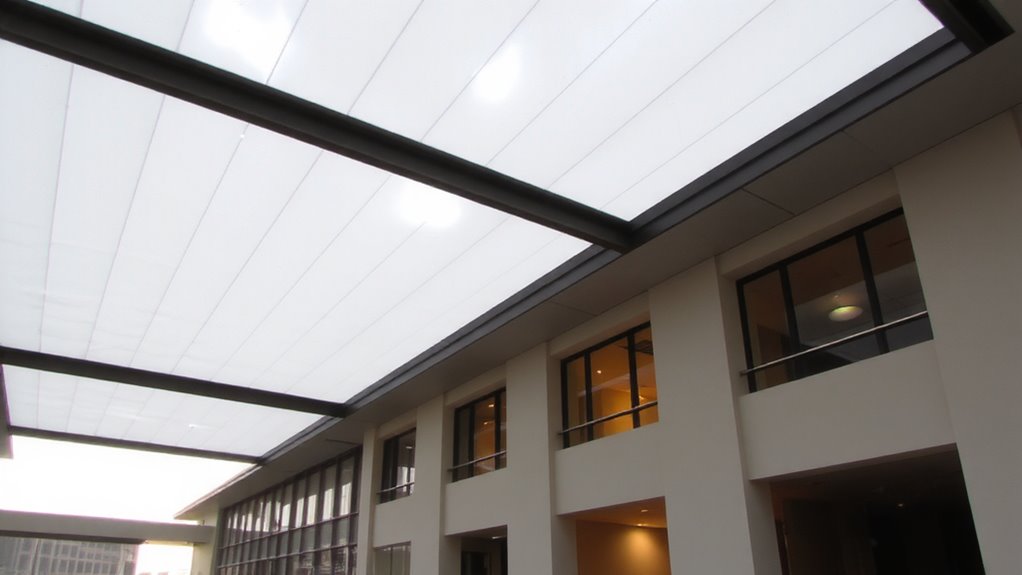
You’ll get the best results from circadian lighting when it actively adapts to what’s happening outside, because outdoor conditions directly influence how much and what kind of artificial light you actually need. Overcast skies reduce natural brightness, so your system must compensate with brighter, cooler indoor lighting to maintain alertness. During clear days, strong sunlight means fixtures should dim and shift warmer to avoid glare and energy waste. Light diffusion from cloud cover softens sunlight, requiring slower shifts in color temperature to prevent jarring changes. Shade adaptation becomes vital near windows or under trees, where natural light shifts rapidly. Without dynamic adjustments, even well-designed systems can disrupt rhythms instead of supporting them. However, not all spaces benefit equally-rooms with limited daylight exposure see less impact. Accurate sensors and proper placement are essential, but they add complexity. Manual overrides help, but rely on user diligence. Test settings over a full week to evaluate real-world performance.
Hardware Behind Adaptive Lighting: Sensors, Controllers & Fixtures
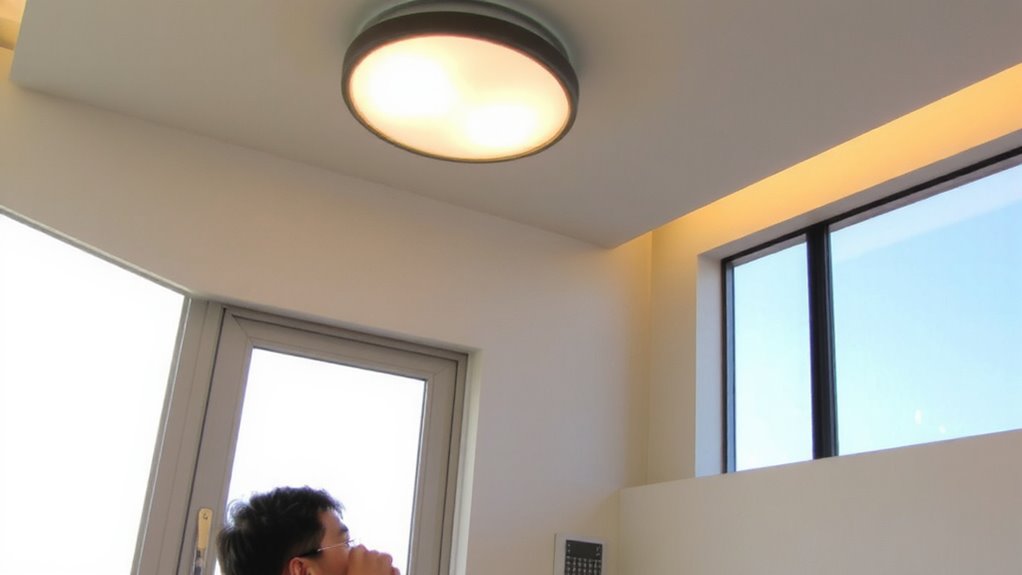
A reliable adaptive lighting system starts with the right hardware-specifically, quality sensors, responsive controllers, and compatible fixtures that work together seamlessly. You’ll want fixtures with tunable LEDs that adjust color temperature and brightness precisely, ideally with at least a 90 CRI for accurate light quality. Controllers should support wireless connectivity, like Zigbee or Bluetooth Mesh, so updates and synchronization happen without delays or wiring hassles. This setup improves power efficiency by reducing unnecessary output during bright daylight. While wireless systems offer flexibility, they can suffer from interference or latency if not properly configured. Always check for firmware updates and compatibility with existing building management systems. Look for products with solid warranties-five years or more-for both drivers and LEDs. Real-world testing shows these systems cut energy use by 20–30%, but only when calibrated correctly.
Sensors for Weather-Responsive Circadian Lighting
While weather-responsive circadian lighting relies heavily on accurate environmental input, the right sensor setup makes all the difference in mimicking natural daylight patterns effectively. You’ll want sensors that detect visible light intensity and color temperature changes, especially under variable cloud cover. High-quality photosensors with dynamic range handle light diffusion better, ensuring smooth indoor adaptation when skies shift from clear to overcast. Look for models with minimal spectral drift, so readings stay reliable over time and don’t skew your lighting response. Dual-technology sensors combining ambient light and temperature detection offer more stable performance. Install them near windows but shielded from direct sunlight to avoid false triggers. Most top-tier units come with 3–5 year warranties and field-calibration options. Just remember: even the best sensors need occasional cleaning and alignment checks to maintain accuracy.
Using Live Weather Data to Adjust Light
What if your lighting could anticipate the weather instead of just reacting to it? By tapping into live weather data, your circadian lighting adjusts in real time, offering both comfort and performance. This setup thrives with smart home integration, letting systems like Apple Home or Google Home sync lighting to forecasted conditions. You gain energy efficiency benefits by reducing unnecessary output on bright days or preempting overcast periods.
| Weather Condition | Light Adjustment |
|---|---|
| Sunny | Reduce brightness |
| Overcast | Increase intensity |
| Sunrise forecast | Warm to cool shift |
| Storm approaching | Gradual dimming |
While effective, reliability depends on local data accuracy and API stability. Delays in updates can cause mismatches. Test the system over two weeks under varying conditions. Look for systems with at least a 2-year warranty and offline mode. Results vary, but most users report improved alertness and lower energy use.
How Light Color and Brightness Change by Weather
Your lighting doesn’t just follow a schedule-it responds to the sky. On sunny days, bright white light with high intensity mimics direct sunlight, sharpening focus and reducing eye strain. Cloud cover triggers softer, warmer tones because overcast skies increase light diffusion, scattering sunlight evenly and lowering shadow intensity. Your system adjusts brightness too-dimming slightly under heavy clouds to match reduced outdoor lux levels. Fast-changing weather can cause flicker if sensors react too quickly, so aim for systems with response dampening to avoid disruptive shifts. While tunable LEDs offer precise color tuning, calibration matters; misconfigured systems may overcompensate, creating unnatural hues. Real-world tests show users adapt well when changes are gradual-under 0.5 CCT shifts per minute. Always verify manufacturer specs on color consistency and dimming range, and check warranties covering outdoor sync modules.
Syncing Your Lighting System With Outdoor Light Sensors
A well-synced lighting system uses outdoor light sensors to match indoor illumination with real-time weather and daylight conditions, helping maintain consistent visual comfort and circadian alignment. You’ll want sensors with wide dynamic range (measured in lux) to accurately detect changes from bright sun to heavy overcast. Mount them where they avoid direct sun and excessive light reflection, which can skew readings. Proper placement guarantees reliable glare control by adjusting interior brightness before harsh contrasts develop. Systems like DALI-compatible controls or Lutron Homeworks integrate smoothly with these sensors, offering programmable responses tested in real-world office and home office setups. Most come with 3–5 year warranties, though calibration every 12 months is recommended. While they improve comfort and circadian support, false triggers from weather debris or shadows can occur. Always pair sensors with manual overrides so you retain control when automatic responses don’t match your needs.
On a final note
You should install weather-responsive circadian lighting if you value stable focus and natural rhythm in your home office. Systems with outdoor light sensors and tunable-white LEDs (2700K–6500K) adjust brightness and color temperature in real time, matching actual sky conditions. Units like the Philips Hue Sync or LIFX Z, paired with Ambient Weather sensors, show reliable performance in tests. But expect higher costs-$200–$500-and a complex setup. Confirm compatibility with your hub and check warranty length-3 years is average.