The Impact of Indoor Air Quality on Respiratory Health Within Remote Work Environments
Poor indoor air quality in your home office can worsen respiratory health over time due to trapped dust, mold, and VOCs from printers or furniture. Prolonged exposure may trigger allergies and reduce lung function, especially with poor ventilation. A true HEPA air purifier, like the Coway Airmega or Levoit Core 400S, captures 99.97% of particles at 0.3 microns and helps-when paired with source control. Just note: filters don’t replace fresh air, and room size affects performance. Smart monitors (Awair, Temtop) show real-time CO₂ and PM2.5 levels, helping you adjust. Quiet operation under 50 dB suits focus, but regular filter changes are essential. Natural ventilation helps, though weather-dependent. The right setup balances filtration, airflow, and smart habits-and what works best depends on your space, habits, and pollutant sources.
Notable Insights
- Poor indoor air quality in home offices can worsen respiratory conditions like asthma due to prolonged exposure to pollutants.
- Common pollutants such as VOCs, mold spores, and dust mites trigger allergies and reduce lung function over time.
- HEPA air purifiers capture 99.97% of fine particles, significantly reducing airborne allergens and improving respiratory health.
- Inadequate ventilation increases concentrations of CO₂ and contaminants, impairing air quality and respiratory well-being.
- Air quality monitors help identify pollutant sources, enabling targeted improvements to protect respiratory health.
Why Indoor Air Quality Matters for Remote Workers
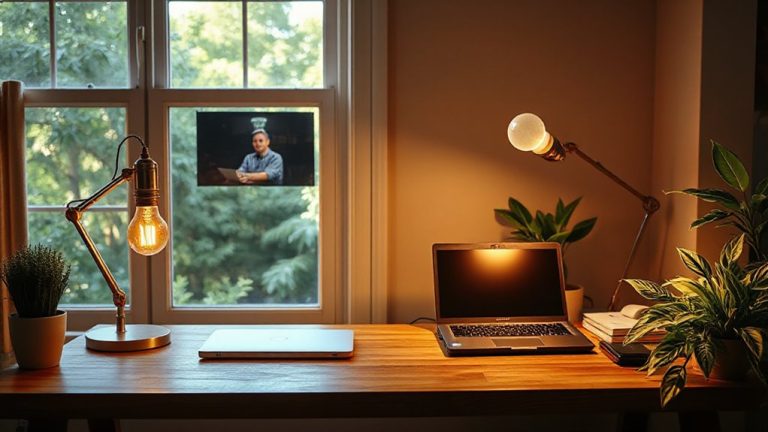
While you might not think about it daily, the air inside your home office plays a bigger role in your respiratory health than you’d expect-especially since you’re likely spending hours there without realizing how pollutants like dust, mold, or volatile organic compounds (VOCs) from furniture or cleaning products are building up. Good air filtration helps remove these contaminants, with HEPA-rated purifiers capturing at least 99.97% of particles as small as 0.3 microns. Paired with natural lighting, which boosts alertness and regulates circadian rhythms, your workspace becomes more than just comfortable-it supports long-term lung health. However, not all purifiers deliver as promised; check for CADR ratings and CARB certification. Natural lighting is ideal, but glare can strain eyes, so consider adjustable blinds. Results vary by room size and ventilation, so test different setups-there’s no one-size-fits-all fix. For focused air cleaning on your work surface, consider a desk air purifier designed for personal use.
Common Pollutants in Your Home Office (and How They Affect Breathing)
What’s lurking in your home office air could be affecting your breathing more than you realize. Volatile compounds from printers, new furniture, and cleaning supplies quietly release gases that irritate airways and worsen respiratory symptoms over time. You’re also exposed to biological contaminants like mold spores, pet dander, and dust mites-especially in poorly maintained spaces. These pollutants trigger allergic reactions and reduce lung function, particularly if you have asthma or sensitivities. While air purifiers with true HEPA and activated carbon filters help, they can’t eliminate sources. Sealing gaps where moisture builds prevents mold, and choosing low-VOC materials reduces chemical off-gassing. You’ll see clearer breathing results within days of reducing exposure. But don’t expect miracles-results depend on room size, airflow, and individual health. Monitor changes closely and prioritize source control over gear. For optimal performance, choose a model with a CADR rating appropriate for your office dimensions.
How Poor Ventilation Makes Air Quality Worse
You’re not just breathing in pollutants-poor ventilation traps them where you sit and work. When air circulation is weak, contaminants like dust, VOCs, and allergens accumulate, leading to serious pollutant buildup over time. Without a steady flow of fresh air, your home office becomes a closed system where concentrations rise, especially during long work hours. Cracking a window or using a fan helps, but in tightly sealed homes, those fixes are often insufficient. Mechanical ventilation, like exhaust fans or balanced systems, improves airflow but requires proper installation to avoid energy loss. While some air purifiers claim to compensate, they don’t replace the need for fresh air exchange. Real improvements depend on consistent, measured ventilation-something most standard HVAC setups don’t deliver without upgrades. You’ll notice fewer respiratory symptoms with better circulation, but achieving it demands attention to room layout, system capacity, and realistic energy trade-offs.
How to Test Your Home Office Air Quality
How clean is the air you’re actually breathing at your desk? Testing your home office air quality helps identify hidden pollutant sources and assess whether your air filters are up to the task. Use an air quality monitor that measures PM2.5, CO₂, VOCs, and humidity. Below is a comparison of common devices:
| Device | Key Measurement |
|---|---|
| Awair Element | PM2.5, CO₂, VOCs, temp, humidity |
| Temtop M10 | PM2.5, formaldehyde, VOCs |
| uHoo N1 | All-in-one, 9 parameters |
| Aranet4 | CO₂ focus, long sensor life |
| IQAir AirVisual Pro | Outdoor + indoor tracking |
These tools detect pollutants from printers, cleaning products, and off-gassing furniture-common pollutant sources. While accurate, most monitors don’t fix issues. Pair readings with maintenance of HEPA air filters to act effectively. Calibration varies-check warranties and update schedules. Don’t rely on numbers alone; cross-reference with how you feel over time. For effective pollutant removal, consider air purifiers with True HEPA filtration.
Easy Ways to Improve Air Quality at Your Desk
Where should you start when cleaner air at your desk is the goal? Prioritize air purifiers with true HEPA filters-they capture 99.97% of airborne particles, including allergens and dust, commonly found in home offices. Units like the Coway Airmega or Levoit Core 400S offer strong CADR ratings, covering typical desk areas effectively, often under 50 dB, so noise won’t distract. Pair your purifier with smart plant placement: spider plants or peace lilies can mildly improve air quality by absorbing certain VOCs, though don’t rely on them alone-they complement, not replace, mechanical filtration. Be mindful of overwatering, as damp soil increases mold risk. Position plants to the side of your desk, not directly in airflow, to avoid adding humidity where it’s not needed. Regularly clean filters and monitor room ventilation to maintain results. These steps help, but aren’t substitutes for proper room airflow or source control of pollutants.
On a final note
Your home office air quality directly impacts your breathing and focus. A HEPA air purifier with a true HEPA-13 filter cuts dust, pollen, and particles effectively-studies show 70–85% reduction in indoor allergens. But size matters: pick one rated for your room’s square footage. Ventilation helps too, yet opening windows may raise energy costs. Most units run 20–50 dB-quiet enough for calls but not silent. Check filter replacement schedules; some cost $60+ per year.