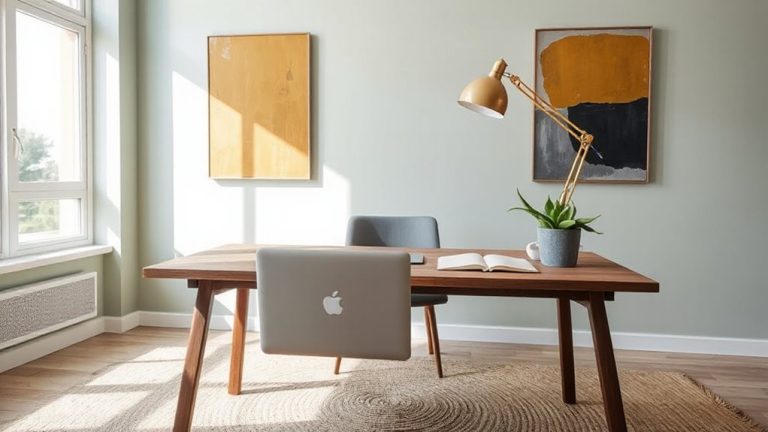
Incorporating Natural Elements Into Your Workspace for Stress Reduction During High-Intensity Tasks From Home
Start your day with 10 minutes outside-morning sunlight for 15–30 minutes sharpens focus by regulating cortisol and circadian rhythm. Position your desk perpendicular to south- or east-facing windows to harness natural light without glare; use sheer curtains and adjustable blinds to control heat and screen reflections. Add a snake plant or peace lily within three feet of your workspace to improve air quality and mental clarity. Choose sealed wood desks or stone accents like basalt organizers for warmth and subtle sound absorption, but check desk load limits-real wood can warp in humidity. Play forest ambience or rain at under 50 dB through external speakers for sustained concentration, though audio quality varies by app. There’s more to optimizing your environment where small changes amplify results.
Notable Insights
- Spend 10 minutes outdoors daily to lower cortisol and boost mood, enhancing resilience during intense work tasks.
- Position air-purifying plants like snake plants within three feet of your desk to improve focus and oxygen levels.
- Align your desk perpendicular to windows to reduce screen glare and maintain stable light exposure throughout the day.
- Incorporate wood and stone elements to add warmth, reduce workspace sterility, and promote a grounded, calm atmosphere.
- Play low-volume nature sounds, such as rain or forest ambience, to support concentration and reduce mental fatigue.
Start With Nature to Reduce Work Stress
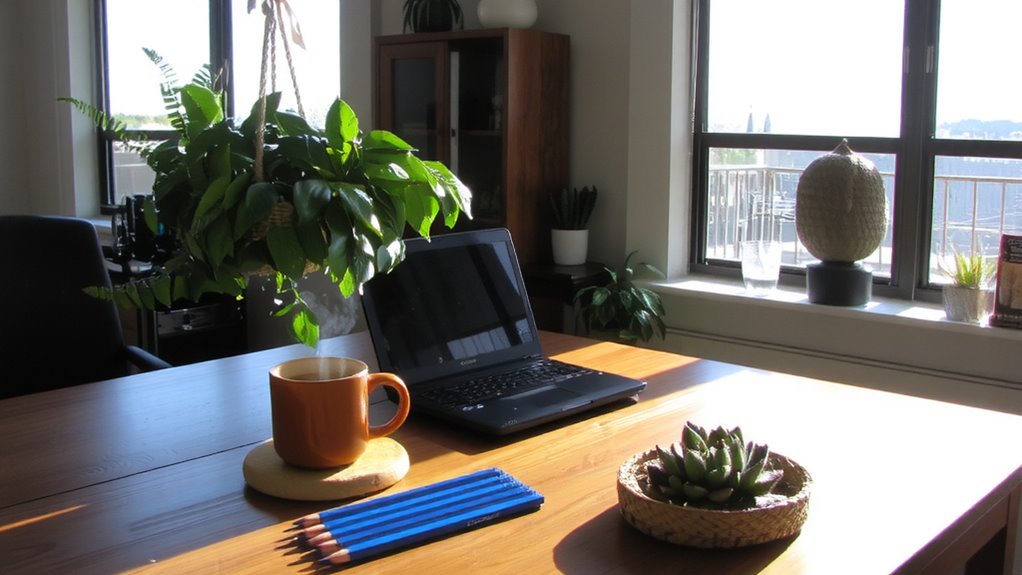
Nature isn’t just a nice addition-it’s a proven tool for dialing down stress during your workday. Getting outside for even 10 minutes can boost mood and lower cortisol, with activities like forest bathing-mindfully walking through green spaces-showing measurable reductions in anxiety. You don’t need a hiking trail; city parks or tree-lined sidewalks work. Pair that with morning sunlight therapy, aiming for 15–30 minutes of natural light shortly after waking, to regulate your circadian rhythm and improve daytime alertness. This isn’t just feel-good advice-studies show real cortisol and heart rate variability improvements. However, it’s not a fix-all; results vary based on consistency and environment. If you’re indoors all day, position your desk near a window, but avoid glare. No gear can replace the real thing-skip the expensive light boxes unless medically advised. Simple, free habits beat gadgets every time. Adding best office plants can further enhance indoor environments by improving air quality and reducing mental fatigue.
Pick Air-Purifying Plants That Sharpen Focus
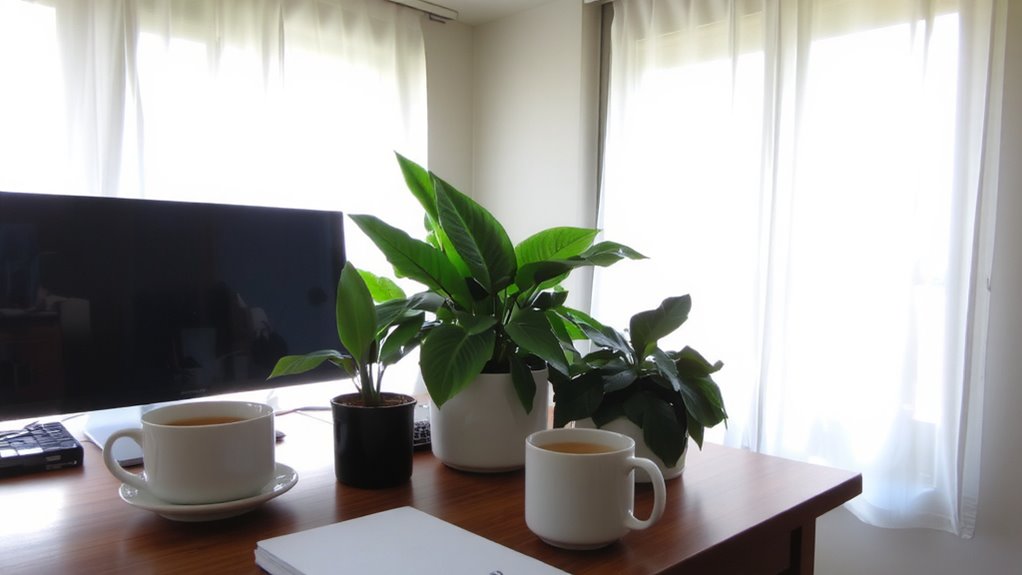
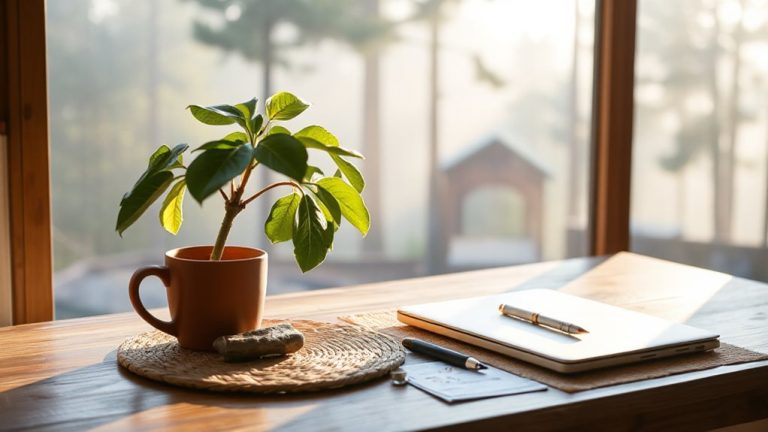
What if your desk plant did more than just look good? It could actually help you focus. Certain air-purifying plants, like snake plants and peace lilies, remove common indoor pollutants and increase oxygen levels, which may boost mental clarity during long work sessions. These plants thrive with minimal care, making them practical for home offices. For best results, pay attention to plant placement-position them within three feet of your desk for airflow benefits without blocking movement. Use well-draining soil types like cactus mix or perlite-amended potting soil to prevent root rot, especially in containers without drainage holes. While they improve air quality, don’t expect dramatic cognitive shifts-results are subtle and vary by room size and ventilation. Keep away from direct drafts or HVAC vents to maintain consistent moisture. Overall, they’re a smart, low-risk addition to a focused workspace.
Avoid Glare and Heat When Using Natural Light
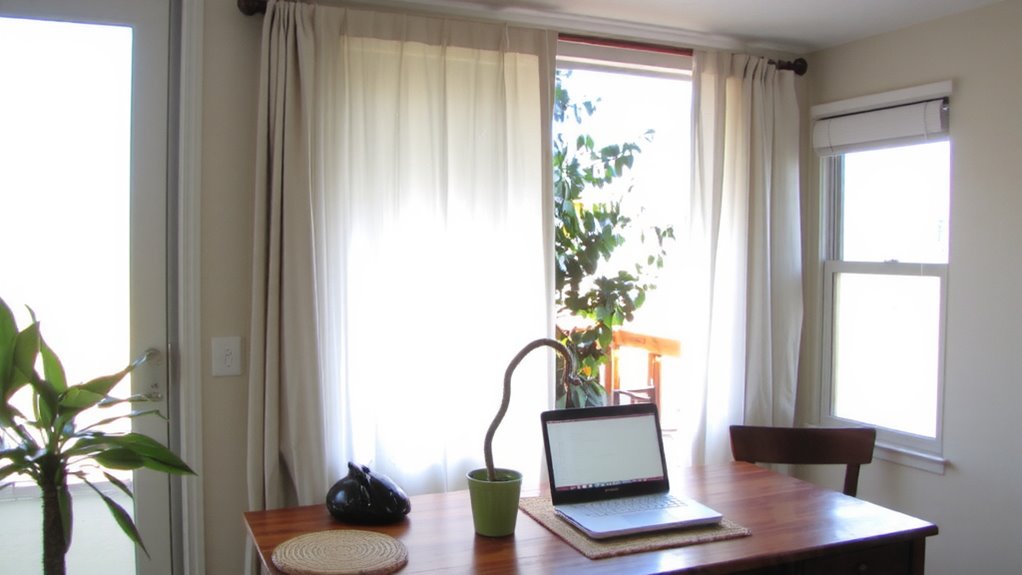
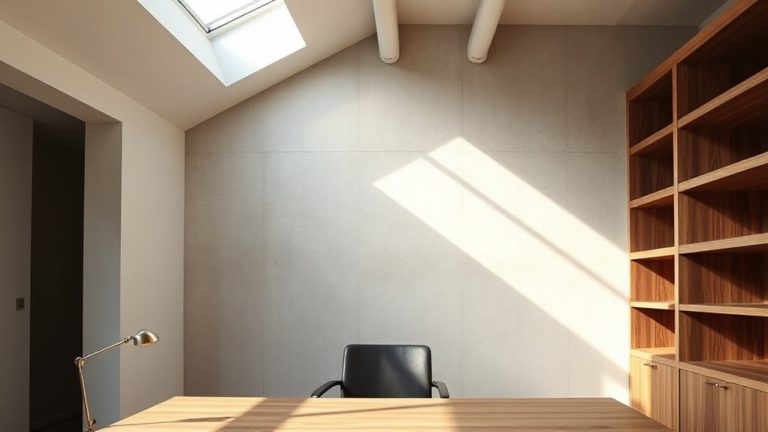
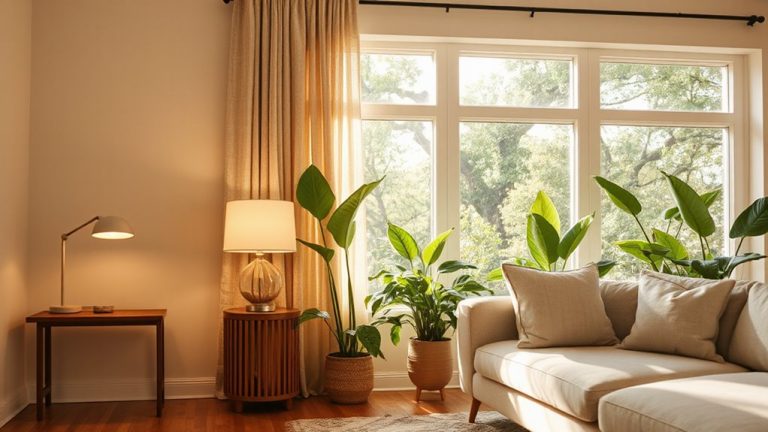
You’ve optimized your air quality with low-maintenance plants, but your lighting setup might still be working against you. Natural light boosts alertness, but poor window positioning can cause glare on screens and uneven thermal control, raising room temperature uncomfortably. Position your desk perpendicular to windows when possible-this minimizes direct sun exposure while maintaining brightness. South-facing windows deliver consistent light but often require shades or sheer curtains during peak hours. East or west exposures create harsh morning or afternoon glare, so adjustable blinds are essential. Avoid placing your monitor directly in front of or behind a window. Overheating from sunlight can disrupt focus, so pair light-filtering window treatments with a room thermometer to monitor shifts. While some films reduce UV and heat, they may slightly dull daylight quality. Balance is key: prioritize glare reduction and stable thermal control without dimming your space too much.
Add Wood and Stone for a Calmer Workspace Feel
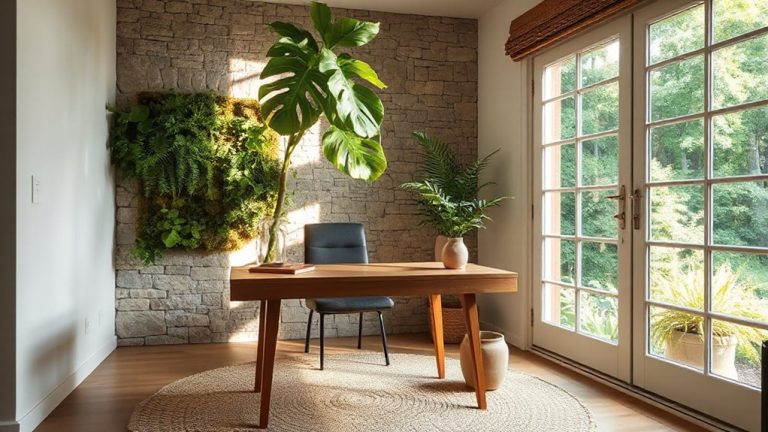
While you can’t always control your office’s layout or lighting, introducing natural materials like wood and stone into your workspace often makes a measurable difference in perceived calm and focus. You’ll find that wood textures-like those in solid oak desktops or walnut shelves-add warmth and visual depth, reducing the sterile feel of synthetic materials. Stone accents, such as a polished granite coaster or a small basalt organizer, offer subtle tactile variety and grounding contrast. These materials don’t just look stable-they actually absorb sound slightly and maintain consistent surface temperatures, which helps regulate your micro-environment. But be cautious: real wood can warp in humid areas without a sealed finish, and stone items add weight-so check desk load limits. Most tested products with UV-cured coatings last longer and resist fading. Choose smaller pieces first to gauge comfort and durability in your space.
Play Calming Nature Sounds During Heavy Work
A well-designed workspace goes beyond materials to include how it sounds-especially when deadlines pile up. Playing nature sounds like bird sounds or flowing water can reduce stress during intense work, but only if done right. Background audio should be consistent and low in variation to avoid distraction.
| Sound Type | Best For | Potential Drawback |
|---|---|---|
| Bird sounds | Morning focus | Can be unpredictable |
| Flowing water | Deep work | May feel monotonous |
| Rain | All-day use | Overused in apps |
| Forest ambience | Creative tasks | Lower audio quality |
| Stream + birds | Balanced effect | Needs good speakers |
Use wired or noise-isolating headphones for clarity. Avoid loops with sudden changes. Test free apps like Nature Sounds or Atmosphere before buying subscriptions. Volume should stay below 50 dB-just audible enough to mask distractions without causing fatigue.
Take Quick Nature Breaks Without Leaving Your Desk
Why stay cooped up when a two-minute recharge is possible without stepping outside? You can tap into forest imagery right at your desk using a small digital frame or tablet set to loop serene woodland scenes-look for models with matte screens to reduce glare and loop timers to avoid distractions. Pair that with desk aromatherapy using a simple reed diffuser or compact essential oil diffuser that runs quietly and uses passive dispersion, so there’s no noise or extra humidity. Scents like cedarwood or pine mimic forest air and may help lower stress markers in short bursts. While effects vary per person, studies suggest brief visual and scent exposure can briefly improve focus. Just don’t rely on plastic-framed “nature apps” with ads or diffusers with short warranties-stick to ad-free loops and refillable diffusers with 12-month guarantees for real utility.
On a final note
You should add natural elements to your home office-they reduce stress during intense work. Plants like snake or spider varieties clean air and boost focus, but avoid overwatering; drainage trays prevent messes. Use sheer blinds to soften natural light and reduce screen glare. Wood desks and stone accessories add calm texture. Play forest or rainfall sounds at low volume through speakers like the Sonos One. Take micro-breaks, gazing at greenery. Not all setups allow this; space and lighting vary. Test changes over two weeks. Results differ by person.