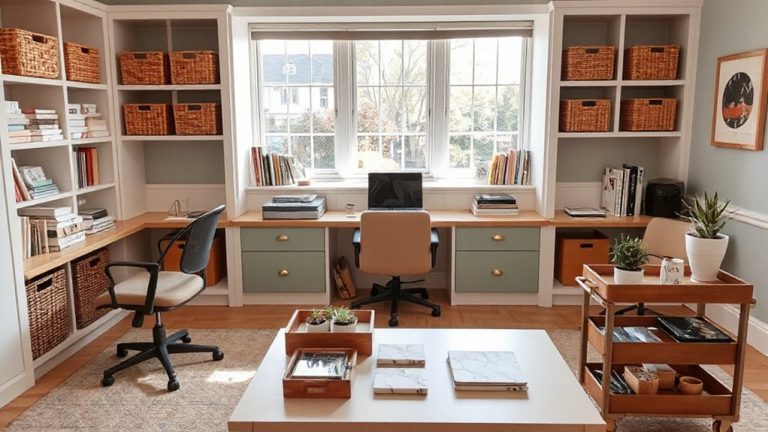
Using Light Tubes to Channel Natural Light Into Interior Home Office Rooms
You can boost focus and mood in your interior home office with light tubes like Solatube or Sun Tunnel, which channel natural light through a reflective tube from a roof dome to a ceiling diffuser-ideal for south-facing roofs where they deliver steady daylight and may improve cognitive performance by up to 15%. They’re easier and cheaper to install than skylights, cut eye strain, and lower lighting costs, though output drops on cloudy days or with long, bent tubing runs. While DIY-friendly, proper sealing is essential to prevent leaks-your next steps depend on placement, room size, and backup lighting needs.
Notable Insights
- Light tubes channel natural daylight into interior home offices using a roof-mounted dome and reflective tubing.
- South-facing roof installations maximize light capture, enhancing midday illumination in home office spaces.
- Light tubes reduce eye strain and boost focus by delivering consistent, glare-free natural light.
- They are easier and less costly to install than skylights, with minimal roof disruption and no structural compromise.
- Short, straight tube runs from Solatube or Sun Tunnel kits ensure optimal brightness and even ceiling light distribution.
Why Natural Light Transforms Your Home Office
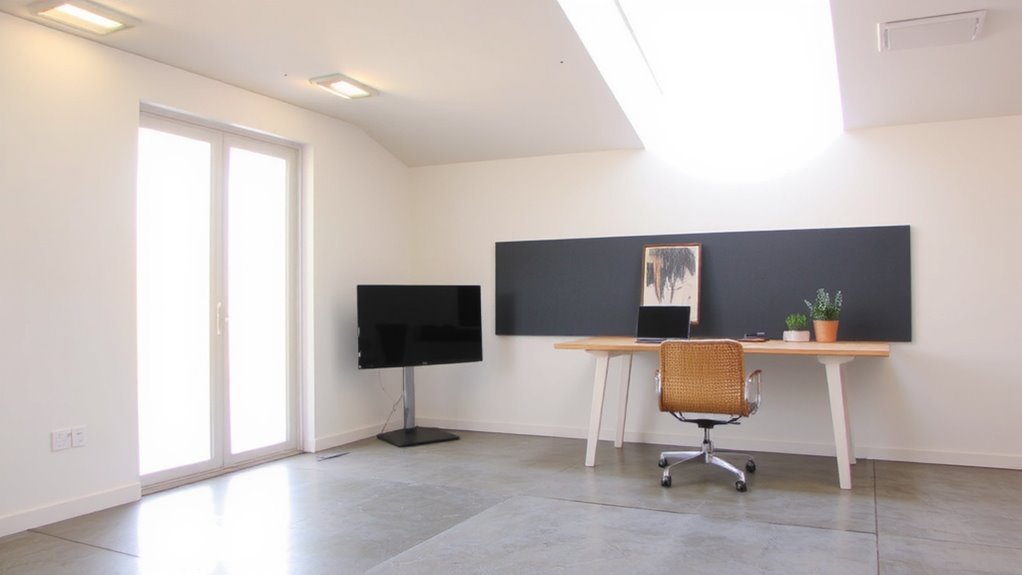
Ever wonder why you feel sharper and more alert on days you’re near a window? Natural light does more than brighten a room-it directly supports your mental health and delivers a measurable productivity boost. Exposure to daylight helps regulate circadian rhythms, improving focus and reducing fatigue during work hours. Studies show people working near natural light report better mood and energy, with up to 15% higher performance on cognitive tasks. It’s not just comfort-consistent daylight reduces reliance on artificial lighting, cutting eye strain and headaches. Still, placement matters: south-facing windows offer steady exposure, while shaded or north-facing ones deliver less benefit. If your layout limits access, consider daylight-balanced bulbs (5000K–6500K) as a temporary fix. They help, but don’t match the biological impact of real sunlight. Real gains come from consistent, direct exposure-not gimmicks. Know your space before investing in fixes.
How Light Tubes Bring Sunlight Into Windowless Rooms
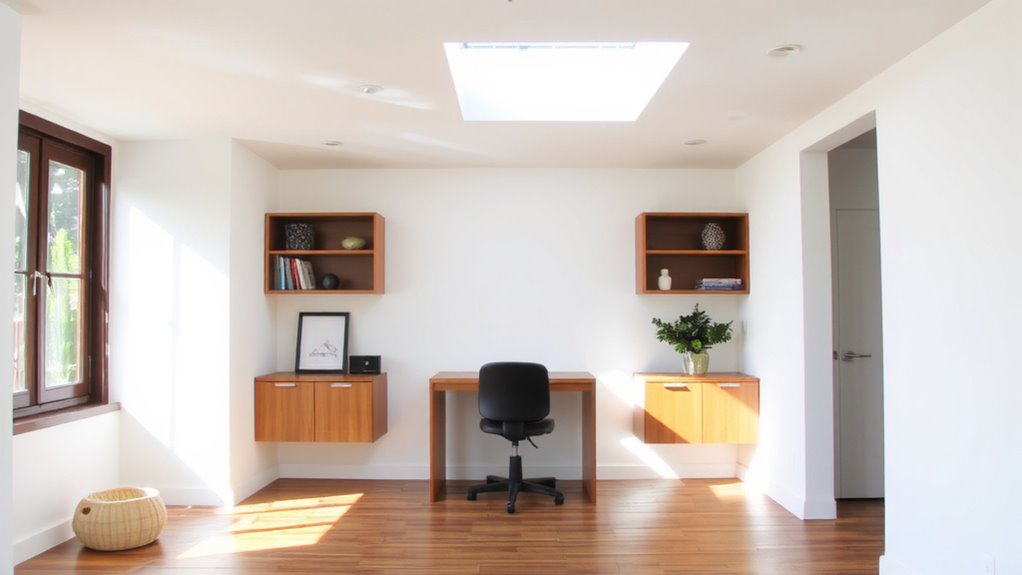
How do you get real sunlight into a windowless room without tearing down walls? Light tubes make it possible by capturing sunlight on the roof and channeling it through a highly reflective, rigid tube to your ceiling. Proper tube placement-short and straight-is key to maximizing brightness; bends or long runs reduce output. A dome-shaped collector on the roof funnels light in, while diffusers at the room end spread it evenly, mimicking natural daylight with effective light diffusion. You’ll get strong illumination during midday, though overcast skies or northern latitudes reduce performance. Most systems install in one day, with warranties up to 15 years. While they don’t replace electric lighting completely, they cut reliance on bulbs during daylight hours. Ideal for windowless interior offices, they deliver real sun exposure-just make certain your setup avoids sharp angles and uses the right diffuser size.
Light Tubes vs. Skylights: Which Is Better for Home Offices?
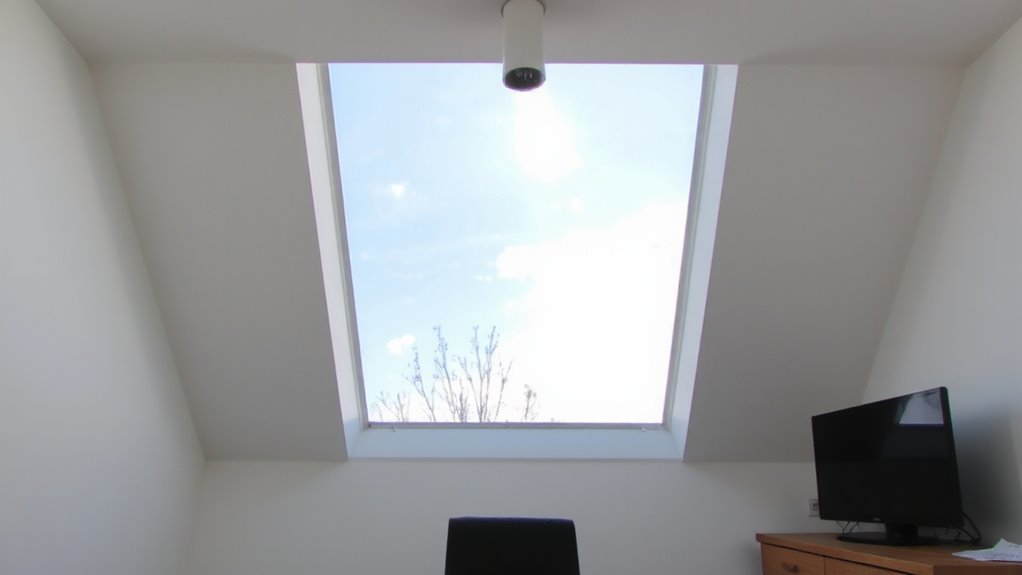
Why settle for dim, artificial light when your home office could have the real thing? For most, light tubes beat skylights-they’re cheaper, easier to install, and preserve your roof’s structural integrity. Unlike skylights, which require big cuts and potential leaks, light tubes use a small roof opening and a reflective tube to channel sunlight efficiently. They don’t offer the same aesthetic impact-you won’t get starry-night views-but they deliver consistent daylight without compromising energy efficiency. You’ll save on wiring and AC costs since they transmit almost no heat. Most kits come with 10-year warranties and perform well in real-world tests, brightening windowless rooms evenly. Still, if you want ventilation or a view, a skylight might be worth the extra cost and risk. For pure function, reliability, and minimal home modification, light tubes are the smarter pick.
Where to Install Light Tubes for Maximum Brightness
Where should you place a light tube to get the most daylight in your home office? For maximum brightness, best placement depends on ceiling positioning and roof exposure. You’ll want the tube installed where your roof gets the most sun-usually the south-facing section. Avoid shaded or north-facing areas, since they cut light output by up to 50%. Below, check how location affects performance:
| Roof Area | Light Output |
|---|---|
| South-facing | High |
| North-facing | Low |
| Shaded | Poor |
Ceiling positioning should center over your work zone without obstructing beams or ducts. An off-center tube still helps, but expect uneven light spread. Remember, even with perfect ceiling positioning, attic obstructions or long tubing can reduce brightness. Always measure your space and verify clear roof access before finalizing placement.
Can You Install a Light Tube Yourself? A Step-by-Step Guide
Thinking about skipping the contractor and handling the install yourself? You can, but be ready for some DIY challenges. Light tube kits, like Solatube or Sun Tunnel, come with clear instructions and fit most roof pitches, but you’ll need basic tools-jigsaw, drill, ladder-and a helper. First, cut the ceiling opening using the included template, usually 10 or 14 inches. Then, go up to the attic and align the dome with the ceiling hole. Cut the roof hole carefully, install the flashing, and secure the dome. Connect the rigid or flexible tube, sealing all joints to prevent heat loss. Mind the safety precautions: wear goggles, use a sturdy ladder, and turn off power if near wiring. Improper alignment or loose seals cuts performance. While many complete it in a few hours, missteps can lead to leaks or dim results-so double-check every step.
Cost, Energy Savings, and Maintenance for Home Office Users
Installing a light tube yourself can save on labor, but you’ll still need to account for the upfront cost of the kit, which typically ranges from $300 to $600 depending on diameter and length-10-inch models like the Solatube 160 DS are cheaper and suit smaller offices, while 14-inch versions such as the Sun Tunnel 290 DST deliver more light for larger or deeper rooms. The initial cost may seem high, but you’ll gain long term savings on electricity and HVAC, since natural light reduces reliance on bulbs and generates less heat than electric fixtures. Most tubes need little maintenance-just an occasional rooftop dome wipe and sealant check. However, performance drops on cloudy days, so you’ll still need backup lighting. Warranties often cover 10+ years, but roof access for cleaning isn’t always easy. Weigh your daylight access and usage patterns carefully before committing.
On a final note
You should install a light tube if you want reliable natural light in your windowless home office. Models like the Solatube 160 DS bring in measurable daylight, cutting electric lighting use by up to 70% during the day. They’re easier to install than skylights, with minimal roof damage. But output depends on roof orientation and local weather-overcast days yield less light. Warranties typically cover 10 years, and reflective tubing maintains efficiency over time.