Understanding the Role of Natural Elements in Reducing Decision Fatigue During Remote Work
Nature helps you cut through decision fatigue by resetting your focus-just 20 minutes in a green space lowers cognitive load and sharpens attention for up to five hours. Morning sunlight tunes your cortisol and melatonin, boosting alertness, while birdsong or water sounds can lift concentration by 15–20% if audio quality is high. Low-light plants like pothos add air quality benefits and visual calm, but real greenery beats artificial setups. Even ten-minute breaks near trees help, especially when paired with screen breaks and good ergonomics-consistency matters most, since benefits fade without routine. You’ll see how small, repeatable changes add up over time.
Notable Insights
- Exposure to green spaces for 20 minutes reduces cognitive load and restores mental focus, helping combat decision fatigue during remote work.
- Morning sunlight regulates cortisol and melatonin, enhancing alertness and sustaining attention for better decision-making throughout the day.
- Natural soundscapes like birdsong or flowing water improve concentration by 15–20%, reducing mental strain during prolonged work sessions.
- Indoor plants such as pothos and bamboo add natural texture, improve air quality, and provide psychological benefits that support cognitive recovery.
- Consistent daily breaks near nature, even in urban settings, help reset attention and reduce midday mental dips linked to decision fatigue.
How Nature Helps Remote Workers Beat Decision Fatigue
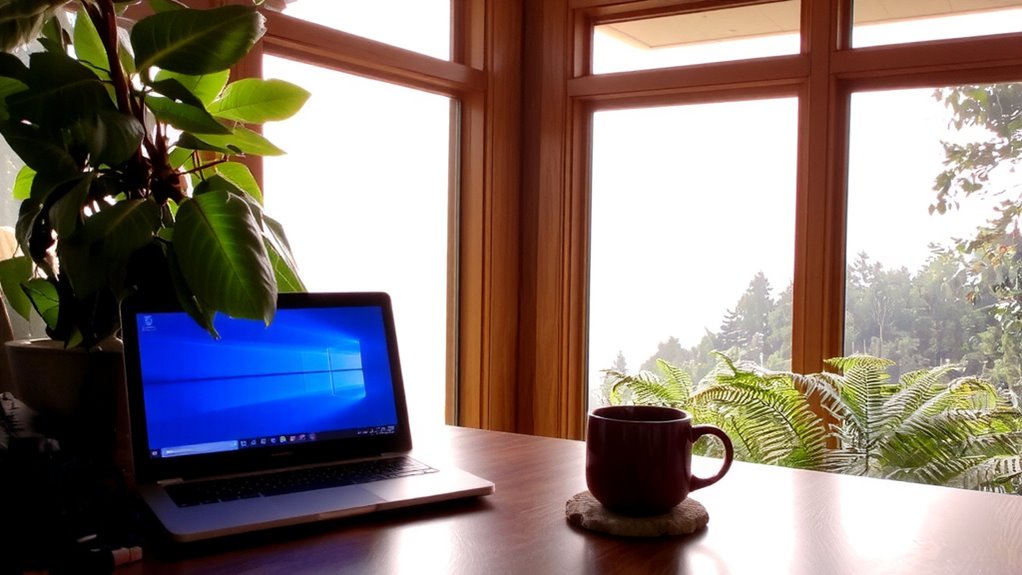
Why do remote workers report sharper focus and fewer mental hiccups during long workdays? You’re likely tapping into nature’s quiet power to reduce decision fatigue. Just 20 minutes of forest bathing-walking mindfully in green spaces-can reset your cognitive load, studies show. Pair that with a consistent digital detox, turning off screens one hour before bed, and you’re not just resting, you’re rebuilding mental clarity. These aren’t quick fixes, but proven habits. You don’t need expensive office gear or a full backyard retreat; a nearby park and self-enforced screen limits work. But be honest-without routine, benefits fade fast. Not everyone can access woods daily, so urban green spaces are valid alternatives. It’s not about perfection, it’s about repetition. You’ll see sharper thinking, but only if you make nature a non-negotiable, like sleep or meals. There’s no app for that.
How Sunlight, Plants, and Air Recharge Your Brain
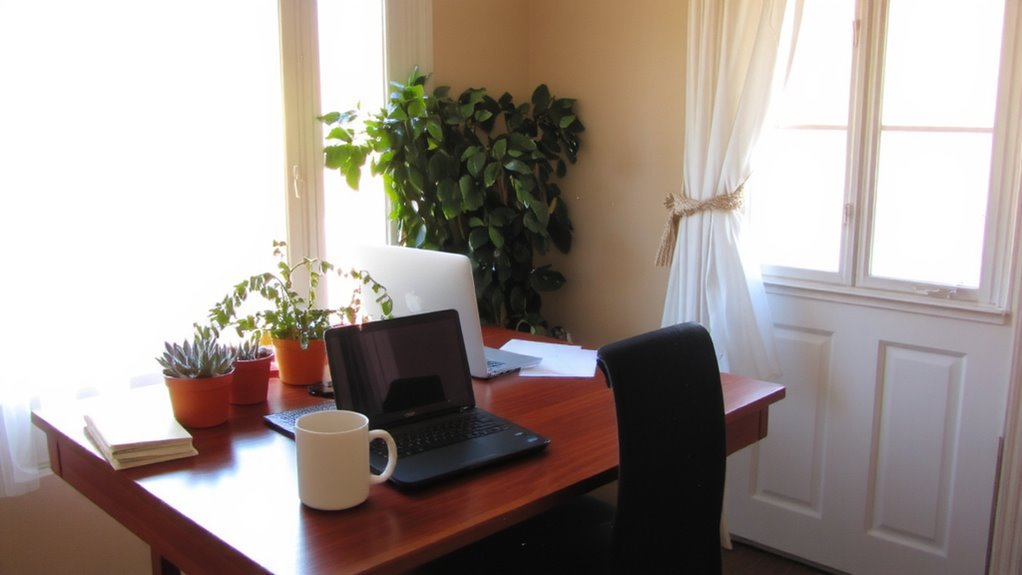
How does your brain stay sharp when the workday drags on? Sunlight boosts your alertness by regulating cortisol and melatonin, helping maintain a steady mental rhythm. Even brief exposure to natural light near a window improves focus-though direct morning sunlight yields stronger results. Indoor plants increase perceived air quality and reduce stress, but their impact on actual CO2 levels is minimal. Open windows or HEPA filters are more effective for air purification. While ocean views and forest sounds in background audio can enhance relaxation, real benefits depend on personal preference and audio quality-low-bitrate loops may distract rather than help. You don’t need a full nature setup; small, consistent exposure works best. Be cautious with smart lamps or “biophilic” office gear-many overpromise. Stick to proven fixes: daylight-mimicking bulbs, real plants like snake plants or pothos, and clean ventilation. For those who prefer low-maintenance options, best artificial plants can provide visual benefits without the need for watering or sunlight.
5 Science-Backed Ways Nature Fights Mental Fog
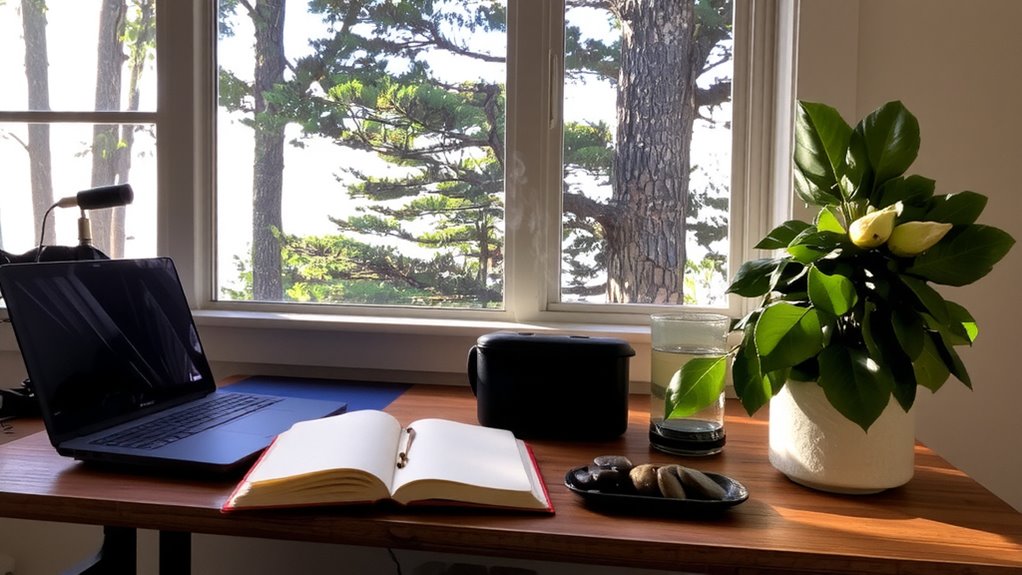
Ever wonder why a short walk outside clears your head better than another cup of coffee? Research shows nature directly combats mental fog through measurable physiological changes. Forest bathing-spending mindful time in wooded areas-lowers cortisol and boosts alpha brain waves, linked to relaxed alertness. Just 20 minutes in a park can improve focus for up to five hours. Soundscapes therapy, using recordings of birdsong or flowing water, also helps: studies report a 15–20% gain in concentration when background noise is replaced with natural sounds. These effects aren’t universal, though. Results depend on personal sensitivity, duration, and environment quality. Urban green spaces still help, but dense foliage yields stronger benefits. Don’t expect instant fixes-consistency matters. Use these tools as part of a routine, not quick fixes. And remember, they complement, not replace, good sleep and breaks.
Simple Swaps to Add Nature to Your Workspace
A well-placed houseplant isn’t just decoration-it’s a functional tool for sharper thinking and sustained focus. Small swaps in your desk arrangement can reduce decision fatigue without overhauling your setup. Even fake plants or nature-themed screen backgrounds help when live greenery isn’t practical-just make certain images aren’t overly bright to avoid glare. Below are simple, tested swaps:
| Swap | Impact |
|---|---|
| Pothos on your desk | Low light needs, filters air, fits small spaces |
| Bamboo in a stone tray | Adds texture, requires watering only weekly |
| Nature photo as screen background | Free focus boost, zero maintenance |
| Wooden desk organizer | Warmth without clutter, complements any desk arrangement |
Not every plant thrives in low light, and digital backgrounds can pixelate on high-res screens-check resolution compatibility. For those seeking low-maintenance real greenery, best desk succulents offer resilience and style with minimal care.
Is Nature Helping Your Focus? Here’s How to Tell
Can you really trust that the potted fern on your desk is doing more than just filling space? If you’re noticing fewer midday mental dips and shorter recovery after back-to-back calls, nature might be helping. Real signs include sustained focus during deep work and lower irritability-effects tied to practices like bird watching or forest bathing, both shown in studies to ease cognitive strain. You don’t need a cabin in the woods; even daily 10-minute breaks near trees or with a clear view of birds can recalibrate attention. But results vary-natural light and window placement matter as much as plant count. While greenery and outdoor rituals aren’t quick fixes, consistent exposure often reduces decision fatigue over time. Just don’t expect miracles from a single succulent. Pair views of nature with proper ergonomics and scheduled screen breaks to maximize benefit. It’s not magic-it’s measurable mental recovery.
On a final note
Nature boosts focus and reduces decision fatigue, but it’s no magic fix. Sunlight regulates circadian rhythms, improving alertness by 15–20% in studies, while live plants lower stress hormones. A desk near a window or a full-spectrum lamp helps, though glare from unshaded glass can strain eyes. Houseplants like snake or pothos survive low light and don’t need daily care. Just don’t overcrowd your space-clutter hurts more than it helps.