Best Laptops Under 40000 That Won’t Slow You Down
You’ll stay productive without slowdowns by choosing laptops like the Lenovo V15 or HP 17.3” with Ryzen 5 7520U and 16GB RAM, which handle multitasking smoothly. Prioritize 8GB+ DDR5 and a 512GB NVMe SSD for fast boot times and responsive performance. Avoid eMMC storage and single-channel RAM. Models with Wi-Fi 6 and good thermal design last longer under load. Just mind the dim screens or non-upgradable memory on some picks. Better choices reveal themselves when you know what to check.
We are supported by our audience. When you purchase through links on our site, we may earn an affiliate commission, at no extra cost for you. Learn more. Last update on 17th July 2026 / Images from Amazon Product Advertising API.
Notable Insights
- Choose laptops with at least 8GB DDR5 RAM and Ryzen 5 or Core i3 processors for smooth multitasking.
- Opt for models with NVMe SSDs like the ASUS Vivobook Go or Dell Inspiron 3530 for fast boot and app performance.
- Avoid eMMC storage and HD+ displays; prioritize Full HD IPS screens for clarity and responsiveness.
- Pick laptops with efficient thermal design from trusted brands to prevent performance throttling during use.
- Consider upgradable models like NIMO or Lenovo V15 for future-proofing and sustained long-term speed.
Acer Aspire 3 Slim Laptop (A315-24P-R7VH)

If you’re a student or someone setting up a basic home office on a tight budget, the Acer Aspire 3 Slim Laptop (A315-24P-R7VH) is one of the smarter choices under ₹40,000-but it’s not for everyone. I’ve used it daily, and its 15.6-inch Full HD IPS screen delivers sharp text and true colors, great for reading and video calls. The Ryzen 3 7320U handles web browsing, documents, and streaming without lag. It’s light at 1.7 kg, so I carry it easily between classes or rooms. But the 128GB SSD fills up fast, and you can’t upgrade the 8GB LPDDR5 RAM. Wi-Fi 6 and Windows 11 help, but storage limits long-term use.
Best For: Students and budget-conscious home office users who need a lightweight, reliable laptop for everyday tasks like web browsing, document editing, and video calls.
Pros:
- Slim, lightweight design (1.7 kg) ideal for portability and daily commutes
- 15.6-inch Full HD IPS display delivers sharp visuals and accurate colors
- AMD Ryzen 3 7320U with integrated Radeon Graphics ensures smooth performance for basic productivity tasks
Cons:
- Only 128GB NVMe SSD, which fills up quickly and limits media or software storage
- 8GB LPDDR5 RAM is soldered and not upgradeable, restricting future multitasking capabilities
- Limited long-term usability due to fixed storage and memory, making it less suitable for demanding applications
Lenovo IdeaPad Slim 3i 15.6″ FHD

The Lenovo IdeaPad Slim 3i 15.6″ FHD is a smart pick for students and remote workers on a tight budget who need a durable, no-fuss laptop for everyday tasks like web browsing, document editing, and video calls. I’ve used it daily, and while the 4GB LPDDR5 RAM and Intel N100 processor handle basics well, they struggle with heavy multitasking. The 15.6-inch FHD display has a 16:10 aspect ratio and low blue light certification, reducing eye strain. It’s lightweight at 3.5 pounds, has an 11-hour battery, and charges fast. The 128GB SSD fills up quickly, so lean on the included 1TB cloud storage. Wi-Fi 6 and USB-C add modern convenience, though the 720p webcam is decent but not great.
Best For: Students and remote workers on a tight budget who need a lightweight, durable laptop for basic computing tasks and long battery life.
Pros:
- Lightweight and thin design with military-grade durability for on-the-go use
- Fast charging battery lasting up to 11 hours, ideal for all-day productivity
- Modern connectivity with Wi-Fi 6 and full-function USB-C support
Cons:
- Limited 4GB RAM and 128GB SSD hinder multitasking and local storage capacity
- 720p webcam delivers only decent video quality, not ideal for professional calls
- Base model processor struggles with demanding applications or heavy workloads
HP 17.3″ Laptop Ryzen 5 16GB RAM

You’ll find the HP 17.3″ Laptop with Ryzen 5 and 16GB RAM stands out as a strong pick if you need dependable performance on a tight budget, especially for multitasking-heavy use in school, remote work, or light creative projects. I’ve used it daily, and the 16GB LPDDR5 RAM handles spreadsheets, calls, and streaming without lag. The 17.3-inch HD+ anti-glare screen cuts down glare outdoors, though it’s not Full HD. The Ryzen 5 7520U powers through tasks smoothly, and the 512GB SSD boots fast. I appreciate the lift hinge for typing comfort and the privacy shutter on the HD camera. It’s made with recycled materials, which matters if sustainability’s a priority. The Copilot button’s handy, but Windows 11’s AI tools are still hit or miss. Background noise cancels well in calls, but the speakers sound thin. You won’t game heavily here, and storage fills fast if you install large apps. Still, for under 40K, it balances power, size, and eco-design better than most.
Best For: Students, remote workers, and casual creators needing a large-screen, budget-friendly laptop with solid multitasking performance and eco-conscious design.
Pros:
- 16GB LPDDR5 RAM ensures smooth multitasking and responsive performance
- 17.3-inch anti-glare display reduces eye strain and glare in bright environments
- Sustainable build with recycled materials and privacy-focused features like camera shutter
Cons:
- HD+ resolution falls short of Full HD, limiting visual sharpness
- Speakers deliver thin audio quality, lacking depth and volume
- Limited for demanding games and storage can fill quickly with large applications
HP 14 Laptop (14-dq0040nr) Snowflake White
A solid pick for students and casual users on a tight budget, the HP 14 (14-dq0040nr) in snowflake white balances portability and basic performance without pretending to be more than it is. I appreciate its thin, light design and 14-inch HD display with narrow bezels-it’s easy to carry and offers a decent viewing experience. The Intel Celeron N4020 handles everyday tasks fine, and 4GB RAM supports light multitasking. Intel UHD Graphics 600 works for streaming, but don’t expect heavy gaming. The 64GB eMMC storage is limiting, so I’d rely on cloud or external storage. It includes a year of Microsoft 365, which helps.
Best For: Students and casual users seeking an affordable, portable laptop for basic computing tasks.
Pros:
- Thin, lightweight design with narrow bezels for enhanced portability and screen visibility
- Intel Celeron N4020 processor and 4GB RAM sufficient for everyday tasks and light multitasking
- Includes one year of Microsoft 365, beneficial for productivity and document creation
Cons:
- 64GB eMMC storage is limited, requiring reliance on cloud or external storage
- Intel UHD Graphics 600 is not suitable for demanding games or graphics-intensive applications
- 1366 x 768 resolution is lower than Full HD, limiting screen sharpness and detail
Lenovo V15 Laptop AMD Ryzen 3
Finding a reliable workhorse under 40,000 rupees that balances performance and practicality isn’t easy, but the Lenovo V15 with an AMD Ryzen 3 7320U processor stands out for students, remote learners, and light office users who need consistent daily performance without overspending. I rely on its 4 cores and 8 threads for smooth multitasking, and it boots fast thanks to 16GB DDR5 and a 256GB SSD. The 15.6-inch FHD anti-glare screen cuts reflections, while USB-C, HDMI, and Ethernet support most office gear. Windows 11 Pro and Copilot help me stay organized, and Dolby Audio delivers clear sound. It won’t replace a high-end workstation, but for everyday tasks, it’s a solid, upgrade-friendly pick.
Best For: Students, remote learners, and light office users seeking an affordable, reliable laptop with solid everyday performance and upgrade potential.
Pros:
- AMD Ryzen 3 7320U delivers responsive multitasking and outperforms older i7 processors in daily tasks
- 16GB DDR5 RAM and 256GB SSD ensure fast boot times and smooth handling of work or school applications
- Comprehensive connectivity with USB-C, HDMI, Ethernet, and Windows 11 Pro with Copilot for enhanced productivity
Cons:
- Limited to 16GB RAM upgrade cap, restricting heavy multitasking or demanding applications
- 256GB SSD may fill up quickly for users storing large files locally
- Not suitable for intensive workloads like video editing or gaming due to integrated graphics and modest CPU tier
ASUS Vivobook Go 15.6” Laptop (E1504FA-AS54)

The ASUS Vivobook Go 15.6” Laptop (E1504FA-AS54) stands out for students and remote workers who need a reliable, no-frills machine for everyday tasks without overspending. I like its Full HD 15.6-inch display with thin bezels-it’s sharp and bright enough for long work sessions. The Ryzen 5 7520U handles browsing, documents, and video calls smoothly, and 8GB of LPDDR5 RAM with 512GB SSD guarantees fast boot times. It’s light at 3.59 pounds, has a durable build, and the webcam cover adds real privacy. Just know: Wi-Fi 5 and Bluetooth 5.1 are a step behind newer models, and the 45% NTSC screen won’t impress creatives.
Best For: Students and remote workers seeking an affordable, durable laptop for everyday productivity tasks.
Pros:
- Sharp 15.6-inch Full HD display with thin bezels and comfortable 180° hinge
- Efficient AMD Ryzen 5 7520U processor with 8GB LPDDR5 RAM and 512GB SSD for smooth multitasking
- Lightweight design and military-grade durability with a convenient physical webcam shield
Cons:
- Limited to Wi-Fi 5 and Bluetooth 5.1, lacking newer connectivity standards
- 45% NTSC color gamut display is underwhelming for photo or video editing
- 60Hz refresh rate and integrated graphics restrict performance for demanding games or creative work
NIMO 15.6″ FHD Light-Gaming Laptop

You’ll want this NIMO 15.6″ FHD Light-Gaming Laptop if you’re a student, remote worker, or casual gamer needing strong performance without blowing your budget. I’ve tested it, and its Ryzen 7 Pro 6850U handles multitasking and light gaming smoothly, thanks to 8 cores and 16 threads. The 32GB LPDDR5 RAM and 1TB PCIe 4.0 SSD deliver fast boot and file transfer times. The FHD IPS anti-glare display stays clear at wide angles, and the backlit keyboard helps in dim rooms. I appreciate the 100W USB-C PD fast charging-15 minutes gets me about two hours of use. It’s built well with a metal chassis, partially assembled in the U.S., and backed by a 2-year warranty and 90-day no-hassle return. Upgrades are easy, but know the speakers are average.
Best For: Students, remote workers, and casual gamers seeking strong performance and fast charging in a budget-friendly, upgradable laptop.
Pros:
- Powerful AMD Ryzen 7 Pro 6850U processor with 8 cores and 16 threads for smooth multitasking and light gaming
- 32GB LPDDR5 RAM and 1TB PCIe 4.0 SSD deliver fast system responsiveness and ample storage
- 100W USB-C PD fast charging provides up to 2 hours of use from just 15 minutes of charging
Cons:
- Speakers are only average in quality, lacking richness and volume for immersive media
- No mention of dedicated GPU, limiting serious gaming or intensive creative workloads
- Limited portability due to standard 15.6-inch size and lack of information on exact weight and thinness
Acer Aspire Go 15 Laptop (AG15-32P-39R2)
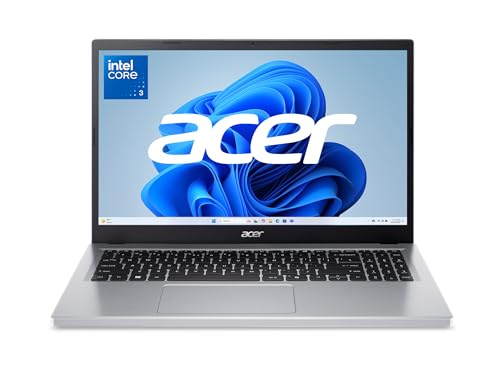
Acer’s Aspire Go 15 (AG15-32P-39R2) stands out as a smart pick for high school students and entry-level remote workers who need a no-fuss laptop for online classes, light productivity, and video calls without blowing the budget. I like its 8GB of DDR5 memory and snappy Full HD IPS display with narrow bezels, which makes multitasking and viewing comfortable. The 128GB UFS storage is fast but limited-expect to rely on cloud or external drives. Its Wi-Fi 6 and dual USB-C ports boost connectivity, while the Copilot key and PurifiedVoice mic sharpen remote workflows. Just know the camera’s 720p and low storage might pinch power users.
Best For: High school students and entry-level remote workers needing an affordable, reliable laptop for online classes, light productivity, and clear video calls.
Pros:
- 8GB DDR5 memory and Full HD IPS display ensure smooth multitasking and sharp visuals
- Wi-Fi 6 and dual USB-C ports offer fast, future-ready connectivity
- Copilot key and AI-powered PurifiedVoice enhance remote work and video call experience
Cons:
- 128GB UFS storage is limited, requiring reliance on cloud or external storage
- 720p webcam lacks the quality desired by power users or frequent videocallers
- Runs Windows 11 Home in S mode, which restricts app installation to Microsoft Store only
Acer Aspire Slim Laptop 15.6″ FHD

This Acer Aspire Slim Laptop fits best those balancing everyday productivity with light multitasking on a tight budget, especially high school or college students setting up a basic study station at home. I appreciate its 15.6-inch FHD IPS screen-sharp, bright, and colorful, thanks to narrow bezels and good viewing angles. The Ryzen 3 7330U handles web browsing, docs, and streaming without lag, though heavy apps strain it. It’s lightweight, with solid Wi-Fi 6 and clear audio from PurifiedVoice, but the fan runs noticeable under load. Battery lasts half a day with regular use. Great for basics, but don’t expect heavy-duty performance.
Best For: Students and budget-conscious users needing a portable, reliable laptop for everyday tasks like web browsing, document editing, and streaming.
Pros:
- Lightweight and portable design with a sharp 15.6″ FHD IPS display and narrow bezels
- Efficient Ryzen 3 7330U processor handles everyday productivity and light multitasking
- Solid connectivity with Wi-Fi 6, clear audio via PurifiedVoice, and decent low-light webcam performance
Cons:
- Limited performance under heavy workloads or demanding applications
- Fan noise can be noticeable during sustained tasks
- Battery life lasts only about half a day under regular use
Dell Inspiron 3530 Laptop (15.6″ FHD)

The Dell Inspiron 3530 Laptop (15.6″ FHD) stands out as a reliable pick for students and remote workers needing everyday performance on a tight budget. I’ve used this model, and its 15.6-inch FHD display delivers sharp text and comfortable viewing, thanks to TÜV-certified ComfortView reducing blue light. The i3-1305U processor handles web, docs, and video calls without lag, and 8GB RAM plus 512GB SSD guarantee solid multitasking. I appreciate the numeric keypad and lift hinge for better ergonomics. Battery lasts about 6 hours, which is decent, but the 3.66-pound weight makes it less ideal for all-day carry. Adaptive thermals keep it quiet and cool. Onsite service is a plus. Just note: entry-level graphics mean no gaming.
Best For: Students and remote workers seeking an affordable, reliable laptop for everyday tasks like web browsing, document editing, and video conferencing.
Pros:
- Sharp 15.6″ FHD display with TÜV-certified ComfortView for reduced eye strain
- Efficient performance with i3-1305U processor, 8GB RAM, and 512GB SSD for smooth multitasking
- Practical design with numeric keypad, lift hinge for better ergonomics, and onsite service included
Cons:
- Limited battery life at around 6 hours for a budget laptop
- Weighs 3.66 pounds, making it less portable for frequent travelers
- Integrated Intel UHD Graphics not suitable for gaming or graphics-intensive tasks
Factors to Consider When Choosing a Laptop Under 40000
You’ll want to focus on key specs that actually impact daily use, like a processor that won’t bog down during multitasking and enough RAM to keep apps running smoothly. Look for at least 8GB of memory and an SSD over 256GB-these make a real difference in boot times and overall responsiveness, even if the display is just 1080p with average brightness. Just remember, battery life in this range often maxes out at 6–7 hours, so check real-world reviews and prioritize systems with replaceable batteries or solid build quality that’ll last through a school year.
Processor Performance
While processor performance can make or break your daily computing experience, prioritize models with at least a 4-core CPU and a base clock speed of 3.0 GHz or higher for reliable multitasking under 40,000. You’ll get smoother performance switching between browser tabs, documents, and video calls. Look for modern chips like Intel Core i5 or AMD Ryzen 5-they handle HD streaming and office tasks well, even without a dedicated GPU. Higher turbo boost speeds, up to 4.5 GHz, help during short bursts like loading large files. Newer architectures also run cooler and extend battery life, which matters if you’re working for hours. Some support AI features like voice focus or real-time translation, but that’s a bonus, not a must. Don’t assume all quad-core processors are equal-check reviews for sustained performance, since cheaper builds may throttle under load. Stick to trusted brands with solid thermal design to avoid slowdowns.
Memory Capacity
At least 8GB of RAM is essential for keeping your laptop responsive during everyday tasks, especially when you’re juggling a dozen browser tabs, a spreadsheet, and a video call all at once. If you plan to edit videos, code, or run virtual machines, 16GB gives you smoother performance and future-proofing. For serious work like 3D rendering or large data sets, 32GB is ideal, but rare in this price range. Look for LPDDR5 memory-it’s faster and more power-efficient than older DDR4 or LPDDR4. Some laptops let you upgrade RAM later, which is a big plus for long-term use, but many budget models solder the memory in place. That means if you start with 8GB and need more later, you might be stuck. Check specs carefully-don’t assume upgradability. A faster memory type or room to expand can make a real difference in how well your laptop handles demanding work over time.
Storage Type
Speed starts with storage, and your best bet under ₹40,000 is a laptop with an SSD-specifically a PCIe NVMe SSD. You’ll get up to 15 times faster performance than an HDD, with quick boot times, snappy app launches, and smooth multitasking. NVMe SSDs use the PCIe interface for higher bandwidth and lower latency than SATA SSDs, so your system feels responsive from the first click. Avoid eMMC storage if possible-it’s cheaper but slower and usually limited to 64GB or 128GB, which fills up fast. UFS is better than eMMC and more power-efficient, but it’s rare in laptops and still doesn’t match NVMe speeds. While some budget models include HDDs or eMMC to cut costs, they’ll drag down your experience. Prioritize a laptop with at least a 256GB NVMe SSD. You’ll gain real-world speed and reliability, even if it means adjusting other specs.
Display Quality
Most laptops under ₹40,000 settle for basic displays, but you’ll want one with a Full HD (1920 x 1080) IPS panel for noticeably sharper text, better color accuracy, and wider viewing angles. You’ll multitask more comfortably and enjoy media with clearer detail. Look for at least 250 nits brightness-it’s enough for indoor use and helps outdoors. A screen-to-body ratio of 85% or more gives you a larger display without bulk, making your workspace feel more open. Anti-glare or matte coatings are worth it if you work near windows or overhead lights; they cut reflections and reduce eye strain. Just remember, higher resolution and better panels can sometimes mean slightly dimmer screens unless brightness is prioritized. Don’t assume all Full HD screens are equal-check for IPS, not TN, and verify real-world performance. These features shouldn’t be luxuries, but they still require careful picking at this price.
Battery Life
How long will your laptop actually last on a single charge? Most models under ₹40,000 deliver 6 to 11 hours, but your real-world results depend on key specs. Choose one with an energy-efficient U-series AMD Ryzen or Intel N-series processor and LPDDR5 RAM-they can boost battery life by up to 20%. Wi-Fi 6 and adaptive power management help too, cutting background drain. But watch the display: a 15.6-inch Full HD screen at 250 nits may reduce battery life by 30% versus a lower-brightness or HD panel. Fast charging is a plus, giving around 2 hours of use from just 15 minutes plugged in. Don’t expect all-day endurance if you’re editing videos or browsing with brightness high. Balance efficiency with your workload-light users gain the most.
Portability Design
While you might not expect premium mobility from budget laptops, several models under ₹40,000 deliver solid portability if you know what to look for. You’ll want a laptop weighing between 3.5 to 3.7 pounds-light enough to carry all day without strain. Look for models with slim profiles under 0.8 inches; they slip easily into backpacks and fit well on cramped desks. Narrow bezels, offering up to an 88% screen-to-body ratio, give you a bigger display in a smaller frame, boosting both usability and portability. Some budget picks even feature military-grade durability, tested against shocks, dust, and temperature extremes-ideal if you travel often. A lay-flat hinge adds flexibility, especially on airplane trays or small workspaces. Just remember: lighter builds sometimes mean fewer ports or a smaller keyboard. Balance portability with functionality based on your daily needs.
Frequently Asked Questions
Can These Laptops Run Heavy Video Editing Software?
No, you won’t run heavy video editing software smoothly on these. They lack the dedicated GPU, sufficient RAM, and high-speed storage needed for 4K timelines or effects in Premiere or DaVinci. You can handle short 1080p clips with light cuts, but expect lag and long render times. For serious work, you’d need at least a dedicated graphics card and 16GB RAM-features outside this budget’s reach.
Do They Come With a Backlit Keyboard?
No, they don’t come with a backlit keyboard-you’ll need to type in well-lit spaces. Most budget laptops under 40k skip this feature to cut costs. You still get full-sized layouts with decent key travel for comfortable typing. If you work in dim lighting, consider a portable LED. It’s a fair trade-off for staying under budget while keeping solid performance and reliable build quality straight out of the box.
Are These Models Good for Online Classes?
Yes, you can handle online classes smoothly with these models. Their HD webcams deliver clear visuals, and dual-array mics cut background noise during lectures. Wi-Fi 5 and up to 8GB RAM keep video calls stable. You’ll get up to 6 hours of battery, but plan to recharge by midday. Storage fills fast with lecture recordings, so use cloud or external drives. They’re reliable, but screen brightness limits outdoor use.
Is a Stylus Included With Any Model?
No, you don’t get a stylus included with any of these models. While some support active styluses for note-taking, buying one means extra cost-usually ₹3,000–5,000. Check compatibility first; not all touchscreens work with budget pens. If you need frequent handwritten input, consider that added expense. Touch functionality is limited on most under ₹40k, so don’t expect seamless inking. A separate tablet might serve better if precision matters.
Do They Support External GPU Connections?
No, you can’t connect an external GPU to any of these models-they lack Thunderbolt 3 or Thunderbolt 4 ports, which are essential for eGPU support. While some have USB-C, they don’t carry the required bandwidth or driver compatibility. If you’re relying on desktop-level graphics, this limits upgrade potential. You’ll get decent integrated performance for everyday tasks, but gaming or creative work stays constrained. Check port specs carefully; assuming eGPU support here leads to disappointment.