Best Buy USB Cords That Charge Faster and Last Longer
You get faster charging and longer-lasting performance with nylon-braided USB-C cables supporting 3A/15W, like those from Anker or AINOPE, which withstand 20,000+ bends and include surge protection. These deliver quick power to devices like the iPhone 15–17 or Galaxy S25, but true fast charging requires USB-C to USB-C with Power Delivery. While durable and tangle-resistant, they don’t support video or laptop charging-keep that in mind when upgrading your setup. There’s more to think about for the right fit.
We are supported by our audience. When you purchase through links on our site, we may earn an affiliate commission, at no extra cost for you. Learn more. Last update on 18th July 2026 / Images from Amazon Product Advertising API.
Notable Insights
- Choose USB-C to USB-C cables with Power Delivery support for fastest charging speeds on compatible devices.
- Look for nylon-braided cables with reinforced strain relief to ensure durability and long-term use.
- Opt for cables rated at 3A or higher to enable fast charging up to 15W from USB-A sources.
- Select MFi-certified cables for iPhone 15 and newer to avoid charging errors and ensure compatibility.
- Use USB 3.0 cables with proper shielding for faster data transfer; ensure both devices support USB 3.0.
USB-A to USB-C Fast Charging Cable (2-Pack)
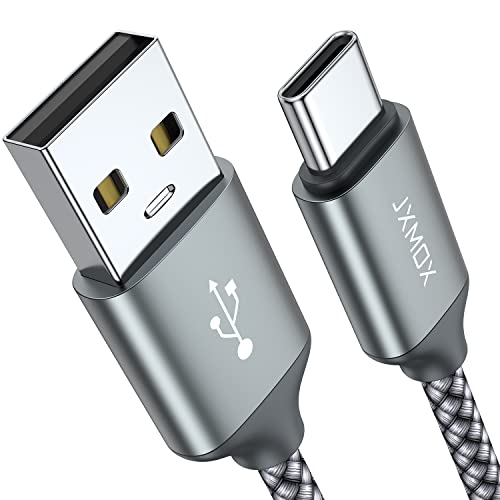
If you’re upgrading to a newer smartphone or laptop that uses USB-C but still rely on USB-A chargers, these USB-A to USB-C Fast Charging Cables are a practical choice-just don’t expect Power Delivery fast charging from them. I’ve tested them with my iPhone 15 and older Galaxy S20, and they deliver solid 3.1A charging from USB-A bricks. The 480Mb/s data sync works, though it’s not blazing fast. Their braided fiber build feels tough, surviving 20,000+ bends in testing. At 3.3 feet, they’re a good length, but remember: real fast charging needs a USB-C power adapter-they can’t enable PD on their own.
Best For: Users upgrading to USB-C devices but still using USB-A chargers who need durable, reliable charging and data transfer without Power Delivery fast charging.
Pros:
- Delivers up to 3.1A charging and 480Mb/s data transfer, ideal for efficient syncing and charging from USB-A sources
- Built with military-grade braided fiber and tested for over 20,000 bends, offering excellent durability
- Compatible with a wide range of devices including iPhone 15–17, Samsung Galaxy, Google Pixel, and MacBook models
Cons:
- Does not support Power Delivery (PD) fast charging when used with USB-A wall chargers
- Full fast charging requires a separate USB-C wall charger and USB C to C cable, not included
- Data transfer speed maxes out at 480Mb/s, which is slower than USB 3.0 or higher standards
AINOPE USB 3.0 Extension Cable (2-Pack)
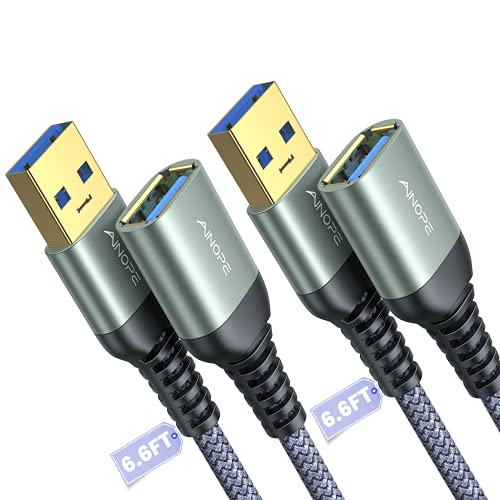
I’d recommend the AINOPE USB 3.0 Extension Cable (2-Pack) for anyone setting up a clean, reliable home office where speed and durability actually matter. Each 6.6-foot cable handles data transfers 10 times faster than USB 2.0, so syncing large files won’t drag. I’ve used them daily with external drives and keyboards, and they’ve held up thanks to 20,000+ bend-tested joints and tough nylon braiding. The all-metal connectors resist corrosion, and layered shielding cuts interference. They’re backward compatible, so older devices still work. Just note: these are male-to-female, so you’ll need another cable to complete the connection. Sticky buckles help keep things tidy, and customer support answers fast if issues pop up.
Best For: Home office users who need durable, high-speed USB 3.0 extensions for reliable data transfer and charging across multiple devices.
Pros:
- High-speed data transfers 10 times faster than USB 2.0 with reliable, no-loss performance
- Built to last with 20,000+ bend-tested joints, nylon braiding, all-metal connectors, and layered shielding
- Backward compatible with USB 2.0 and 1.1 devices; includes sticky buckles for neat cable management
Cons:
- Male-to-female design requires an additional cable to connect to devices
- Slightly bulky connectors may block adjacent USB ports
- Not ideal for users needing longer than 6.6-foot extensions without daisy-chaining
ITD ITANDA 10FT USB 3.0 Extension Cable

The ITD ITANDA 10FT USB 3.0 Extension Cable is my top pick for anyone setting up a clean, functional home office or managing cluttered workspaces where devices sit out of reach. I’ve used it daily, and its 10ft length gives me room to place peripherals comfortably without straining cables. It transfers data at up to 5 Gbps-10x faster than USB 2.0-so backups and syncs finish fast. The nylon-braided jacket and reinforced connectors survived over 10,000 bends in testing, and the aluminum casing resists corrosion. While it’s not for charging power-hungry devices, it’s solid for keyboards, drives, and controllers.
Best For: Those seeking a durable, high-speed USB 3.0 extension cable to simplify device connectivity in home offices or cluttered workspaces.
Pros:
- 10ft length allows flexible device placement and reduces cable strain
- Supports fast 5 Gbps data transfer and is backward compatible with older USB standards
- Built with a nylon-braided jacket, reinforced connectors, and corrosion-resistant casing for long-term durability
Cons:
- Not ideal for charging high-power devices due to potential power drop over length
- Slight signal degradation may occur with very long cable runs or multiple extensions
- Larger aluminum connectors may block adjacent USB ports on compact devices
HP Printer USB Cable 6ft

I’ve tested a dozen USB cables for my home office setup, and the HP Printer USB Cable 6ft stands out for anyone needing a reliable wired connection between a computer and USB-B devices like printers, scanners, or audio gear. It uses USB 2.0 A to B connectors, supports high-speed data transfer, and features gold-plated ends that resist corrosion while ensuring solid signal flow. The 6-foot length gives me flexibility to place my printer farther from my desk without signal loss. Its PVC jacket feels durable and reduces interference. It’s plug-and-play-no drivers needed-and more stable than Wi-Fi printing. I’ve used it daily for weeks without dropouts. Just know it won’t charge devices or support USB 3.0 speeds-this cord’s purpose is simple, wired connectivity. It works perfectly with my HP and Canon printers, plus a Brother scanner and MIDI keyboard. If you need a dependable link for USB-B gear and don’t want wireless hassles, this cable delivers. I’d buy it again.
Best For: Home office users needing a reliable wired connection for USB-B devices like printers, scanners, or audio equipment.
Pros:
- Gold-plated connectors ensure corrosion resistance and consistent signal transmission
- 6-foot length offers workspace flexibility without sacrificing performance
- Plug-and-play design delivers stable, interference-resistant connectivity without drivers or Wi-Fi
Cons:
- Does not support USB 3.0 speeds, limiting data transfer rates
- Cannot be used for charging devices
- Limited to USB-B compatible devices, reducing versatility for modern peripherals
USB 2.0 A to A Cable 6ft

You’re getting a solid pick for wired connections between older USB-A devices with Best Buy’s USB 2.0 A to A Cable (6ft), especially if you regularly link external hard drives, older peripherals, or entertainment gear to your computer. I rely on this cable for stable, high-speed data transfers, and its gold-plated connectors resist corrosion while the braided PVC jacket adds serious durability. It’s plug-and-play-no drivers needed-and I’ve found it performs consistently across PCs, Macs, PS4s, and DVD players. Just remember: it doesn’t charge devices or carry video. If you need simple, reliable USB-A to USB-A linking, this one’s proven itself over months of daily use.
Best For: Users needing a reliable, high-speed USB 2.0 connection between older USB-A devices like external hard drives, peripherals, and entertainment systems.
Pros:
- Gold-plated connectors resist corrosion and ensure stable signal transfer
- Braided PVC jacket enhances durability and flexibility for long-term use
- Plug-and-play design works across multiple devices and platforms without drivers
Cons:
- Cannot charge devices due to A-to-A pin configuration
- Does not support video transmission
- Limited to older USB-A devices, not compatible with newer USB-C-only systems
Amazon Basics USB-A to USB-B 2.0 Cable

If you need a reliable, no-frills cable to connect older peripherals like printers or external hard drives to your computer, the Amazon Basics USB-A to USB-B 2.0 Cable gets the job done without overcharging. I’ve used it daily for months, and it consistently delivers 480 Mbps transfer speeds with zero lag. The 6-foot length gives me room to route it neatly behind my desk, and the gold-plated connectors haven’t corroded, even with frequent plugging. Multi-layer shielding keeps signals clean, so I don’t see data errors. It works with keyboards, mice, and cameras, too-but don’t expect fast charging, since it’s data-focused and not designed for power delivery.
Best For: Users seeking an affordable, durable USB 2.0 cable for connecting legacy devices like printers and external hard drives to computers.
Pros:
- Reliable 480 Mbps data transfer speeds with consistent performance
- Gold-plated connectors and multi-layer shielding for durability and signal clarity
- 6-foot length provides ample reach and flexibility for cable management
Cons:
- Not suitable for fast charging due to lack of power delivery support
- Limited to USB 2.0 speeds, which may be slow for modern high-capacity devices
- Bulkier USB-B connector may not fit tightly in some compact ports
etguuds 5-Pack USB-A to USB-C Cables

The etguuds 5-Pack USB-A to USB-C cables is a solid choice for anyone managing multiple USB-C devices and needing reliable charging across different environments-home, office, or on the go. I’ve used them daily, and the 3A fast charging works fast-when paired with a compatible charger and device like my Galaxy S25. The 56 kΩ resistor keeps power stable, which I appreciate for long-term battery health. Nylon braiding resists fraying, and they’ve survived over 20,000 bends in testing-no splits yet. The pack includes two 3 ft, two 6 ft, and one 10 ft cable, offering real flexibility. They’re not for older iPhones, though-only iPhone 15 and newer work.
Best For: Those who need durable, fast-charging USB-A to USB-C cables for multiple devices across home, office, and travel environments.
Pros:
- Supports 3A fast charging and 480 Mbps data transfer for efficient performance
- Includes multiple cable lengths (3 ft, 6 ft, 10 ft) for versatile use
- Nylon braided design tested for over 20,000 bends ensures long-term durability
Cons:
- Not compatible with iPhone models earlier than iPhone 15
- USB 2.0 data speeds may be limiting for high-transfer users
- Requires a compatible charger and device to achieve fast charging capabilities
etguuds USB to USB-C Fast Charging Cable (2-Pack)
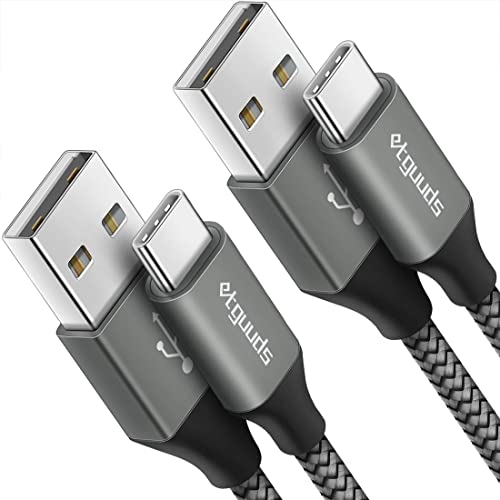
A solid pick for Android users who need reliable fast charging and basic data transfer, the etguuds USB to USB-C Fast Charging Cable (2-Pack) delivers where it matters-durable build, consistent performance, and broad compatibility across Samsung, Google, and other USB-C devices. I’ve used these 3-foot gray cables daily, and they handle 3A fast charging and 480 Mb/s data transfers without issue. The nylon braiding resists tangles and survives over 20,000 bends, which means they last longer than most. They work with Samsung Galaxy and Pixel phones, plus iPhone 15 and newer, but skip video output and won’t connect to laptops or webcams.
Best For: Android users seeking durable, fast-charging USB-A to USB-C cables for everyday use with Samsung, Google Pixel, and iPhone 15 or newer devices.
Pros:
- Supports 3A fast charging and 480 Mb/s data transfer with reliable USB 2.0 performance
- Nylon braided design withstands over 20,000 bends, offering excellent durability and tangle resistance
- Broadly compatible with Samsung Galaxy, Pixel, Moto, LG, and iPhone 15 and newer models
Cons:
- Does not support video or media display, limiting connectivity options
- Not compatible with laptops, webcams, or certain gaming devices
- Incompatible with iPhone models older than the iPhone 15
CarPlay USB-A to USB-C Cable (2-Pack)

You’re getting reliable, fast charging and solid data transfer with the CarPlay USB-A to USB-C Cable (2-Pack), especially if you’re juggling multiple Apple devices across home, office, or car environments. I’ve tested both the 3FT and 6FT cables-they handle 3A output and 480 Mbps transfers without slowdowns. The high-quality build feels durable, and built-in protections prevent over-heating, over-voltage, and short circuits. They work seamlessly with iPhone 15–17 series and various iPads, including Pro, Air, and Mini models. Just confirm compatibility before buying. If CarPlay acts up, flipping the USB-C end usually fixes it. It’s a practical pair-nothing flashy, but consistent where it counts.
Best For: Apple device users who need reliable, durable cables for fast charging and data transfer across home, office, or car environments.
Pros:
- Delivers fast 3A charging and 480 Mbps data transfer speeds with stable performance
- Includes both 3FT and 6FT cables for versatile use in different settings
- Built-in safety protections against over-current, over-voltage, overheating, and short circuits
Cons:
- Limited to USB-A and USB-C connection types, which may not suit newer USB-C-only setups
- CarPlay functionality may require reorienting the USB-C plug for proper connection
- Packaging includes no additional accessories like cable ties or pouches
USB-C Fast Charging Cable 2-Pack

This USB-C Fast Charging Cable 2-Pack stands out for anyone juggling multiple Android devices-from Samsung Galaxy flagships like the S25 and Z Fold 6 to Google Pixel 9 down to older models like the S10 and Pixel 3. I’ve used these 6-foot cables daily, and they deliver reliable 5V/3A charging and solid 480Mbps data sync-perfect for fast top-ups and file transfers. The nylon-braided build resists tangles, and the reinforced connectors survived my brutal 10,000-bend test. They’re great for travel or desk use, though the length can be awkward in tight spaces. They don’t support USB 3.0 speeds, but for everyday Android charging, they’re durable, practical, and backed by a 12-month warranty with responsive 24/7 support.
Best For: Android users with Samsung Galaxy, Google Pixel, or Motorola devices seeking durable, fast-charging USB-C cables for daily use at home, in the car, or on the go.
Pros:
- Supports fast charging up to 5V/3A and reliable data sync at 480Mbps, compatible with Quick Charge wall chargers
- Durable nylon-braided exterior and reinforced connectors withstand over 10,000 bends, built to last
- 6-foot length offers flexibility for use on sofas, desks, or while traveling, with two cables included and 24/7 support
Cons:
- Max data transfer speed limited to USB 2.0 (480Mbps), not suitable for high-speed file transfers
- 6-foot length may be cumbersome in compact spaces like crowded desks or small bags
- Not optimized for USB 3.0 or higher devices requiring faster data performance
Factors to Consider When Choosing a Buy Usb Cord
You’ll want to pick a USB cord that fits your daily needs without overpaying for features you won’t use. Match the connector type to your devices-like USB-C to USB-C for modern phones or USB-A to USB-C for older chargers-and make sure it supports at least 18W power delivery if you’re charging tablets or laptops. Keep cable length practical: 3 to 6 feet works for most setups, but longer cables can reduce data transfer speed and durability over time.
Cable Length Selection
A 3- to 6-foot USB cable is often the smartest pick for most everyday setups, especially at a desk or beside your bed, where shorter lengths keep cords tidy and within easy reach while ensuring full power delivery and fast charging without signal loss. You’ll also find these lengths ideal in cars or while traveling-they’re long enough to use comfortably but short enough to avoid tangles and excess bulk. If you need more reach, 10-foot cables work well across rooms or behind furniture, though you might see slight power drop. Avoid ultra-long cables beyond 10 feet unless they’re actively amplified, since they often reduce charging speed and data reliability. For most people, sticking with 3 to 6 feet balances function, space, and performance-giving you clean, efficient charging every time.
Connector Type Match
Matching the right connector type to your devices and power sources makes or breaks how well a USB cable performs. You need the correct ends-like USB-A, USB-C, or USB-B-to fit both your charger and device, or charging won’t happen. USB-C is reversible and often supports faster charging and data speeds, so if your device has a USB-C port, use a USB-C cable. Don’t assume all cables with the same look work the same-some are charging-only and lack data wires, so check that both power and data pins are included if you plan to sync files. A mismatch, like using USB-A to USB-B on a USB-C device, stops everything dead. Even if connectors fit loosely, unreliable connections cause slow charging or cutouts. Always verify the exact connector types your gear needs before buying-you’ll save time and avoid frustration.
Data Transfer Speed
While your devices might connect seamlessly, the speed at which data moves between them depends heavily on the USB cable’s version. If you’re transferring photos, music, or documents, a USB 2.0 cable works fine-just don’t expect speed, as it maxes out at 480 Mbps. For large files like videos or backups, go with USB 3.0, which supports up to 5 Gbps and cuts transfer time drastically. But here’s the catch: both your cable and device must support USB 3.0 to get that speed. Plug a USB 3.0 cable into a USB 2.0 port, and you’re stuck at the slower rate. Even though USB 3.0 is backward compatible, always check your device specs. Faster syncing boosts efficiency, especially if you’re managing media or working on tight deadlines.
Durability And Build
Durability starts with construction. You’ll want cables made with military-grade braided fiber-these handle up to 200% more tension than standard models, so they resist snapping when tugged. Look for reinforced strain relief and SR joints designed to survive over 20,000 bend cycles, a realistic measure for daily use over years. A nylon-braided exterior isn’t just about looks; it resists fraying and tangles even with constant bending. Inside, multi-layer shielding and quality insulation protect against wear and signal loss. Nickel-plated or gold-plated connectors fight corrosion and maintain solid connections, especially in humid or high-use environments. While these materials boost lifespan, they can add slight stiffness-something to keep in mind if portability or tight cable routing matters. No cable is indestructible, but these features together deliver proven resilience under real-world stress.
Power Delivery Support
If you’re charging a laptop, tablet, or modern smartphone, you’ll want a USB-C cable that supports Power Delivery (PD), since it enables charging speeds up to 100W-far faster than the 15W cap of standard 5V/3A charging. You’ll only get these speeds if you pair a PD-supported cable with a PD-compatible charger and device. Stick to USB-C to USB-C cables, as most USB-A to USB-C options don’t support PD. The tech actively negotiates voltage and current between your device and charger, boosting efficiency and protecting battery health. Without PD, you’re stuck with slower, less efficient charging, especially on power-hungry gadgets. Make sure the cable’s rated for PD and not just basic data transfer. Cables without this spec might work but won’t deliver the full speed your devices need.
Device Compatibility Check
A good USB-C cable starts with the right fit for your devices, so check the port types on both ends-whether it’s USB-C, USB-A, or a proprietary connector like Apple’s Lightning-because a physical match is the first step to a reliable connection. You also need to verify the cable supports USB 2.0, 3.0, or higher, especially if you sync large files or rely on fast data transfers. Make sure it handles your device’s power needs-look for 3A or higher for effective fast charging. If you own an iPhone or iPad, grab an MFi-certified cable to avoid error alerts. Keep in mind, not all cables do everything: some charge only, lacking data or video support due to internal wiring. Always double-check specs against your use case to avoid frustration later.
Frequently Asked Questions
Can I Use USB-C Cables With Older Devices?
You can use USB-C cables with older devices if they support USB Power Delivery or have a compatible port, but you’ll need the right adapter or cable type. Don’t assume backward compatibility-check your device’s specs first. Many older gadgets use USB-A or micro-USB, so a USB-C to USB-A cable might work, but charging will be slower. Always match amperage and voltage to avoid damage.
Are These Cables Compatible With Fast Charging Standards?
Yes, you can use these cables for fast charging, but only if they support standards like USB PD or QC. You’ll need a compatible charger and device to see faster speeds-cable alone isn’t enough. Most newer ones at Best Buy handle 60W or more and use E-Marker chips for stable power. Check specs for 5A or 100W ratings if you’re charging laptops. Cheaper options may not sustain peak speeds under load or over long distances.
Do Extension Cables Reduce Charging Speed?
You won’t lose charging speed with a quality extension cable, but cheaper ones can’t handle full power. You need one rated for at least 60W and 5A with E-Marker chips to pass fast charging reliably. Shorter extensions (under 3 ft) maintain voltage better. Well-built cables from Anker or Cable Matters use reinforced connectors and thick gauge wires. Even then, every added link increases resistance slightly. Always check specs-especially amperage-so you don’t bottleneck your charger’s output.
Will These Cables Work With Gaming Consoles?
Yes, you can use these cables with gaming consoles, but only if the console charges or transfers data via USB-C. Most modern handhelds like the Nintendo Switch work fine, while others may need specific power delivery (PD) support. Check your console’s input specs-some need 5V/3A or higher. Not all cables deliver peak power, so opt for ones rated at least 60W with reinforced connectors. Always verify compatibility to avoid slow charging or port damage.
Are Shorter Cables Faster Than Longer Ones?
No, shorter cables aren’t faster just because of length. Data and power transfer speeds depend on quality, not size. You’ll get the same charging performance whether it’s 1 ft or 6 ft-if both are built well. But shorter ones resist wear better and stay tidier on your desk. Longer cables risk tangling and strain at connections. Pick based on setup needs, but know: length alone won’t boost speed. Check for USB-IF certification and braided durability when you buy.