How to Assess Wear on Braided Cable Jackets in High-Friction Desk Areas
Check your braided cables regularly where they cross desk edges or pass through grommets-these spots take the most abuse. Run your fingers along the jacket to feel for fuzziness, thinning, or stiffness, which signal early wear. Even if the inner wires seem fine, fraying means the braid can’t protect them much longer. Sharp bends and constant dragging accelerate damage, especially on low-radius edges. Use a magnifier in good light to catch snags early. Cables with tight nylon braids and reinforced stress points last longer, especially those rated for 10,000+ bends. If you’re seeing exposed copper or cracked insulation, replace the cable immediately-don’t risk overheating or shorts. Simple fixes like fabric tape or silicone guards help, but only if applied right over high-friction zones. The best cables balance durable materials with smart routing, and knowing how yours wears tells you when to act before failure hits. You’ll want to evaluate how small adjustments and product choices multiply in impact over time.
Notable Insights
- Inspect cable edges and grommets frequently for fraying, as these areas face the most desk-related abrasion.
- Run fingers along the braid to detect thin, fuzzy, or loose spots indicating early jacket wear.
- Look for stiffness or kinks, which signal internal copper damage even if the jacket appears intact.
- Use bright light or a magnifier to spot subtle snags and weave degradation on nylon braided cables.
- Replace cables immediately if inner wires are exposed or insulation shows cracks to avoid safety hazards.
Inspect Your Desk’s Cable Friction Points
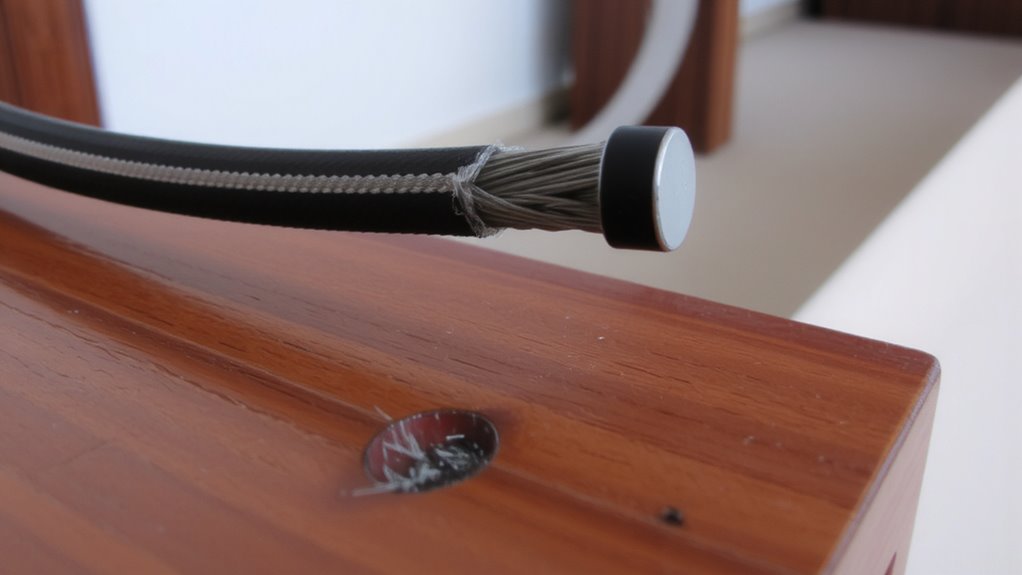
Where’s the most wear on your cables likely to occur? Right at your desk’s friction points-edges of desks, sharp corners, or where cables bend sharply through grommets. These spots build up cable tension every time you move your chair or adjust gear, and that repeated stress leads to material fatigue over weeks or months. Nylon braiding helps, but it won’t stop internal copper strands from weakening if the bend radius is too tight. You’ll notice stiffness or kinks forming-early warning signs. To reduce strain, use cable clips or adhesive guides to keep lines from dragging across metal or wood edges. Even high-end cables fail early if constantly yanked or bent at 90 degrees. No warranty covers abuse from poor routing, so proper setup matters more than brand. Check these contact zones monthly-you’ll catch damage before failure. Pairing your setup with one of the best standing desks can improve cable management by reducing sharp bends and enhancing routing options.
Spot Fraying on Braided Cable Jackets
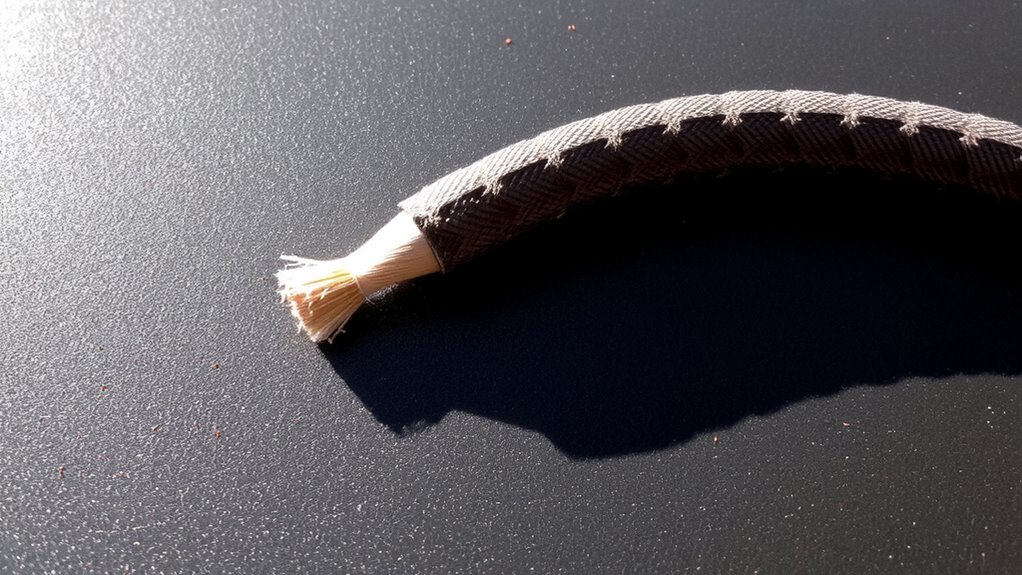
While nylon braiding adds durability to your cables, it won’t last forever-look closely and you’ll spot fraying before the inner wires are compromised. You should run your fingers along the cable texture to detect thin or fuzzy patches, especially near connectors and bends. A healthy braid feels firm and consistent, but wear loosens the weave tightness, creating visible snags. Fraying often starts subtly, so check under bright light or with a magnifier if needed. Catching it early lets you replace the cable before failure. Not all braids are equal-tighter weaves resist fraying better, but even premium cables show wear over time. Reinforced jackets help, but no braid lasts indefinitely under constant abrasion. Monitor texture changes monthly, especially if you move cables frequently. Replacement isn’t urgent at first signs, but once fibers split beyond repair, signal loss or breakage becomes likely. Prioritize inspection where cables bend or rest against edges.
Why Desk Edges Ruin Braided Cables
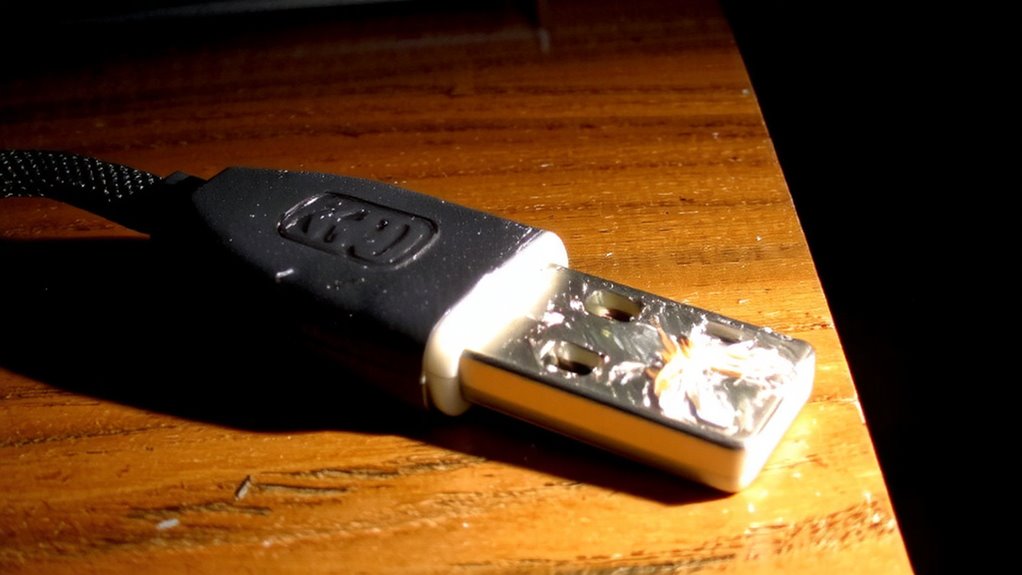
Though they seem harmless, desk edges act like blades over time, grinding down braided cable jackets with repeated movement. That constant rubbing causes edge abrasion, especially where cables bend sharply. Over weeks, this leads to cable fatigue, weakening the structure beneath the weave. You might not see damage at first, but tiny frays spread invisibly. To visualize the stress points, consider this:
| Cable Position | Contact Type | Damage Risk Level |
|---|---|---|
| Leaning on sharp edge | Direct friction | High |
| Draped over soft pad | Reduced abrasion | Low |
| Bent at 90 degrees | Strain + friction | Very High |
Rounded edges or fabric guards help, but no setup eliminates wear entirely. Even well-built cables fail eventually under constant stress. Choose rugged models, but expect trade-offs in flexibility. Rotate cables periodically to extend life-but remember, prevention only slows cable fatigue. It doesn’t stop it. Implementing effective cable management solutions can significantly reduce friction and exposure to high-wear areas.
When Fraying Becomes a Safety Risk?
Fraying starts as a cosmetic flaw but can quickly turn dangerous the moment you see exposed wires beneath the braid. That’s when everyday wear crosses into real electrical hazards. Once the inner insulation is compromised, live conductors could make contact with conductive surfaces-or your skin-posing shock risks. In tight desk setups where cables bend and heat builds, damaged sections can overheat, increasing fire risk. You might not notice it at first, but degraded jackets near ports or under constant friction are ticking issues. Don’t wait for sparking or melting-those are late signs. If fraying reveals copper or shows cracked insulation underneath, the cable’s no longer safe. Replacement, not repair, is the only reliable fix. While some materials resist abrasion better, no braided jacket lasts forever under stress. Inspect monthly, especially at hinge points. Your setup’s safety depends on it. Proper cable management for clean desk practices significantly reduce friction and stress on cables, extending their lifespan and maintaining safety.
Use Tape, Guards, or Clips to Stop Damage
When used correctly, simple reinforcements like fabric tape, silicone guards, or strain-relief clips can dramatically extend the life of your braided cables-especially at stress points near connectors. You’ll want to apply tape solutions neatly, wrapping 1–2 inches beyond the connector to reinforce weak spots without adding bulk. Overwrap too much, and you might hinder plug access; too little, and protection fails. Guard placement matters just as much-align silicone sleeves precisely over high-friction zones where cables bend against desk edges. Poor alignment reduces effectiveness and can create new pressure points. Clips mounted near anchor points reduce cable movement, cutting abrasion over time. While these fixes aren’t permanent, they’re cost-effective and easy to replace. Just remember: they mask wear but don’t repair damaged conductors. Regularly inspect beneath guards and tape to guarantee no hidden fraying progresses.
Pick Cables That Resist Desk Wear
If you’re tired of replacing cables every few months, start by choosing ones built to handle daily desk wear-because not all braided jackets perform the same. Look for cable materials like nylon or polyethylene terephthalate (PET) over thinner synthetics, as they resist fraying longer. High-quality cables often meet higher durability standards, such as passing 10,000+ bend tests or including reinforced stress points at connectors. These features matter most where cables rub against desk edges or get bent frequently. While sturdier builds cost more upfront-sometimes $5–10 extra-they typically last 2–3 times longer based on real-world use. Keep in mind, though, no jacket is indestructible; even durable cables fail if constantly pinched or pulled. Check manufacturer warranties: brands offering 18-month to lifetime coverage usually stand behind their durability claims. Prioritize proven construction over flashy specs to save money and reduce waste long-term.
Route Cables to Avoid Future Wear
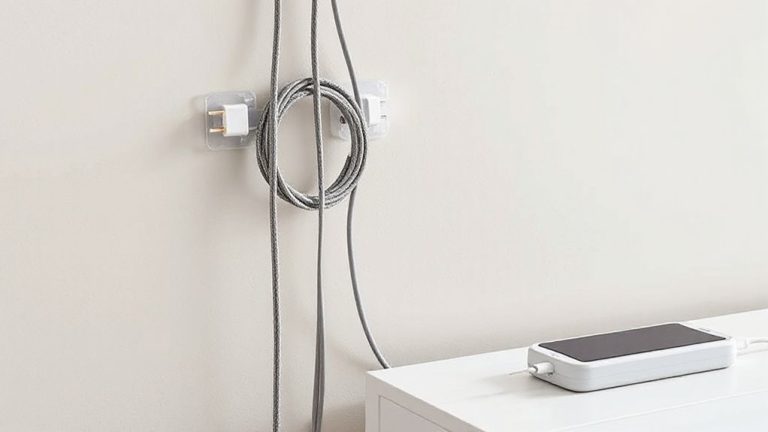
You’ve picked a cable built to last, but even the toughest nylon or PET braid won’t hold up if it’s constantly dragged across sharp desk edges or twisted under heavy use. Proper cable routing is essential for wear prevention. Route cables along smooth paths, away from high-movement zones like chair swivel arcs or sliding desk drawers. Use adhesive cable clips or under-desk trays to secure lines and reduce tension at connection points. Avoid sharp bends-maintain at least a 30mm bend radius to prevent internal strand breakage. While cable sleeves add protection, they can trap heat if overused. Steel-backed desk grommets can pinch, so pad edges with rubber grommet liners. These steps extend jacket life, but no solution eliminates wear if routing ignores friction points. Smart routing isn’t just neat-it’s critical wear prevention backed by real-world cable longevity tests.
On a final note
You should replace frayed braided cables now-once fibers split, strength drops fast. Desk edges grind jackets thin, especially near bends under 1 inch radius. Reinforced cables with TPU overmolding or nylon sleeves last longer but cost more. Tape or guards help short-term, yet routing behind desks beats surface contact. No warranty fixes electrical faults from wear. Real-world tests show even premium cables fail in 6–12 months without proper strain relief. Prevent damage: elevate, protect, inspect monthly.