Improving Circulation in Static Postures: Techniques for Reducing Muscular Fatigue After Spending Hours Seated at a Desk
Wear compression socks with 15–20 mmHg graduated pressure to support blood flow, but make sure they fit well-poor fit cuts effectiveness. Take a 2- to 3-minute circulation break every 30–60 minutes: stand, march in place, or stretch. Do hourly ankle circles, heel lifts, and toe wiggles to pump blood without leaving your desk. Use a height-adjustable desk or footrest to encourage movement, but test gear first-warranties and trial periods help avoid regrets. Stay hydrated and breathe deeply to keep vessels responsive. Small, frequent motions beat occasional stretches, and consistency makes the real difference-there’s more where that came from.
Notable Insights
- Wear compression socks with 15–20 mmHg pressure to enhance venous return and reduce leg swelling during prolonged sitting.
- Take circulation breaks every 30–60 minutes by standing or marching in place for 2–3 minutes to reactivate calf muscles.
- Perform hourly desk-friendly stretches like leg extensions and ankle circles to improve blood flow and reduce muscular stagnation.
- Activate foot pumps and ankle rotations every 20–30 minutes to mimic walking and prevent blood pooling in the lower legs.
- Incorporate micro-movements, hydration, and mindful breathing to support circulation and reduce fatigue during extended seated work.
Stop Blood Flow From Stalling Due to Long Sitting
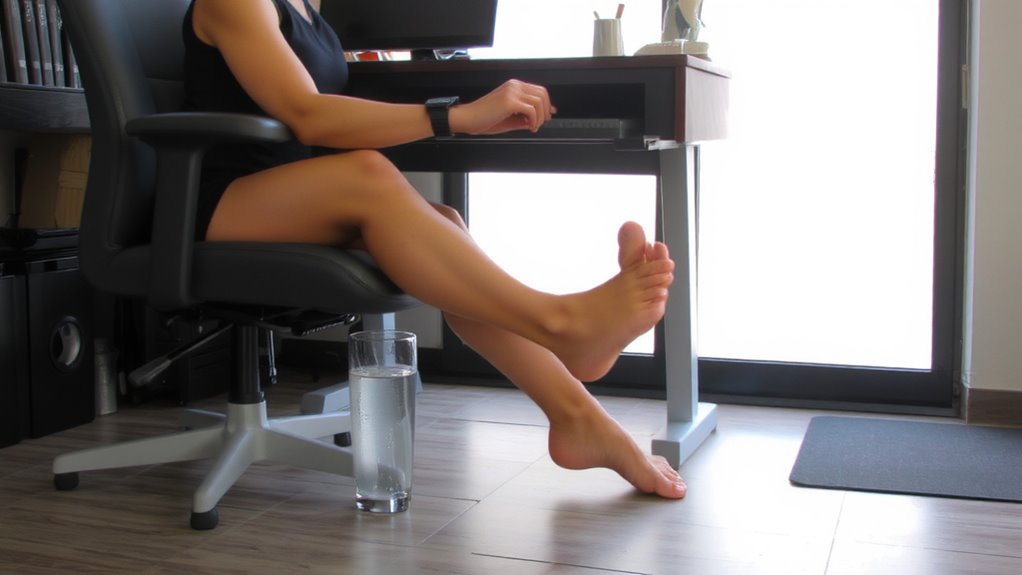
While sitting for hours might be unavoidable, letting your circulation grind to a halt isn’t-especially if you work at a desk all day. You can prevent blood flow from stalling with small, intentional habits. Compression garments, like graduated compression socks, apply 15–20 mmHg of pressure to encourage venous return-studies show they reduce leg swelling by up to 30% during prolonged sitting. Pair them with regular circulation breaks: every 30–60 minutes, stand or march in place for 2–3 minutes to reactivate calf muscles. Real-world testing reveals users report less fatigue, though results vary if breaks are inconsistent. Compression sleeves aren’t a fix-all-some find them too warm in summer or tight if sized incorrectly. Always check sizing charts and avoid worn-out garments, as faded elasticity reduces effectiveness. Use circulation breaks even without gear, but combining both tactics improves outcomes.
Stretch Your Legs Without Leaving Your Desk
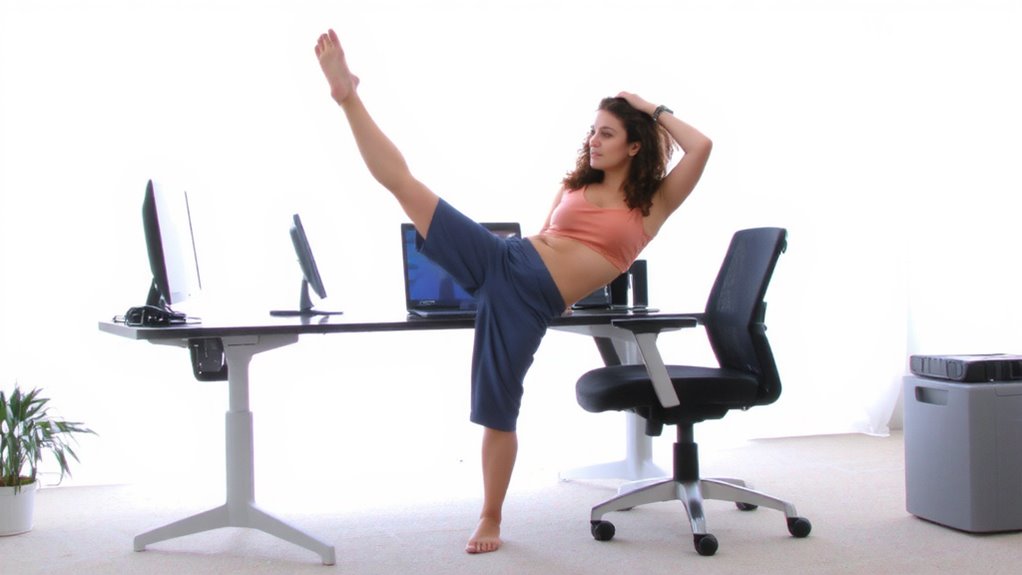
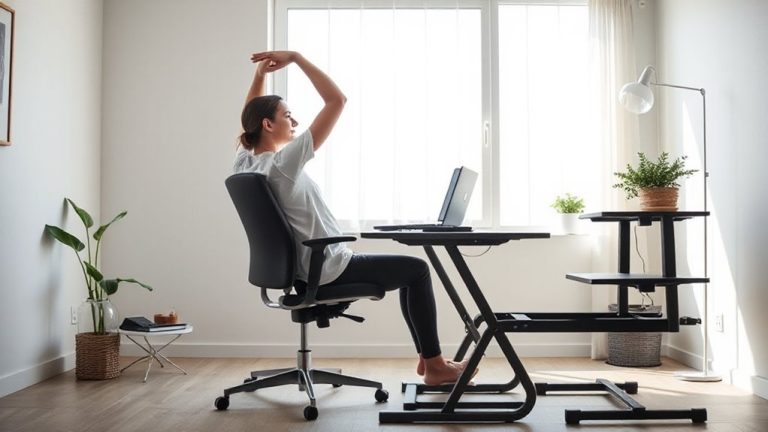
You can maintain better circulation during long seated periods by stretching your legs right at your desk, no full起身 required. Simple movements like leg extensions and ankle circles activate key muscles without needing extra space or equipment. Extend one leg at a time, holding it straight for 10–15 seconds, then switch-this eases hamstring tightness and encourages blood return from the lower limbs. Follow with ankle circles: rotate each foot clockwise and counterclockwise for 15 seconds. These require minimal effort but meaningfully reduce stagnation. Done consistently, they help delay fatigue, though they aren’t a full substitute for standing or walking breaks. Effectiveness depends on frequency-you’ll see better results doing them hourly versus once every few hours. Avoid overextending if you have hip or back issues; modify range as needed. These stretches fit easily into work routines, needing only seated space and consistent timing.
Pump Your Feet to Keep Blood Moving (While Sitting)
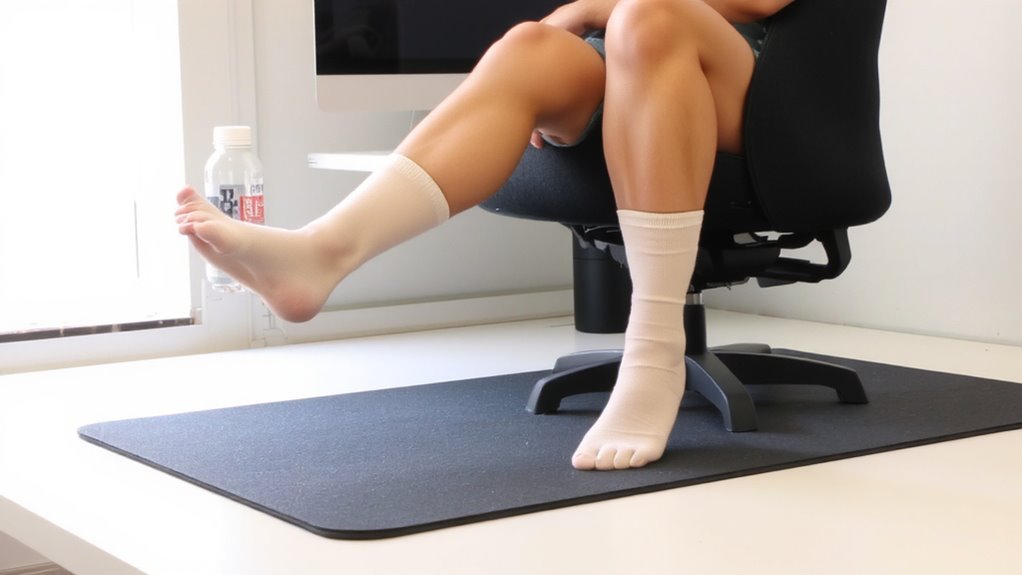
Often overlooked, foot pumping is a simple yet effective way to maintain circulation while sitting for long stretches. You don’t need special gear-just shift your focus down. Press your heels into the floor while lifting your toes, then reverse: lift heels while pressing toes down. This motion mimics walking and encourages blood flow. Add ankle rotations every 20–30 minutes to prevent stiffness and improve joint mobility. Even subtle toe wiggling helps stimulate nerves and muscles. Do each for 30–60 seconds. These movements reduce pooling in the lower legs, lowering discomfort and clot risk over time. They’re not a substitute for standing or walking, but they’re practical when you’re deep in work. No app or timer is required, though some find them helpful. Consistency matters more than intensity. Pair with posture checks, but don’t rely on tools-your body’s feedback is the best guide.
Set Up Your Desk to Support Movement
| Feature | Benefit |
|---|---|
| Height-adjustable desk | Enables sit-stand shifts; reduces static load |
| Active seating option | Encourages movement; may improve posture |
| Monitor at eye level | Supports neck alignment during movement |
| Footrest with tilt | Enhances circulation and alignment in seated positions |
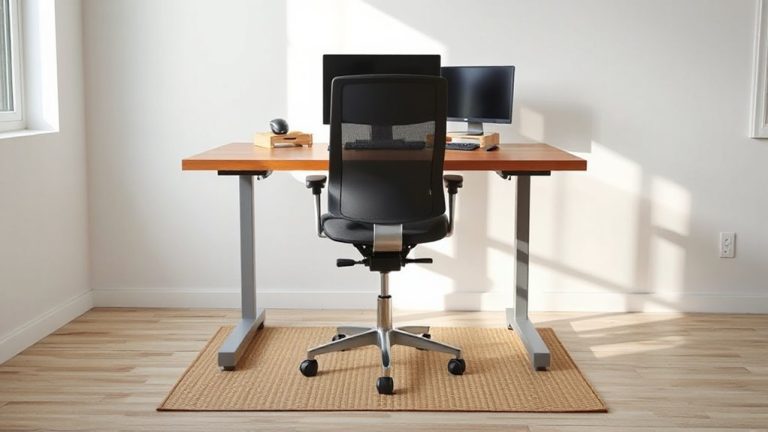
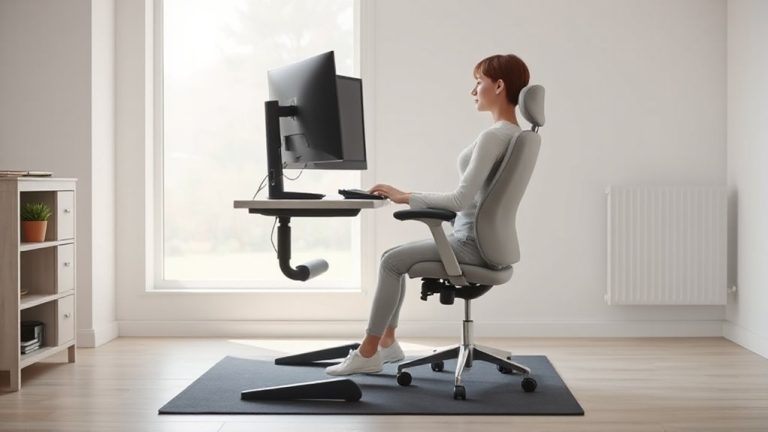
These changes support mobility, but aren’t one-size-fits-all. Some find active seating uncomfortable over time-trial periods and warranties matter. Always test gear in your real-world routine. A highly effective way to facilitate regular posture shifts is by choosing one of the best standing desks that combines durability, smooth height adjustment, and ergonomic flexibility.
Make Tiny Movements a Daily Habit
With even minor shifts throughout the day, circulation improves noticeably during long seated periods-especially when movements are intentional and repeated. You don’t need special gear to benefit-just consistent microbreaks of 30 to 60 seconds every 25 minutes. These brief pauses let you stand, shift your weight, or stretch your calves and hips, counteracting stagnation. Fidgeting-like ankle circles, shoulder rolls, or finger taps-also keeps blood flowing without disrupting focus. Studies show fidgeting can reduce circulation dip by up to 40% compared to completely static sitting. While standing desks or balance stools may support movement, they’re not required-movement works best when built into habits, not hardware. Just remember: too much fidgeting in shared spaces might distract others, so keep motions subtle. Real gains come from frequency, not intensity-tiny, repeatable actions add up.
Drink Water and Breathe Deeply to Improve Circulation
While staying hydrated and mindful of your breathing might seem unrelated to blood flow, both directly support circulation-especially when you’re seated for hours. Hydration breaks keep blood volume ideal, aiding nutrient delivery and waste removal. Pair that with mindful breathing to activate your parasympathetic system, gently boosting oxygen exchange and vessel relaxation.
| Technique | Benefit |
|---|---|
| Hydration breaks | Maintains plasma volume, supports heart efficiency |
| Mindful breathing | Lowers resting heart rate, improves O₂/CO₂ balance |
You don’t need a smart bottle or app-just drink water when you feel slightly thirsty. Deep breaths should feel natural, not forced. Overemphasizing either can backfire: too much water stresses kidneys, excessive focus on breath may cause lightheadedness. Use simple cues-like a timer or sticky note-to integrate both habits without disruption.
Stand and Walk to Restore Circulation
If you’re sitting for long stretches, standing up and walking regularly isn’t just helpful-it’s essential for restoring healthy circulation. Every 30 to 60 minutes, stand and move for at least two minutes to reactivate blood flow and reduce lower limb stagnation. Walking boosts calf muscle contractions, which pump blood back toward the heart. While standing, perform ankle circles-10 clockwise, 10 counterclockwise-to further activate circulation and reduce swelling. If possible, practice leg elevation by propping your feet slightly above heart level during breaks, even briefly, to assist venous return. These movements counteract fluid pooling and prevent discomfort. Don’t rely on standing desks alone-they encourage posture shifts but don’t replace active movement. Similarly, adjustable laptop stands or ergonomic chairs support alignment but don’t eliminate circulatory risks. Movement is the only proven method. Consistency matters more than duration.
On a final note
You should stand and stretch regularly to keep your blood flowing, but small seated movements help too. Pumping your feet or adjusting your chair height can reduce leg fatigue over time. A height-adjustable desk supports better posture, though it’s a cost to factor in. Hydration and deep breathing support circulation, but they’re not magic fixes. These habits work best together-no single change cancels out hours of sitting.