How to Use Ambient Lighting to Reduce Perceived Room Size in a Large Home Office
Use warm ambient lighting (2700K–3000K) with layered sources to make your large home office feel cozier. Skip harsh overheads-they flatten space-and instead combine floor lamps (60–72 inches tall), swing-arm sconces (300–500 lumens), and table lamps (400–800 lumens) to create intimate zones. Position lights at eye level or use upward-facing sconces to bounce light and reduce perceived depth. Limit focal points to two or three per area to avoid clutter. Hardwired or plug-in, placement and diffusion matter most for balanced, glare-free results. Choosing the right setup transforms how space feels-but getting the details right takes more than just bulbs.
Notable Insights
- Use warm-toned bulbs (2700K–3000K) with high CRI to create a cozy, intimate atmosphere.
- Layer multiple light sources like floor, desk, and wall lamps to add depth and reduce openness.
- Position floor lamps near seating areas to anchor space and define functional zones.
- Install wall sconces at eye level (58–62 inches) to create human-scale lighting and draw focus inward.
- Avoid overhead lighting; use indirect, diffused glow to minimize perceived room size.
Use Ambient Lighting to Visually Shrink Your Office
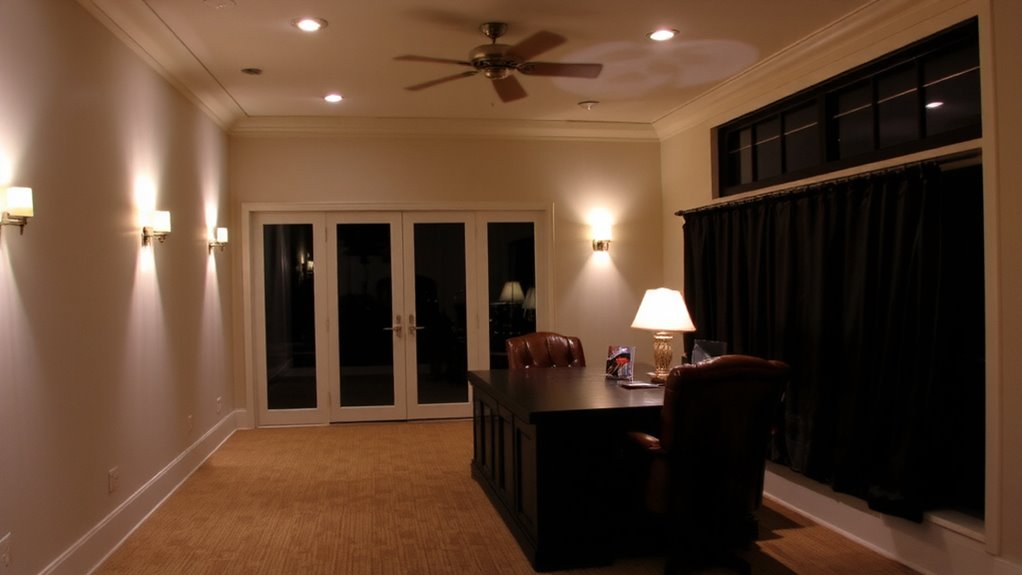
How do you make a spacious home office feel more intimate and focused? Use ambient lighting to visually shrink your office by layering light sources strategically. You don’t need expensive fixtures-start with floor or desk lamps that provide soft, indirect glow. Position them to create accent lighting along walls or behind furniture, which draws the eye inward and reduces the sense of openness. Include adjustable-arm lamps or wall sconces to enable shadow play, adding depth and coziness through contrast. Avoid overhead lighting alone-it flattens space and highlights emptiness. Instead, keep ceiling lights dim and supplement with lower placements. This setup works best in rooms over 200 sq ft, but be mindful: too many lamps without control can clutter outlets and require timers or smart switches. Results vary based on ceiling height and reflectivity of surfaces. For targeted task lighting that complements ambient layers, consider Top LED Desk Lamps for Your Workspace.
Choose Warm Bulbs to Soften Large Spaces
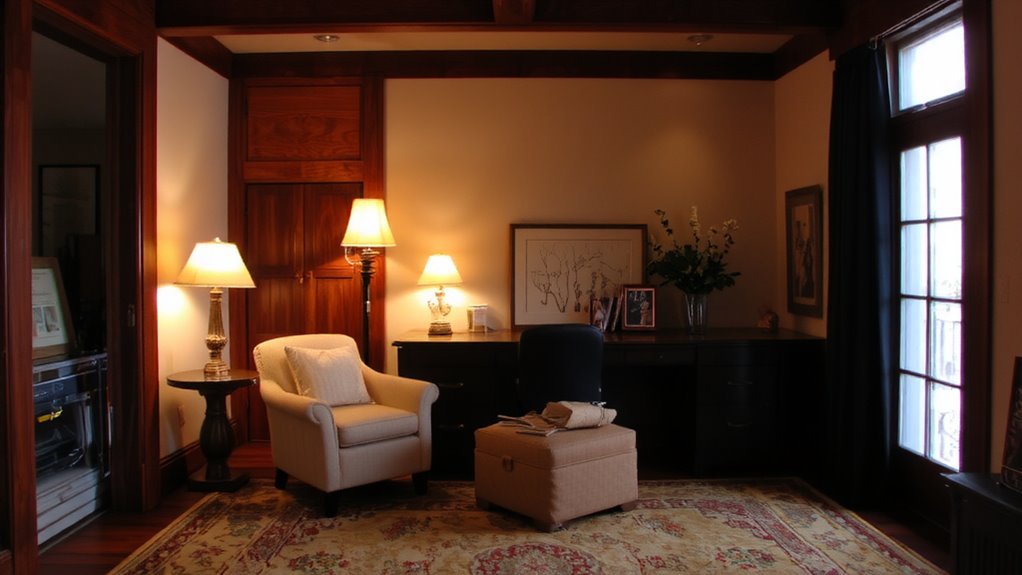
Most experts agree that warm-toned bulbs-typically 2700K to 3000K on the color temperature scale-can noticeably soften the feel of large, sterile office spaces. You’ll want to choose bulbs in this range because they emit a gentle, inviting glow that reduces harsh contrasts and makes expansive walls feel less imposing. A warm color temperature mimics natural indoor light, helping your eyes relax during long work sessions. Pair this with a soft white or frosted bulb finish to diffuse light evenly and minimize glare. Matte finishes are especially effective at scattering light without hotspots. Just keep in mind that while warm bulbs enhance coziness, the addition of a best LED ceiling light with Bluetooth speaker can further transform the ambiance by combining mood lighting with audio control; consider selecting a model with LED ceiling lights with Bluetooth speakers to unify function and comfort in expansive rooms. Some LED models may not render colors as accurately at this color temperature. Always check packaging for CRI ratings above 90 and reliable warranties-tested brands like Philips and GE often deliver consistent performance.
Layer Lamps and Sconces for Cozy Zones
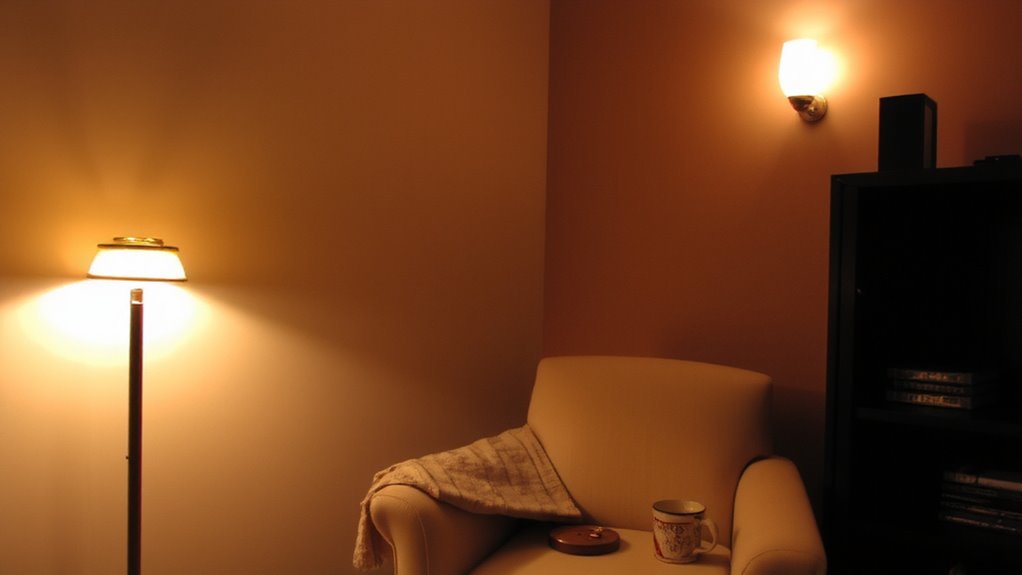
While overhead lighting can leave large rooms feeling flat and impersonal, layering lamps and sconces helps carve out cozy, well-defined zones that make the space feel more human-scale. Use sconces at eye level to soften walls and add depth, especially in a reading nook where ambient glow matters. Pair with adjustable task lighting on desks to guarantee clarity without glare. A well-lit workspace benefits from the right balance of ambient and best desk lights to maintain both comfort and productivity. Below is a comparison of common fixture types:
| Fixture Type | Light Output (Lumens) | Best Use Case |
|---|---|---|
| Swing-arm sconce | 300–500 | Reading nook, wall space |
| Table lamp | 400–800 | Desk, side table |
| LED strip | 1,000–1,600 | Under shelves, indirect |
| Floor lamp | 1,200–1,800 | Corner accent, tall spaces |
Choose warm-toned bulbs (2700K–3000K) for consistency. Mount sconces 58–62 inches from floor for ideal eye comfort. Over-lighting can create clutter, so limit to two to three focal points per zone.
Place Floor Lamps to Anchor the Room
A well-placed floor lamp can act as a visual anchor, giving a room more focus and balance-especially in spaces that feel too open or undefined. Strategic lamp placement helps define zones in a large home office, making the area feel cozier and more intentional. Go for floor positioning near seating or workspaces, where the lamp complements furniture groupings without blocking pathways. Opt for arc lamps if you need to span over a couch or desk-they draw the eye and establish a focal point. Stick to a height between 60 and 72 inches for effective scale. Avoid overly bright bulbs; soft, diffused light works better for ambiance. Keep cords tidy with clips or raceways. While floor lamps add warmth, overcrowding can make a space feel cluttered, so use them sparingly. Test different spots for ideal shadow control and coverage. Lamp placement isn’t just practical-it’s a design move that directly influences how spacious (or intimate) your office feels.
Install Wall Sconces to Reduce Depth
One well-placed wall sconce on each side of a focal point-like a desk or bookshelf-can effectively shorten the perceived depth of your room by creating visual boundaries. Proper light placement draws the eye laterally, making the back wall feel less distant. Sconces with adjustable arms let you control shadow contrast, adding dimension without glare. Upward-facing sconces bounce light softly, reducing the sense of emptiness in tall or deep rooms. You’ll want fixtures between 60 and 72 inches high for balanced coverage. Hardwired models offer clean lines, but plug-in sconces are easier to reposition. While sconces enhance ambiance, they shouldn’t replace task lighting. Poorly aimed ones can cast awkward shadows or highlight uneven walls. Choose matte finishes to minimize glare and test placement before mounting. Real-world testing shows that even low-lumen LED sconces (around 400 lumens) create noticeable depth reduction when aligned with eye-level features.
Skip Harsh Overheads for a Softer Glow
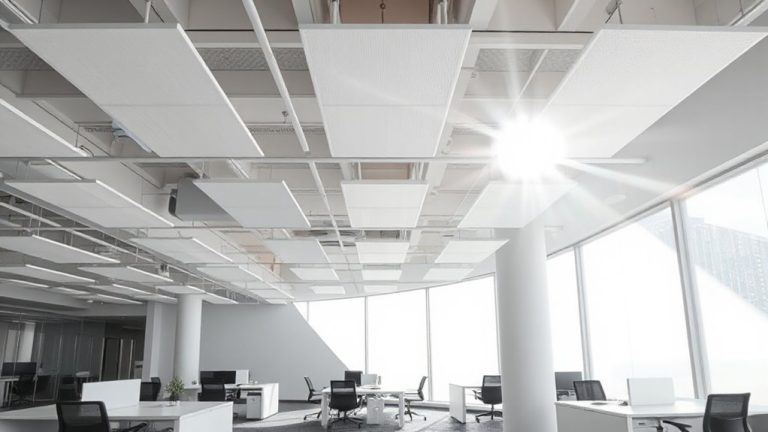
If you’re aiming to soften your room’s visual weight and shrink its perceived size, ditching harsh overhead lighting is a smart move. Harsh LEDs or bright fluorescents wash out surfaces, making walls recede and space feel larger. Instead, layer ambient, task lighting, and accent fixtures to build depth and warmth. This blend guides the eye inward, breaking up open expanses without sacrificing function.
| Light Type | Placement | Purpose |
|---|---|---|
| Floor Lamps | Corners | Soft ambient pools |
| Desk Lamps | Work Surfaces | Targeted task lighting |
| Wall Sconces | Mid-wall | Highlight textures, art |
| LED Tape Lights | Under shelves | Subtle accent fixtures |
Avoid overlighting-too much brightness counteracts the cozy effect. Opt for warm color temperatures (2700K–3000K). Balanced layering enhances comfort and focus, but requires thoughtful placement to prevent shadows or glare.
On a final note
You can effectively shrink a large home office with ambient lighting. Use warm-colored bulbs (2700K–3000K) in floor lamps and wall sconces to create soft, zonal glow. Placing fixtures closer together builds intimacy but requires careful wiring or portable options. Avoid ceiling lights that flatten space. While layered lighting enhances comfort, it demands planning around outlets and switch placement. Results depend on room layout, so test placements before permanent installs.