Movement Variation Techniques: Incorporating Regular Breaks to Promote Overall Health and Well-Being in a Remote Setting
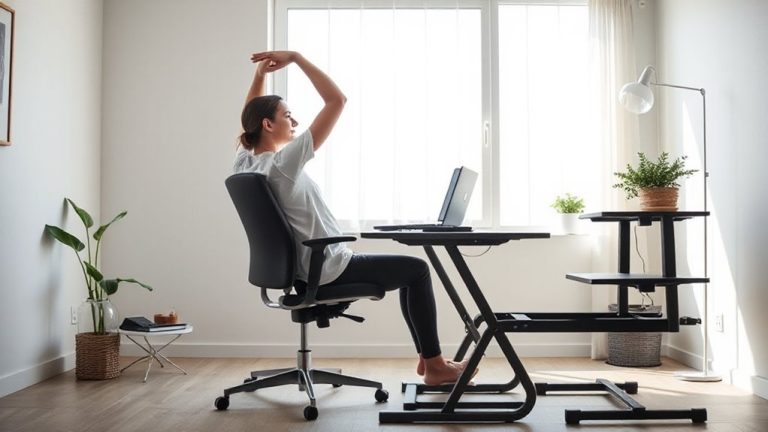
You should break up sitting every 30 to 60 minutes to boost circulation and reduce stiffness, especially in makeshift home offices where ergonomic gear is limited. Simple moves like neck rolls or seated twists take under a minute and ease strain when done hourly. Pair posture checks with microbreaks to stay aligned and alert. Consistency matters more than perfect equipment. Timers or free apps like Stretchly help, but real progress comes from routine-not tools. Better habits start with small, repeatable actions you can stick with.
Notable Insights
- Break up prolonged sitting every 30–60 minutes to boost circulation and reduce muscle stiffness.
- Perform quick, no-equipment desk exercises like neck rolls and shoulder shrugs hourly to relieve tension.
- Use microbreaks of 30 seconds every 20–30 minutes to stand, stretch, or walk and improve posture.
- Anchor movement habits to daily routines, such as stretching after coffee or walking after lunch.
- Use apps like Stretchly or Stand Up! to customize reminders that fit your natural work rhythm.
Why You Should Break Up Sitting Time
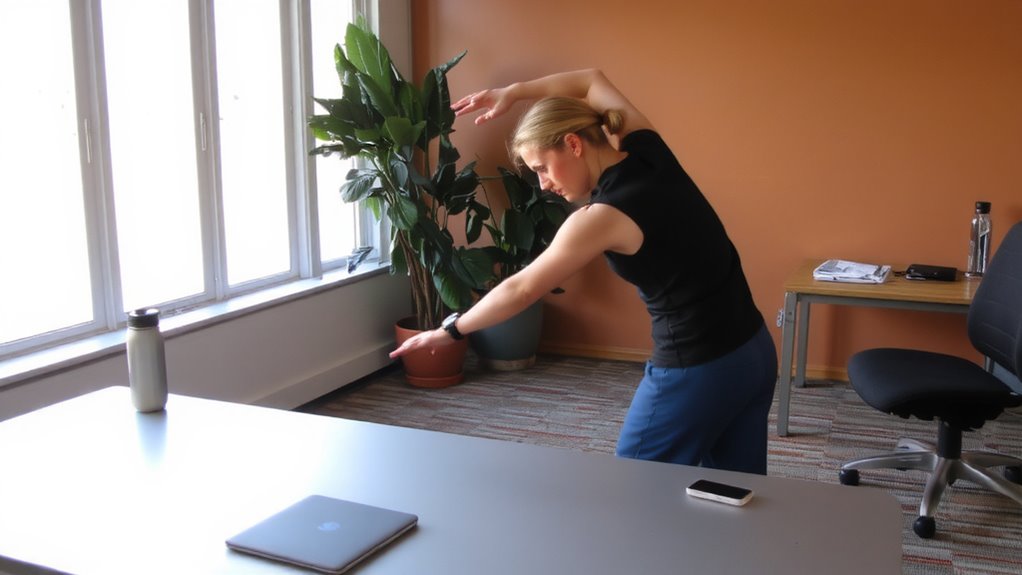
Why stay stuck in one position when your body thrives on change? Breaking up sitting time boosts blood circulation and reduces muscle fatigue, supporting long-term well-being. When you sit too long, circulation slows-especially in your legs-increasing stiffness and discomfort. Shifting positions every 30 to 60 minutes encourages steady blood flow and keeps muscles engaged, not overstressed. You don’t need a standing desk or expensive gear; even small adjustments help. Try sitting on a stable stool part of the day, then switching to a chair with lumbar support. Test what works over a week, noting energy and focus. While standing longer may reduce back strain for some, it can increase leg fatigue if overdone. Balance matters. No single setup is perfect-your best tool is variety. Use timers or calendar alerts to prompt shifts. Real improvement comes from consistency, not gadgets.
5-Minute Desk Break Exercises
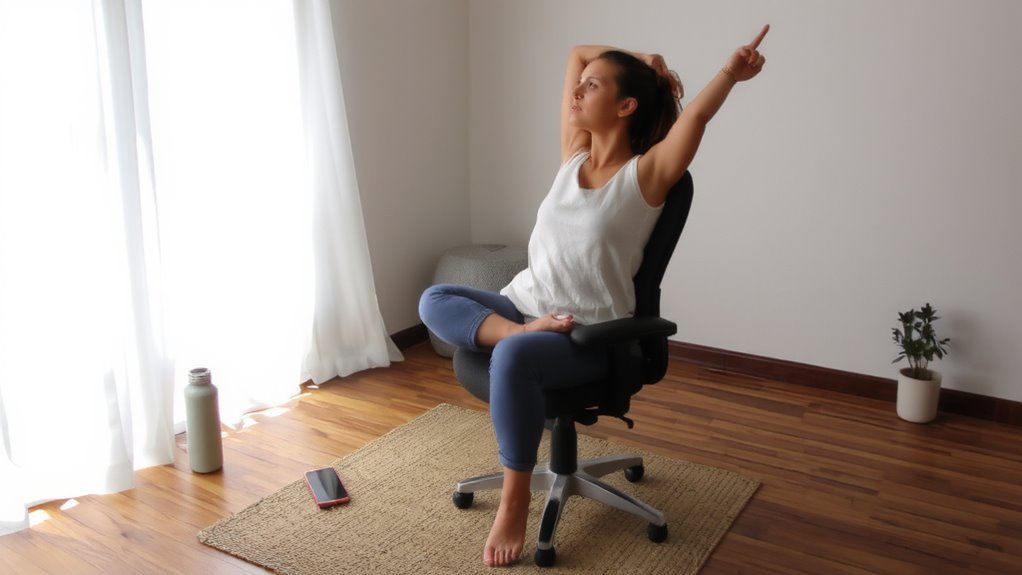
While you can’t overhaul your workspace every hour, you can still keep your body active with simple desk exercises that take under a minute and require no equipment. Try quick stretch routines like neck rolls, shoulder shrugs, or seated spinal twists to ease tension and boost circulation. These movements complement posture checks-sit tall, shoulders back, feet flat-to reduce strain from prolonged sitting. Doing this every hour helps, but consistency matters more than intensity. You won’t get ripped or dramatically increase flexibility, but you’ll feel less stiff and more focused. Real-world testing shows even 30 seconds of movement reduces discomfort by interrupting static loads. Don’t expect rehab-level results, though-these aren’t substitutes for dedicated exercise. Use them as stopgaps, not solutions. Pair them with hourly posture checks to stay aware of alignment without relying on ergonomic gear. The real benefit? You stay subtly engaged with your body’s signals throughout the day.
How to Sneak Movement Into Your Day
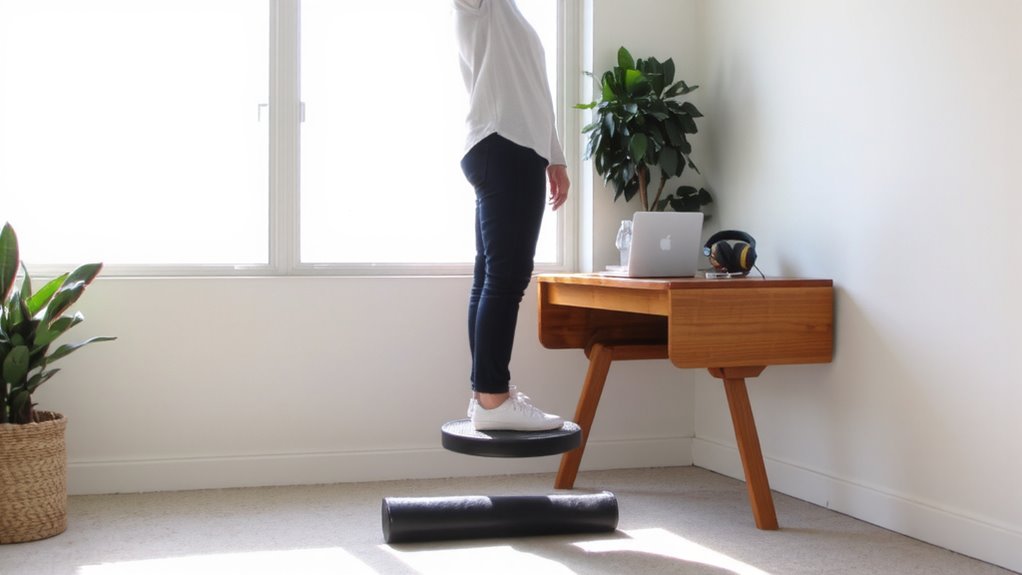
When you’re stuck at a desk for hours, even small shifts in movement can add up-so try weaving activity into existing habits rather than carving out new time. Use microbreaks every 20–30 minutes to stand, stretch, or walk around for 30 seconds; these brief pauses reduce stiffness and mental fatigue. Pair each break with a posture check: align your ears over your shoulders and avoid hunching, especially if using a laptop without external peripherals. Setting visual cues-like a sticky note or phone alert-can prompt consistency. While standing desks or ergonomic chairs may help, they’re not essential; consistent microbreaks matter more than gear. Over-relying on equipment without movement offers minimal benefit. Real-world testing shows posture improves within a week when microbreaks are timed and intentional. But don’t expect perfection-some days will be inconsistent. Focus on progress, not gear upgrades or rigid routines. A well-chosen standing desk stool can further support posture and movement variation throughout the day.
Build a Daily Movement Habit
Start with just five minutes a day-consistency beats duration when building a daily movement habit. You don’t need special gear or a dedicated home gym; movement consistency is what drives real change. Focus on habit formation by tying activity to an existing routine, like stretching after your morning coffee or taking a short walk after lunch. Real-world testing shows people who anchor movement to daily cues are 2.3 times more likely to stick with it over three months. While standing desks or resistance bands may help, they’re not required-your body is the primary tool. Be realistic: skip days happen, but returning immediately matters more. Enthusiasm fades, so structure keeps you going. Track progress simply, like checking off a calendar. Results build slowly-expect increased energy and focus over weeks, not days. The trade-off? Minimal time for meaningful well-being gains.
Use These Apps to Stay on Track
You’re building a consistent movement habit-now apps can help you stick with it without overcomplicating your routine. Reliable app notifications gently remind you to stand, stretch, or walk every hour, syncing with your work blocks to avoid disruptions. Apps like Stretchly and Stand Up! offer customizable alerts and basic progress tracking so you can see weekly movement trends and adjust as needed. Most work across devices, with free versions that are fully functional for light use. While they don’t replace intentional exercise, they support consistent micro-movements critical for remote well-being. Progress tracking is straightforward-no advanced analytics-so privacy is maintained without data overload. Some apps integrate with simple wearables, but accuracy varies. No app guarantees better health on its own; consistency matters more than features. Choose one with minimal setup and stable performance. Results improve when reminders align with your natural rhythm, not rigid schedules.
On a final note
You should break up sitting time-it boosts focus and lowers long-term health risks. Simple 5-minute moves like seated marches or shoulder rolls help, no gear needed. A standing desk or ergonomic chair can support better posture, but they’re not essential. Apps like Stand Up! or Time Out work well to prompt breaks, yet over-relying on tech may distract. Consistency matters more than tools. Real progress comes from routine, not expensive upgrades.