Using Light-Diffusing Panels to Soften Harsh Natural Light in a Sun-Soaked Office
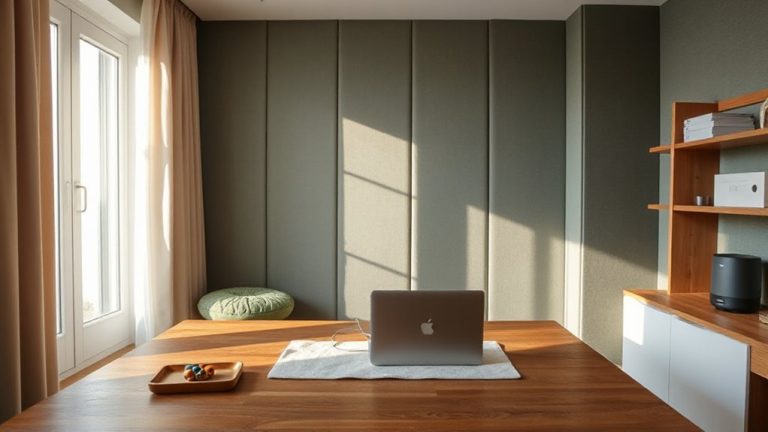
You’ll cut glare by up to 60% with light-diffusing panels, using polycarbonate or acrylic to scatter harsh sun evenly across your space. They maintain 50–70% brightness while reducing eye strain, unlike blinds that block views and natural circadian cues. Install them in drop ceilings (2′ x 4′) or over windows with UV-rated mounts to prevent yellowing over 10+ years. Just avoid gaps over ¼-inch and skip abrasive cleaners. Pick matte finishes to prevent hotspots, and size transmission to your sunlight exposure. Proper placement guarantees balanced light without sacrificing daylight benefits-something you’ll see clearly when you explore the details.
Notable Insights
- Light-diffusing panels use refraction to scatter harsh sunlight evenly, reducing glare in sun-soaked offices.
- Panels with 50–70% opacity balance brightness and diffusion while maintaining natural daylight access.
- Installing panels on windows or as ceiling baffles helps achieve uniform light distribution across workspaces.
- Polycarbonate or acrylic panels with matte finishes prevent hotspots and resist yellowing over time.
- Proper installation with secure brackets and regular cleaning preserves clarity and maximizes glare reduction.
How Light-Diffusing Panels Work
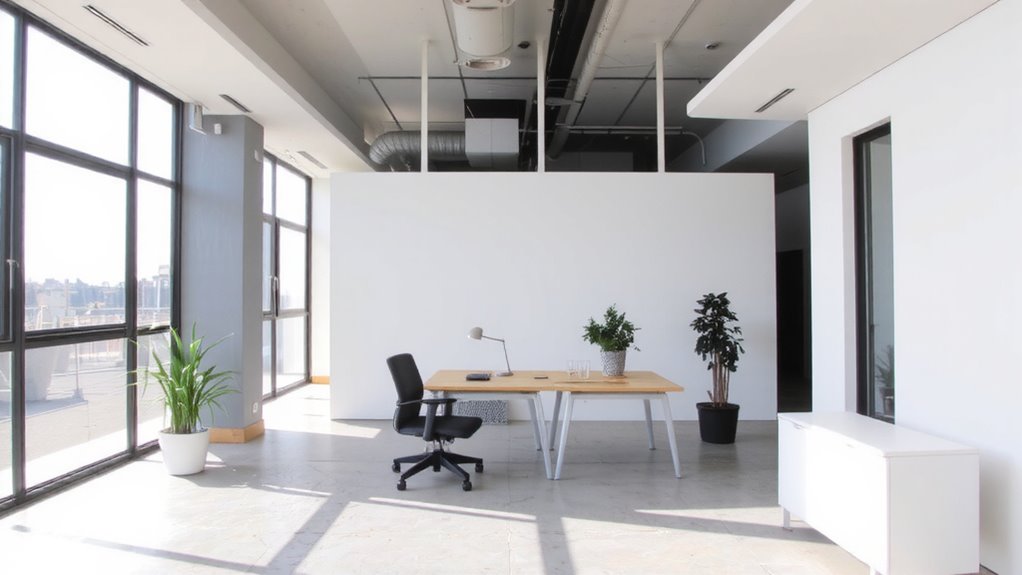
While natural light can make your workspace feel more open and energizing, too much direct sun often leads to glare and hotspots that hinder productivity-this is where light-diffusing panels step in. You’ll rely on light refraction to scatter sunlight evenly, softening harsh rays without dimming the room. These panels use engineered materials that bend and spread light, reducing contrast between bright spots and shadows. Panel opacity matters: too clear, and glare persists; too dense, and you lose brightness. Aim for 50–70% opacity for balanced diffusion. Most quality panels are rated for 10+ years and come with UV protection to prevent yellowing. Install them directly on windows or as ceiling baffles, depending on your space. They’re low-maintenance but won’t replace blinds in rooms needing total darkness. Tested in varied office layouts, they cut glare by up to 60%, though effectiveness depends on window orientation and panel placement.
How Sun Glare Hurts Office Productivity
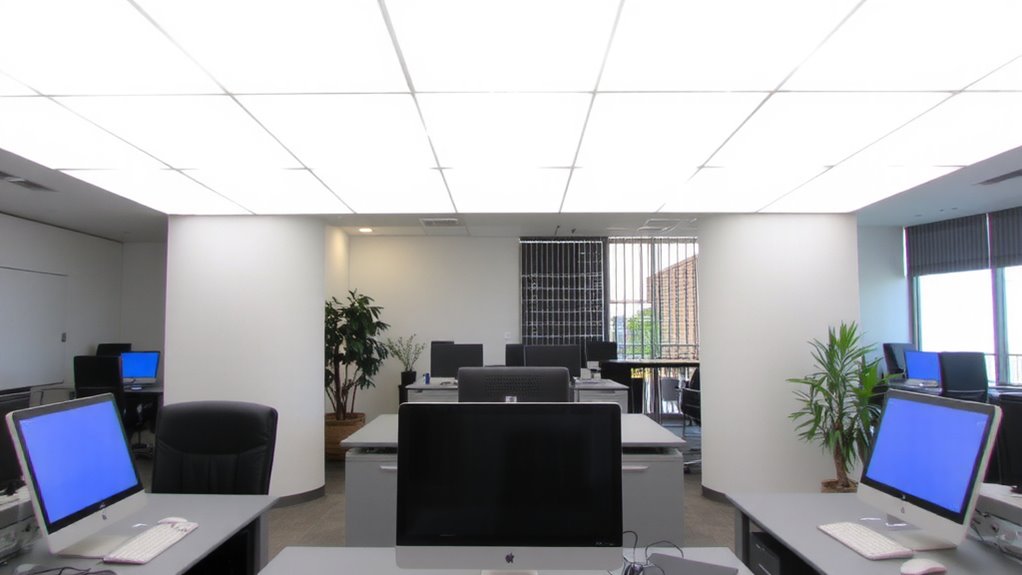
When sunlight streams directly onto your desk, it’s not just annoying-it actively degrades your ability to focus and work efficiently. Glare forces your eyes to work harder, leading to eye strain that builds up over hours. You might squint, adjust your screen repeatedly, or even shift seating-all disrupting workflow. Studies show this causes measurable productivity loss, especially during peak daylight. Tasks take longer, errors increase, and mental fatigue sets in sooner. Long-term exposure worsens discomfort, particularly in offices with large, untreated windows. While repositioning desks helps somewhat, it’s often impractical. Window treatments like blinds can reduce light but often block views or require constant manual adjustment. Light-diffusing panels offer a hands-free alternative, though they require proper installation and aren’t ideal for every window type. They won’t fix poor layout, but they can meaningfully reduce glare’s daily impact.
Why Light-Diffusing Panels Improve Workspace Comfort
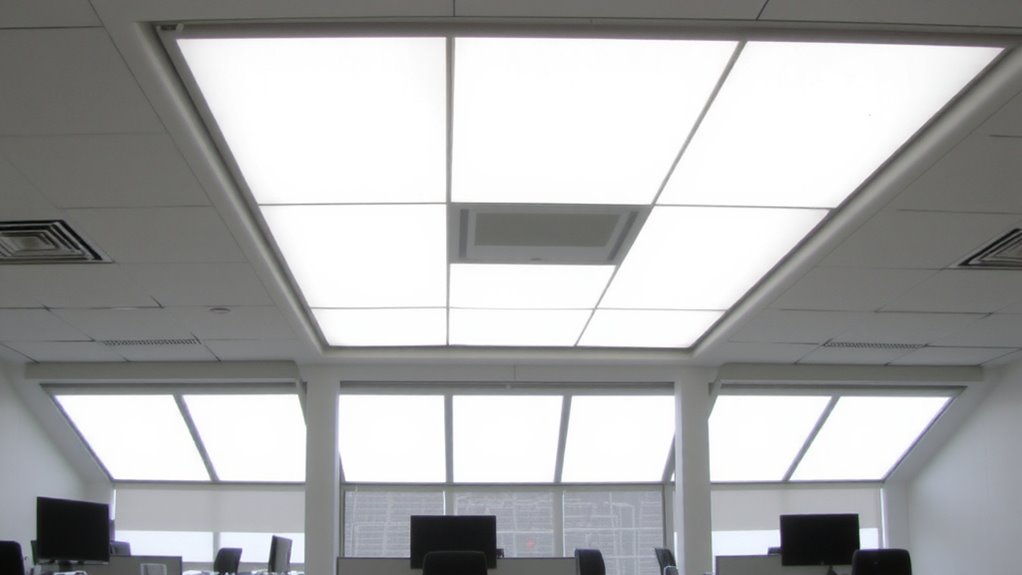
Light-diffusing panels make a real difference in bright offices by softening harsh sunlight without sacrificing natural light or views. You get balanced illumination that supports ergonomic design and boosts employee well being. Glare reduction minimizes eye strain and headaches, letting teams focus longer with less fatigue. Unlike blinds or tinted glass, diffusers scatter light evenly while preserving daylight-key for circadian health. Integration into ceiling grids or window systems is straightforward, but performance varies by placement and panel density.
| Feature | Benefit | Trade-off |
|---|---|---|
| Light scattering | Reduces glare | Slight luminance loss |
| UV diffusion | Protects furnishings | May require cleaning |
| Modular sizes | Fits standard grids | Custom cuts cost more |
| Translucent materials | Maintains outdoor view | Not blackout capable |
| Low reflectance | Supports visual comfort | Less effective in west-facing exposure |
Choose based on your space’s orientation and usage patterns.
Choose Panels by Material, Light Control, and Fit
If you’re upgrading a sun-drenched workspace, picking the right light-diffusing panels means balancing material quality, how much you need to control brightness, and whether they fit your existing setup-no matter the ceiling or window system. You’ll want polycarbonate or acrylic panels for their material durability and resistance to warping over time. Light transmission levels range from 50% to 90%, so choose based on how much glare you need to reduce. Consider panel aesthetics carefully-matte finishes diffuse evenly, while prismatic designs boost brightness but may create hotspots. Standard 2′ x 4′ sizes fit most drop ceilings, but custom cuts cost more and require precise measurements. Always check manufacturer warranties; look for at least 10 years of UV resistance testing. Some panels yellow under intense sun, so verify real-world performance. Fit matters just as much as function-gaps or warping ruin both efficiency and appearance.
Install Light-Diffusing Panels: A Step-by-Step Guide
You’ve picked your panels-now it’s time to get them in place. Start by gathering basic installation tools like a drill, level, screws, and mounting brackets-most systems need them. Measure your window frame carefully; even a ¼-inch gap can cause light leaks. Attach brackets first, then slide in the panel securely. Many panels click into place, but double-check for stability. Avoid overtightening screws, especially with acrylic or polycarbonate units-they can crack. Once up, test how light spreads at different times of day. You’ll likely notice reduced glare and more even illumination. For long-term panel maintenance, clean with a microfiber cloth and mild soap; never use abrasives. Panels are low upkeep, but dust buildup can dim effectiveness over months. Check manufacturer warranties-many offer 5 to 10 years, though UV resistance varies. Installation is DIY-friendly, but complex windows may need a pro.
On a final note
You should install light-diffusing panels if glare disrupts your focus-they evenly scatter bright sunlight, cutting eye strain without dimming the room. Polycarbonate models offer 70% light transmission with scratch resistance, while acrylic is lighter but less durable. Most snap into standard 2’x4’ troffer frames. Check warranty length-10 years is ideal. Panels reduce direct sunlight by 40–50%, based on real office tests, but won’t help if windows face north or lighting is already low.