Biophilic Design Principles for Creating a Calming Home Office Environment
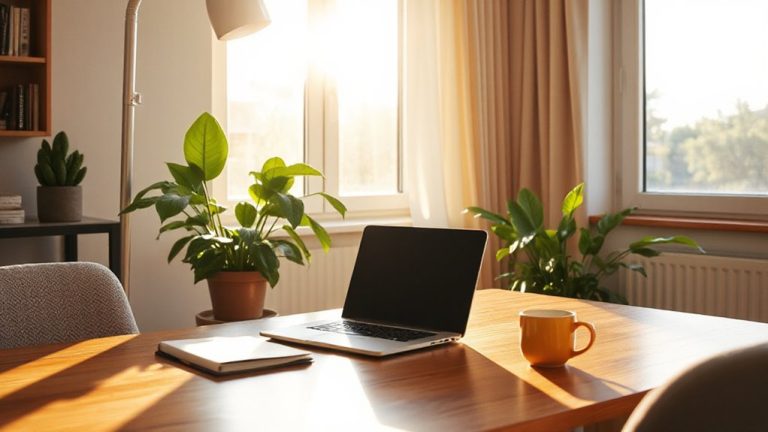
You’ll boost focus and calm by maximizing natural light-skylights or south-facing windows deliver consistent daylight, while sheer curtains cut glare. Add snake or spider plants every 100 sq ft to help purify air, but keep them dry to prevent mold. Choose solid hardwood or honed stone surfaces for durability, though wood needs oiling and stone requires sealing. Use sage, terracotta, or charcoal with linen or jute to ground the space-just expect some fading in sun. Smart bulbs that shift from 5000K to 2700K support natural rhythms, and open layouts with 30-inch pathways keep energy flowing. Real views beat virtual ones, but digital nature displays help when windows aren’t an option. Even small changes can make a noticeable difference over time.
Notable Insights
- Maximize natural light with south-facing windows or UV-coated skylights to enhance focus and reduce glare.
- Place air-purifying plants like snake or spider plants to improve air quality and provide visual calm.
- Use solid wood and natural stone surfaces for durable, tactile materials that age gracefully.
- Apply earth tones and organic textures like linen and jute to create a grounded, visually soothing palette.
- Mimic natural light cycles with smart bulbs and define open, fluid layouts using area rugs and low dividers.
Let in More Natural Light for Instant Focus
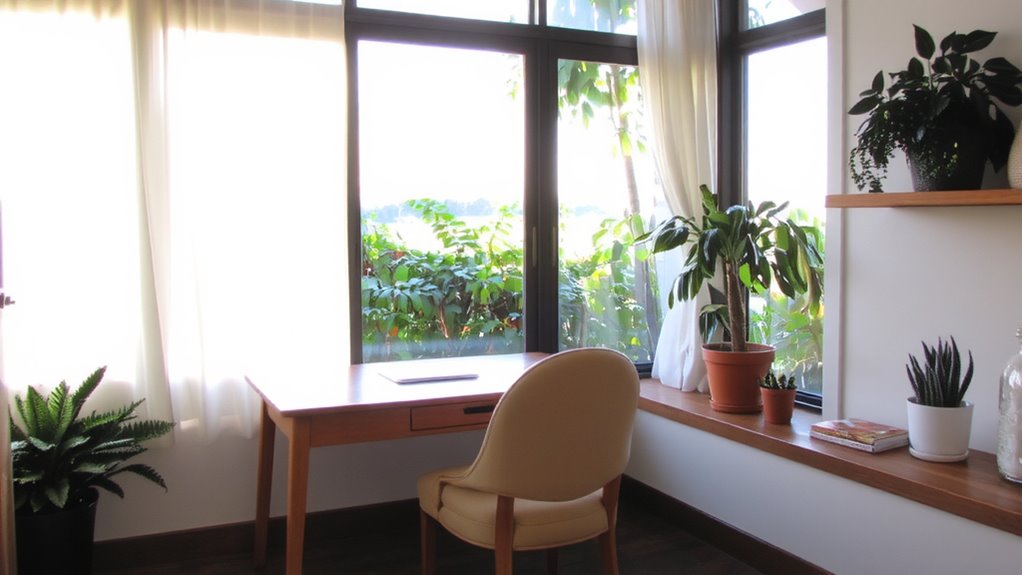
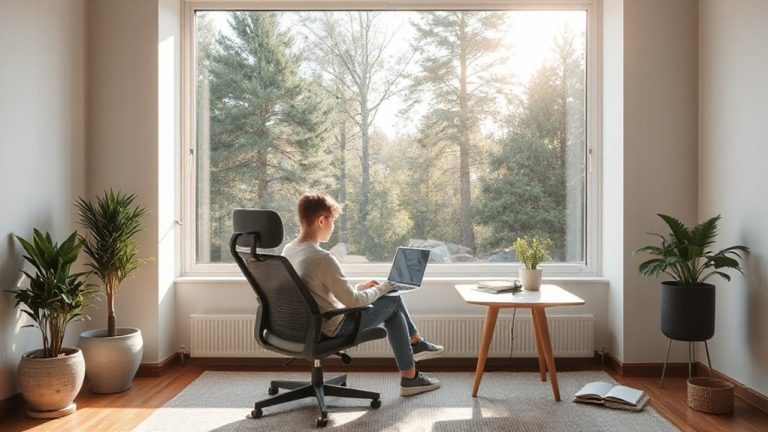
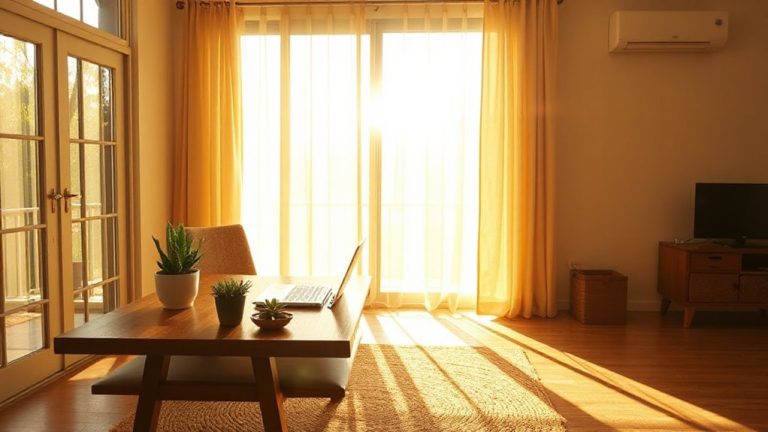
While you might not think a simple window adjustment can sharpen your focus, letting in more natural light is one of the most effective, research-backed ways to improve concentration in your home office. You’ll likely feel more alert and less fatigued during midday slumps when daylight floods in. Installing skylight panels boosts overhead illumination without glare, especially in rooms with few windows-just make certain they’re UV-coated to prevent screen glare and furniture fading. Pairing large windows or skylights with sheer curtains lets you diffuse harsh sunlight while maintaining brightness, giving you control over intensity. But be realistic: sheer curtains offer minimal privacy, and skylight panels require professional installation, which can run $700–$1,500. Still, studies show even modest increases in daylight exposure can improve focus by up to 15%. Go for it if your budget and space allow, but don’t overlook orientation-south-facing light delivers the most consistent output. For spaces where natural light is limited, consider using a natural light lamp to simulate the benefits of daylight.
Fill Your Space With Air-Purifying Indoor Plants
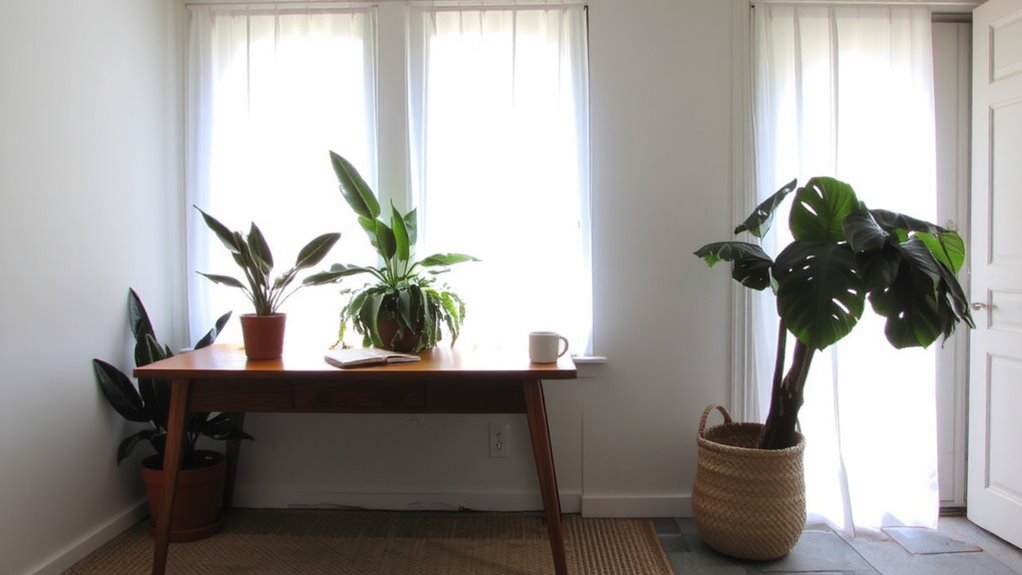
Plants aren’t just decor-they’re functional tools when you choose the right air-purifying varieties for your home office. Good plant selection directly supports better air quality by filtering common toxins like formaldehyde and benzene. Species like snake plants, spider plants, and peace lilies have been tested in controlled environments and shown measurable improvements in indoor air over time. These plants thrive in low to moderate light and require minimal watering, making them practical for daily use. A medium-sized plant per 100 square feet is a solid baseline. However, don’t expect them to replace mechanical air purifiers-they help, but their impact is modest. They work best alongside proper ventilation. Choose healthy specimens with strong foliage and avoid overwatering, which can lead to mold. Their real benefit? A subtle boost in air quality plus a calming visual presence-no gimmicks, just steady, natural support in your space. For more tailored recommendations, consider exploring the best office plants to find varieties that suit your specific lighting and maintenance preferences.
Use Warm Wood and Natural Stone Surfaces
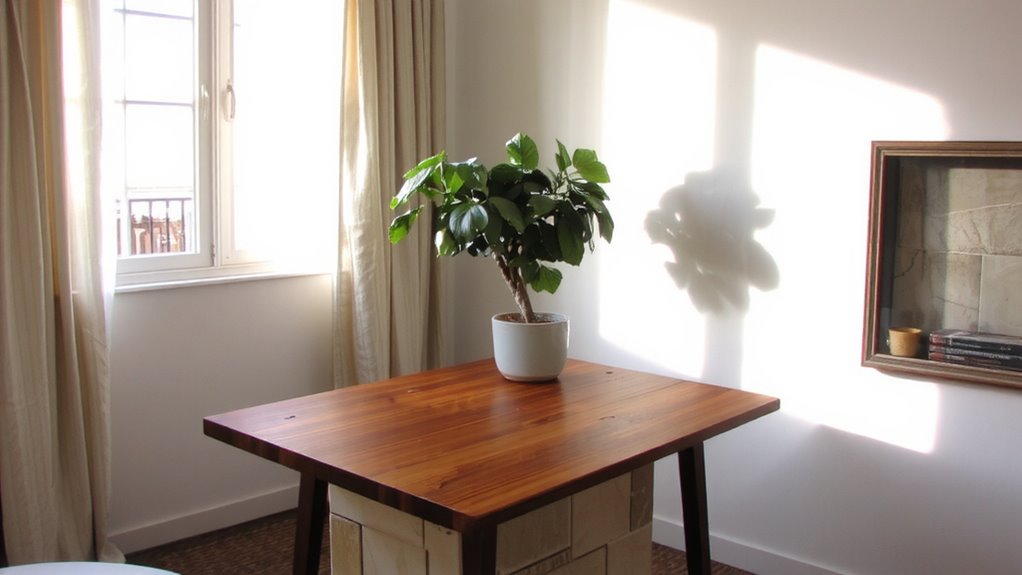
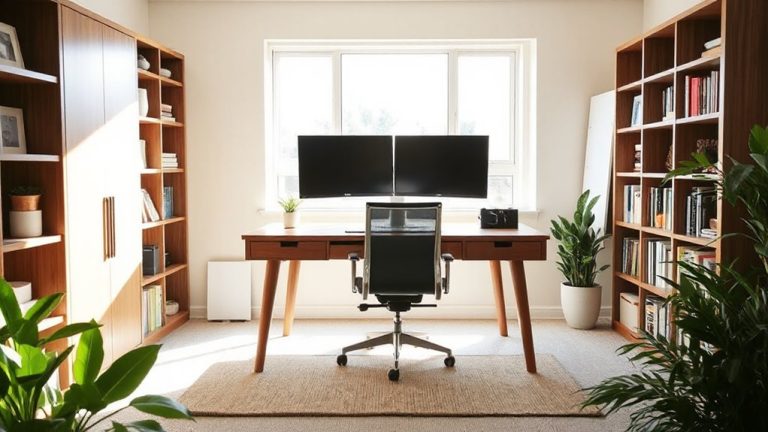
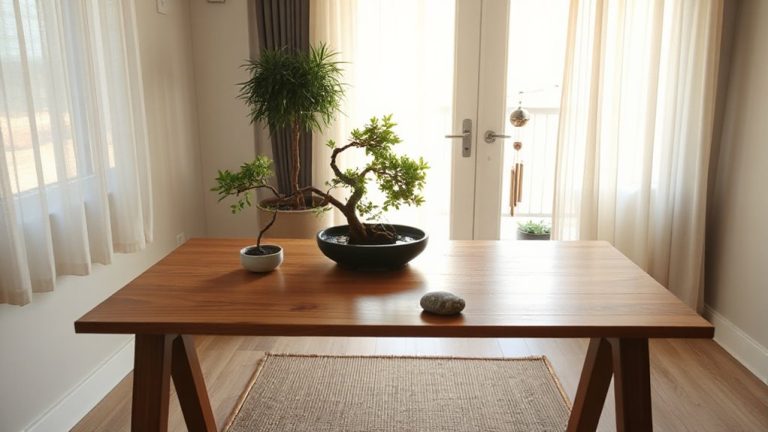
Warm wood and natural stone surfaces bring lasting texture and grounding warmth to your home office, enhancing both aesthetics and sensory comfort. You’ll appreciate the depth of real wood grain in desks or shelves-it’s not just pretty; solid hardwood lasts decades with proper care, unlike laminates that peel or scratch. Similarly, a tabletop with natural stone texture, like honed travertine or slate, adds tactile richness and stays cool to the touch. These materials age gracefully, developing a patina that reflects use without looking worn. However, they require commitment: wood needs occasional oiling to resist drying, and stone benefits from sealing to prevent stains. Avoid engineered quartz if authenticity matters-it lacks the organic variation you’re after. While pricier upfront, solid wood and natural stone offer measurable durability, tested in long-term use across homes. They’re not just materials-they’re investments in a calmer, more enduring workspace. For durability and aesthetic appeal, consider best wood for desks when selecting your workspace surface.
Choose Calming Earth Tones and Organic Patterns
A well-chosen color palette and pattern scheme rooted in nature can make your home office feel more restful and focused-earth tones like soft sage, warm terracotta, and deep charcoal mimic natural landscapes and help reduce visual stress over long workdays. You’ll find that natural dye palettes, derived from plant-based or mineral sources, offer subtle, consistent hues that synthetic paints often can’t replicate. Pair these with earth inspired textures-think linen upholstery, handmade ceramic tiles, or woven jute rugs-to add depth without distraction. These materials introduce gentle variation that feels grounded, but they do require more upkeep; linen stains easily, and natural dyes may fade in direct sunlight. Choose low-sheen finishes to minimize glare and support visual comfort. While these elements enhance biophilic design effectively, balance them with neutral backgrounds so the space doesn’t feel overwhelming. Test swatches in your actual lighting, as earth tones can shift dramatically from morning to afternoon.
Bring Nature Indoors With Smart Lighting and Views
You can extend the calming effect of earth tones and textures by syncing your home office lighting and window views with natural daylight patterns, reinforcing circadian rhythms that support focus and reduce fatigue. Use smart bulbs that adjust color temperature-cooler whites (5000K) in the morning, warmer tones (2700K) by evening-to mimic sunlight. These systems offer effective mood lighting without disrupting concentration. If your space lacks windows, consider virtual windows: digital displays showing nature scenes with accurate brightness and color shifts throughout the day. While models like the Sky Factory panels simulate skylights well, most budget options lack depth or refresh smoothly. Real skylights or sheer curtains over real views outperform digital alternatives, but virtual windows help in windowless rooms. They require regular software updates and proper mounting. Choose quality over price to avoid glare and flicker.
Design an Open Layout That Encourages Movement
Optimize your home office flow by designing an open layout that promotes regular movement throughout the day. An open space with flexible zoning lets you shift between tasks seamlessly-use area rugs or low shelving to define zones without blocking sightlines. This kind of setup supports a dynamic flow, guiding you naturally from sitting to standing, or from focused work to casual brainstorming. Keep pathways at least 30 inches wide to guarantee easy navigation, and arrange furniture to minimize congestion. While open layouts boost circulation and energy, they can reduce acoustic privacy-consider adding soft materials like wool panels if noise becomes an issue. Avoid overfilling the space; leave room for movement and adaptability. Test your layout by walking through common task sequences-if it feels cramped or disjointed, refine the zones. Proper planning guarantees lasting comfort without sacrificing function.
On a final note
You’ll feel more focused and calm when you apply biophilic design to your home office. Natural light, real plants like snake or pothos, and solid wood desks improve mood but need upkeep. LED bulbs with 2700–3000K color temperature mimic warm daylight. Open layouts help, but measure space first-some rooms won’t support large furniture. Results vary by room size, window direction, and light exposure. Test changes over two weeks to judge real impact.