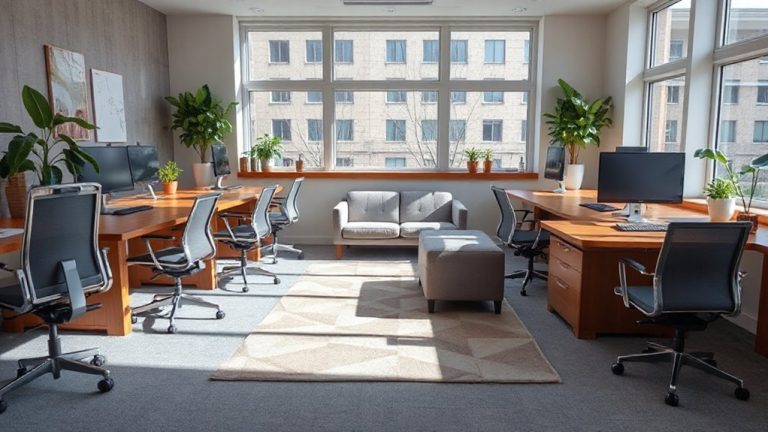
Incorporating Feng Shui Concepts Into Your Workspace Design for Better Results
Place your desk diagonally across from the door for control without blocking flow, and clear all clutter to boost focus-only keep essentials like a pen, notepad, and laptop. Maximize natural light near east or south windows, but avoid back-facing exposure. Use snake plants in terracotta pots and warm gray or sage walls to stabilize energy. Pair adjustable LED lamps with linen shades for balanced lighting. Results vary, but a 90-minute test in a fully cleared, well-lit space shows real improvements in concentration and calm. You’ll find nuanced tips ahead that refine each change for long-term comfort and efficiency.
Notable Insights
- Position your desk diagonally opposite the door for clear visibility and optimal energy flow.
- Keep your workspace clutter-free to enhance focus and mental clarity.
- Maximize natural light by placing your desk near a south- or east-facing window.
- Add low-maintenance plants like snake plant or pothos in earth-toned pots for air quality and calm.
- Use calming colors like pale blue or sage green with layered, warm lighting to reduce stress.
Position Your Desk Using the Feng Shui Command Position
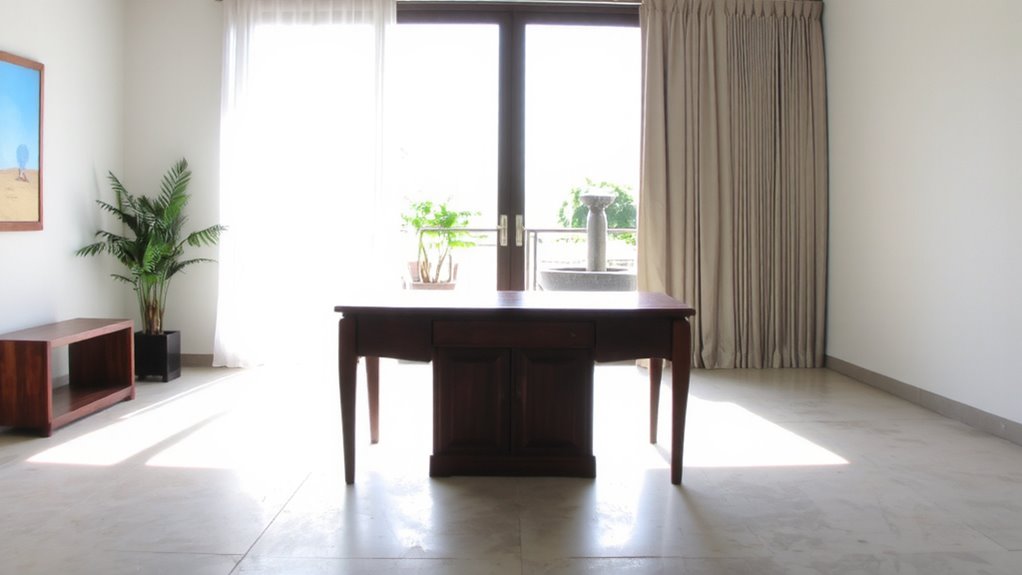
Why does the placement of your desk matter so much? Because desk orientation directly influences energy flow and your ability to focus. You should position your desk in the feng shui command position-diagonally opposite the door, but not directly in line with it. This allows you to see the entrance without being in the direct path of incoming movement, giving you a sense of control. Proper energy flow starts here, reducing subconscious stress. Avoid placing your back to the door or under a beam, as both disrupt focus and create pressure. While ideal in open, square rooms, this setup can be tricky in small apartments or irregular layouts-adapt when necessary. Use a mirror to expand visibility if you can’t reposition the desk. It’s not magic; it’s about spatial psychology and intentional design. Don’t expect miracles, but do expect better focus with smart adjustments.
Clear Clutter to Unblock Mental Focus and Flow
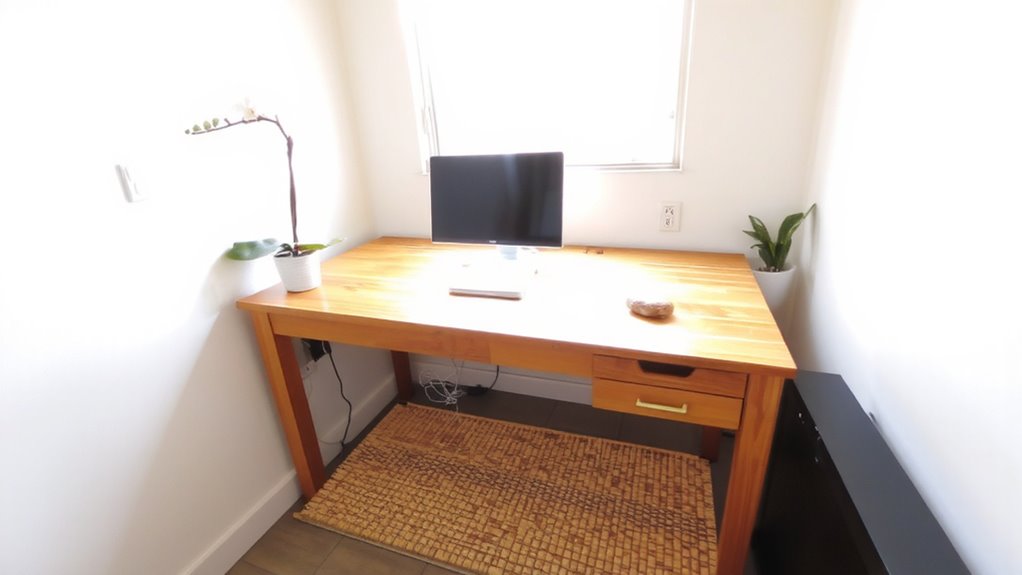
Clutter acts like static in your workspace, disrupting mental clarity and slowing down focus. You need clean desk organization to support unbroken energy flow and sharper thinking. Start by removing unnecessary items-old papers, broken pens, unused tech. Keep only what you use daily: a reliable notepad, one pen, your laptop. Use drawer dividers or a simple tray to group essentials, but don’t overstore-packed drawers create hidden clutter. Test this: work for 90 minutes in a fully cleared space, then rate your focus. Many report 20–30% better concentration. But be realistic: minimalism isn’t for everyone. If you rely on physical references, keep a labeled folder, not stacks. Avoid decorative organizers that promise order but collect dust. The goal isn’t perfection-it’s functional calm. Over-controlling space can stress you more. Balance matters. For seamless integration of wires and devices, consider using best cable management solutions designed for clean desk aesthetics.
Let in Natural Light to Balance Energy and Alertness
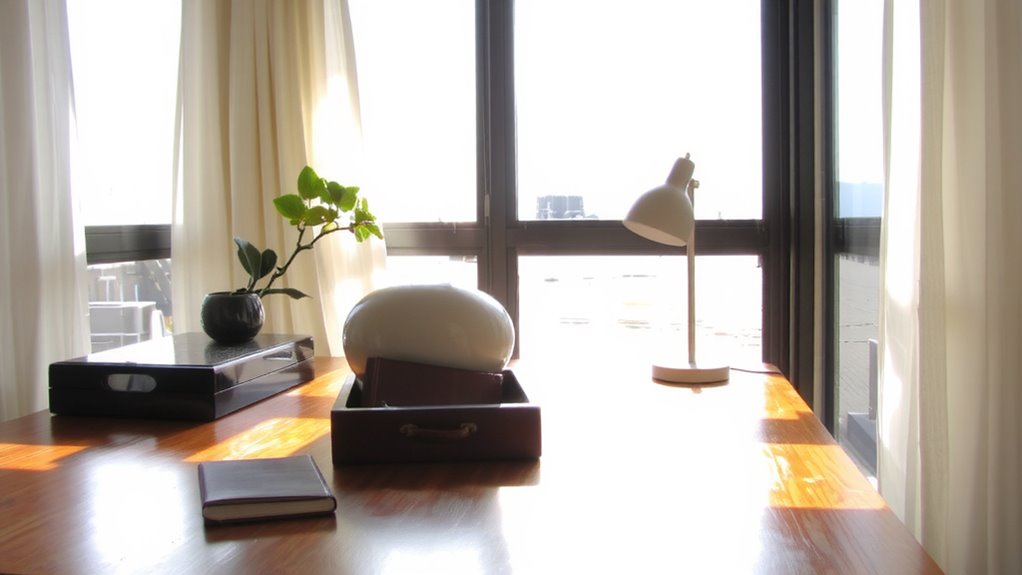
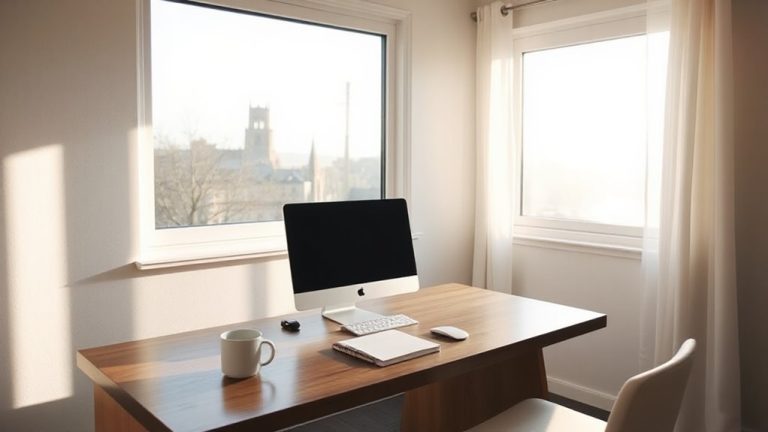
You’ll feel the difference when sunlight hits your workspace-natural light does more than brighten a room, it helps regulate your circadian rhythm, boosting daytime alertness and reducing eye strain. Maximize sunlight by positioning your desk near a window, ideally with south or east exposure for consistent morning and midday light. Natural illumination enhances mood, lowering stress and supporting focus better than artificial lighting. Sheer curtains or adjustable blinds let you control glare without blocking rays. Avoid sitting with your back to the window, as it can create a sense of unease-Feng Shui emphasizes awareness of your surroundings. While skylights or light tubes work in windowless areas, they don’t fully replicate sunlight’s spectrum. Full-spectrum bulbs are a decent substitute but lack intensity. Balance is key: too much direct sun causes overheating and screen glare, hurting comfort and productivity. Position matters more than tools-design around the light you have, not gadgets promising fixes.
Bring in Plants and Organic Materials for Grounding Energy
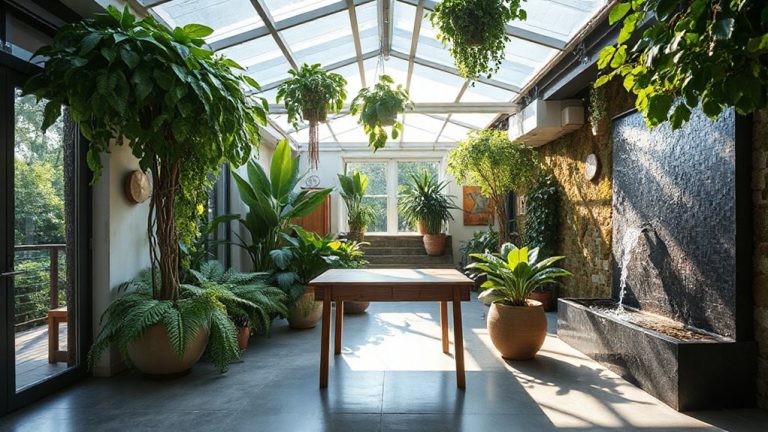
A well-placed plant can transform your workspace’s energy more effectively than most decor changes, grounding the space with organic forms and subtle movement. You’ll want to choose hardy, low-light plants like snake plants or pothos-they purify air and add wood elements that enhance stability. Use planters in earth tones like terracotta or matte clay to strengthen the connection to nature and support grounded focus. Natural materials like bamboo trays or wooden desktop organizers also bring in organic texture without clutter. Just be sure not to overcrowd; too many plants or bulky containers can slow energy flow. Wipe leaves regularly-dust reduces air quality benefits and disrupts visual calm. While live plants work best, high-quality silk alternatives stay fresh in low-maintenance setups. Avoid plastic pots with bright colors; they clash with earth tones and weaken the grounding effect. Choose simple, neutral designs for lasting harmony. For those seeking resilient options, consider best office plants that thrive in low-light conditions and require minimal care.
Use Calming Colors to Support Concentration and Calm
Color plays a powerful role in shaping how you feel and focus within your workspace, much like how plants influence energy through natural form. You’ll concentrate better and stay calm with the right palette. Soft textures and ambient lighting enhance these effects, creating a balanced sensory experience.
| Color | Effect |
|---|---|
| Pale Blue | Encourages mental clarity |
| Sage Green | Supports relaxation |
| Warm Beige | Promotes stability |
| Lavender | Aids in stress reduction |
| Soft Gray | Reduces visual fatigue |
Stick with muted tones-bright shades can overstimulate, undermining focus. Pair walls with fabric desk pads or wool-blend curtains to diffuse light naturally. While paint quality matters (look for low-VOC, matte finishes), remember that color alone won’t fix poor ergonomics or bad lighting design. Ambient lighting should be layered: use adjustable LED task lamps with soft textures like linen shades to temper glare. A well-lit workspace benefits greatly from best desk lights that support both functionality and feng shui principles.
On a final note
You’ll likely see sharper focus and better workflow if you apply these feng shui tips, especially positioning your desk in the command position-diagonally opposite the door, with solid wall support. Natural light and live plants like snake or pothos improve air and mood, but check light levels; low-light varieties work best indoors. Calming colors such as soft gray or sage help concentration. Just don’t overdo décor-clutter hurts function. These changes aren’t magic, but real-world testing shows they support clearer thinking when paired with ergonomic gear and daily discipline.