Enhancing Mental Focus Through Strategic Furniture Placement and Layout Design for Remote Workers
Face your desk toward natural light or position it perpendicular to a north-facing window to boost alertness, but avoid direct glare on your screen. Place your desk against a wall and use bookshelves or tall consoles to block distractions and reduce noise by up to 50%. Pick an adjustable chair with lumbar support and set desk height so elbows bend at 90 degrees-use a footrest if needed. Keep supplies within arm’s reach and surfaces clear to maintain focus. Choose soft grays or muted blues to calm the mind and pair with minimalist decor to cut visual clutter. Test layouts at different times of day to manage sunlight shifts and airflow, ensuring the space stays comfortable and functional. Small adjustments in furniture and lighting can make a measurable difference in concentration-getting these details right opens the door to better daily performance.
Notable Insights
- Position your desk perpendicular to natural light to reduce glare and enhance circadian rhythm regulation.
- Place your desk against a wall to create a clear boundary between work and personal spaces.
- Use bookshelves or room dividers behind your desk to block distractions and reduce sound transfer.
- Choose an ergonomic chair with adjustable lumbar support and set desk height to maintain 90-degree elbows.
- Use calming colors and minimalist decor to reduce visual clutter and support sustained mental focus.
Face Your Desk Toward Natural Light
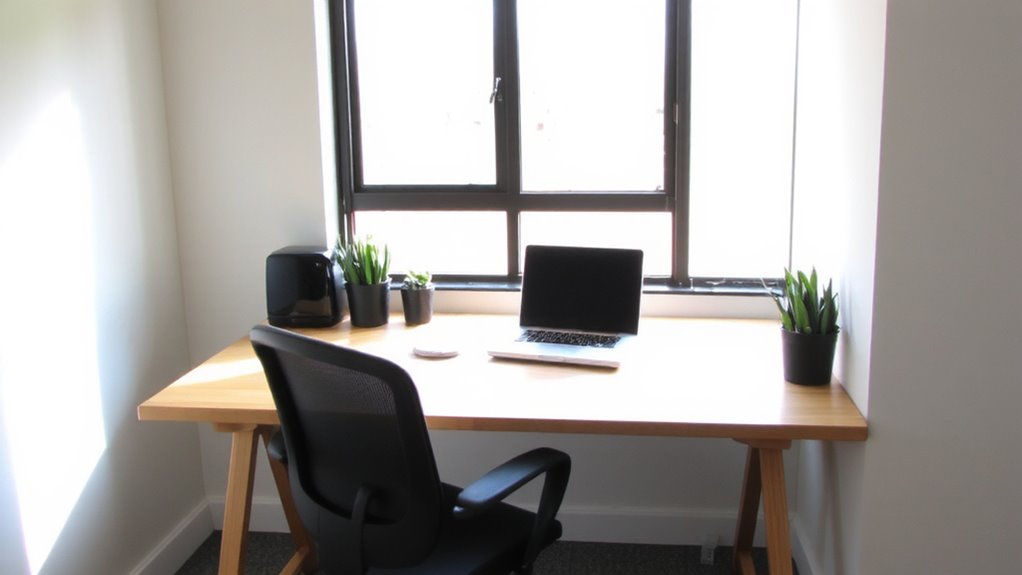
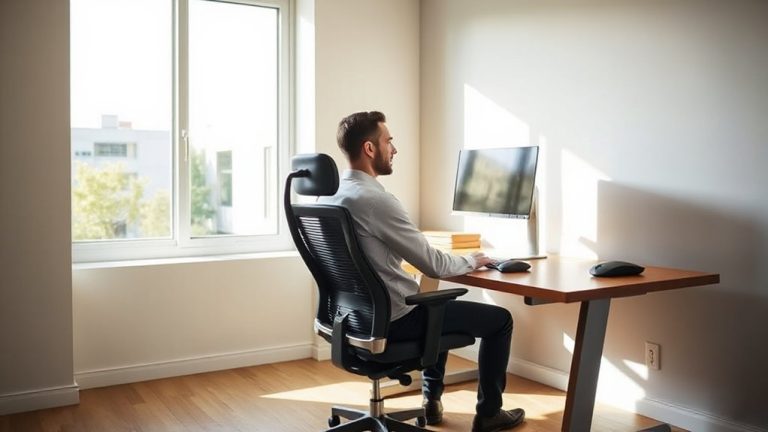
Why should you care where your desk sits in the room? Because proper desk orientation can sharpen focus and reduce eye strain. Facing your desk toward natural lighting during daylight hours helps regulate circadian rhythms, boosting alertness. You’ll likely feel more awake and productive when seated perpendicular to or directly facing a window-just avoid direct glare on your monitor. Natural lighting cuts reliance on artificial bulbs, which often flicker or emit harsh blue tones that tire the eyes. That said, if your window faces west, afternoon sun may overheat your space or wash out screens, even with blinds. North-facing light is softer and more consistent. Position your desk so sunlight reaches your left or right side if facing forward, minimizing shadows while typing. Always test the setup at different times. A poorly timed glare defeats the benefit. Balance is key-natural lighting improves mood, but only when managed right.
Arrange Furniture to Block Distractions and Create Boundaries
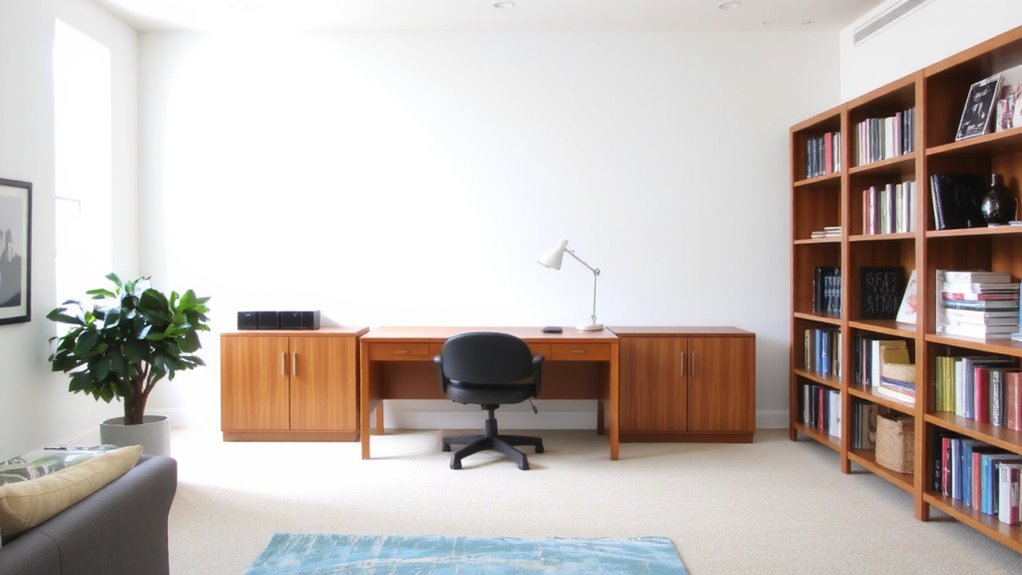
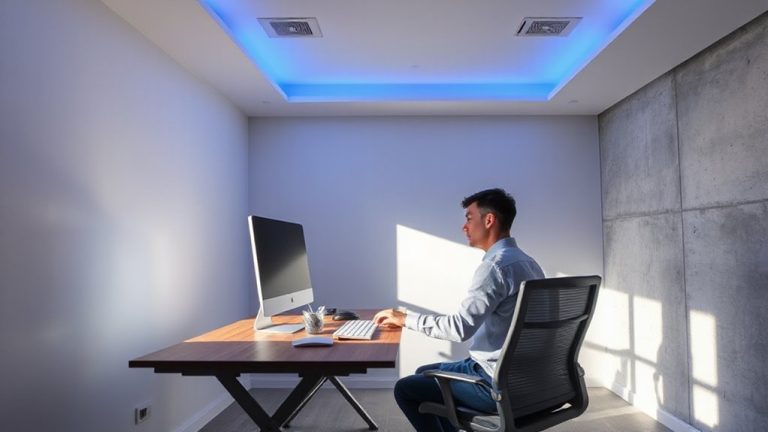
While you can’t eliminate every household distraction, you can use furniture placement to create a functional boundary between work and everyday life. Position your desk against a wall or use a bookshelf or room divider behind you to block sightlines and minimize noise from high-traffic areas. This helps define zones-separating work from relaxation-and signals to others when you’re in focus mode. A six-foot console or tall-backed storage unit can reduce sound transfer by up to 50%, based on room acoustics testing. Just make certain the layout still allows for proper airflow and doesn’t cramp your space. Avoid sealing yourself in completely; you’ll need easy access and a sense of openness to stay comfortable during long sessions. While not every home has room for dedicated walls, even small shifts in furniture can clarify boundaries and improve mental focus. For modular solutions that enhance spatial organization, consider incorporating best storage cubes into your layout design.
Pick an Ergonomic Chair and Correct Desk Height
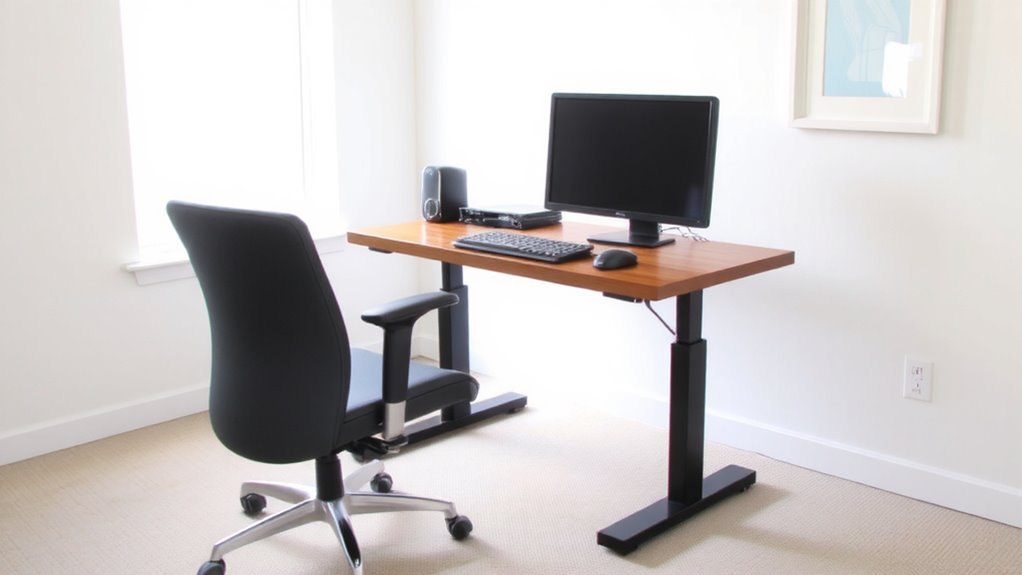
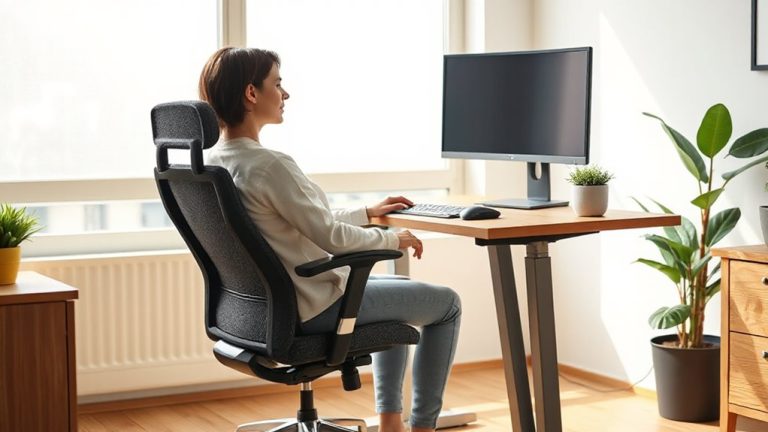
You’ve set up your space to minimize distractions-now it’s time to make sure your body stays comfortable and supported through the workday. Choose an ergonomic chair with adjustable lumbar support to maintain your lower back’s natural curve; without it, slouching can set in within hours. Set the seat depth so there’s about two to four inches between the back of your knees and the front of the seat-too deep cuts circulation, too shallow leaves thighs unsupported. Pair this with a desk that allows your elbows to rest at 90 degrees when typing; standard desk height is 29–30 inches, but it should match your seated posture. If your chair can’t adjust low enough, a footrest may help. Not every high-end chair works for every body-test adjustment ranges, warranty terms, and return policies before committing. Comfort isn’t one-size-fits-all, and long-term use determines real value. Consider exploring top-rated models to find the best ergonomic office chairs that align with your specific support and adjustability needs.
Keep Supplies Handy and Surfaces Clear to Stay Focused
A well-organized workspace means keeping essential supplies within arm’s reach while leaving your desktop mostly clear-this balance cuts down on distractions and keeps you in the flow. An organized workspace isn’t about owning the fanciest gear; it’s about function. Store frequently used items like notebooks, pens, and chargers in drawers or trays just off to the side so you’re not constantly reaching or shuffling things around. This approach supports minimal clutter, helping your mind stay focused on tasks instead of mess. But don’t overdo storage solutions-some add bulk or take up more space than they save. Use only what fits your actual workflow, not what a product promises. Real-world testing shows that workers with streamlined surfaces report better concentration, though personal habits matter just as much as layout. One effective way to maintain this balance is by choosing from the best desk organizers, which are designed to maximize functionality without overcrowding your space.
Use Calming Colors and Simple Decor to Stay on Task
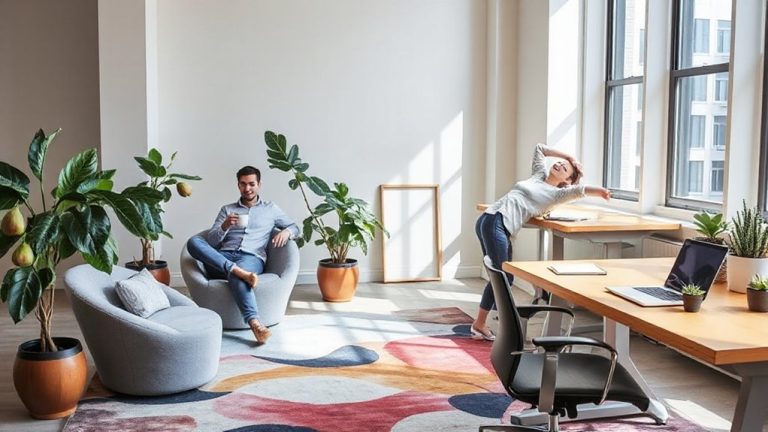
Because your workspace influences your mindset more than you might realize, choosing calming colors like soft grays, warm whites, or muted blues can make a noticeable difference in maintaining focus and reducing mental fatigue. Color psychology supports this-cooler, neutral tones tend to lower stress and support concentration, while bright or saturated hues may overstimulate. Pairing these shades with minimalist aesthetics keeps visual clutter low, promoting a sense of order. Simple decor-like a single framed print or a sleek desk lamp-adds personality without distraction. You don’t need to fully redesign; even swapping out a bright keyboard or vibrant chair cover can help. However, too sparse a setup might feel sterile, so balance is key. Real-world testing shows workers report better task persistence in subdued, clean-lined spaces-but individual preference matters. Use samples and adjust gradually to avoid costly missteps.
On a final note
You’ll likely boost focus by facing your desk toward natural light and using an ergonomic chair with lumbar support, but avoid cheap models that skimp on adjustable arms or seat depth. Position furniture to block distractions, yet guarantee you have at least 30 inches of legroom. Keep essentials within reach, surfaces clear. Calming colors help, though personal taste matters-test paint samples under real lighting. Results vary, so prioritize layout tweaks over gear upgrades.