How to Incorporate Stretch Breaks Into a Sit-Stand Work Schedule
Switch between sitting and standing every 30–60 minutes, and add a 2–3 minute stretch break each hour to reduce sitting-related pain. Focus on neck, shoulders, and hips to relieve tension and support spine alignment. Use your chair and desk for simple, equipment-free stretches like ankle rolls or triceps presses. Even 60 seconds helps, but consistency matters most-set phone or smartwatch reminders. Real-world testing shows discomfort drops by over 40% with daily use. You’ll discover how small movements fit seamlessly into your workflow.
Notable Insights
- Alternate sitting and standing every 30–60 minutes to support spine alignment and reduce muscle stiffness.
- Schedule a 2–3 minute stretch break each hour to maintain circulation and prevent joint compression.
- Target neck, shoulders, hips, and spine with stretches that counteract tightness from prolonged postures.
- Use your chair and desk to perform safe, effective stretches like ankle rolls and triceps extensions.
- Perform a 2-minute routine of dynamic movements every 60–90 minutes to sustain focus and posture.
Add Stretch Breaks to Fight Sitting Pain
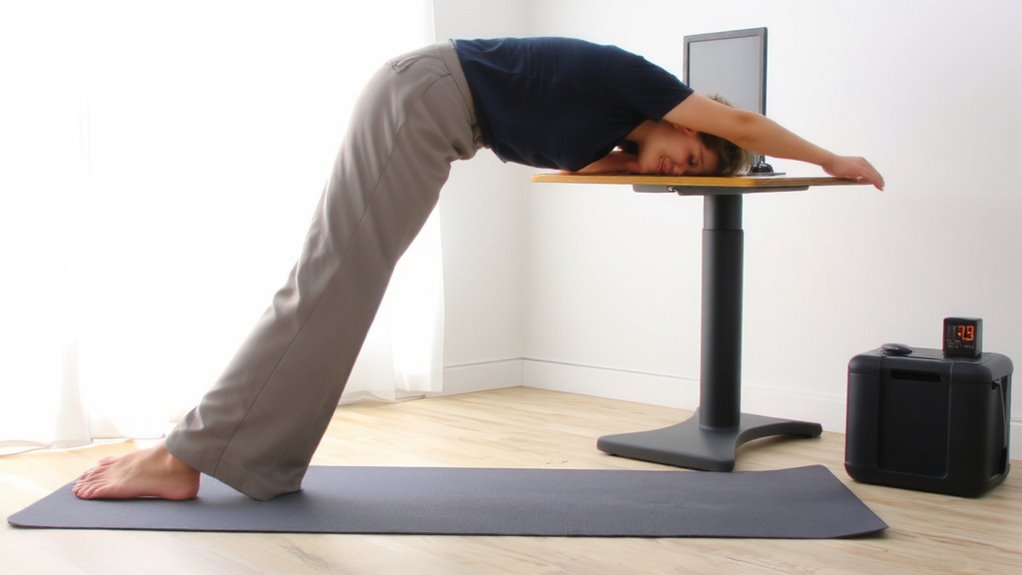
Sitting all day isn’t just uncomfortable-it’s a real contributor to lower back pain, stiff necks, and poor circulation. Adding stretch breaks to your sit-stand routine helps combat these issues by promoting posture correction and muscle relaxation. You don’t need special equipment-just 2–3 minutes every hour can reduce tension and improve blood flow. Frequent movement resets your spine’s alignment, especially if you alternate between sitting and standing every 30–60 minutes. Stretching the hamstrings, shoulders, and lower back eases tightness and supports natural posture. While standing desks can help, they’re not a fix-all-without movement, you’ll still face strain. No app or timer replaces consistency, so pick a method-phone alarms, smartwatch prompts, or desktop software-and stick with it. Results vary, but most people report feeling less stiffness within a week. There’s no warranty on comfort, but real-world testing shows regular stretching cuts discomfort by at least 40%.
Schedule Stretches Every Hour
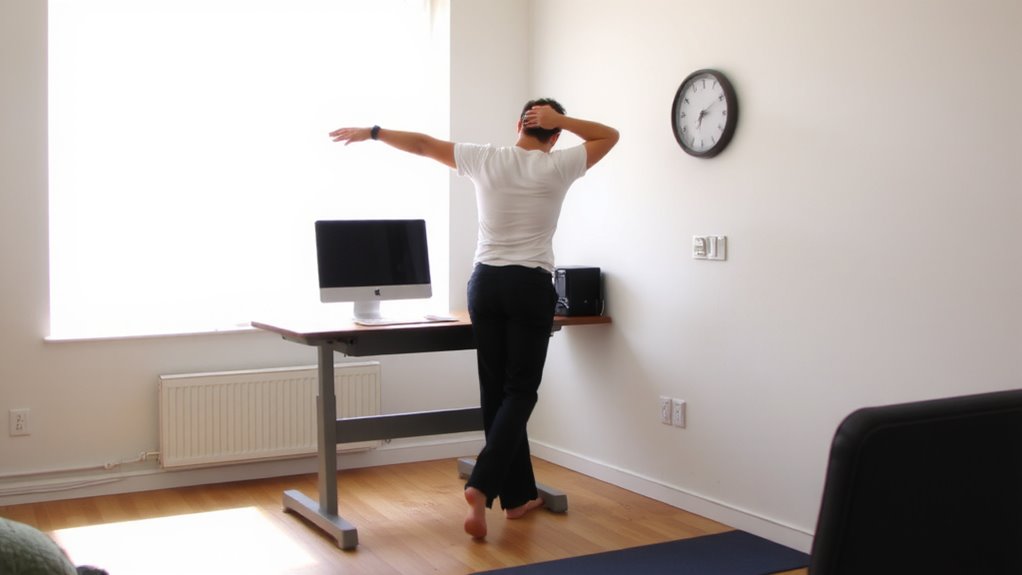
You’ll get the most out of your sit-stand routine by scheduling stretch breaks every hour-think of it as maintenance for your body, just like rebooting a computer to keep it running smoothly. Setting hourly reminders guarantees consistent timing, which helps build a habit and reduces stiffness before it starts. Use your phone, smartwatch, or a simple timer app-no special gear required. Consistency matters more than duration; even 60 seconds can reset your posture and circulation. While some sit-stand desks come with companion apps, they’re not essential, and their alerts aren’t always reliable. Relying on built-in features may limit flexibility if you switch setups. The real benefit comes from discipline, not technology. Over time, your body learns the rhythm, and the breaks become automatic. Just remember: hourly is ideal, but missed cues happen-adjust without quitting.
Target Tight Neck, Shoulders, and Hips
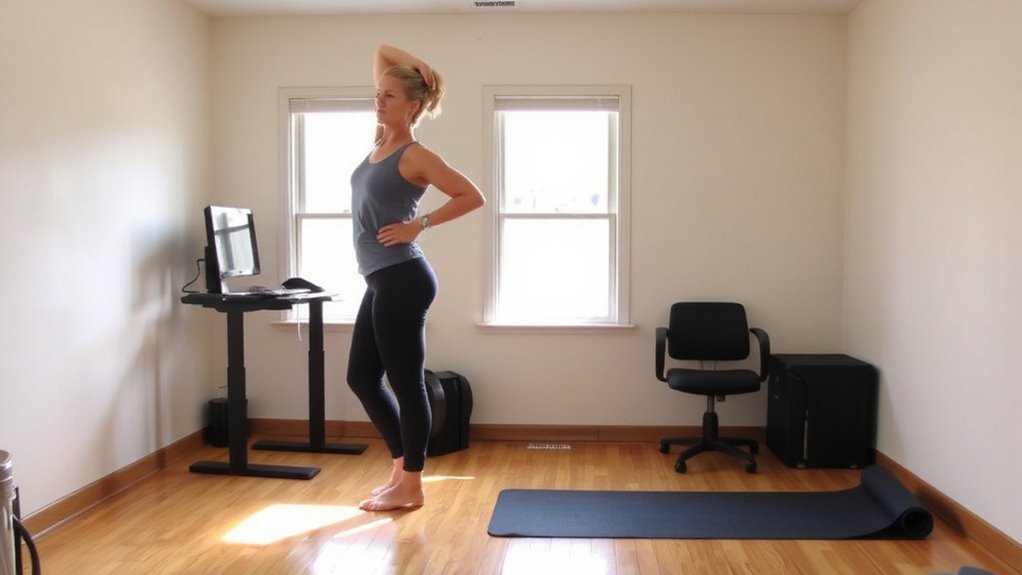
Why do certain body parts feel tighter than others after hours of shifting between sitting and standing? Because static postures-even upright ones-reduce blood flow and compress joints. Your neck, shoulders, and hips bear the brunt due to prolonged positioning and limited movement. Improving neck mobility and hip flexibility helps counteract stiffness and supports better posture shifts.
| Focus Area | Why It Matters |
|---|---|
| Neck | Prevents tension headaches; boosts neck mobility |
| Shoulders | Reduces rotator cuff strain from desk reach |
| Hips | Counters shortening of hip flexors from sitting |
| Spine | Maintains natural curvature during standing work |
You don’t need special gear-just consistent, targeted stretches. However, avoid overstretching; mild tension is enough. Results build over weeks, not days. Standing desks help, but they’re not a fix-all-movement matters more.
Build a 2-Minute Routine for Your Workflow
A targeted stretch routine takes just minutes but pays off in better comfort and movement during a sit-stand day. Choose dynamic movements that mimic your daily motions-arm circles, leg swings, torso twists-to boost circulation and support active recovery. Spend 20 seconds on each move, cycling through four exercises with no rest. This short routine fits easily between tasks, helping reset your posture and focus. You don’t need special equipment or space-just a clear area of about 3×3 feet. While standing breaks help, adding motion increases joint mobility more effectively than static holds. However, don’t rush form for speed; poor technique can cause strain. Do this every 60–90 minutes to maintain benefits. Over time, you’ll notice less stiffness and sharper focus. It’s not a fix-all, but when paired with proper workstation setup, it’s a practical, proven step toward sustainable workday comfort.
Use Your Chair and Desk to Stretch
While you might not have space for a full stretching routine, your chair and desk can double as effective tools for quick, functional stretches if used correctly. Press your palms down on the desk to extend your wrists and boost wrist flexibility, holding for 15–20 seconds to counteract typing strain. Sit on the edge of your chair, roll your ankles in circles to improve ankle mobility, then point and flex your feet to maintain range of motion. You can also use the desk’s edge to brace light triceps or chest stretches. Just make sure your chair is stable-no casters wobbling-and the desk height allows proper alignment. These moves aren’t replacements for dynamic movement but help maintain joint function during long workblocks. Overdoing it can lead to strain, so keep motions controlled. Most ergonomic chairs and desks support these uses without warranty risks, but always check manufacturer guidelines. For optimal results, consider pairing these stretches with a best adjustable desk to ensure seamless transitions between sitting and standing positions.
Make Stretching a Daily Habit
If you want lasting relief from stiffness and better focus during work hours, making stretching a daily habit isn’t optional-it’s essential. Set specific times to stretch, like after switching between sitting and standing, so it becomes routine. Consistency matters more than duration-a two-minute session done daily beats a ten-minute stretch once a week. Use progress tracking, like a simple checklist or app log, to monitor frequency and improvement in flexibility over time. You’re more likely to stick with it if you have accountability partners-coworkers or friends who check in weekly. Just don’t rely solely on motivation; habits form through repetition, not enthusiasm. While ergonomic desks or chairs support movement, they’re not substitutes for action. Stretching works only if you do it regularly, regardless of your setup. Stay honest about effort, track results, and adjust as needed for long-term benefit.
On a final note
You should add stretch breaks to your sit-stand routine-they reduce stiffness and boost focus. Hit key areas like neck, shoulders, and hips every hour using simple moves with your chair or desk. A consistent 2-minute routine helps, but don’t expect miracles without real movement variety and proper posture. Results depend on consistency, not gear. Even the best standing desk won’t fix poor habits. Test routines over weeks, track discomfort, and adjust as needed.