Optimizing Chair Height So Feet Rest Flat on the Floor or Footrest
Set your chair height so your feet rest flat on the floor or a footrest, with knees bent at 90 degrees and thighs parallel to the floor. This reduces lower back strain and improves circulation. Use the gas lift lever to adjust seat height between 16 and 21 inches, based on your body. If your feet dangle, add a stable footrest like the Vari or Ergofoam model with non-slip padding. Test adjustments barefoot, then with shoes. Confirm alignment on your actual floor surface-carpet or tile can change stability. Even high-end chairs fail if poorly adjusted, so prioritize proper form over features. Small tweaks now prevent numbness, fatigue, and long-term posture issues. Better positioning starts with consistent, real-world testing and may include upgrades for lasting support.
Notable Insights
- Adjust chair height so thighs are parallel to the floor and knees form a 90-degree angle.
- Ensure feet rest flat on the floor or use an adjustable footrest for proper support.
- Measure seat height from the floor to the back of the knee while seated, aiming for 16–21 inches.
- Use a footrest with a non-slip surface and height tilt if feet don’t reach the floor.
- Choose ergonomic chairs with gas lift mechanisms for precise, smooth height adjustments.
Why Proper Chair Height Matters for Health and Comfort
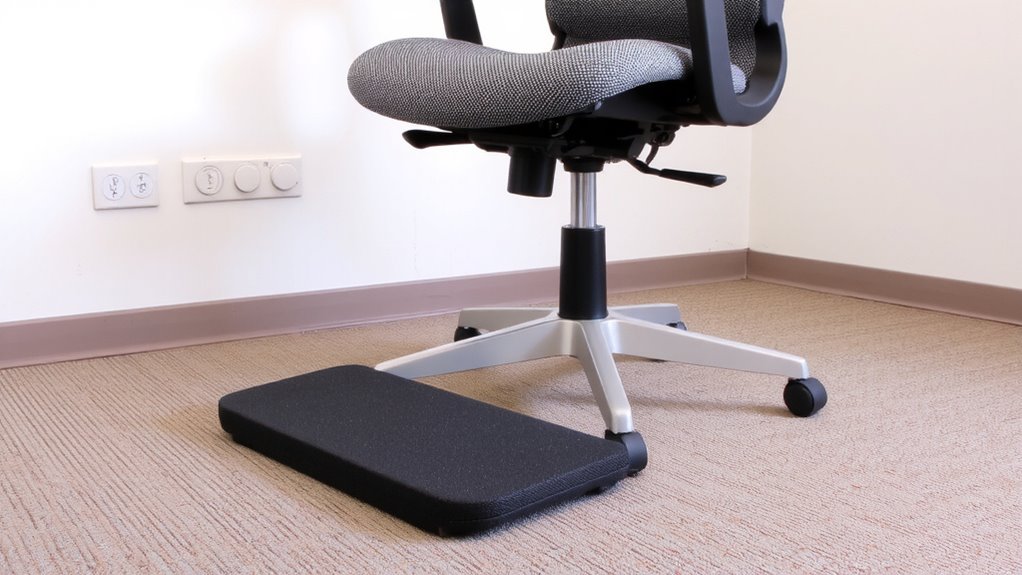
Your comfort and long-term health hinge on one simple adjustment: chair height. If it’s too low or too high, you risk poor blood circulation and nerve compression, especially in your legs and lower back. Sitting with feet flat on the floor-or on a footrest-keeps your knees at a 90-degree angle, which aligns your spine and reduces strain. Without proper alignment, pressure builds in your thighs, restricting blood flow and potentially numbing nerves over time. You might feel tingling or fatigue after just an hour. While many ergonomic chairs offer height adjustment via a lever and gas lift-tested to support up to 300 lbs and last 5+ years-adjusting it wrong can worsen discomfort. There’s no universal setting; your body size and desk height matter. A perfect chair won’t fix poor positioning, so always prioritize correct posture over brand claims. Those with shorter stature may benefit from models specifically designed for smaller frames, such as the best desk chairs for short people.
How to Measure Your Ideal Chair Height
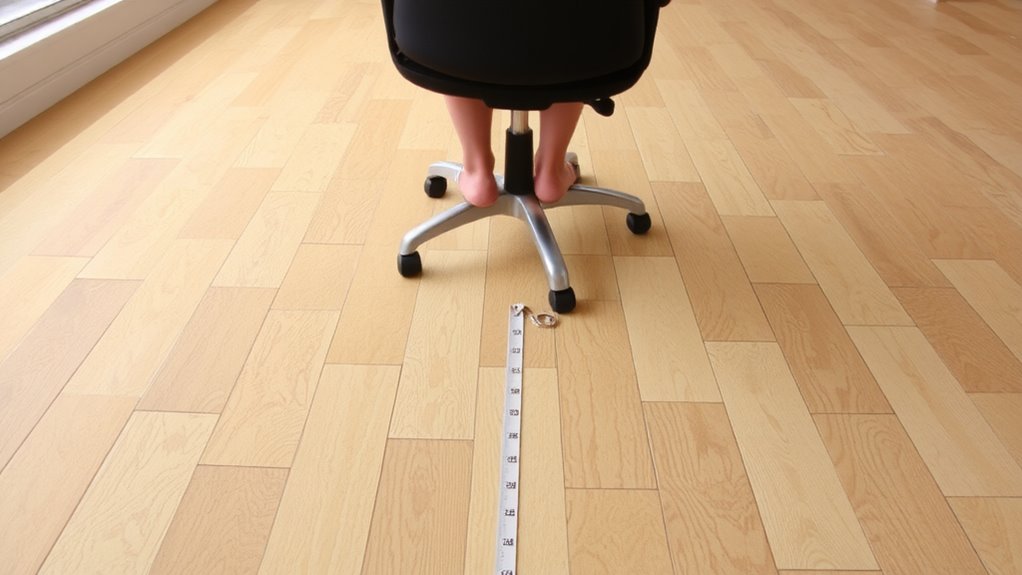
A properly adjusted chair height starts with accurate measurement, and the process is straightforward if you follow a few key steps. Stand beside your chair and adjust the seat so it aligns with the back of your knees when you’re seated-this respects your body proportions and supports an effective ergonomic assessment. Your thighs should be parallel to the floor, with feet flat or ready for a footrest. Use a tape measure for precision: ideal seat heights typically range from 16 to 21 inches, depending on your height. Keep in mind that chair mechanisms vary; gas lifts allow smooth adjustments, but not all chairs offer enough range for taller or shorter users. Measure barefoot first, then reassess with shoes if needed. Accuracy matters-incorrect height can undo other ergonomic efforts, so take time to get it right. For added comfort and proper alignment, consider using one of the best footrests best footrests for support if your feet don’t rest flat on the floor.
Adjust Your Chair for Flat Feet on Floor or Footrest
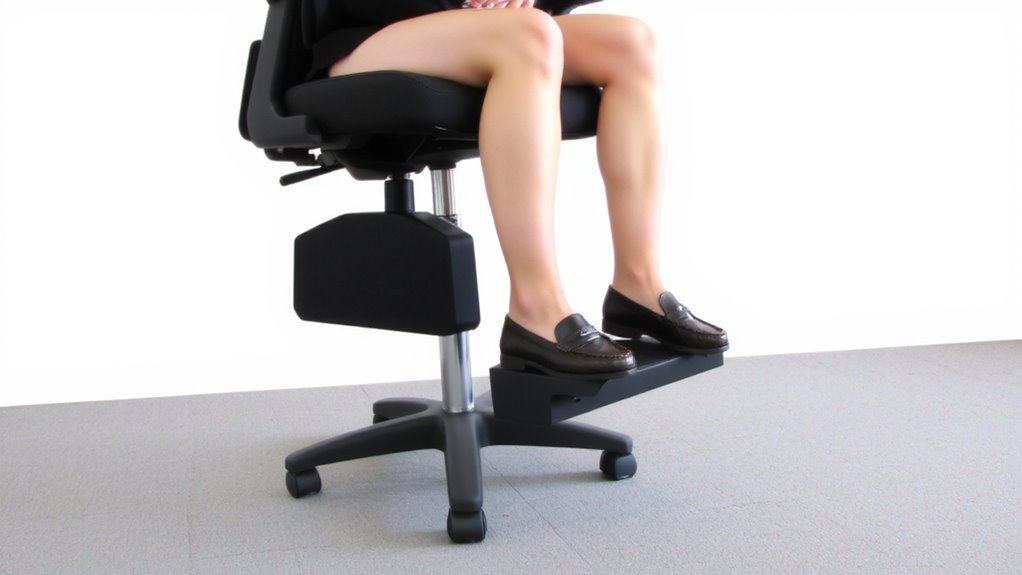
Once you’ve measured your ideal seat height, the next step is making sure your feet can rest flat-either on the floor or with help from a footrest. Proper foot support is essential for maintaining posture alignment and reducing lower back strain during long sitting periods. If your feet don’t reach the floor, use an adjustable footrest that allows your knees to stay at a 90-degree angle. Look for models with tilt and height adjustment, nonslip surfaces, and adequate leg clearance. While built-in footrings on some chairs work well for shorter users, they’re less flexible than standalone footrests. Keep in mind that adding a footrest changes your sitting dynamic-test it for at least 30 minutes to check comfort. Though effective, basic models may lack durability, so check warranty and load ratings before buying.
Is Your Chair Too High or Too Low?
How can you tell if your chair’s height is working against you? If your feet dangle or your knees bend sharply, your chair’s likely too high. If your thighs press against the seat or you’re sliding forward, it’s probably too low. A mismatched height can cause a chair wobble, especially on uneven flooring, reducing stability and comfort. You should sit with feet flat, thighs parallel to the floor, and knees at 90 degrees. Even a well-designed chair performs poorly when height is off. Adjustable seats solve many issues, but test height on your actual floor-what works in a showroom might fail at home. Remember, carpets, tiles, or sloped rooms create uneven flooring, skewing results. Always verify stability and posture after adjusting. There’s no universal setting-your body and space dictate the right fit.
Best Footrests When Chair Height Doesn’t Reach Floor
You’re better off using a footrest when your chair can’t get low enough for your feet to reach the floor-otherwise, you risk leg fatigue, poor circulation, and lower back strain from dangling limbs. Look for models with ergonomic design that support a 90-degree sitting posture and promote even pressure distribution across the soles. Top picks include the Vari Foot Rest and the Ergofoam Footstool, both contoured to reduce under-desk strain. Adjustable footrests let you fine-tune height and tilt, which helps match your seating setup precisely. Textured, non-slip surfaces keep feet secure without socks snagging. Most durable options use steel frames or high-density foam and back claims with 3–5-year warranties. However, larger footrests take up under-desk space-measure clearance before buying. While they improve comfort, cheap models can wobble or lack support; avoid flat, rigid boards. A quality footrest isn’t essential for everyone, but if you’re stuck with fixed seating, it’s a practical fix worth considering. Best Desk Footrests offer a range of features tailored to different ergonomic needs and workspace constraints.
Upgrade Your Chair for Better Height Control
A better chair often makes the difference when seat height adjustments fall short. If your current model lacks precision, upgrading to one with advanced mechanisms gives you finer control over seating height, ensuring your feet rest flat without straining. Look for chairs with ergonomic materials like molded foam or breathable mesh that support posture while maintaining comfort during long sessions. These materials often last longer and adapt better to your body than cheap padding. Advanced mechanisms, such as ratcheting or pneumatic levers with extended range, allow adjustments in smaller increments-sometimes as little as half an inch. That precision helps match your desk height accurately. However, higher adjustability usually means higher cost. Most quality models start around $250 and come with a 5-year warranty. Test stability at full height, as some chairs wobble when extended. Upgrading works well, but only if your desk setup aligns with the chair’s range.
Quick Chair Height Fixes That Work Immediately
When upgrading your chair isn’t in the cards, temporary fixes can still get you into the right position fast-no tools or big purchases needed. Stack a couple of firm cushions or folded towels under you to raise your seat slightly; it’s a simple DIY hack that works in a pinch. If your feet dangle too low, slip a sturdy book or a small storage box under them as an instant footrest-just make sure it won’t slide. These temporary solutions help align your knees at 90 degrees and reduce lower back strain. However, they aren’t built for long-term use: cushions compress, and boxes lack ergonomic shaping. While they improve posture today, they won’t replace adjustable-height mechanisms or durable support. Use them as trial fixes while saving for an upgrade, but expect trade-offs in stability and comfort after a few hours.
On a final note
You should set your chair height so your feet rest flat on the floor or a stable footrest, knees at 90 degrees, thighs parallel to the ground. This reduces lower back and leg strain during long sits. If your chair won’t adjust low enough, use a reliable footrest like the Vari or UPLIFT models-tested to support up to 300 lbs. Avoid makeshift solutions; they wobble and lack durability. Some chairs, like the Steelcase Leap, offer precise height control with a 5-year warranty, but cost more. Even minor height mismatches add up over time, so measure your sit-bone height once and readjust as needed.