Designing Personal Workspace Territories for Increased Cognitive Efficiency
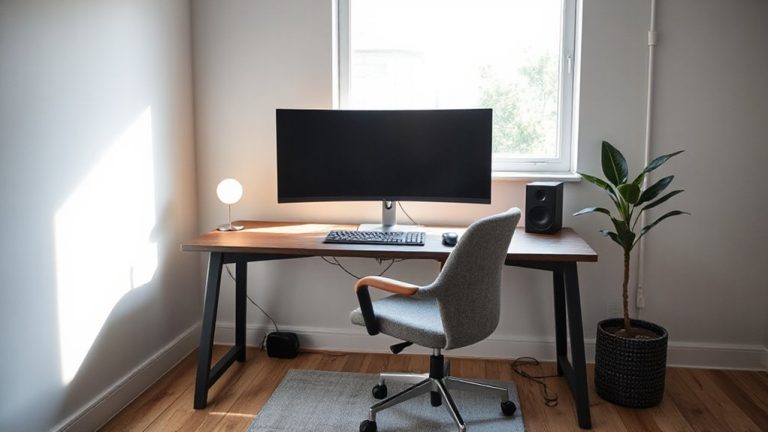
You can boost focus by matching your workspace to how you think-use a sit-stand desk (24–48 in height range) for movement, writable surfaces for quick notes, and zone your space: deep work (neutral colors, minimal distractions), prep (warm light, easy file access), and reset (plants, comfort). Prioritize 4000–5000K lighting, noise masking, and chairs with adjustable lumbar support. Test every piece for stability, comfort, and layout fit over at least two weeks. There’s more to how each choice shapes your daily focus.
Notable Insights
- Use adjustable sit-stand desks and writable surfaces to match workspace to individual thinking styles and movement needs.
- Design cognitive zones for deep work, task prep, and mental recovery to compartmentalize focus and reduce distractions.
- Optimize lighting with 4000–5000K ambient and task lights to reduce eye strain and support sustained concentration.
- Position furniture to minimize foot traffic, enhance acoustics, and create visual boundaries that protect focus.
- Integrate one or two personal sensory or emotional anchors to prime focus without causing cognitive overload.
Match Your Workspace to Your Thinking Style
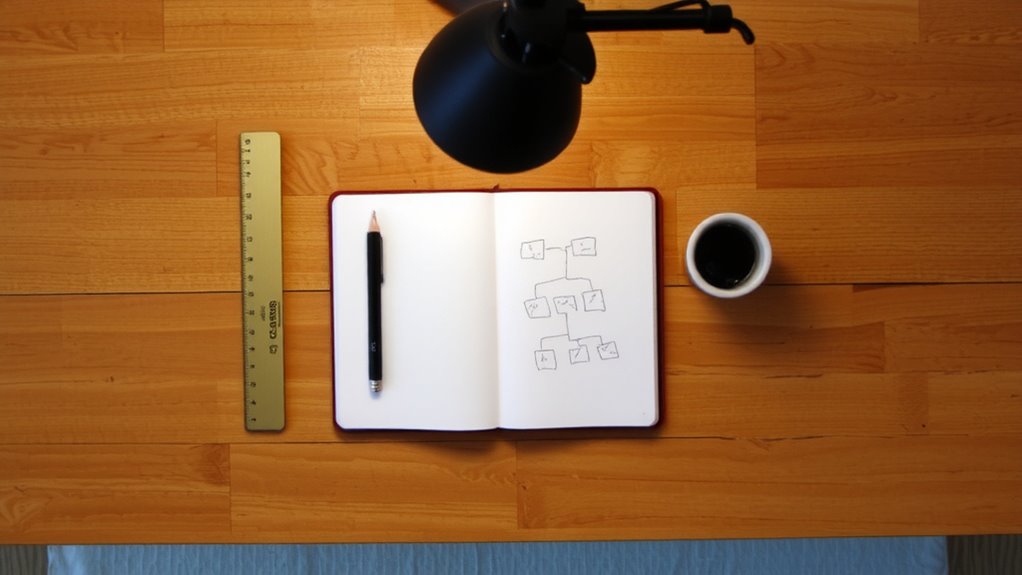
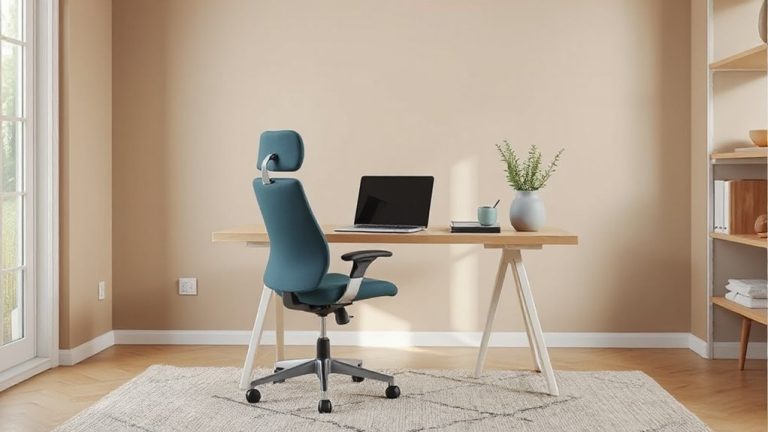
How you think should shape how your workspace looks-so why default to a one-size-fits-all desk and chair? Your thinking patterns directly affect your cognitive flow, and your setup should support-not disrupt-that. If you brainstorm best on your feet, a sit-stand desk with a minimum height range of 24–48 inches gives flexibility. Frequent note-takers need writable surfaces or nearby whiteboards for capturing ideas without delay. But trading space for modularity? That’s risky-compact desks may limit movement, hurting long-term focus. Test any unit for at least two weeks; check stability at full height and verify warranty coverage, since motorized parts can fail. Built-in cable management helps, but don’t sacrifice surface area for aesthetics. A chair with adjustable lumbar support maintains posture during deep work, yet even premium models won’t fix poor layout. Match gear to how you actually think, not how you wish you worked.
Design Zones That Boost Focus
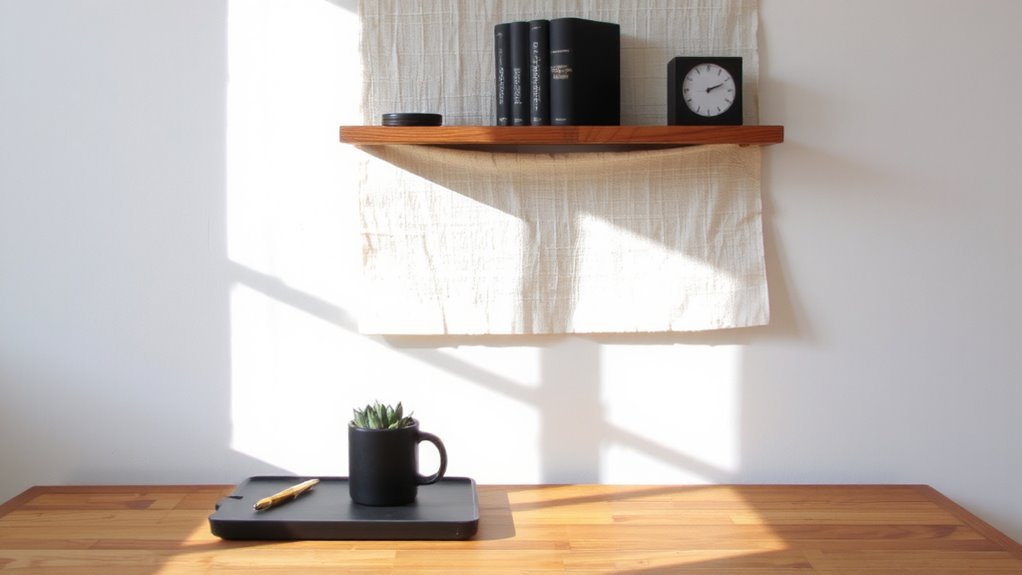
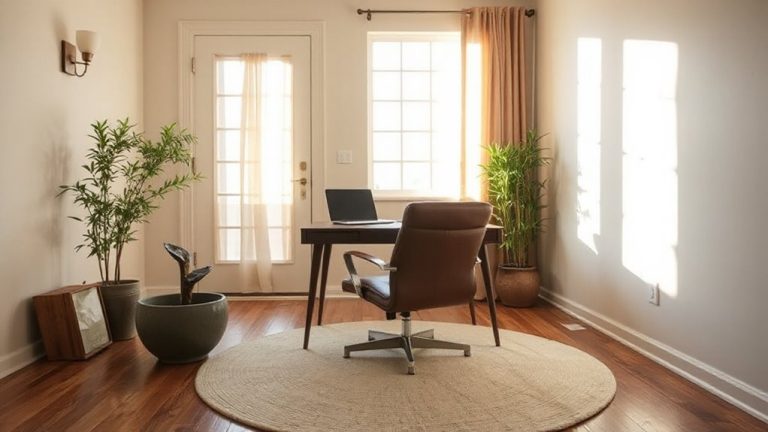
While a clutter-free desk helps, true focus comes from intentional zoning-dividing your workspace into dedicated areas for specific cognitive tasks. Cognitive zoning sharpens mental clarity by aligning physical spaces with how you think. Create zones for deep work, reference, and breaks. Use sensory anchoring-like distinct lighting or textures-to signal each zone’s purpose. Overdoing separation can waste space, so keep shifts fluid.
| Zone Type | Recommended Features |
|---|---|
| Deep Work | Minimal distractions, neutral colors |
| Reference & Prep | Easy access to files, warm lighting |
| Rest & Reset | Comfortable seat, plants, natural view |
Sensory anchoring works best with consistent cues-don’t switch layouts often. While zoning boosts focus, it requires discipline and room to implement. Small spaces may need collapsible or multi-use solutions. Test configurations over a week before finalizing. Warranties on modular furniture can offset setup risks. Adding a best desk organizer can enhance the functionality of each zone by keeping essential tools within reach yet out of the way.
Optimize Light, Sound, and Seating for Clarity
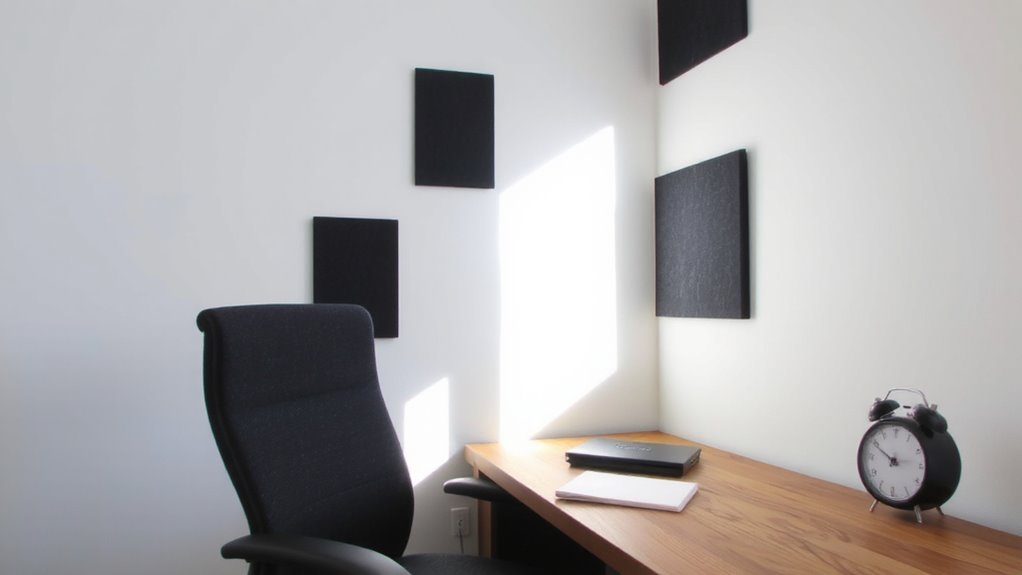
Why do some workdays feel sharper than others, even at the same desk? Because your light, sound, and seating directly shape mental clarity. Use ambient lighting with a color temperature of 4000–5000K-this mimics natural daylight and reduces eye strain during long tasks. Pair it with task lighting to avoid shadows. For sound, noise masking through low-volume white or pink noise helps dampen distracting speech without total silence, which can be jarring. Avoid over-reliance on headphones; they fatigue ears over time. Choose chairs with lumbar support and seat depth adjustable to your frame-look for mesh backs to stay cool. No single chair fits all, so test models with at least a 30-day trial. These tweaks sharpen focus, but balance matters: too much light or noise control can feel sterile or isolating. A rocking stool can further enhance seated comfort and dynamic posture, and models like the best rocking stools combine gentle motion with ergonomic support for prolonged focus.
Arrange Furniture to Block Distractions
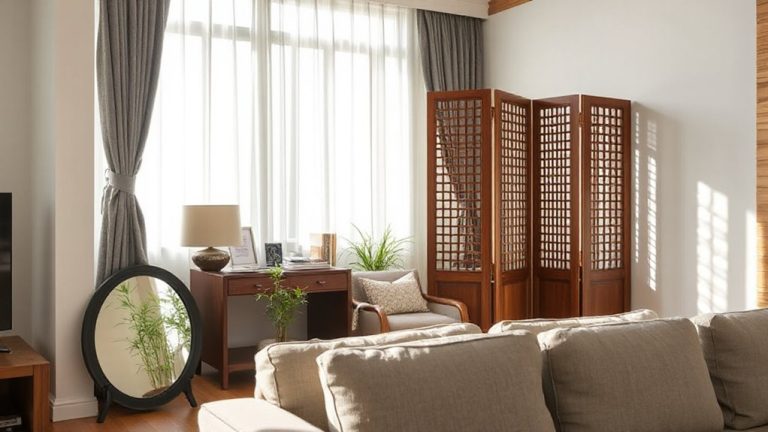
Your seating and lighting setup lays the foundation, but how you position your desk and furniture can make or break sustained focus. Position your desk away from foot traffic to create effective visual boundaries, reducing interruptions from movement. Bookshelves or low cabinets placed beside or behind your workspace act as acoustic barriers, dampening ambient noise-ideal for open-plan areas. A room divider or tall plant stand can further buffer distractions without sealing off the space completely. While taller partitions improve both visual and sound blocking, they may limit airflow or natural light access, so balance is key. Test different layouts; even a 15-degree desk rotation can reduce peripheral motion. Avoid overcrowding-each added piece should serve a measurable purpose in shielding focus. Effective arrangement isn’t about isolation, but strategic placement that supports concentration. Selecting an ergonomic and spacious best home office desk can significantly enhance both comfort and productivity.
Use Personal Items to Stay in the Zone
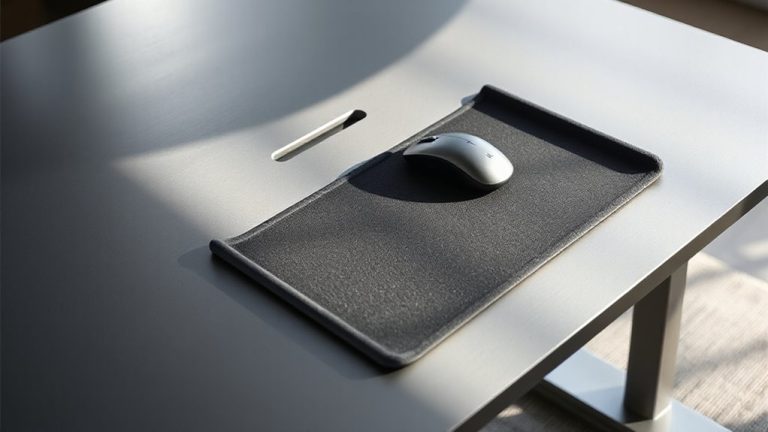
A well-placed personal item can anchor your focus better than any gadget. You need Emotional Anchors-like a photo or souvenir-that ground you during intense work. These aren’t clutter; they’re intentional cues that bring calm and continuity. Pair them with subtle Sensory Triggers: a textured stone, lavender-scented cloth, or soft fabric mousepad. These small inputs prime your brain to stay in the zone without distraction. But choose carefully-overdoing it backfires. One or two items max; anything more splits attention. Avoid anything tied to stressful memories or strong smells that fatigue you. Test each item for a full workday. If focus slips or irritation builds, swap it out. These tools don’t replace good ergonomics or lighting, but when used right, they sharpen mental presence. Stay minimal. Stay intentional.
Keep Your Space Performance-Ready
While consistency in performance starts with habit, it’s sustained by a workspace that’s always ready to support you-no last-minute fixes or fiddling. Keeping your setup performance-ready means daily habits that preserve ergonomic alignment: adjust your chair so thighs are parallel to the floor, position your monitor at eye level, and guarantee wrists stay neutral. These micro-checks prevent strain and signal your brain it’s time to focus. A clutter-free desk also enables a quick mental reset-step away, then return to a space that doesn’t demand reorganization. Use cable trays to manage cords and drawer dividers for supplies; everything earns a fixed spot. But don’t over-invest in premium gear unless you’ve tested the layout first. Adjustable standing desks help, yet stability at full height varies by model. Aim for function over flair, and prioritize gear with solid warranties-like 5-year frame guarantees-since daily use exposes weak builds fast.
Start Small: Make One Change Today
If you’re pressed for time or unsure where to begin, picking just one ergonomic adjustment today can yield noticeable gains in comfort and focus-just make sure it’s a change rooted in repeatable use, not hype. Swap out harsh overhead lighting for a warm-white LED desk lamp with dimmable mood lighting; studies show it reduces eye strain and supports alertness during long sessions. Start small: add one low-maintenance desk plant like a snake plant or pothos to improve air quality and soften visual clutter. Don’t overbuy-many “focus-boosting” plants need more light than typical offices provide. Similarly, avoid expensive smart lighting unless you’ve tested its color temperature range (2700K–5000K is ideal). A $20 adjustable lamp and a single healthy plant deliver 80% of the benefit. Real gains come from consistency, not gear.
On a final note
You’ll likely gain sharper focus by aligning your workspace to your thinking style, but it’s not a one-size-fits-all fix. Position your desk to minimize sightlines to clutter, use a task chair with adjustable lumbar support, and aim for 300–500 lux of layered lighting. Noise-canceling headphones help, yet over-reliance can reduce environmental awareness. Changes like cable management or a monitor arm work fast, yet real gains come from consistency-not gear.