How to Use Ambient Lighting to Create a Sense of Height in a Low-Ceilinged Office
Use uplighting to boost ceiling height perception by placing LED floor or wall fixtures that shine upward, drawing your eye vertically and emphasizing architectural lines. Choose adjustable models like Philips Hue Lightstrip or Kichler 2110OI with 15–30 degree beams to control glare and shadow. Add diffusers to soften flaws, pair with wall grazing on textured surfaces, and stick to 3000K–3500K tones for balance-just make certain spacing avoids uneven patterns. There’s more to optimizing vertical focus with strategic placement and layering.
Notable Insights
- Use uplighting to direct light upward, enhancing perceived ceiling height and emphasizing vertical architectural lines.
- Install wall grazing fixtures close to textured walls to amplify depth and draw the eye upward.
- Choose low-profile ambient fixtures like recessed downlights to maintain an unbroken ceiling plane.
- Incorporate cove or valance lighting to bounce soft, even light upward and minimize visual weight.
- Apply vertical LED strips or tall floor lamps to create strong vertical shadows and enhance height illusions.
Use Uplighting to Make Ceilings Feel Higher
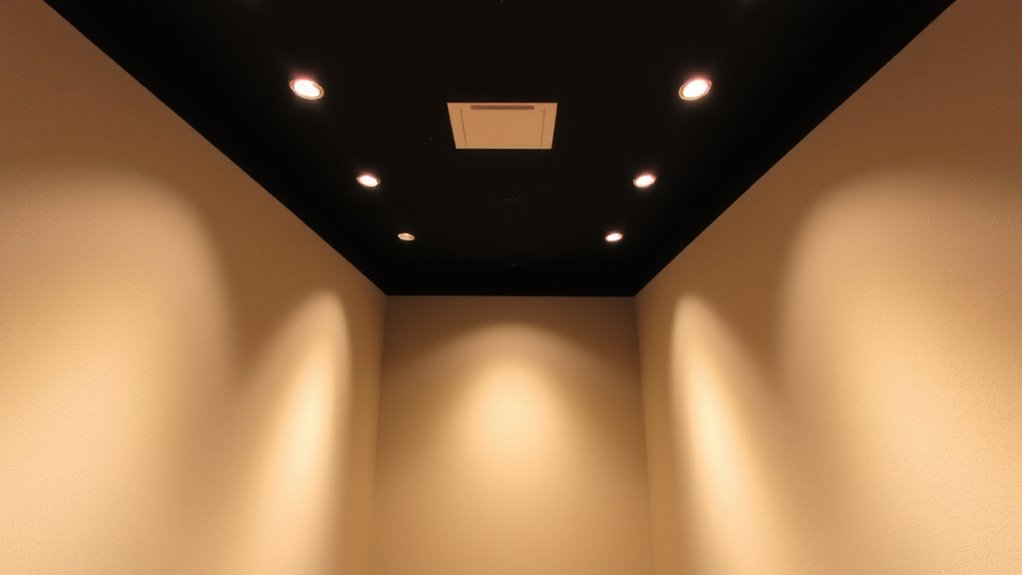
While you can’t change your office’s actual ceiling height, using uplighting is one of the most effective ways to make the space feel more open and taller. You position fixtures on the floor or low walls to cast light upward, which draws the eye and enhances perceived height. When aimed correctly, uplights graze ceiling beams, emphasizing architectural lines and creating subtle vertical shadows that stretch the sense of space. Choose LED models with adjustable heads so you can fine-tune angles-this precision matters when avoiding glare or hotspots. Units like the Philips Hue Lightstrip or Kichler 2110OI offer reliable performance and consistent color temperature. But beware: poor placement can exaggerate flaws in uneven ceilings. Use diffusers to soften harsh contrasts. You’ll need to test positioning during both day and night. While uplighting works well, it’s not a standalone fix-if your room feels cramped, combine with lighter paint and minimal décor. For added mood and focus benefits, consider incorporating a best light therapy lamp into your ambient lighting plan.
Create Height With Wall Grazing Techniques
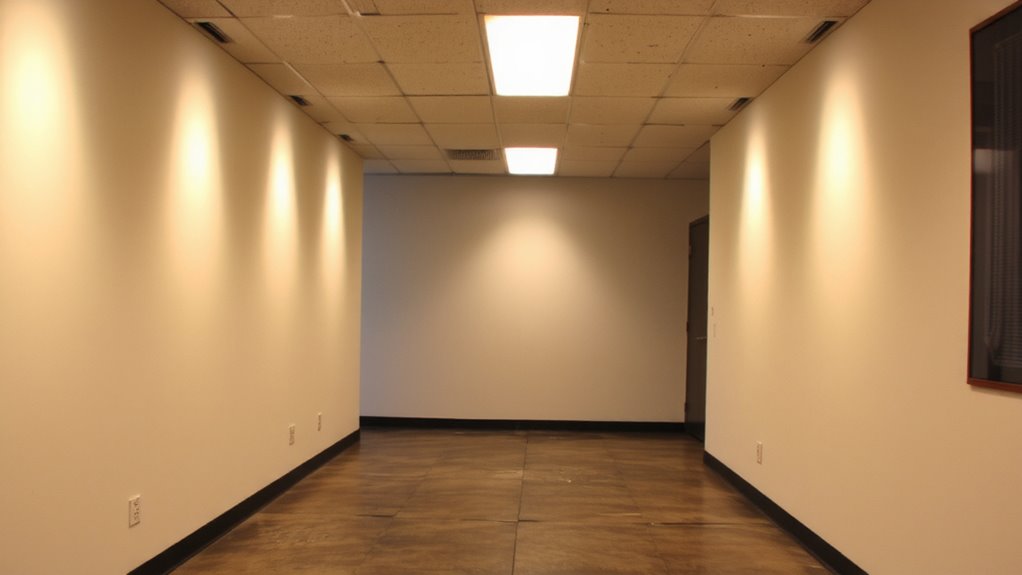
Wall grazing gives your low-ceilinged office a vertical lift by highlighting texture and drawing the eye upward, much like uplighting-but with more control over shadow and contrast. Wall grazing techniques place narrow beams close to textured or paneled walls, creating a gradient of light that stresses the wall’s depth and enhances vertical emphasis. For best results, position adjustable linear LED fixtures 6–12 inches from the wall, aiming the beam straight down its surface. A beam width of 15–30 degrees works well; wider spreads wash out texture, while narrower ones create harsh lines. This method works especially well with brick, wood slats, or raised paneling. However, smooth drywall won’t show much effect. Keep fixtures low-profile and out of sight to maintain clean sightlines. While installation needs precision, the outcome is a taller-feeling space. Just remember: misalignment causes uneven lighting, so test placement before final mounting.
Choose Low-Impact Fixtures That Open Space
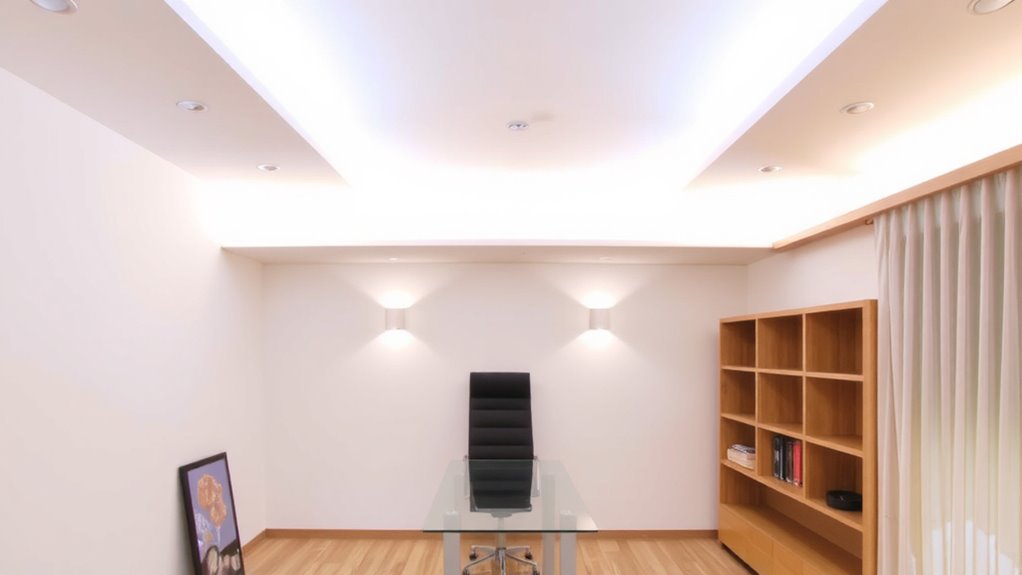
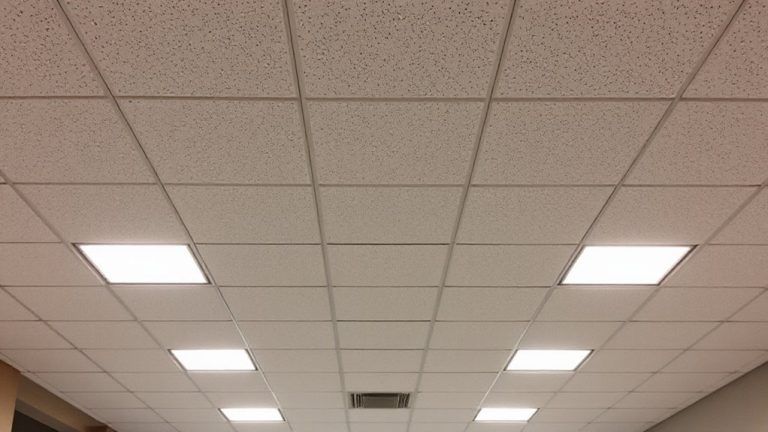
Lighting fixtures shouldn’t dominate your space-they should disappear into it. Choose minimal fixtures that blend with your ceiling instead of drawing attention. Recessed downlights or slim LED panels work well because they don’t hang low or break the plane of the ceiling. Hidden sources, like cove lighting or LED strips tucked above valances, bounce light upward, making ceilings feel higher without visual clutter. These options keep sightlines open, helping the room feel more spacious. But don’t overload the space-too many fixtures can create glare or hotspots, undermining the effect. Opt for fixtures with diffused lenses to soften output and guarantee even distribution. Look for models with at least a 5-year warranty and energy use under 15W per fixture for efficiency. Test color temperature; 3000K to 3500K delivers warmth without dimness. Minimal fixtures with hidden sources open space, but only when sized and spaced precisely. For focused illumination that complements ambient lighting, consider adding a well-placed top floor lamp for office to enhance both function and perception of height.
Layer Ambient, Task, and Accent Lighting
A well-layered lighting plan is your best tool for turning a low-ceeiled office from flat to functional. You’ll need ambient, task, and accent lighting working together-each with a clear role. Use overhead fixtures for ambient light, but keep them low-profile to avoid visual clutter. Task lights, like adjustable desk lamps, should offer bright, focused illumination where you work. For accent lighting, use wall sconces or shelving lights to add depth. Match the light color across all layers-stick to 3000K–4000K for a consistent, alert atmosphere. Fixture placement matters: position ambient lights centrally, task lights just behind your monitor, and accents higher on walls to imply vertical space. Avoid over-lighting, which can create glare or fatigue. Balance brightness and shadow deliberately. Poor coordination between layers will undermine even well-chosen fixtures. Layering isn’t just about quantity-it’s about smart, integrated control. Consider installing dimmable controls for best office lighting setups to fine-tune brightness throughout the day.
Draw the Eye up With Vertical Lighting Tricks
You can make a low ceiling feel less oppressive by guiding attention upward with smart lighting choices. Use vertical lighting tricks to create the illusion of height and open space. Install wall sconces or floor lamps that cast vertical shadows, drawing the eye skyward. Pair them with ceiling mirrors to reflect light and double the effect. Avoid overly bright overheads-they flatten the space. Instead, aim for layered brightness that emphasizes vertical lines in the room.
| Technique | Benefit |
|---|---|
| Tall floor lamps | Create strong vertical shadows |
| Wall-mounted uplights | Direct light toward ceiling mirrors |
| Vertical LED strips | Emphasize architectural height |
| Narrow-beam sconces | Enhance wall texture and perceived height |
Placement matters: position lights close to walls for sharper shadows. Test different angles during evening hours. Results vary with room dimensions and wall color. Some solutions require wiring modifications-check with an electrician.
On a final note
You can make your low-ceilinged office feel taller with smart lighting. Uplights and wall grazing draw the eye upward, creating height. Choose slim, low-profile fixtures to avoid crowding space. Layer ambient, task, and accent lights for balance. But don’t overdo brightness-harsh glare hurts focus. Test placements first; even LED tape lights need good diffusion. Some brands offer 3-year warranties, but cheap drivers fail faster. Results vary by room size and paint color.