Using Light Therapy Lamps in Northern Climate Home Offices to Combat SAD
Use a 10,000-lux light therapy lamp within 30 minutes of waking to fight SAD in northern home offices-position it 18 inches away at a 30-degree angle for 20–30 minutes daily. This setup mimics natural daylight best, helping regulate your circadian rhythm. Pick a flicker-free, UV-free model with ETL certification and a 1–2 year warranty. Avoid evening use to prevent sleep disruption. Consistency matters more than duration. You’ll find deeper tips on making it work long-term.
Notable Insights
- Light therapy lamps help combat SAD in northern climates by simulating 10,000 lux of natural sunlight critical for mood and sleep regulation.
- Use a 10,000 lux lamp for 20–30 minutes within 30 minutes of waking to align circadian rhythms disrupted by short winter days.
- Position the lamp 16–24 inches away, at a 30-degree angle to your face, to ensure effective light exposure without glare.
- Choose a light therapy lamp with a 5000K–6500K color temperature, minimal blue light flicker, and ETL/UL safety certification for daily use.
- Avoid using the lamp in the evening to prevent melatonin suppression and sleep disruption in high-latitude home offices with limited daylight.
SAD and Remote Work: How Light Therapy Helps
While working from home offers flexibility, it can worsen symptoms of Seasonal Affective Disorder (SAD) if your daylight exposure drops-especially during shorter winter days. You’re likely spending more time indoors, away from natural blue light that helps regulate mood and sleep. Incorporating a light therapy lamp into your morning routine can help maintain circadian rhythms. Look for devices emitting 10,000 lux of cool-white light with minimal UV output-tested models like the Verilux HappyLight Luxe or Carex Day-Light Classic are reliable. Use it within 30 minutes of waking, 16 to 24 inches from your face, for 20 to 30 minutes. While many report improved focus and energy, results vary. It’s not a substitute for clinical treatment if symptoms persist. Check for solid warranties-most reputable brands offer 1 to 2 years.
How Light Therapy Mimics Winter Sunlight
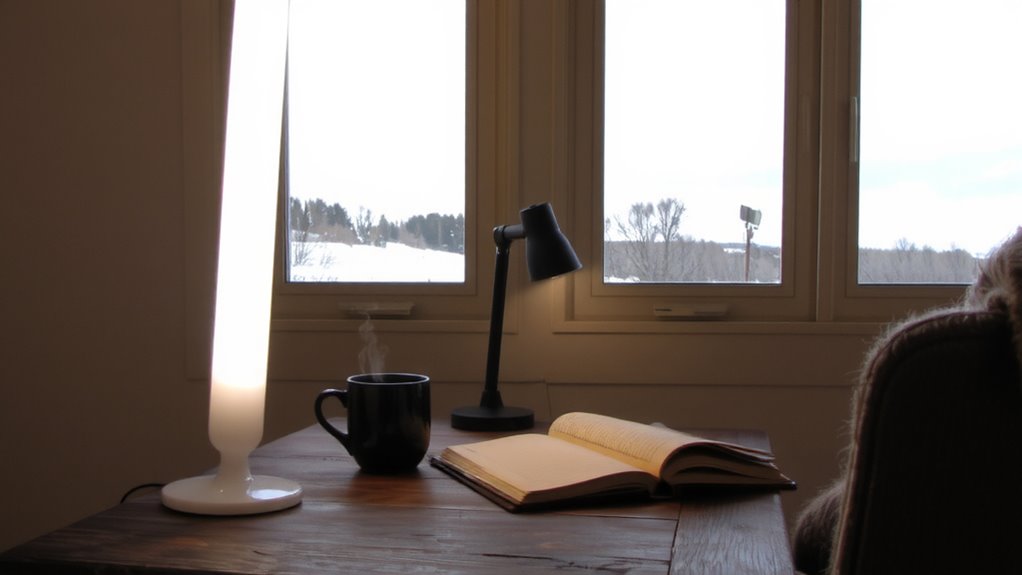
How does a box on your desk actually stand in for sunlight? Light therapy lamps mimic the sunlight spectrum by producing bright, full-spectrum light that closely resembles natural daylight, especially the blue-rich wavelengths missing in winter. You’re not getting UV rays-good, since those can harm your skin and eyes-but you are getting enough intensity (typically 10,000 lux) to signal your brain. This helps regulate your circadian rhythm, shifting melatonin production so you feel more alert during the day and sleep better at night. Think of it as a reset for your internal clock, which often drifts in low-light months. While no lamp perfectly replicates sunrise, quality ones provide consistent, diffuse light that avoids harsh glare. But results depend on proper use: placement, timing, and daily consistency matter. It’s effective for many, but not a cure-all-especially if symptoms persist. For best results, choose a device tested and recommended among the best light therapy lamps.
Pick the Best Light Therapy Lamp for Your Home Office
You’ll want a light therapy lamp that fits seamlessly into your home office setup without sacrificing performance. Look for one delivering 10,000 lux at about 12 inches-this intensity replicates outdoor winter light effectively. A color temperature around 5000K to 6500K mimics natural daylight best, boosting alertness without causing eye strain. Avoid units with flicker or glare, which can disrupt focus. Lamp placement is key: position it just off-center from your screen, about 18–24 inches away, angled slightly toward you to simulate sunrise geometry. This avoids screen reflections while maintaining exposure. Choose a compact, stable design that won’t clutter your desk. Check for ETL or UL certification, and prefer models with at least a one-year warranty. Some lamps overheat or emit too much blue light-check independent reviews for consistent, safe output. For top-performing options, consider exploring the best natural light lamps based on expert testing and user feedback.
When to Use Light Therapy Lamps During Work
A well-timed light therapy session can make a real difference in your focus and mood during the workday, especially in winter months. You’ll get the best results with morning exposure-ideally within an hour of waking-to help regulate your circadian rhythm and boost alertness. Aim for 20 to 30 minutes of consistent use, placing the lamp about 16 to 24 inches from your face at a 30-degree angle to avoid glare. Stick to devices with at least 10,000 lux output for effective light intensity. Duration control matters; overuse can cause headaches or eye strain, so follow manufacturer guidelines. While using the lamp during work is convenient, avoid late-day sessions, as they might disrupt sleep. Not all lamps fit seamlessly into busy routines-some take up considerable desk space. Test different models to find one that balances brightness, design, and timing for your workspace.
Pair Light Therapy With These SAD Relief Tips
Why stop at light therapy when you can stack strategies for better results? Pairing your light therapy lamp with mindfulness practices like daily breathing exercises or short meditation sessions helps reduce SAD-related anxiety and improves focus during long northern winters. These habits, even in 10-minute blocks, can stabilize mood and complement light therapy’s effects. Likewise, strengthening your nutrition habits-especially with foods rich in omega-3s, vitamin D, and complex carbs-supports sustained energy and brain function. Don’t rely on supplements alone; real dietary shifts deliver more consistent outcomes. While high-lux lamps (10,000 lux) are proven, they work best when combined with lifestyle adjustments, not in isolation. Results vary-some notice improvements in 3–5 days, others need two weeks. Be consistent, but stay realistic: no single solution fixes everything, and what works in a controlled study might need tweaking in your actual home office setup.
Avoid These 5 Light Therapy Mistakes at Home
While light therapy can be a game-changer for seasonal affective disorder, skipping small but critical details at home might undercut your results. You’re likely keen to feel better fast, but watch for overuse risks-30 to 60 minutes daily is usually enough; more won’t speed things up and could disrupt sleep. Incorrect placement matters too: position your lamp at a 30- to 60-degree angle, about 16 to 24 inches from your face, ideally on a desk to the side. Don’t just plop it anywhere-alignment affects light exposure to your eyes, and poor angles reduce effectiveness. Avoid using it late in the evening, as timing impacts circadian rhythms. Stick to 10,000 lux lamps tested for safety and consistency. Check manufacturer warranties-many last one to two years. Real-world users report best outcomes when treating light therapy like a consistent routine, not a quick fix.
On a final note
You should try a light therapy lamp if winter fatigue or low mood affects your focus-it’s one of the few SAD tools backed by real studies. Look for 10,000-lux lamps with UV filters and a clinically proven design, like those from reputable brands offering 1–2-year warranties. Use it within an hour of waking for 20–30 minutes, placing it at eye level but not staring directly. Avoid cheap models lacking third-party testing-they may underperform or strain your eyes.