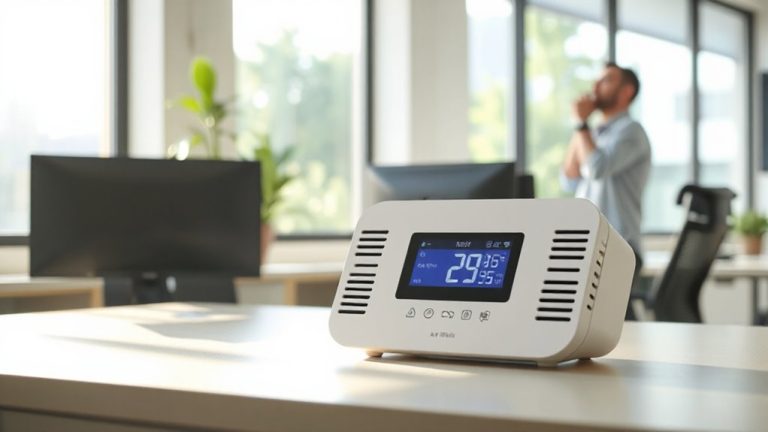
The Influence of Environmental Factors on Cognitive Performance in Home Offices
Your home office environment directly shapes your focus and mental performance. Position your desk near a window for indirect morning light, but use sheer curtains to prevent glare. If natural light’s limited, full-spectrum LEDs at 5000K–6500K help. Noise every few minutes harms retention, so consider noise-canceling headphones or steady white noise. Keep indoor CO₂ low with a HEPA air purifier with carbon filter-especially if you can’t open windows. Temperatures above 77°F slow reaction times, while those below 65°F distract; aim for 68–72°F. Keep your monitor arm’s length away, angle it to avoid glare, and tuck cables out of sight. A tidy workspace supports sharper thinking, but only if lighting, air, and sound are also balanced. Adjusting one factor helps, but optimizing all activates clearer focus.
Notable Insights
- Positioning a desk near a window with indirect natural light enhances circadian rhythm and mental clarity without causing screen glare.
- Using white noise or instrumental music at 50–70 decibels improves focus by masking disruptive sounds and reducing cognitive stress.
- Maintaining indoor CO₂ and pollutant levels low with HEPA air purifiers supports optimal decision-making and cognitive performance.
- Keeping room temperature between 68–72°F (20–22°C) minimizes discomfort and cognitive load, promoting sustained mental efficiency.
- Organizing desks to minimize clutter and position monitors ergonomically reduces strain and enhances concentration and task accuracy.
How Light Shapes Focus in Your Home Office
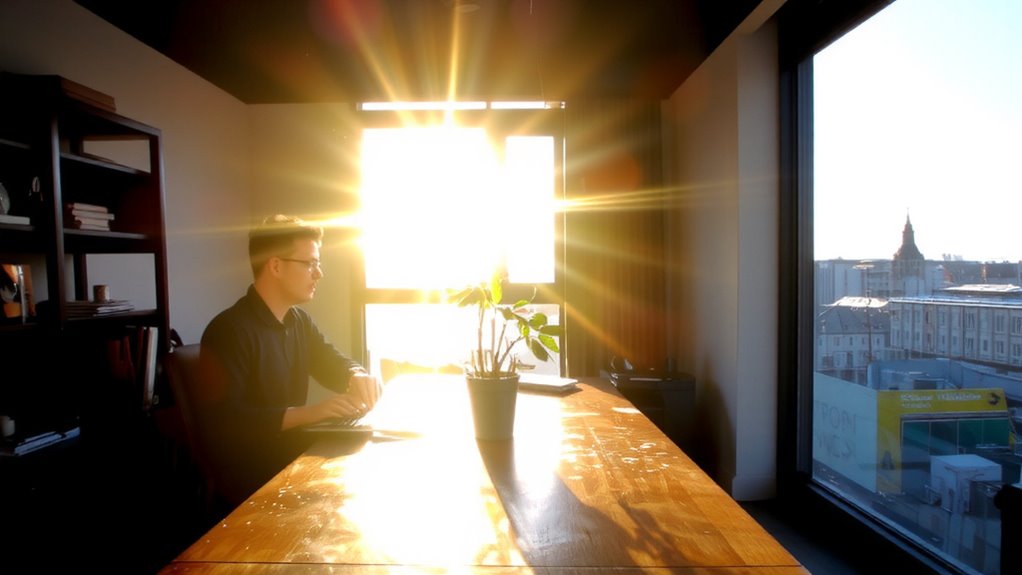
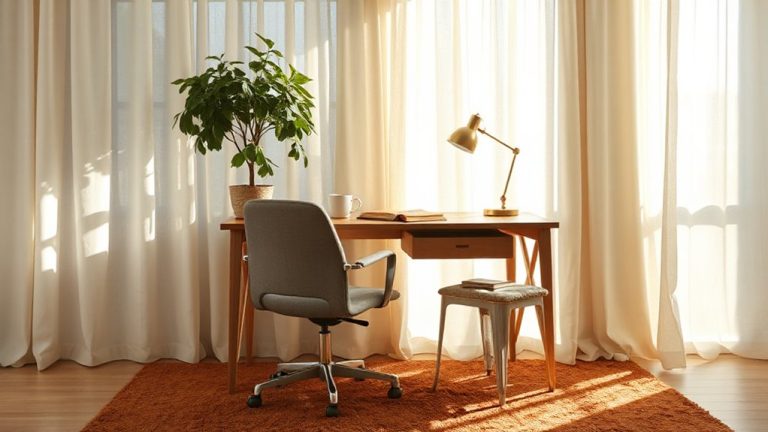
While natural light isn’t always within your control, maximizing it in your home office can substantially boost focus and alertness-just don’t sacrifice glare control for brightness. You benefit most from natural lighting in the morning, when the sun’s blue spectrum helps regulate circadian rhythms and sharpens mental clarity. Position your desk near a window with indirect exposure to harness this effect without screen glare. Sheer curtains or adjustable blinds let you fine-tune intensity while maintaining color accuracy. Avoid sitting with direct sunlight behind or in front of your monitor-reflected glare strains your eyes and counteracts focus gains. If natural light is limited, opt for full-spectrum LED bulbs (5000K–6500K) that mimic the blue-enriched daylight. These aren’t a perfect substitute, but paired with daylight-sensing smart bulbs, they offer measurable improvements in sustained attention-especially in windowless rooms. Consider a desk lamp with color temperature control to dynamically adjust light quality throughout the day.
Can Noise Kill Your Concentration?
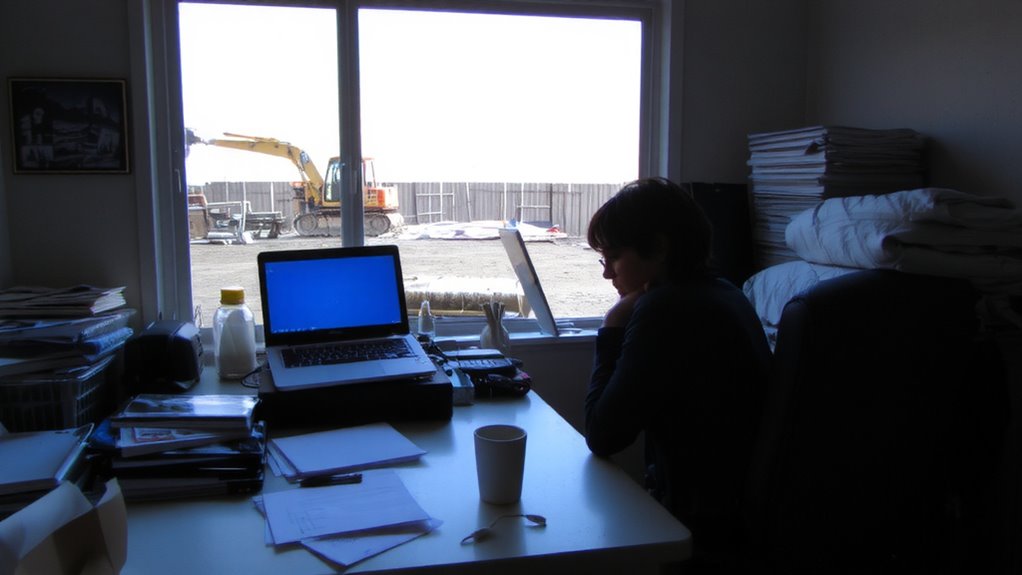
What if the real reason you can’t focus isn’t your willpower-but the sound of traffic, a humming fridge, or a sudden phone ring? Noise disrupts concentration by breaking your attention every 3–5 minutes, reducing retention and slowing task completion. Constant chatter or abrupt sounds spike stress hormones, impairing working memory. But quiet isn’t always possible-and total silence can feel unnatural. That’s where white noise helps: steady, even sound masks unpredictable disruptions, boosting sustained focus by up to 60% in mixed environments. Background music works too, especially instrumental tracks at 50–70 decibels, but lyrics or erratic tempo can backfire. Soundproofing panels or active noise-canceling headphones are effective, but costly-choose models with 20+ dB reduction and comfort for long sessions. Test options during peak workflow hours. Results vary by individual and setup.
How Air Quality Impacts Mental Clarity
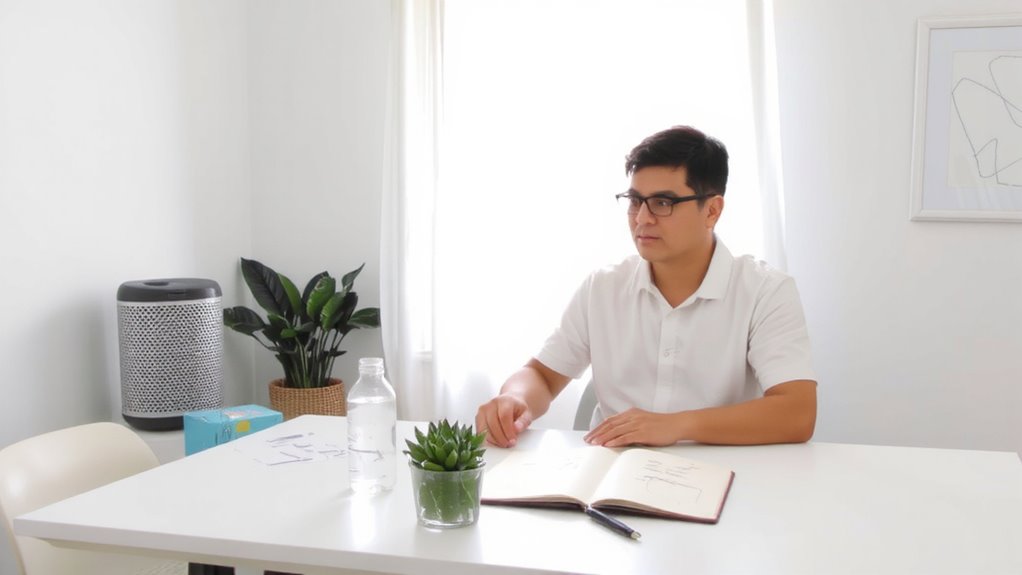
You might have your sound under control with noise-canceling headphones or a well-placed white noise machine, but if the air in your home office feels stale, your thinking could still be foggy. Poor air quality directly dulls mental clarity, even in quiet spaces. Low ventilation efficiency lets CO₂ build up, slowing reaction times and focus-studies show cognitive scores drop by over 50% in stuffy rooms. Meanwhile, everyday pollutant exposure from printers, cleaning products, or outdoor traffic introduces volatile organic compounds that impair decision-making. Opening a window helps, but only if outside air is clean. Portable HEPA air purifiers with activated carbon filters can reduce pollutants, though they’re limited by room size and airflow patterns. They’re not magic, and maintenance-like filter replacements every 6–12 months-cuts into long-term value. You’ll need to balance noise, placement, and energy use. For optimal results, consider models rated highly in best air purifiers guides that match your room’s square footage.
Why Room Temperature Affects Brain Power
If your brain feels sluggish during afternoon work sessions, the temperature of your home office might be to blame-too warm or too cool, and your cognitive performance starts to slide. Thermal comfort directly affects focus and mental efficiency. When temperatures drift outside the ideal range, your brain diverts energy to regulate body heat, increasing cognitive load and reducing processing speed.
| Temperature | Cognitive Effect |
|---|---|
| 68–72°F (20–22°C) | Peak focus, low mental strain |
| Below 65°F (18°C) | Increased distraction, discomfort |
| Above 77°F (25°C) | Slower reaction times, higher errors |
Staying within this sweet spot supports sustained attention. While portable heaters or fans can help, they shouldn’t introduce noise or dry air that worsens conditions. Achieving thermal comfort isn’t about luxury-it’s about maintaining brain power. But individual preferences vary, so monitor how you feel, not just the thermostat. A well-chosen best portable heater can maintain optimal temperatures without creating disruptive airflow or excessive noise.
Arrange Your Desk for Maximum Focus
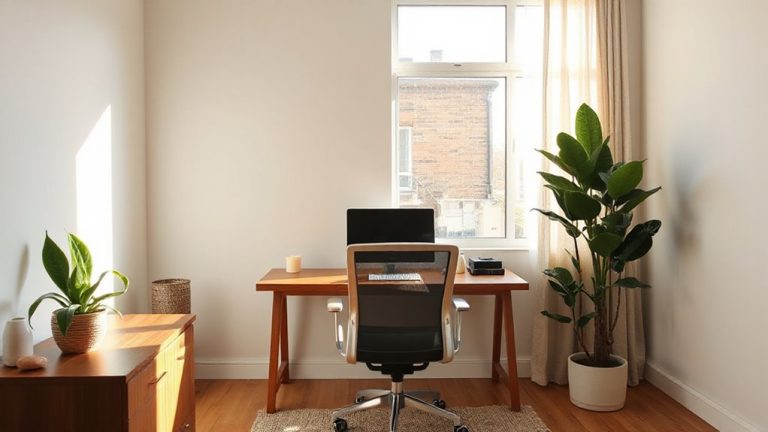
Though small changes can make a big difference, setting up your desk with intentional layout choices will likely boost your focus more than any single gadget or upgrade. Desk alignment matters-position your monitor directly in front, about an arm’s length away, to reduce neck strain and distractions. Face natural light if possible, but angle your screen to avoid glare. Keep frequently used items within easy reach to minimize motion and break concentration. Cable management isn’t just neat-it reduces visual clutter that competes for attention. Use braided sleeves or simple clips to bundle cords, and route them behind desk mounts or trays. Avoid overcrowding the surface; a clean workspace supports a clear mind. While perfect setup takes trial and adjustment, these steps are backed by ergonomic studies and real-world testing. Trade-offs exist-some solutions cost more or require wall anchors-but even budget options help if installed correctly.
Try These Low-Cost Focus Boosters
A well-organized desk sets the stage for better concentration, but smart, low-cost upgrades can amplify focus without stretching your budget. Try adding desk plants like snake or pothos-they’re proven to reduce indoor CO₂ and boost alertness, though they need occasional watering and a few hours of natural light. Pair them with a small diffuser using essential oils such as peppermint or rosemary, which some studies link to improved attention and mental clarity. You’ll often notice the effects within 20 minutes, but scent sensitivity varies, so start with low concentrations. These upgrades aren’t magic-they complement good lighting and noise control rather than replace them. And while most desk plants cost under $20, poor placement can lead to mold or overwatering. Likewise, not all essential oils are equally pure; look for third-party lab-tested options. Use both mindfully, and they become practical tools, not distractions.
On a final note
You’ll likely boost focus by optimizing light, noise, air, and temperature-natural light and 65–75°F make a real difference. A quiet space with an air purifier or HEPA filter can sharpen thinking, but noise-canceling headphones work too. Position your desk to reduce glare and distractions. Cheap tweaks like task lighting or a small fan help, but results vary by room and routine. No gear replaces good habits, and overbuying won’t fix poor setup.