How to Arrange a Dual-Purpose Coffee Table Desk in a Living Room
Pick a dual-purpose coffee table desk that’s 42” wide with a solid wood or tempered glass top for durability and style. Make sure you’ve got 18” of legroom and position it so your screen’s at eye level, using a riser if needed. Use slim trays and under-table cable clips to keep essentials close but the surface clean. Switch modes fast with modular trays, but don’t expect all-day comfort-supportive seating matters. Choose matte finishes in walnut or charcoal to blend in. Larger extendable designs can feel wobbly, so stick to proven sizes. Hidden storage helps, but only if you keep it essential-only. This setup works well if your workflow stays light and mobility matters. More details on optimizing each zone follow.
Notable Insights
- Choose a table size that fits your space, ensuring 42” width for most sofas without crowding small rooms.
- Select durable, aesthetically matching materials like solid wood or tempered glass to align with existing living room decor.
- Position the table to allow ergonomic use, with legs flat and arms at 90 degrees when seated on the sofa.
- Use modular trays, hidden storage, and cable management to switch quickly between work and relaxation modes.
- Maintain visual harmony with neutral finishes, tucked cables, and minimal clutter to preserve the living room aesthetic.
Pick the Right Coffee Table Desk for Your Space
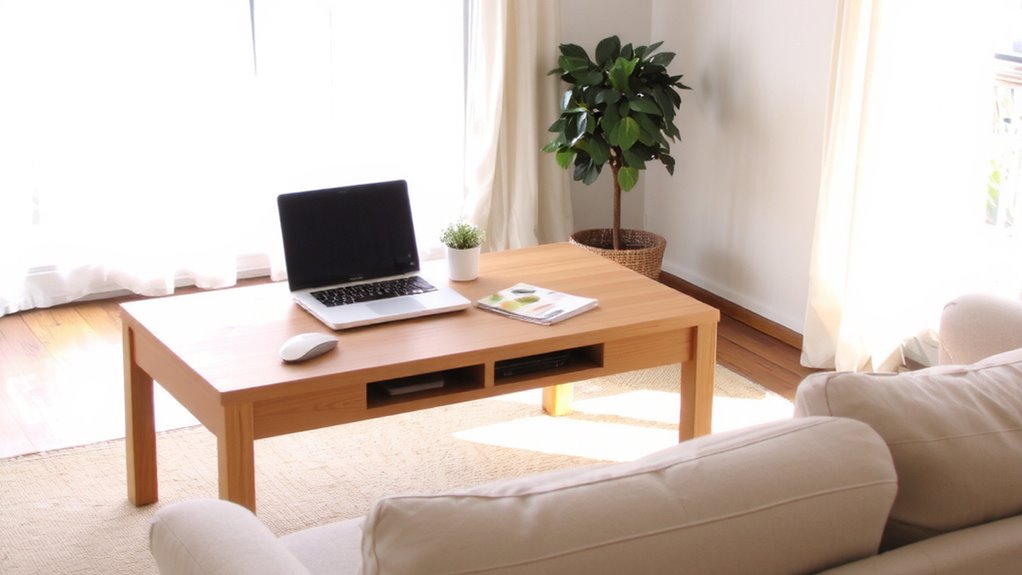
Your space’s layout and workflow needs should dictate the coffee table desk you choose, not the other way around. Start with material selection: solid wood or tempered glass offer durability, while laminate scratches easier but cuts cost. You’ll trade long-term resilience for short-term savings. Size matters-measure legroom and clearance; a 42”-wide table fits most sofas but may crowd small rooms. Style coordination isn’t just about looks-it guarantees the desk blends when not in use. A mid-century modern base won’t match industrial decor, so align finishes and lines with existing furniture. Avoid oversized tops that overwhelm seating areas. Look for warranty coverage of at least one year, especially for moving parts. Some brands test load limits up to 50 lbs, but real-world use shows wobble under 30 lbs on caster-equipped models. Pick function first, then refine for form.
Set It Up for Easy Work and Comfort
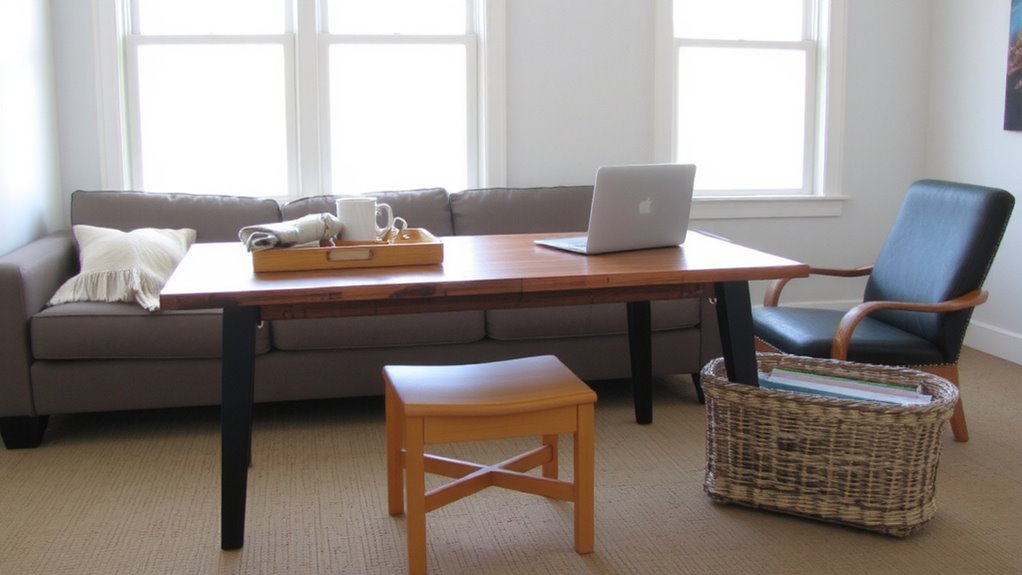
A well-placed coffee table desk can work just as well as a stand-up workstation or a dedicated office if you set it up with ergonomics and workflow in mind. For effective ergonomic positioning, sit on a sofa or chair with feet flat and arms at 90 degrees; your screen should be at eye level, possibly on a riser. A lap desk or adjustable tray helps maintain posture. Use cable management sleeves or adhesive clips to keep cords tidy and prevent tripping. Best cable management solutions can further enhance organization and reduce visual clutter. Avoid overcrowding the surface-leave space for movement. While this setup saves space, it’s not ideal for long workdays unless you have supportive seating. Comfort matters: pivot your monitor easily and charge devices out of sight. Test adjustments daily-small changes improve comfort fast, but don’t expect full office functionality. It’s a compromise that works well with discipline.
Keep Supplies Handy Without the Mess
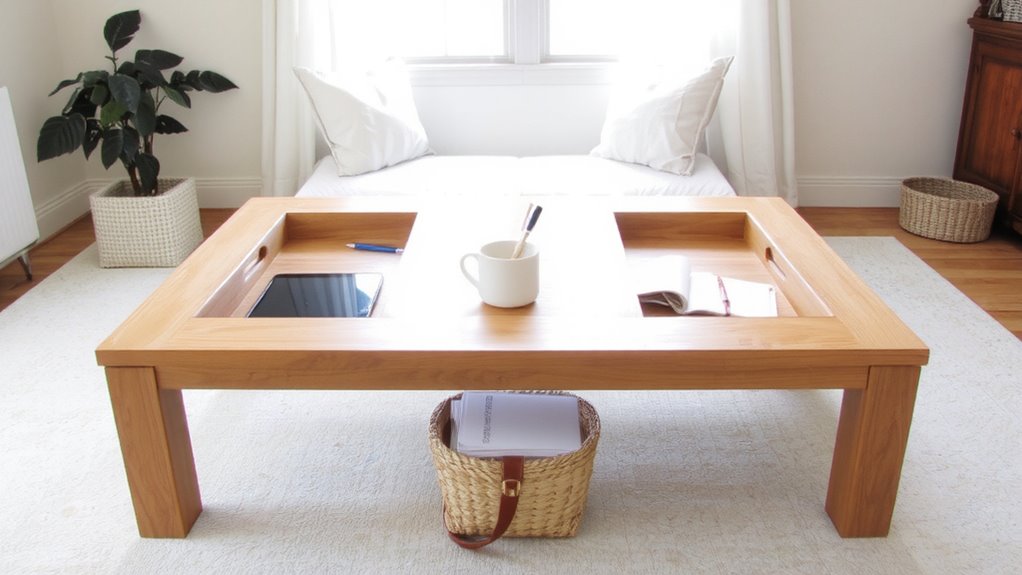
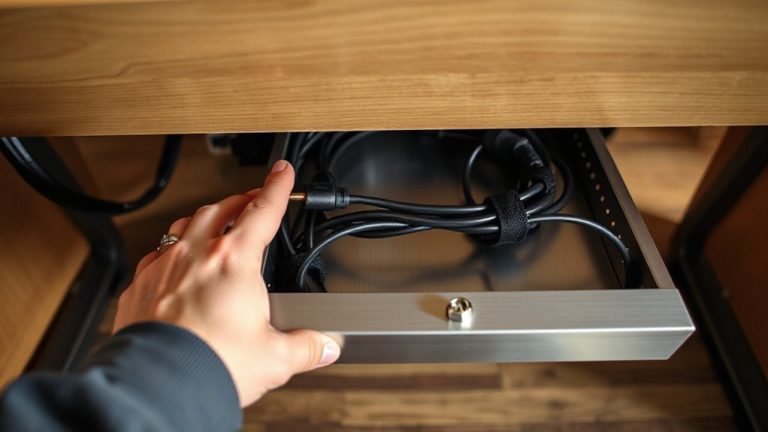
Storing supplies within reach keeps your coffee table desk functional without cluttering the space-think vertical organizers, small trays, or stackable bins that fit under or beside the table. Hidden storage, like lift-top mechanisms or lower shelves behind doors, lets you stash notebooks, pens, or tablets out of sight but within reach. Use slim desktop trays for everyday items so the surface stays clean. Prioritize cable management with adhesive clips or woven sleeves to keep cords for laptops or chargers from tangling. Consider a desk with built-in grommets or notches to route cables neatly downward. While these features improve usability, overloading compartments can make access slower. Hidden storage works best when you limit contents to essentials. Similarly, cable solutions help, but cheap sleeves fray within months. Choose durable fabrics or metal clips tested for daily wear. Test fit larger items before buying-some bins won’t slide under certain tables. For curated options, check the Top Desk Accessories Picks to match your style and needs.
Switch Between Work and Relaxation Fast
Clearing your coffee table desk quickly so you can unwind shouldn’t mean stashing everything in a drawer and calling it good-real flexibility comes from design choices that support fast, consistent shifts between tasks and downtime. Use modular trays and magnetic covers to enable quick shifts, letting you reclaim surface space in seconds. Pair this with ergonomic lighting-choose a slim, adjustable LED floor lamp with a 3000K warm setting and flexible arm to reduce glare and support focus without overwhelming the room. Test models with memory settings so brightness adjusts automatically when you switch modes. Keep cable management tight with adhesive clips or under-table channels to maintain clean lines. Note: ultra-compact storage often sacrifices capacity, so prioritize trays that balance accessibility and size. Fast shifts only work if every item has a designated spot-otherwise, clutter returns faster than you’ll notice.
Make It Look Like Part of Your Living Room
Even one piece of office gear out of place can disrupt your living room’s vibe, so blending function with design isn’t optional-it’s essential. You want design harmony between your coffee table desk and existing furniture. Choose materials like matte wood or soft metals that match your space, avoiding glossy or industrial finishes that scream “office.” Keep cables tucked and surfaces clutter-free to maintain aesthetic balance. Opt for a table with built-in storage or trays you can remove when not working. Neutral colors-charcoal, beige, walnut-integrate easier than bold hues. While some models offer extendable tops for laptop use, they often sacrifice stability. Test wobble and weight limits yourself; many foldable designs support only up to 20 lbs. Check return policies-some lack warranties. A well-chosen desk feels intentional, not intrusive.
On a final note
You can make a dual-purpose coffee table desk work if you choose wisely. Look for sturdy, adjustable models with flat surfaces at elbow height-around 25 inches-for typing comfort. Keep cables tidy with adhesive clips and use stackable trays for supplies. It’s compact, but limits screen space and posture support over time. Test stability under laptop weight, and confirm return policies. Great for small spaces, but pair with a separate desk for long work sessions.