Creating a Space-Saving Desk Solution for Maximizing Square Footage in Small Homes
You’ll maximize space with a wall-mounted or foldable desk-especially in corners-freeing floor area when not in use. Pick one rated for 20–30 lbs and anchor it securely into studs or heavy-duty drywall mounts. Desk models with built-in shelves or under-desk drawers add storage without taking up room. Position it near a window but perpendicular to the light to cut glare, and use cable trays with Velcro ties to keep cords tidy. Bright 4,000K lighting and reflective surfaces help the area feel open. There’s more to optimize beyond the basics.
Notable Insights
- Use foldable wall-mounted desks to save floor space and keep the area clear when not in use.
- Choose corner desks to utilize unused wall junctions and maximize compact room layouts.
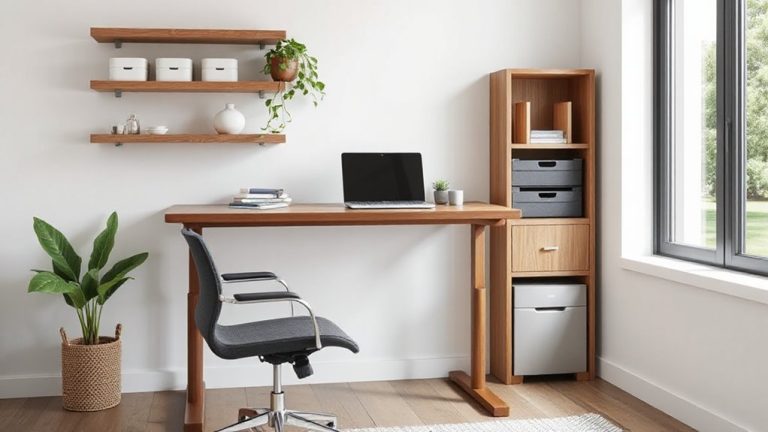
- Opt for desks with built-in storage to reduce clutter and minimize additional furniture.
- Install cable management trays to organize cords and maintain a clean, safe workspace.
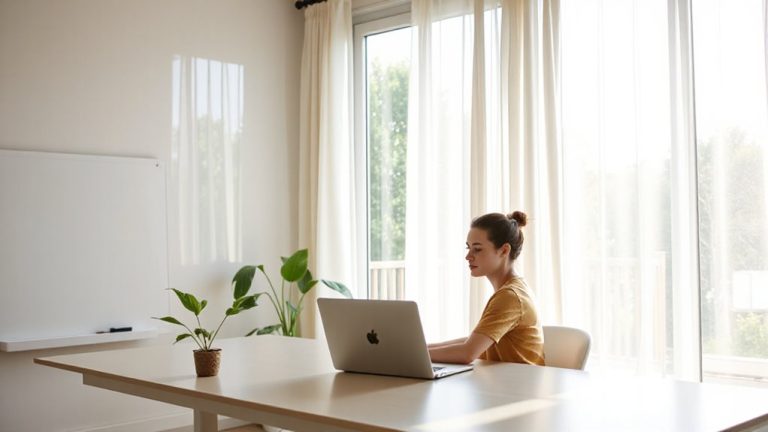
- Position the desk near a window to enhance natural light and create a more open feel.
Choose a Space-Saving Wall Desk for Small Rooms
A wall-mounted desk could be your best bet for squeezing a workspace into tight quarters-especially when floor space is at a premium. You’ll want one with a foldable design so it disappears when not in use, keeping the room open and functional. Corner placement maximizes unused zones, fitting snugly where walls meet without blocking traffic flow. Most models support 20–30 pounds, enough for a laptop and notebook, but check weight limits before loading it up. Install it at 28–30 inches high for comfortable seating, though you’ll need sturdy wall anchors-especially on drywall. Some units have pull-out shelves or modesty panels, but those add bulk. Remember, you lose legroom under the desk, so pairing it with a slim stool works best. While it won’t suit large monitors or dual setups, it’s ideal if you need a minimalist, no-fuss workspace that stays out of the way. For those seeking top-quality options, consider checking out the best home office desks to find models that combine durability and space efficiency.
Use Desks With Built-In Storage to Free Floor Space
Many compact desks on the market include built-in storage-and for good reason, since combining a work surface with shelves, drawers, or cubbies can seriously cut down on floor clutter. You’ll free up space by using underdesk drawers for supplies and vertical shelving for books or decor. These features keep essentials within reach without needing extra furniture. Desks with integrated storage often have narrower footprints, making them ideal for tight rooms. Just be sure the added compartments don’t compromise legroom or ergonomics-check depth and height specs before buying. Underdesk drawers should glide smoothly and support at least 10–15 pounds without sagging. Vertical shelving works well for lightweight items, but avoid overloading top shelves, which can make units top-heavy. Some models come with a one-year warranty, but durability depends on material-solid wood lasts longer than particleboard. Test drawer mechanics in person if possible. For top performance and reliability, consider models from the best desks with drawers category, which are specifically designed for functionality and space efficiency.
Place Your Desk to Open Up a Crowded Room
You’ve picked a desk with built-in storage to reduce clutter, but where you place it can make or break the sense of space in your room. Smart desk placement is key to improving room flow and avoiding a cramped feel. Position your desk against an empty wall, not blocking doorways or natural walkways, to maintain clear traffic patterns. If possible, place it near a window for natural light-this brightens the space and reduces visual weight. Avoid tucking it into tight corners unless you have enough clearance to pull out the chair comfortably. Floating desks or wall-mounted models can further open up floor area. Keep in mind that even a well-designed desk can disrupt room flow if it’s placed in high-traffic zones. Test the layout by walking the path-adjust until movement feels smooth and intentional. For even greater space efficiency, consider a best foldable desks option that can be easily tucked away when not in use.
Tame Cables in Tight Spaces
While managing cords might seem like a minor detail, ignoring it can quickly turn a streamlined workspace into a tangled mess-especially in compact areas where every inch counts. You should use cable trays under your desk to keep power strips and device cords organized and off the floor. These trays mount easily and provide dedicated pathways, reducing clutter and tripping hazards. Pair them with reusable velcro ties to bundle cords by function-like charging, power, or data-so you can identify and access them quickly. Velcro ties are better than zip ties because they’re adjustable and won’t damage cables. Just don’t overtighten, and leave slight slack to avoid strain. While cable trays vary in width-most fit strips up to 12 inches-check your gear’s size before buying. Some trays lack ventilation for hot power strips, so position them where heat dissipates. These fixes take minutes but markedly improve safety and usability.
Make Your Small Office Feel Bigger
A clutter-free desk helps, but smart spatial design is what really opens up a tight office. Use bright lighting-like a 4,000K LED task lamp or a skylight-mimicking ceiling fixture-to enhance depth perception and reduce visual fatigue. Pair it with calming colors such as soft sage, warm gray, or pale blue on walls or large furniture; they lower perceived density and support focus. Opt for sheer curtains to maintain natural light flow while ensuring privacy. Position your desk perpendicular to a window to avoid glare but capture indirect sunlight. Choose reflective surfaces-glass desktops or metallic finishes-to bounce light around. Avoid oversized artwork or dark tones; they shrink space. Note: over-lighting can cause glare on screens, and too much white can feel sterile. Test paint swatches at different times of day. Balance aesthetics with ergonomics-comfort shouldn’t be sacrificed for optics.
On a final note
You’ll gain usable floor space with a wall-mounted desk, especially models featuring built-in shelves or drawers that cut clutter. Units like the Fully Jarvis Desk Shelf Mount save legroom and support up to 30 lbs. Still, check wall anchors and weight limits-drywall alone won’t hold. Cable trays help keep tight areas neat, but expect assembly time. Smaller footprints mean less workspace, so measure your gear first. Good lighting and mirrors offset the compact feel, but don’t expect room for multiple monitors.