Adjusting Seat Depth and Lumbar Support on an Ergonomic Chair for Petite Users
You should adjust seat depth and lumbar support to fit your smaller frame-sit all the way back, leave 2–3 inches between knees and seat edge, and shorten depth using sliders or firm foam inserts if needed. Position lumbar support between L3–L5, not higher, to avoid slumping. Look for chairs like Steelcase Leap or Herman Miller Aeron with independent controls; avoid fixed or top-mounted supports. Pair these adjustments with proper armrest height to reduce strain-there’s more to optimizing your setup than just tweaking two settings.
Notable Insights
- Petite users should ensure a 2–3 inch gap between the back of knees and seat edge for proper seat depth.
- Sit fully back against the chair to accurately measure and adjust seat depth for optimal thigh support.
- Adjust lumbar support downward to align with the lower back, specifically between L3 and L5 vertebrae.
- Use seat sliders or firm foam inserts to effectively reduce seat depth if adjustments are limited.
- Pair proper lumbar positioning with adjustable armrests to maintain 90-degree elbow angles and full-body alignment.
How Poor Chair Fit Hurts Petite Users
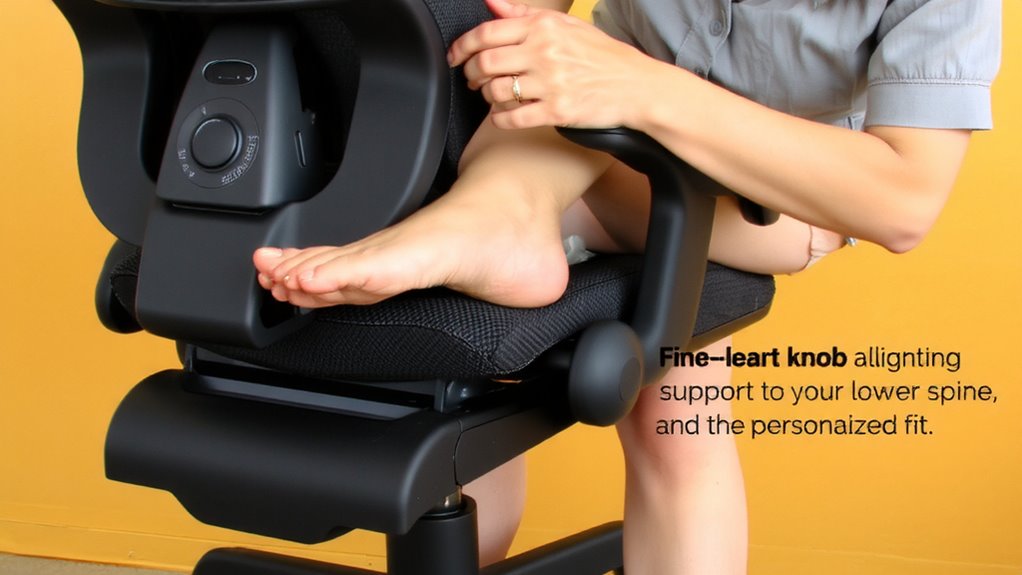
While you might assume a standard office chair works fine, if you’re petite-typically under 5’4“-a poor fit can lead to real discomfort and long-term strain. Sitting too far from the backrest forces you to slump, increasing pressure on your lower back and reducing lumbar support where you need it most. Limited mobility in tight spaces worsens posture, especially if seat depth or armrests can’t adjust narrowly enough. Over time, this misalignment may contribute to nerve compression, particularly in the sciatic region or legs, causing tingling or numbness. Even with padding, improper fit means sustained pressure on sensitive areas. Look for chairs with compact seat pans-ideally under 16 inches deep-and adjustable backrests that support your spine’s natural curve. While some high-end models offer tailored adjustments, many aren’t tested on smaller frames. Always verify return policies and warranties before buying, since real-world comfort varies. For petite users, selecting from the best chairs for short people can make a significant difference in ergonomic support and overall comfort.
Measure Your Seat Depth in 3 Steps
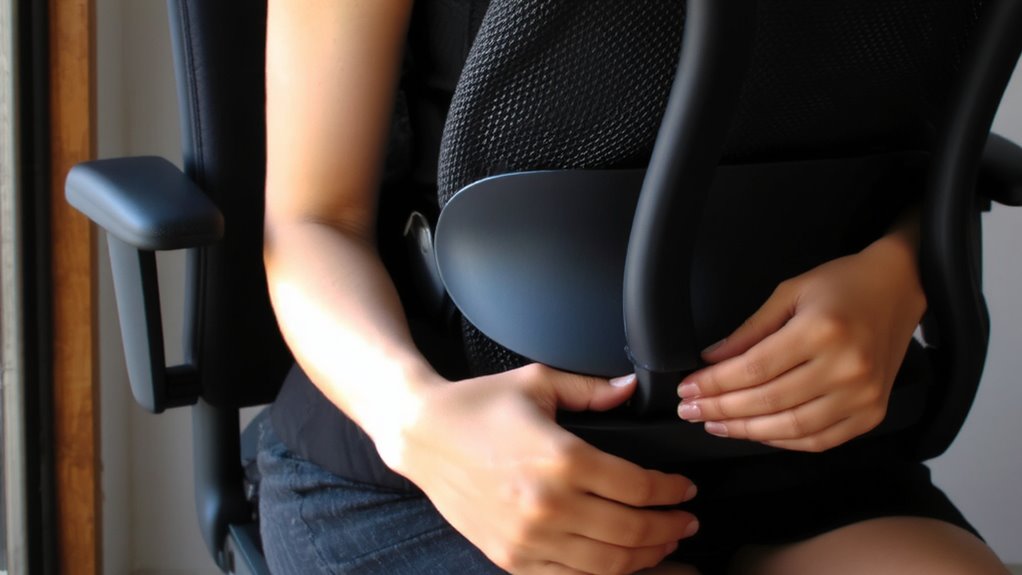
Getting the seat depth right matters more than you might think-especially if you’re under 5’4“, where even a few extra inches of seat pan can throw off your posture and circulation. Start by sitting all the way back in the chair with feet flat on the floor-this guarantees accurate foot placement. Check for a 2–3 inch gap between the back of your knees and the seat edge; less risks pressure, more risks poor thigh alignment. Next, confirm your thighs lie nearly horizontal, not sloping down, which signals too much depth. Finally, recheck while seated in your usual working posture-leaning slightly forward can shift alignment. Don’t rely on chair specs alone; seat depth varies by model and padding density. Even adjustable chairs sometimes overstate usable space. Test in person if possible, or choose brands with solid return policies. A well-fitted chair for shorter individuals often features short people design considerations.
Shorten Seat Depth on Any Ergonomic Chair
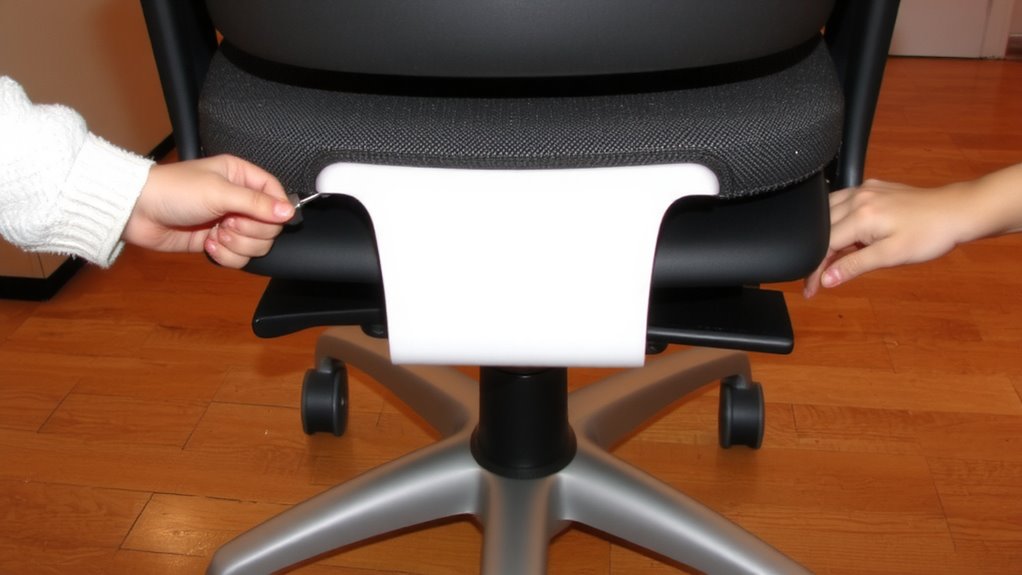
If your chair’s seat pan feels too deep, you’ll want to shorten it-either through built-in adjustments or smart modifications-since excess depth strains your lower back and cuts circulation behind the knees. Some chairs offer adjustable seat sliders; others need haselp from seat cushions or firm foam blocks placed toward the front edge. These tricks effectively reduce depth while adding slight thigh support. Back inserts won’t fix depth issues, but they help maintain spinal alignment once seated properly. Standing for long periods on a hard surface can also contribute to discomfort, so pairing your adjusted chair with an ergonomic floor mat for standing may further improve posture and reduce fatigue. Below are common methods and trade-offs:
| Method | Effectiveness | Caveat |
|---|---|---|
| Seat slider adjustment | High | Only on premium models |
| Firm foam insert | Medium | May shift without securing |
| Folded towel | Low | Uneven support |
| Seat cushion (thin) | Medium | Adds height slightly |
| DIY fabric sleeve | High | Requires sewing |
Always leave 1–2 inches behind your knees.
Set Lumbar Support for a Shorter Torso
Many petite users struggle to find proper lumbar support because most ergonomic chairs are designed for average torso lengths, leaving shorter individuals with inadequate lower back alignment. You’ll need to adjust the lumbar support downward so it fits the natural curve of your lower spine-ideally between the L3 and L5 vertebrae. This helps maintain correct spinal alignment and prevents excessive pelvic tilt, which can lead to discomfort over time. If the lumbar pad sits too high, it’ll push against your mid-back, forcing poor posture. Look for chairs with vertically adjustable lumbar support, like the Steelcase Leap or Herman Miller Aeron, which let you fine-tune the height precisely. Not all budget chairs offer this, so check specs carefully. Even with proper positioning, some trial and error is necessary to avoid over-support or pressure points, especially during long sitting sessions.
Adjust Lumbar Depth and Curve for Comfort
A well-placed lumbar pad isn’t enough-if it’s too deep or too stiff, it’ll dig into your back instead of supporting it. You need to fine-tune the lumbar depth and curve to match your spinal curvature. Most ergonomic chairs let you push or pull the pad forward or backward; ideally, it should sit snugly in your lower back’s natural inward curve. This helps maintain proper lumbar alignment without forcing your spine into an unnatural position. If the pad’s fixed or overly firm, it might not suit your frame, especially if you’re petite. Test adjustments while seated fully-small shifts matter. A pad that’s too aggressive can cause discomfort over time, even if it feels supportive at first. Always check if the chair offers independent control for depth and firmness; models without it often force compromises. There’s no one-size-fits-all setting-prioritize what feels stable and neutral after 20 minutes of sitting.
Fix Knee Pressure and Slouching Fast
Though knee pressure and slouching might seem like separate issues, they’re often linked to how your chair supports your sitting posture and lower body alignment. You’ll likely feel knee strain if the seat pan is too deep, pressing behind your thighs-adjust it so there’s about two fingers’ space between the edge and the back of your knees. If your chair lacks depth adjustment, try changing cushion placement slightly forward to reduce pressure. Slouching often follows when your feet don’t rest flat, so correct footrest positioning is key-your knees should sit at 90–110 degrees. A stable footrest can help, but avoid models that wobble or shift under weight. While cushions and footrests can improve fit, they can also shift during use, so choose ones with non-slip bases. These fixes work fast, but only if your chair’s core dimensions allow proper alignment.
Get Full-Body Support as a Petite User
You’ve tackled knee pressure and slouching by fine-tuning seat depth and footrest placement, but if you’re under 5’4″, those adjustments alone might still leave you feeling unbalanced or overreaching. To get full-body support, focus on armrest alignment and foot placement together. Your elbows should rest at 90 degrees with shoulders relaxed, and armrests must adjust both height and width to match your frame-many chairs claim adjustability but only offer limited range, so check real-world measurements. Proper foot placement guarantees your thighs are fully supported without dangling, ideally with feet flat on a footrest if needed. Poor integration between seat depth, lumbar position, and armrests can still cause strain, even in high-end models. Test for stability and adjustability continuity-don’t assume premium price means proper fit. Prioritize chairs with at least 4 inches of seat depth adjustment and independent armrest controls.
On a final note
You should adjust your chair for a better fit, especially if you’re under 5’4“. Shorten the seat depth so there’s 2–3 inches between the edge and your knees, and set lumbar support to match your lower back curve. A well-fitted chair reduces slouching and leg strain. Not all chairs offer fine-tuned adjustments, so test seat depth, backrest height, and lumbar firmness in real use-features like a 3-year warranty help if changes are needed later.