Choosing the Right Sit-Stand Desk Motor for Quiet and Reliable Height Adjustments
Choose a dual AC or low-noise DC motor under 50 dB for quiet, reliable adjustments-like the 48 dB GeekDesk 6-to guarantee smooth operation without disrupting focus. Dual motors handle wider desks and uneven loads better, while 15,000+ cycle testing and thermal protection guarantee longevity. Always size your motor for 1.5x your total load and check that warranty covers the motor specifically, not just the frame. Poor motors cause wobble, noise, or early failure. There’s more to get right for long-term performance.
Notable Insights
- Choose a DC motor under 50 dB for quiet operation to minimize distractions in focused work environments.
- Opt for dual AC motors (48–52 dB) if you need stability and even lifting for wider or heavier desks.
- Ensure the motor supports at least 1.5 times your desk’s total load to prevent strain and maintain performance.
- Select a dual-motor system for improved weight distribution, reduced wobble, and smoother height adjustments.
- Prioritize motors with thermal protection and a minimum 5-year warranty covering motor-specific defects and cycle durability.
Why the Right Motor Determines Your Desk’s Performance
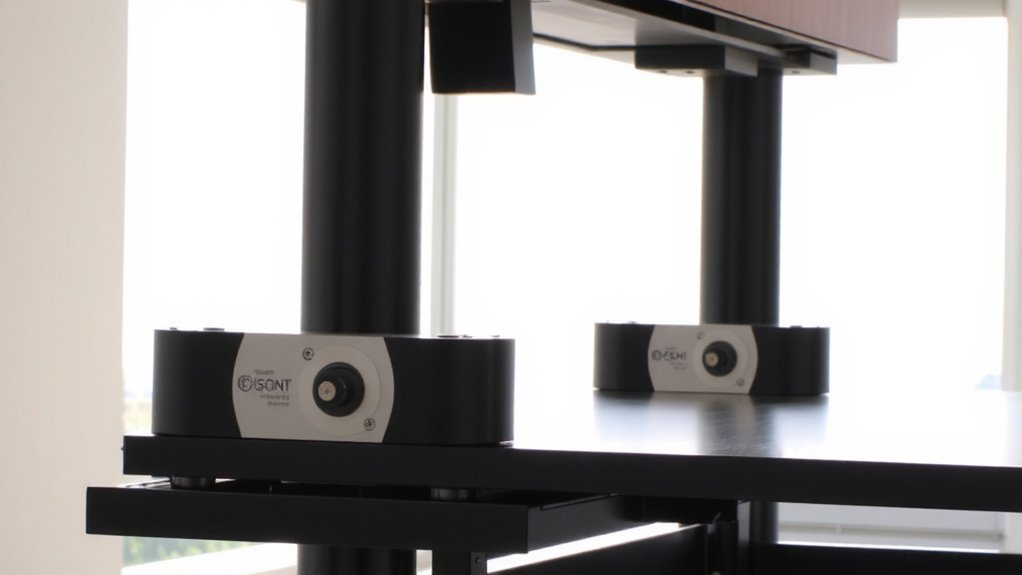
While it might seem like just a hidden part, the motor is what truly drives your sit-stand desk’s reliability and smooth operation-get it wrong, and you’ll notice every flaw. You depend on consistent lift speed and quiet stability, both tied directly to motor efficiency. A high-quality motor guarantees effortless shifts between sitting and standing, even with heavy loads up to 250 lbs. It also preserves desk aesthetics by allowing sleeker frames and less visible hardware. Dual-motor setups typically outperform single-motor ones, offering faster height changes and balanced lifting. But they cost more and may require sturdier frames. Look for motors with at least a 5-year warranty and tested cycle life of 15,000+ adjustments. Poor motor quality leads to wobbling, stuttering lifts, or premature failure-issues no stylish design can fix. Choose wisely, because performance isn’t just how it looks; it’s how it works, day after day.
How Desk Motor Noise Affects Your Workday
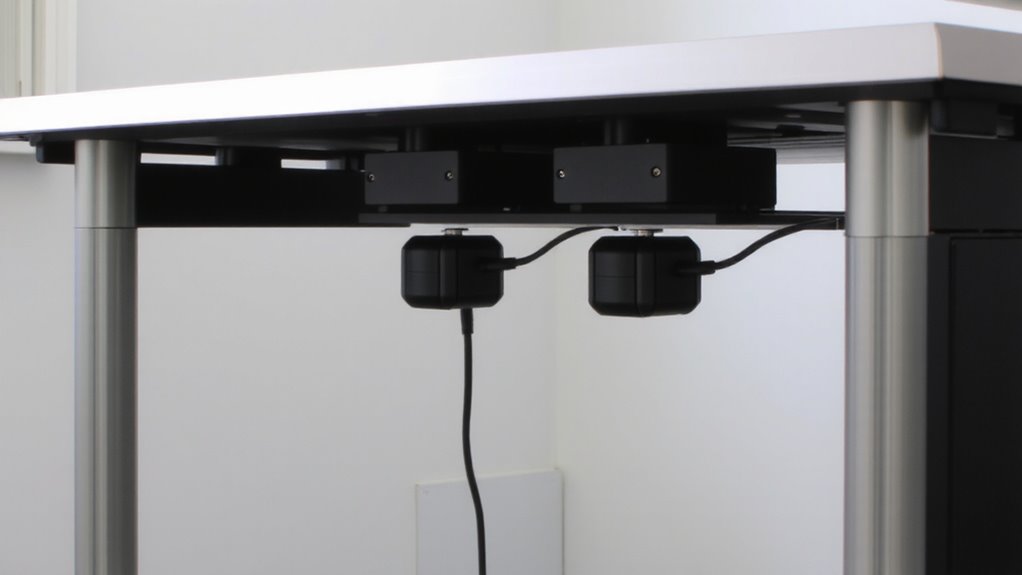
You want a sit-stand desk that moves smoothly without disrupting your focus, and motor noise plays a bigger role than most realize. Excessive sound creates focus disruption, especially in quiet home offices where ambient noise is low. A loud motor can break concentration during calls or deep work, making even short adjustments distracting.
| Motor Type | Noise Level (dB) | Best For |
|---|---|---|
| Dual AC Motor | 48–52 | Large desks, stability |
| Single DC Motor | 45–48 | Quiet environments |
| Budget DC Motor | 53–58 | Occasional use |
Look for desks with DC motors under 50 dB-they minimize ambient noise and maintain workflow. However, quieter motors may adjust slightly slower or cost more. Real-world testing shows noise differences matter most during frequent shifts. Choose based on your environment and tolerance, but don’t overlook sound quality when preserving focus.
How Much Weight Can Your Motor Handle?
A sit-stand desk motor’s weight capacity directly determines how well your setup performs over time-exceeding it risks slow movement, stalling, or permanent damage. You need a motor rated for at least 1.5 times your total desktop load to guarantee smooth, consistent adjustments. Weight capacity isn’t just about max pounds; it’s how well the motor handles real-world demands over thousands of cycles. Poor load distribution-like placing monitors too far forward or stacking heavy gear on one side-can strain the motor unevenly, leading to misalignment or premature wear. Even with a high-rated motor, unbalanced setups reduce reliability. Always check manufacturer specs for both dynamic and static load limits, and consider desk frame design that promotes even weight distribution. Motors with reinforced gears and thermal protection handle sustained use better. Ignore these factors, and you’ll compromise longevity no matter how quiet the motor starts. Some top-rated standing desk converters are engineered with dual-motor systems to better manage heavy and uneven loads.
Dual vs. Single Motors: Which Is Smoother and Stronger?
When it comes to smooth, reliable height adjustments, dual-motor systems generally outperform single-motor setups-especially under heavier loads or wider desktops-because they distribute power evenly across both legs, reducing strain and minimizing wobble. You’ll notice better load balance and movement precision, which means steadier movements and less drifting during adjustments. Dual motors handle asymmetrical weight distributions more effectively, so your monitor and gear won’t tip or sway. That said, they typically cost more and aren’t always necessary for smaller desks or lighter setups. If you’re using a standard 48-inch desktop with average gear, a well-built single-motor system can still perform reliably. However, once you go wider or stack heavier equipment, dual motors deliver noticeably smoother lifts. Just confirm the frame’s build quality-strong motors won’t fix a weak frame. For top-performing options, check out our list of the best standing desks for your workspace.
What Makes a Desk Motor Last?
The longevity of a sit-stand desk motor hinges on three core factors: build quality, load management, and real-world durability testing. Motor durability depends on high-grade materials like reinforced gears and sealed enclosures that resist dust and moisture. You’ll want a motor rated for your desk’s weight load-overloading causes overheating and shortens lifespan factors. Reputable brands test motors through thousands of lift cycles, often exceeding 10,000 cycles under full load, ensuring long-term reliability. But even durable motors wear faster with frequent, rapid adjustments. Look for thermal protection and smooth start-stop mechanics; they reduce strain. However, no motor lasts forever-usage habits matter. If you adjust height constantly throughout the day, expect earlier wear. Pairing a robust motor with proper desk setup improves longevity, but always consider your real usage. Don’t assume higher price means infinite life-maintenance and load discipline are just as critical.
What to Look for in a Motor Warranty and Support
Warranty length alone won’t save you if the coverage’s full of holes-look for at least a 5-year limited warranty that specifically covers the motor, not just the desk frame. That’s essential because motor durability directly impacts how long your desk performs smoothly and quietly. A solid warranty signals the manufacturer’s confidence in their build quality. But don’t just trust the number-read the fine print. Some warranties exclude wear from heavy use or DIY setups. Check if service is handled in-house or through third parties, since response time and replacement processes vary. Longer warranty length is helpful, but only if support is easy to access and transparent. Pairing strong motor durability with responsive, clear warranty support means fewer headaches if something goes wrong-giving you reliable height adjustments for years without guesswork.
On a final note
You should pick a dual-motor sit-stand desk if you want smooth, quiet lifts under heavy loads-tests show they handle 300+ lbs better than single motors. Look for >85 dB noise levels and steel-reinforced mechanisms for durability. A 5-year warranty is standard, but check coverage: some brands exclude motor defects. Just remember, quieter motors often cost more, and compact desks may not fit dual systems.