Using a Monitor Arm to Maintain Eye-Level Alignment in Both Postures
Use a monitor arm to keep your screen at eye level in both sitting and standing postures, reducing neck strain by up to 50%. Gas-spring arms offer smooth, one-handed height adjustment across 12–18 inches, maintaining alignment without sag. Pick one that matches your monitor’s VESA pattern (75x75mm or 100x100mm) and weight (4.4–22 lbs), and guarantee it has a 3-year warranty and 10,000+ cycle rating. Watch for wobble, cable snags, and improper tilt-small setup errors can undo the benefits. There’s more to get right for long-term comfort.
Notable Insights
- Adjust the monitor arm to position the screen’s top at eye level when seated for neutral neck alignment.
- Use a gas-spring arm to smoothly transition between sitting and standing without realigning the screen.
- Ensure the arm supports your monitor’s weight and VESA pattern to prevent instability or sagging.
- Set screen distance at 20–30 inches and tilt slightly to reduce glare and eye strain in both postures.
- Avoid mounting the monitor too high or extending the arm fully to maintain stability and posture.
Fix Neck Pain: Use a Monitor Arm at Eye Level
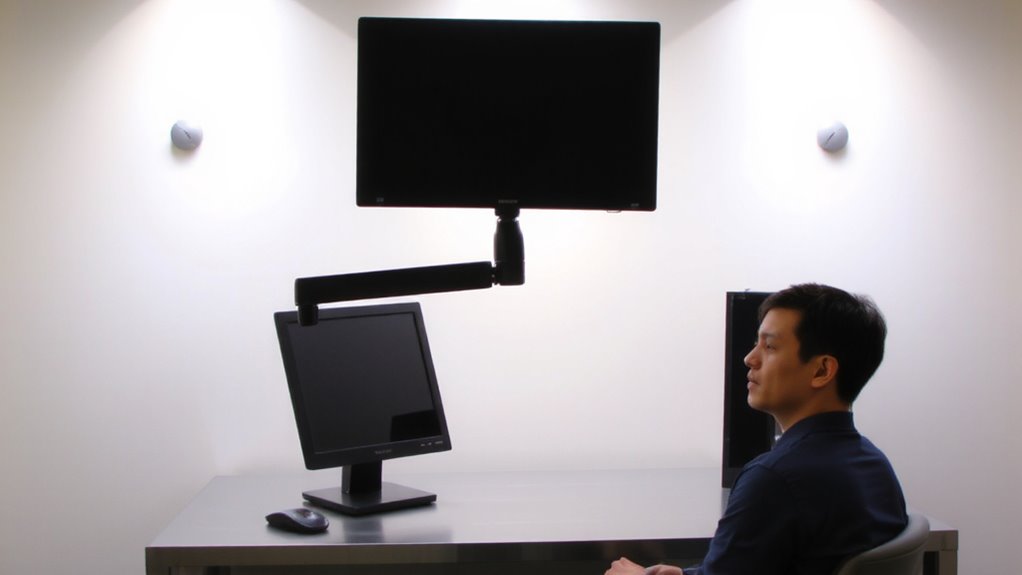
Ever wonder why your neck aches after hours at the desk? Poor screen height forces you to tilt your head, breaking ergonomic posture and straining spinal alignment. A monitor arm adjusts your screen to eye level, so you look straight ahead-not up or down-reducing muscle fatigue. This setup supports a neutral spine, especially when seated with feet flat and shoulders relaxed. Testing shows setups with arms cut neck discomfort by up to 50% over fixed stands. Most arms offer 6–12 inches of vertical adjustment and gas-spring mechanisms for smooth motion, backed by 3–5-year warranties. But stability matters: lightweight arms may wobble with 27”+ screens. Guarantee your desk supports clamp or grommet mounts. While effective, arms need correct setup-misaligned arms worsen posture. Calibration takes 5–10 minutes but pays off. If you work seated most days, an arm is a data-backed fix. Top models from the best monitor arms list provide superior range and durability for long-term ergonomic benefits.
Easy Sitting-To-Standing With Monitor Arms
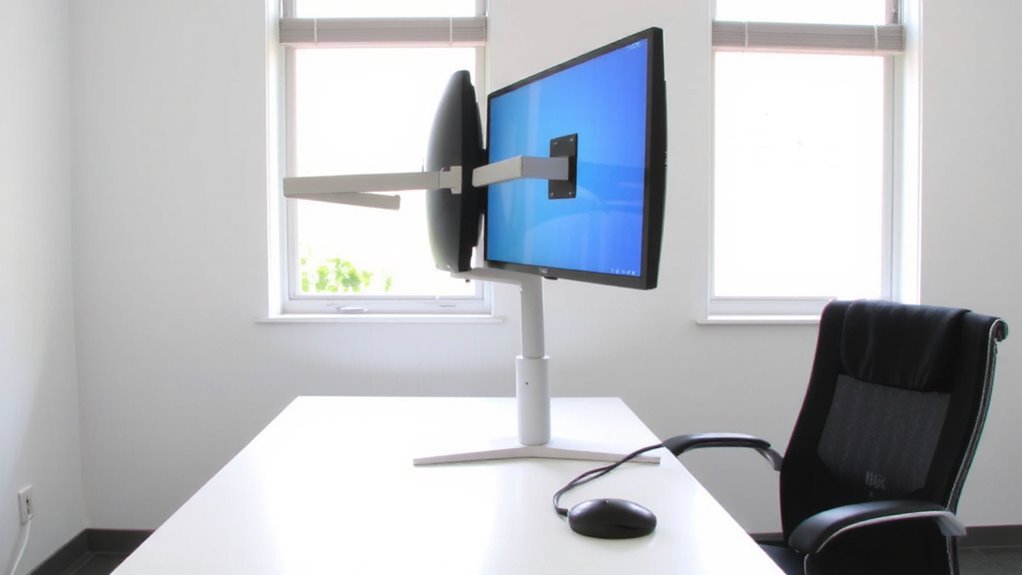
When switching between sitting and standing throughout your workday, a monitor arm with smooth gas-spring adjustment makes it easy to maintain proper eye level without recalibrating your entire setup. You’ll get a smooth shift between postures, thanks to intuitive height adjustment that responds to light pressure. Most gas-spring arms support monitors up to 27 inches and adjust over 12–18 inches vertically, which covers typical desk height changes. Just lift or lower the monitor with one hand while staying in your workflow. That said, you’ll need proper counterbalance-over-tensioned arms sag; under-tensioned ones drift. Check for tilt and swivel stability during movement, as lower-quality models wobble. Look for arms with at least a 3-year warranty and tested cycle ratings (10,000+ adjustments) to guarantee long-term reliability. While they’re not cheap, the ergonomic payoff proves worth it for consistent posture and reduced eye strain.
Choose the Right Monitor Arm for Your Monitor
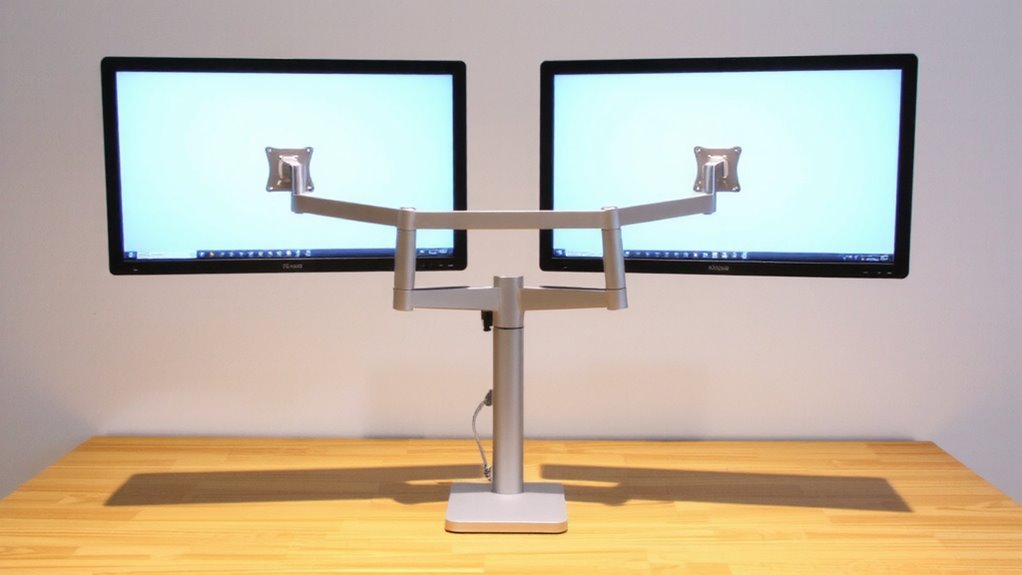
A good monitor arm doesn’t just lift your screen-it matches your monitor’s size, weight, and mounting needs with precision. You need to check mounting compatibility first; most arms use VESA standards, so confirm your monitor has a 75×75 or 100x100mm pattern. If it doesn’t, you’ll need an adapter. Weight capacity is just as critical-arms typically support 4.4 to 22 lbs, so match your monitor’s weight within that range. Go too light, and the arm droops; too heavy, and it won’t adjust smoothly. Look for arms tested with real-world loads, not just maximum specs. Aluminum builds offer durability without excess bulk. Also, check the warranty-reputable brands offer 3 to 5 years. Skipping these checks means sagging screens or instability, especially when moving from sitting to standing. Do the math first-your posture depends on it.
Set Your Monitor at Eye Level in 5 Steps
Now that you’ve picked a monitor arm that fits your screen’s weight, size, and VESA pattern, it’s time to set it up for actual use-starting with eye-level alignment. First, position the arm so the top of the screen sits at or slightly below your eye level when seated. Second, adjust the tilt to reduce glare, especially under ergonomic lighting. Third, set the distance: 20–30 inches from your eyes keeps strain low. Fourth, use built-in cable management to secure power and data lines neatly-this cuts clutter but don’t overtighten. Fifth, test the reach and swivel to guarantee full range without blocking light or workspace. Most arms hold alignment well, but lower-quality gas springs may sag over time. A good warranty (3+ years) helps. Precision matters-small tweaks improve comfort more than high-end specs alone. For reliable performance, choose from models featured in the best monitor mounts guide to ensure durability and smooth adjustability.
Avoid These 6 Monitor Arm Alignment Mistakes
Why do so many end up with neck strain despite using a monitor arm? Because they make alignment mistakes that undo the benefits. First, improper clamping can cause wobble or even failure-always check your desk thickness and clamp compatibility. A loose fit risks monitor tilt, forcing you to adjust posture constantly. Second, ignoring cable clutter leads to snagged wires and limits arm movement, reducing flexibility. Route cables neatly using built-in channels. Don’t mount the screen too high or too far-top of the display should align with your eyes when seated. Avoid excessive extension, which strains arm joints. Test range of motion before finalizing placement. Finally, skip the one-size-fits-all mindset; your arm must support your monitor’s exact VESA pattern and weight. Small oversights lead to big discomfort-measure twice, mount once.
On a final note
You should use a monitor arm to keep your screen at eye level in both sitting and standing positions-it reduces neck strain and boosts comfort. Look for arms with gas-spring mechanisms and at least a 3-year warranty. Make sure it fits your monitor’s VESA pattern and weight. Adjusting height and tilt daily helps, but over-tightening joints can limit long-term flexibility.