How to Combine Soft Furnishings With Technical Treatment for Balanced Acoustics
Start with thick wool rugs (1.5 lb/ft²), heavy blackout curtains (300+ g/m²), and tightly upholstered furniture to absorb mid to high frequencies. Then add 2-inch acoustic panels with NRC 0.8+ at first-reflection points-especially front and side walls-to control echoes and low-end buildup. Use fabric-wrapped baffles for durability and even sound diffusion. Combine these treatments without exceeding 50% wall coverage to avoid a deadened space. You’ll find the balance between comfort and clarity sharpens when both elements work together.
Notable Insights
- Use thick wool rugs and heavy curtains to absorb mid to high frequencies before adding technical panels.
- Place acoustic panels at first-reflection points on front and side walls for maximum sound control.
- Combine 2-inch panels with porous insulation for effective low- and mid-frequency absorption.
- Install fabric-wrapped baffles to maintain aesthetic appeal while enhancing acoustic transparency.
- Balance coverage with 30% to 50% treated surfaces to avoid deadening sound and ensure natural acoustics.
Start With Rugs, Curtains, and Upholstery for Better Sound
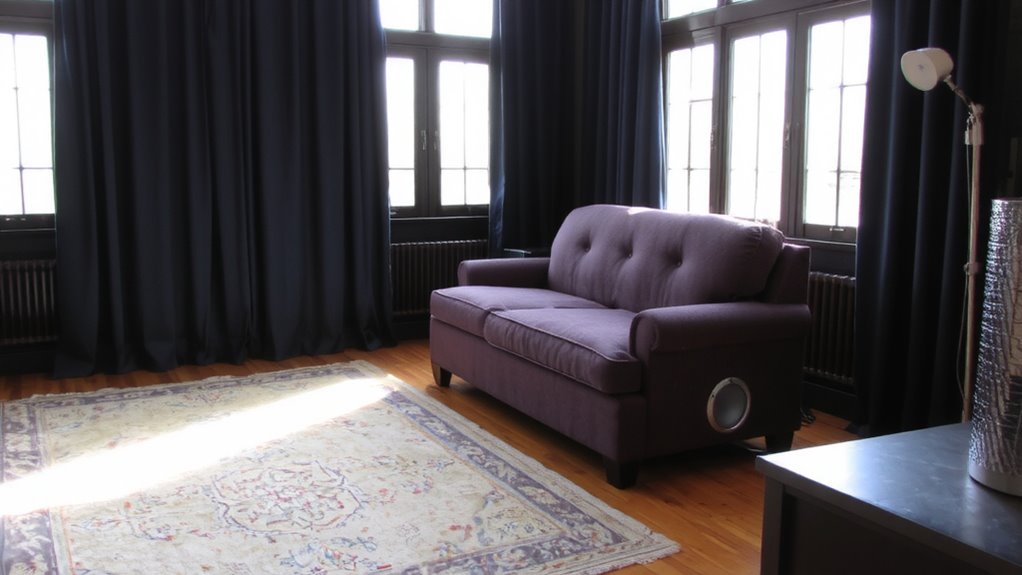
Soft furnishings aren’t just about comfort-they’re your first line of defense against echo and noise buildup. You’ll get real improvements in sound absorption by adding thick rugs, heavy curtains, and dense upholstery. These materials trap mid to high-frequency sounds, especially when they cover large, reflective surfaces like hardwood floors or bare walls. Fabric density matters-opt for wool rugs (at least 1.5 lb/ft²), velvet or blackout curtains (over 300 g/m²), and tightly woven upholstery on sofas and chairs. While they won’t replace specialized treatments, they cut reverb and make rooms feel calmer. Just remember: thin fabrics or loosely woven textiles barely help. And don’t expect deep bass control-soft furnishings mostly affect higher frequencies. For best results, layer them with other strategies, but know their limits. You’ll save money starting here, but performance peaks quickly. Test with claps or voice trails to hear the difference before moving to technical fixes.
Add Acoustic Panels Where Echo Hits Hardest
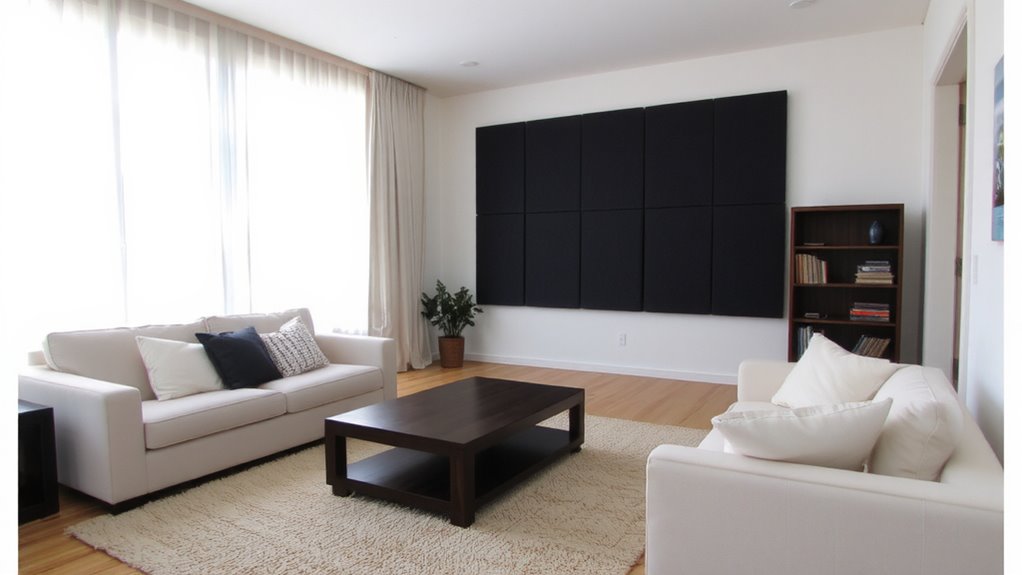
You’ve already made progress with rugs, curtains, and upholstery-now it’s time to tackle the echo that those soft materials can’t fully stop. Target first-reflection points: walls opposite speakers, the ceiling above your desk, and bare corners. Acoustic panels here reduce reverberation better than soft furnishings alone. For balanced sound diffusion, place some panels at ear level and others near the ceiling. They won’t eliminate all noise, so consider noise masking if speech privacy matters. Below is where to start:
| Location | Effectiveness (1–5) |
|---|---|
| Side walls | 4 |
| Front wall | 5 |
| Ceiling | 4 |
| Rear corners | 3 |
Panels improve clarity in calls and music, but over-treatment can make a room feel unnaturally dead. Aim for even coverage without overdoing it. Most foam or fabric-wrapped panels last 5+ years with no maintenance. Look for materials tested to NRC 0.7 or higher.
Pick Panels and Baffles That Fit Your Room’s Needs
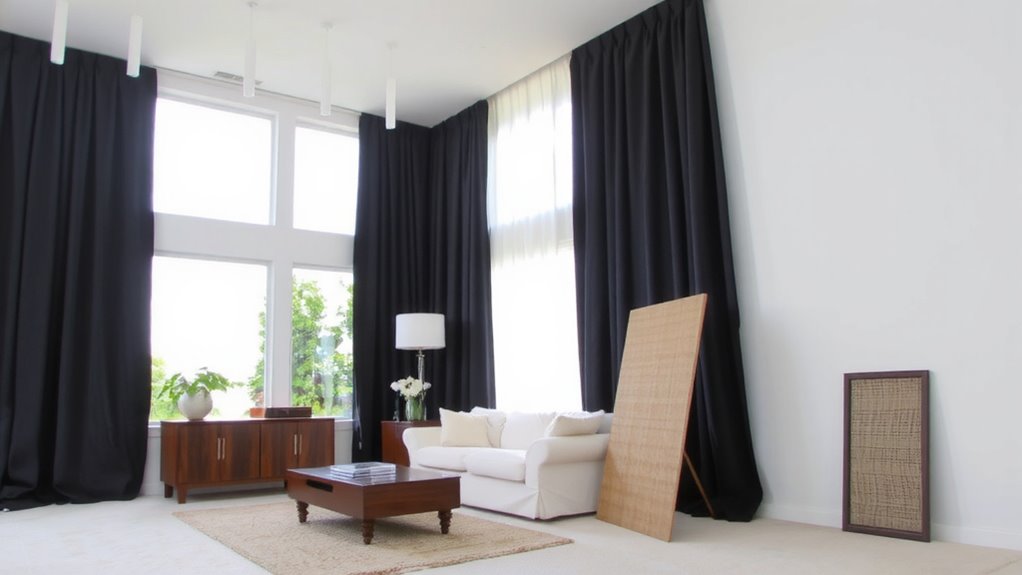
While early reflections and echo are partly managed by soft furnishings, you’ll need purpose-built panels or baffles to fine-tune your room’s sound. You should choose panels based on material density and thickness-1-inch panels help with midrange, but 2-inch versions manage lower frequencies more effectively. Panel placement matters: mount them at first reflection points, typically on side walls and ceiling, to cut down flutter and clarify speech. Baffle design affects performance too; fabric-wrapped baffles with rigid frames maintain shape and acoustic transparency. Don’t rely solely on corner placements-distribute them evenly for balanced absorption. Be mindful that overly aggressive treatment can deaden a room, making speech harder to understand. Always measure room response before and after using a calibrated mic if possible. Check manufacturer specs for NRC ratings and warranty length-most good products offer at least a 5-year guarantee. For home office environments, selecting the best acoustic panels for home office can significantly improve sound clarity and reduce distractions.
Style Panels So They Complement Your Décor
A well-designed acoustic panel doesn’t just perform-it fits naturally into your space, blending function with visual harmony. You can match panels to your décor through smart color coordination and subtle pattern matching, so they look intentional, not tacked on. Choose fabric-faced options in neutral tones for offices or muted contrasts to add depth without distraction. If you’re aiming for style, avoid bold graphics unless they align with your room’s existing art or furniture patterns. Keep in mind: over-prioritizing looks can compromise performance if thick absorptive cores are replaced with thin, decorative shells. Panels should maintain at least 2” thickness and NRC ratings above 0.8 for reliable sound control. Mount them at reflection points-side walls, behind monitors-where function and visibility intersect. Some brands offer customizable covers with fire-rated fabric and five-year warranties, but test swatches first; colors shift under office lighting. Balance aesthetics and acoustics, or you’ll sacrifice one for the other.
Layer Soft Furnishings and Acoustics for Best Results
Think of your room as a system-because when it comes to acoustics, no single fix does it all. You’ll get the best results by layering soft furnishings like curtains, rugs, and upholstered furniture with technical treatments such as foam panels or bass traps. These absorb mid to high frequencies and help reduce room resonance, but they don’t replace the need for sound diffusion. For balanced acoustics, place diffusers on rear walls or ceilings to scatter reflections and create a more natural listening space. Don’t rely solely on decorative fabrics-they look great but won’t fix echo or standing waves. Combine fabric-wrapped panels with porous insulation behind them for improved performance. Remember, even high-end treatments have limits. Over-treating can make a room sound flat. Test configurations with a simple clap or tone sweep, adjust as needed, and aim for moderate coverage-30% to 50% of wall surface-for reliable, real-world results.
On a final note
You’ll get better acoustics by layering soft furnishings with technical treatments. Rugs, curtains, and upholstered furniture absorb some sound, but for noticeable echo reduction, add acoustic panels at reflection points-especially behind your desk or opposite speakers. Pick rigid fiberglass or foam panels rated for NRC 0.7+ for real results. Style them with fabric wraps or frames to match your decor. Just know: thicker panels (2”+) work better for low frequencies. Balance effectiveness and aesthetics without over-treating.