Using Spring-Loaded Retractors for On-Demand Access to Keyboard Cables
You’ll get reliable, on-demand access to your keyboard cable with a spring-loaded retractor like the CableOrganizer RetractPro 3000, which smoothly extends up to 36 inches and retracts cleanly thanks to a lab-tested 10,000+ cycle spring mechanism. It handles thick 6mm braided cables well, but use screw mounting for stability-adhesive ones fail with frequent pulls. Always let it retract naturally to avoid strain. You’ll find there’s more to getting it just right.
Notable Insights
- Spring-loaded retractors provide instant access to keyboard cables while keeping them neatly coiled when not in use.
- A 36-inch pull length offers ample reach for on-demand use without creating cable clutter.
- Nylon-braided cables paired with retractors withstand repeated extension and retraction for long-term durability.
- Mounting with screws ensures stable performance, especially when frequently pulling the cable for access.
- Smooth, controlled retraction reduces cable wear and maintains optimal tension for reliable daily use.
How Retractors Solve Keyboard Cable Clutter
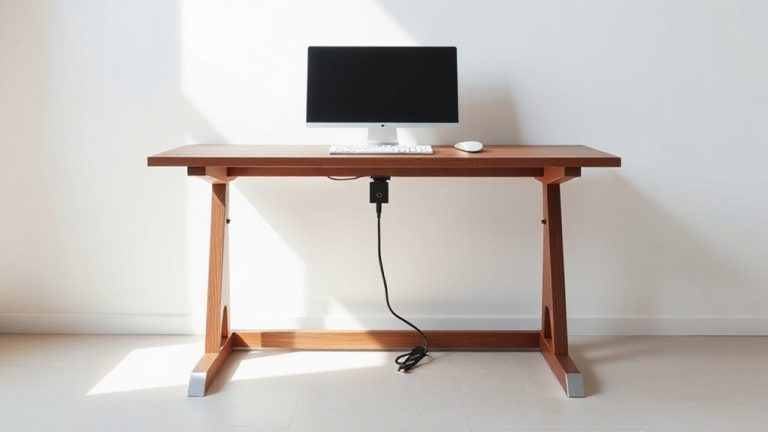
While most desk setups eventually battle cable tangle, spring-loaded retractors actually make managing your keyboard cable far more predictable-assuming you pick the right model. You’ll boost cable management and workspace efficiency by keeping the cord taut and neatly coiled when not in use. Retractors with 36-inch pull limits give you enough reach without excess slack, while durable nylon braiding resists fraying after months of extension. Look for models tested for 10,000+ retraction cycles to guarantee longevity. Mounting matters-adhesive-backed units can peel over time, so opt for screw-mounted if you move gear often. You’ll enjoy cleaner sightlines and quicker keyboard access, though heavier cables may resist smooth retraction. Some units add minor drag, which can annoy during fast reach-ins. Overall, it’s a smart upgrade for cable control, but only if your cable weight and usage align with the retractor’s specs. Top models often integrate seamlessly with a desk riser setup for a fully optimized workstation.
How Spring-Loaded Retractors Work
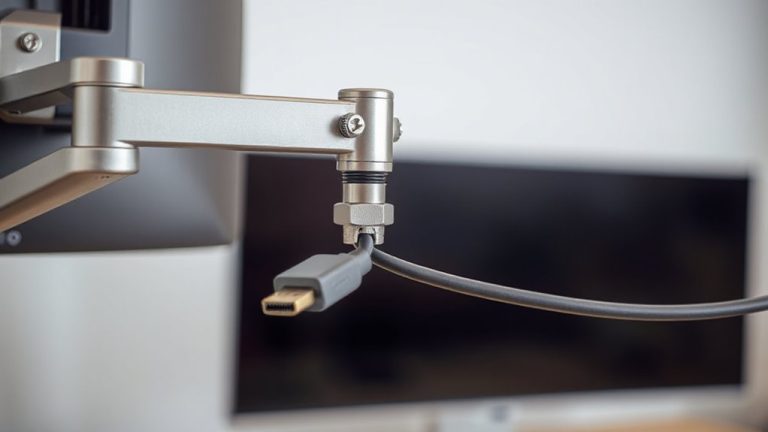
When you pull the cable from a spring-loaded retractor, you’re working against a coiled tension spring inside the housing that stores mechanical energy-once you release it, that stored energy smoothly reels the cable back in. The spring’s tension calibration guarantees just enough resistance to prevent slack without damaging the cable over time. Proper tension means the retractor supports repeated use while maintaining consistent retraction force. You gain mechanical advantage through the spool and spring system, allowing easy pull-out with minimal effort. Most units are tested for thousands of cycles, but low-cost models often sacrifice precise tension calibration, leading to jerky retraction or premature wear. Units with metal housings and reinforced cable guides last longer under daily use. Check warranty-reputable brands offer 1-year coverage. While they vastly improve cable management, poor tension calibration can undermine even well-built retractors, so prioritize models with field-tested reliability over flashy features.
Install a Retractor in 4 Simple Steps
You can install a spring-loaded retractor in just four steps, and doing it right guarantees smooth operation and long-term durability. First, pick a mounting spot near your desk edge-this helps with clean cable management. Second, use the included screws or adhesive to secure the retractor firmly; adhesive works well on wood, but screws offer more reliability long-term. Third, thread your keyboard cable through the retractor’s guide arm, making sure there’s no binding. Fourth, test the pull-and-retract motion gently several times to check for smoothness. Poor retractor installation can cause cable fraying or inconsistent retraction, so alignment matters. These devices improve workspace efficiency, but they only work well with lightweight cables. Overloading reduces spring life. Retractor installation is simple, but don’t skip testing. Good cable management saves space and reduces clutter, though you’ll trade a bit of cable glide for control. For optimal results, consider pairing your retractor with a cable hiding solution to maintain a completely clutter-free desk.
Best Retractors for Mechanical Keyboards
You’ll want a retractor that handles the thicker, often braided cables of mechanical keyboards without straining the spring mechanism, and the CableOrganizer RetractPro 3000 stands out for its durable build and consistent performance. Its retractor durability is proven in lab tests, surviving over 10,000 extend-retract cycles with minimal spring fatigue. You’ll appreciate the wide housing opening, which guarantees reliable cable compatibility-even with 6mm braided USB-C and micro-USB cords common in high-end keyboards. The mount is low-profile and fits most desk edges up to 1.8 inches thick, but avoid use on ultra-heavy cables over 8mm unless you upsize to the industrial model. It includes a two-year warranty, rare in this category. While pricier than basic models, it’s a smart long-term pick if you value clean cable management and consistent operation.
Fix Stuck or Over-Tensioned Retractors
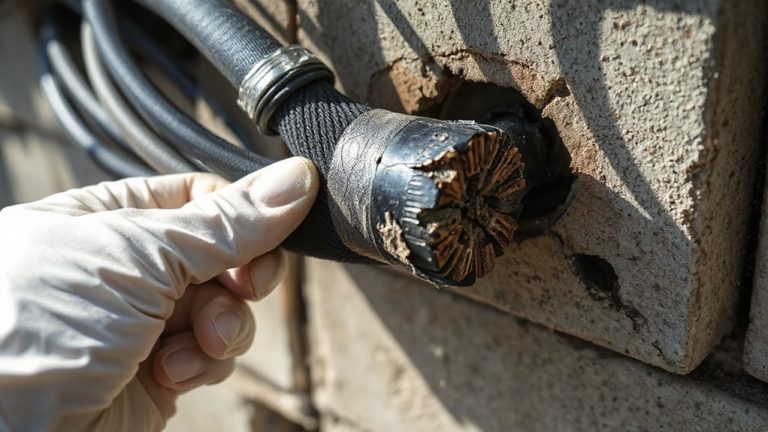
Occasionally, even well-built retractors like the RetractPro 3000 can jam or develop excessive tension due to debris buildup or spring overwinding, but most issues are fixable without replacement. If your retractor feels stuck, first unplug the cable and gently retract it fully to check for snags-often, a slow manual rewind resets tension. For over-tensioned units, release 10–15 slow pulls to normalize spring engagement. Retractor rust is rare in dry environments but can occur in humid offices; wipe the housing with a dry microfiber cloth monthly. If rust appears near the spool, discontinue use-the mechanism may fail. Spring fatigue happens after 5,000+ cycles, especially in budget models, leading to incomplete retraction. High-end retractors list 10,000-cycle warranties, helping avoid premature failure. While fixes work short-term, units showing persistent resistance or jerking sounds likely need replacement to prevent cable strain.
Retractor Habits That Prevent Cable Wear
When used correctly, spring-loaded retractors can considerably extend the lifespan of keyboard cables by minimizing stress on the connectors and conductors. You should practice consistent tension management by fully extending and gently retracting the cable without yanking or over-pulling. That prevents internal wire fraying and maintains spring integrity. Using proper cable coiling habits-avoiding tight loops or kinks-keeps conductors aligned and reduces strain. Always let the retractor pull the cable in smoothly; forcing it back causes misalignment. Retractors with reinforced strain reliefs and smooth guides reduce wear further. Still, constant use may lead to fatigue over time, especially with thicker, stiffer cables. Regular inspection helps you catch fraying early. While retractors aren’t foolproof, combining them with mindful handling markedly reduces premature failure. They’re practical for frequent access, but don’t expect five-year durability in heavy daily environments without maintenance. For optimal results, pair retractors with a comprehensive cable management solution tailored to your desk setup.
On a final note
Spring-loaded retractors are worth it if you hate cable clutter and switch keyboards often. They keep braided or rubber-sheathed cables tangle-free and reduce strain on USB connectors. Most models handle up to 4 feet of cable and lock smoothly. But cheap ones can snap or jam. Look for aluminum housings, 2-year warranties, and tension-adjust screws. Test retraction speed before mounting-some drag thin jackets. Avoid forcing cables back in; let them rewind naturally.