Designing a Calming Workspace to Support Mental Wellbeing and Focus
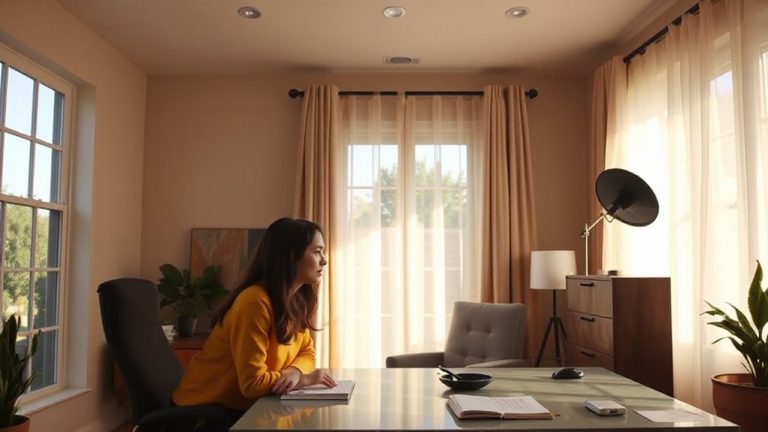
Start by clearing clutter to sharpen focus-keep only essentials within arm’s reach and store the rest. Use pale blue or warm gray walls to calm your mind, but test swatches in your actual light first. Add a snake plant or real wood desk for warmth and reduced strain. Opt for an LED task lamp with 5000K morning light and dim to 3000K at night. Arrange furniture to allow 30+ inches of movement, and silence non-urgent notifications. A few meaningful, calm-inducing items can help-just avoid overcrowding. You’ll find deeper benefits when you fine-tune each element together.
Notable Insights
- Declutter physically and digitally to reduce distractions and support mental clarity.
- Use calming colors like pale blue, warm gray, or sage green to promote focus and ease.
- Incorporate low-maintenance plants and natural materials to enhance connection to nature.
- Optimize lighting with adjustable color temperatures to match circadian rhythms and tasks.
- Arrange furniture for smooth movement and keep essential items within easy reach.
Declutter First for a Calmer Mind
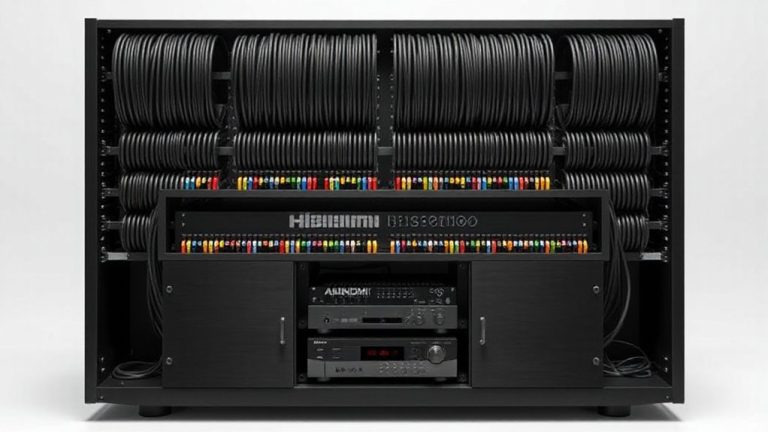
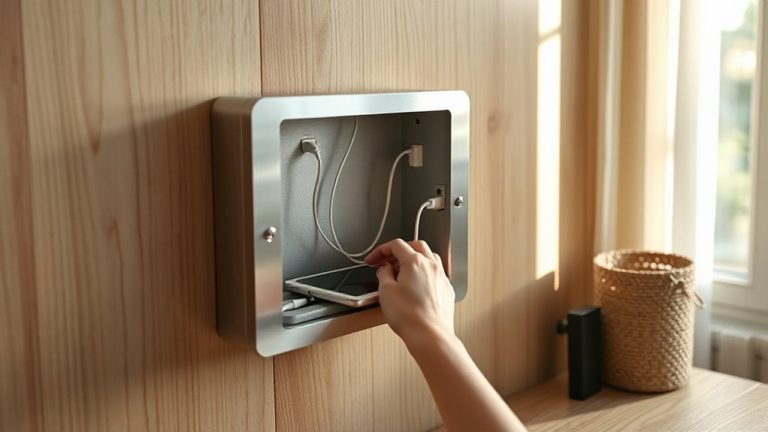
Start by clearing the clutter-literally. A tidy workspace supports mental clarity, reducing distractions that chip away at focus. You don’t need expensive organizers-just sort items into keep, toss, or relocate. Keep frequently used tools within arm’s reach; store the rest. This simplicity creates space for mindfulness breaks, letting you reset without visual noise. Pair this with a daily digital detox: silence non-essential notifications and power down devices hourly to recalibrate. These habits improve attention, but only if they’re consistent. Don’t mistake a perfectly styled desk for progress-function matters more than aesthetics. Minimalism isn’t about emptiness; it’s about intention. Some find open shelves helpful, but they can become clutter traps without routine checks. There’s no one-size-fits-all layout, so adjust based on what sustains your concentration. Effective cable management, such as using cable management solutions, can further reduce visual clutter and enhance focus.
Choose Calming Colors That Boost Focus
Color isn’t just decoration-it’s a tool. When applied with color psychology in mind, your workspace palette can sharpen focus or quietly drain energy. Cool tones like soft blues and muted greens support concentration, while warm neutrals add calm without dulling alertness. Pair these hues with intentional material textures-think linen desk pads or matte finishes-to deepen the sense of order. But balance matters: overly dark shades may weigh on mood, and too much white can feel sterile.
| Color | Effect on Focus |
|---|---|
| Pale Blue | Enhances clarity |
| Warm Gray | Reduces visual fatigue |
| Sage Green | Promotes mental ease |
Material textures should complement, not compete with, color. A rough ceramic mug or a smooth wood tray adds tactile contrast without clutter. Test swatches under your room’s lighting-natural versus artificial light shifts perception. Results vary by space size, wall position, and personal sensitivity. There’s no universal fix, but informed choices make a measurable difference.
Add Plants and Natural Materials
A well-chosen plant or natural material can make your workspace feel more grounded and less clinical, but not every option delivers on both style and practicality. Lean into biophilic design by selecting low-maintenance plants like snake plants or pothos-they thrive in indirect light and need watering only every 1–2 weeks. Real wood desks or bamboo organizers add warmth through natural textures, which help reduce visual fatigue and mental strain. These materials don’t just look good; studies show they support focus and calm by mimicking restorative outdoor environments. However, avoid overly textured surfaces that trap dust or complicate cleaning. Solid wood costs more but lasts decades; laminates offer budget-friendly alternatives with decent grain patterns. Remember, overloading your desk with plants can clutter your space, so keep sizing proportional. Aim for one or two key natural elements that enhance airflow and aesthetics without sacrificing function. For those who prefer zero maintenance, consider adding a lifelike artificial plant to maintain greenery without watering or sunlight.
Use Soothing, Adjustable Lighting
Good lighting makes a real difference in how focused and relaxed you feel at your desk, and the best setups let you adjust brightness and color temperature throughout the day. Tuning light temperature helps match your environment to your natural rhythms-cooler tones (5000K–6500K) aid concentration in the morning, while warmer light (2700K–3000K) supports relaxation later on. Dimmer switches give precise control, letting you avoid glare during screen work or reading. However, not all bulbs work with dimmers, so check compatibility to prevent flickering or early failure. Top LED desk lamps offer excellent adjustable lighting performance for personalized workspace comfort.
| Time of Day | Light Temperature | Brightness Level |
|---|---|---|
| Morning | 5000K–6500K | High |
| Midday | 4000K–5000K | High to Medium |
| Afternoon | 3500K–4000K | Medium |
| Evening | 2700K–3000K | Low |
Use LED task lamps or ceiling fixtures with certified dimmer switches and adjustable color for best results.
Arrange Furniture for Easy Movement
You’ll work better when your body can move freely, so arrange your furniture to support easy access and smooth shifts between tasks. Smart furniture placement reduces strain and distractions-keep at least 30 inches of clearance around desks and chairs for unhindered movement. Position your monitor, keyboard, and frequently used tools within arm’s reach to limit unnecessary reaching or twisting. Flow optimization means aligning furniture with natural movement patterns; for example, place your chair so you can swivel between your desk and reference shelves without standing. Avoid tight corners or blocking pathways with filing cabinets or printers. While open layouts improve flow, they may sacrifice privacy-consider compact desks with modest footprints if space is limited. Test movement paths daily for one week to spot friction points. Reassess after any setup change to maintain efficiency.
Reduce Screen Clutter and Notifications
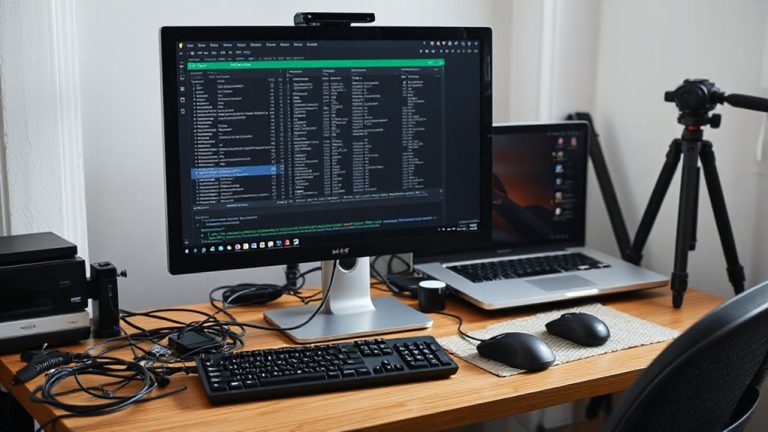
While a clean digital workspace won’t eliminate stress on its own, paring down screen clutter and muting non-essential notifications can markedly sharpen focus and reduce low-grade mental fatigue. Embracing digital minimalism means keeping only essential apps visible and using folders to group similar tools-fewer icons mean fewer distractions. Turn on notification management features like Focus Mode or Do Not Disturb to silence social media, email, and non-urgent alerts during deep work sessions. You’ll regain minutes each hour previously lost to context switching. Most operating systems offer customizable scheduling and app-specific controls, so you stay reachable for urgent messages. Still, be realistic: overrestricting alerts might cause you to miss time-sensitive items, especially if others rely on quick digital replies. Test settings over a few days to balance focus with responsiveness. The payoff isn’t instant calm-it’s sustained mental clarity built through consistent, small choices.
Add Meaningful Personal Touches That Calm You
Your workspace’s emotional tone hinges on the personal details you choose to include-small, intentional items that ground you without bogging down the desk. Favorite photos and cherished objects can reduce stress, but only if they’re curated, not cluttered. A framed picture of a quiet forest or your family smiling calms your mind during tense moments. These aren’t just decorations; they’re mental anchors.
Consider these examples:
| Item | Placement | Effect |
|---|---|---|
| Favorite photo | Left corner | Visual comfort |
| Cherished object | Near monitor | Tactile reassurance |
| Small plant | Rear right | Softens space |
Avoid overcrowding-limit to three meaningful pieces. Overdoing it distracts more than it soothes. Choose items with emotional weight, not aesthetic hype. Test placements for sightline ease. Rotate seasonally to keep the effect fresh.
On a final note
You’ll get a calmer mind and sharper focus with a smartly designed workspace, but only if you keep things intentional. Declutter first-clear surfaces cut mental load. Go for warm neutrals and soft greens; they’re proven to lower stress. Add real plants and wood finishes for grounding. Use dimmable, 2700K–3000K LED lighting to match natural cycles. Arrange for 30-inch pathways and cut unnecessary notifications. Personal touches help, but skip clutter-choose one photo or object with meaning. Test changes over a week; not every fix works long-term. Balance function and comfort.